
IN CONVERSATION WITH PEDRO ANDRADE
interview by PHOEBE GIBSON-DOUGALL
Pedro Andrade is one of the most influential figures in Brazilian fashion and a central figure within Latin America’s streetwear scene. The launch of his label Piet in São Paulo in 2012, saw Andrade cut his teeth as a highly innovative streetwear designer and collaborator, partnering with brands such as Oakley, Nike, and Adidas. In 2021, Andrade and his wife—the fashion designer and consultant Paula Kim—started their own menswear line, P_Andrade, where Brazilian culture, innovation, and sustainability align. After more than a decade revolutionising Brazil’s style scene and representing his home country on fashion’s global stage, Andrade has perfected the art of honouring one’s roots whilst always facing forward.
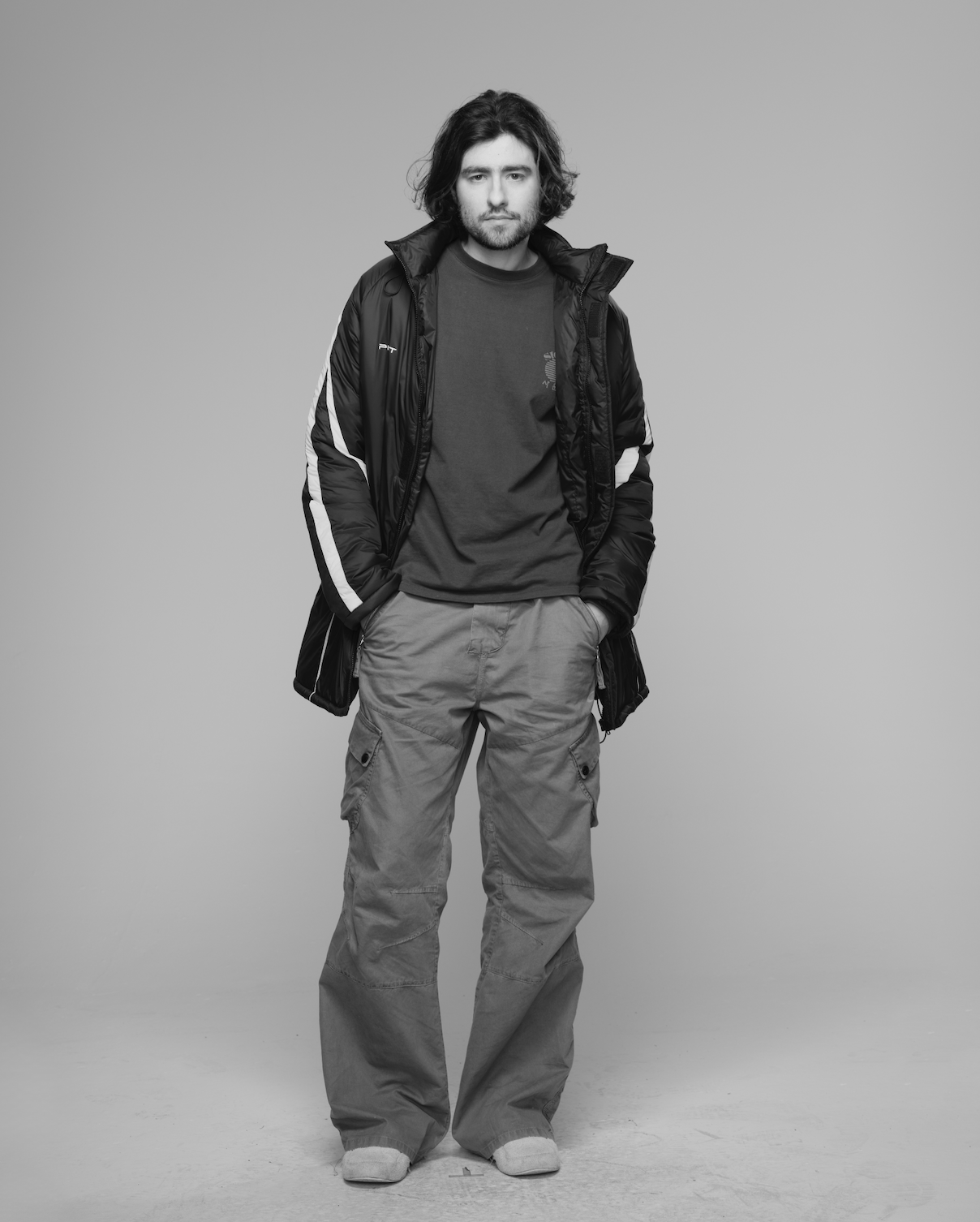
In the past, you’ve described yourself as a storyteller who wants to showcase the more hidden sides of Brazil, but when you were growing up in São Paulo, did you like it? Did you always feel connected to your city and Brazil, this desire to tell stories about where you’re from?
Growing up in São Paulo, I didn’t realise how much the city was shaping me. It was chaotic, dense, sometimes heavy, but it was also alive in ways I only learned to appreciate later. As a kid, I didn’t think of myself as someone “from Brazil” in a grand sense; I was just navigating my neighborhood, my school, my own small universe. It took years to understand that the stories I tell today were already forming back then. The connection was always there, but it was quiet. It revealed itself as I matured and began to really see the city, the beauty, the contradictions, the invisible narratives. That’s when the desire to tell those stories became clear.
Speaking of storytelling, the brand has a lot of personal history woven into it; the name Piet came from a childhood nickname, and you’ve described the brands as versions of yourself when you were younger (Piet) and the matured version of yourself now (P_Andrade). How did you cultivate your sense of self and style?
My style didn’t come from a single moment of clarity; it came from survival, curiosity, and a lot of observation. Piet was the younger me: restless, experimental, hungry. P_Andrade reflects a different stage, one where I’m more aware of what moves me and why. I cultivated my sense of self by paying attention to the world: the way people move through the city, the textures of everyday life, the mix of cultures that shape São Paulo. My identity formed in conversation with all of that. It’s still forming, actually.
When starting P_Andrade, was it difficult to reconcile that your changing vision had, in a sense, outgrown Piet? How do you retain a sense of your past self while also looking forward?
It wasn’t about outgrowing Piet, it was about acknowledging that I had changed. That realisation wasn’t painful; it was liberating. Starting P_Andrade gave me space to explore questions that didn’t fit inside Piet anymore. But I never left Piet behind. It’s a part of me, like a snapshot of who I once was. I carry that version of myself with affection and use it as a compass: a reminder of my roots, even as I step into new territories.
To put so much of yourself into your brands can be difficult; do you ever struggle to separate yourself from your brands? For example, when you receive criticism or have to make tough business decisions?
Absolutely. When your work comes from such a personal place, it’s almost impossible not to feel exposed. Criticism can sting because it doesn’t feel like it’s about a product. Over time, I’ve had to build emotional distance, not to become detached, but to stay healthy. Creative decisions require vulnerability; business decisions require clarity. Navigating between those two states is one of the hardest parts of being a designer-founder.
You look for inspiration in the most interesting places — architecture, nature, even frogs! Is this a natural process for you? Or do you find you have to take time to go out into the world and look for creative stimulus?
It’s natural in the sense that my brain works this way, always connecting things, always hunting for metaphors. But I do need to go out into the world for it to happen. Inspiration doesn’t come when I’m staring at a screen. Sometimes it’s a building I’ve passed every day for years that suddenly reveals a detail. Other times it’s something unexpected and almost funny, like a frog or a bug. They remind me that creativity isn’t always grand; sometimes it’s hidden in tiny, overlooked corners.
As a designer, is product a big concern for you? How do you resist quality decline when growing as a brand?
The product is everything. You can have vision, narrative, hype but if the piece isn’t well made, none of it holds. Growing a brand puts real pressure on quality. Timelines get shorter, demand increases, expectations rise. But I’ve always believed that the work needs to outlast the moment. I prefer to slow down, revise, and obsess over details. It’s not about perfectionism; it’s about respect for the craft, for the customer, and for the story we’re telling.
With P_Andrade, you’ve made history this year; it was the first Brazilian brand to debut at PFW, and it’s also the first Brazilian menswear brand to be added to the official calendar of Fédération de la Haute Couture et de la Mode. After more than a decade in the industry, how do these landmark achievements feel?
It feels surreal, honestly. When you’re working, you’re not thinking about “making history”; you’re just trying to build something true. Being recognised by the Fédération and stepping onto the official PFW calendar means a lot not only for me, but for everyone who has walked this path with me. It’s a milestone for Brazilian fashion, and I carry that responsibility with pride. At the same time, moments like this make me even hungrier. They open doors to bigger dreams.
What do you hope to contribute to the local and global fashion industries? Is the vision the same for both? Or do they differ?
Locally, I want to broaden the narrative of what Brazilian fashion can be: sophisticated, conceptual, layered, not constrained by cliché. Globally, I want to bring a Brazilian perspective that isn’t exoticized, but respected. The vision in both contexts is aligned: to tell stories with depth and intention. But the language shifts depending on where those stories land.
Collaboration is essential to the DNA of Piet and to what you do. Could you see yourself taking P_Andrade down similar collaborative paths?
Collaboration has always been a part of the brands, it’s how I learn, challenge myself, and expand ideas. For P_Andrade, I do see more collaborations happening, in a curated way. The brand has a specific emotional and aesthetic universe, and any partnership needs to live inside that world. When a collaboration becomes an extension of the narrative rather than a disruption, then it makes sense.
And finally, do you have a favourite collection or collaboration? Or a favourite story that you’ve told with your work?
I am very fond of all the stories we tell, it is very difficult to choose a favourite, but if I had to mention one that I really like, it would be the collection we made about the Arrow Frogs of the Amazon, because from this collection, we financed two expeditions in the Amazon rainforest and discovered a new species of frog, which is now protected by Brazilian environmental agencies.
