
words by JULIA WARZOCHA
Now that the scrappy spirit of Halloween is officially over, the time has come to officially defrost Mariah Carey, and dive head first into the craze of the holiday season. There is clearly a theme in this year’s luxury fashion holiday campaigns, which is “hand-made”, or rather “human-made”, art. We got Loewe’s collection, inspired by Tim Burton’s The Nightmare Before Christmas, Prada’s Drawing Prada and Dior’s Christian Dior’s Night in Colour. There was also the Bottega Veneta collaboration with Moomin or a fairytale-like Miu Miu campaign that got us lost in plush toys once again. All of these came out in the span of two weeks, together with behind-the-scenes videos, interviews and sketches — which makes it hard not to see them as a record of provenance. Yet, in the world of AI integrated into our lives, what exactly constitutes “human-made” art?
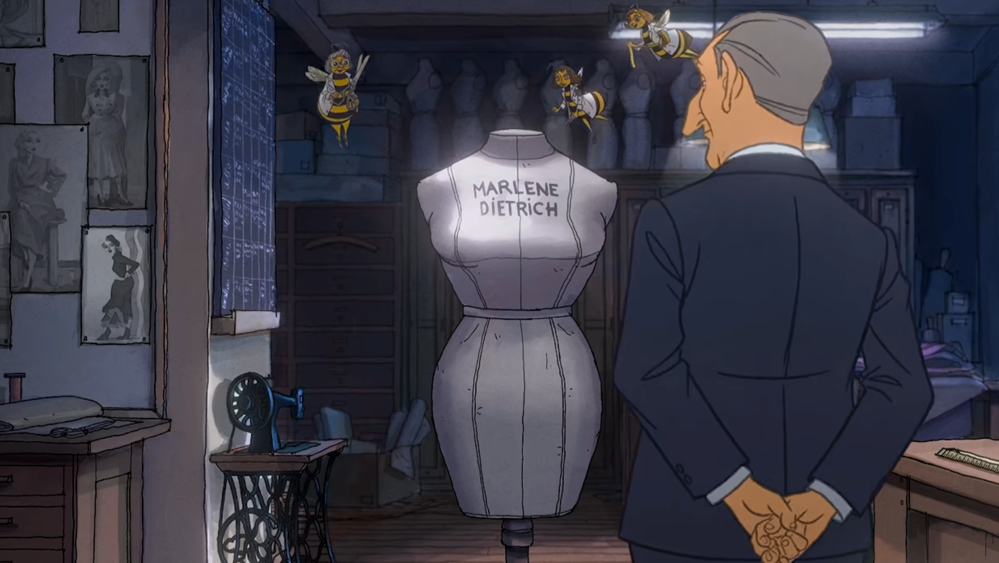
image still from Christian Dior’s Night in Colour, courtesy of DIOR
Dior found itself in the middle of social media scrutiny after being accused of using AI to produce its animated film. “The entire creative process is exactly the same as when I started making animated films. What has changed is the technology” said Sylvain Chomet, the director of Christian Dior’s Night in Colour (and an icon for the animation world), although the ambiguity of his statement seemed to have only added fuel into the fire. Almost ironically, in light of the anticipation for an official statement from Dior, people turned back to Prada’s Drawing Prada and referred to it as an exemplary execution of what Dior wanted to achieve — or perhaps imitate. It seems absurd, considering that in March this year it was Prada that released its Angry Birds campaign, created with Jordan Wolfson, for which the house received backlash over a visible use of AI. Paradoxically, they also didn’t directly admit to using AI at the beginning (later saying it was only used in post-production).
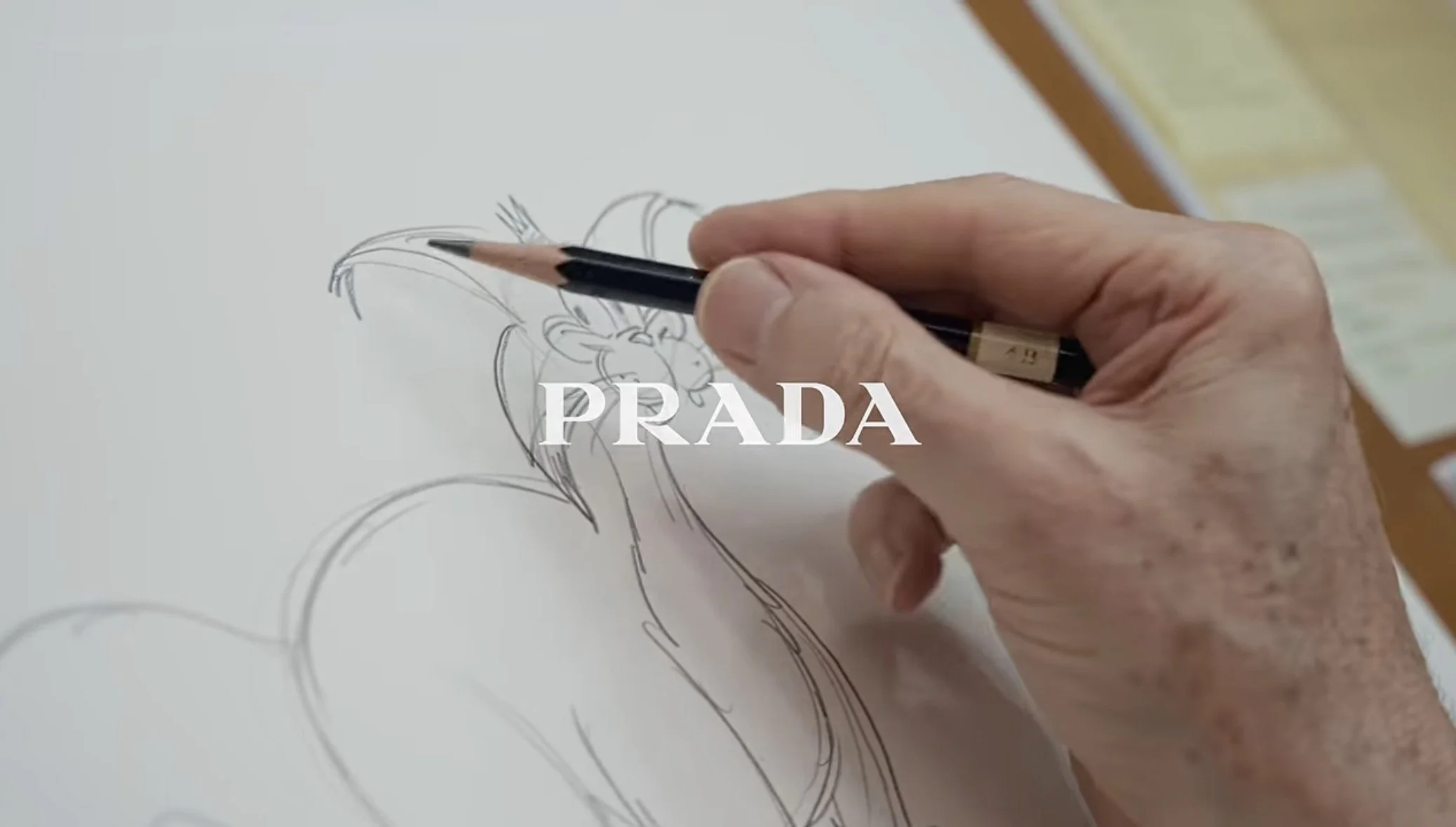
image still from Drawing Prada: Animated by Hand, courtesy of PRADA
But while Prada or Dior hoped for the angry wave to calm down without too much of an impact, some other brands openly embrace the use of AI. Gucci’s Primavera promotional images were accompanied by an arguable response from Demna, who spoke of AI as “simply a tool” after fully generating official images for the campaign, marking a very controversial choice as AI is actively diminishing career opportunities for creatives. Valentino and the De Vain Digital Creative Project turned all of our attention to uncanny and bizarre visuals instead of the bag itself. These are just a few examples.
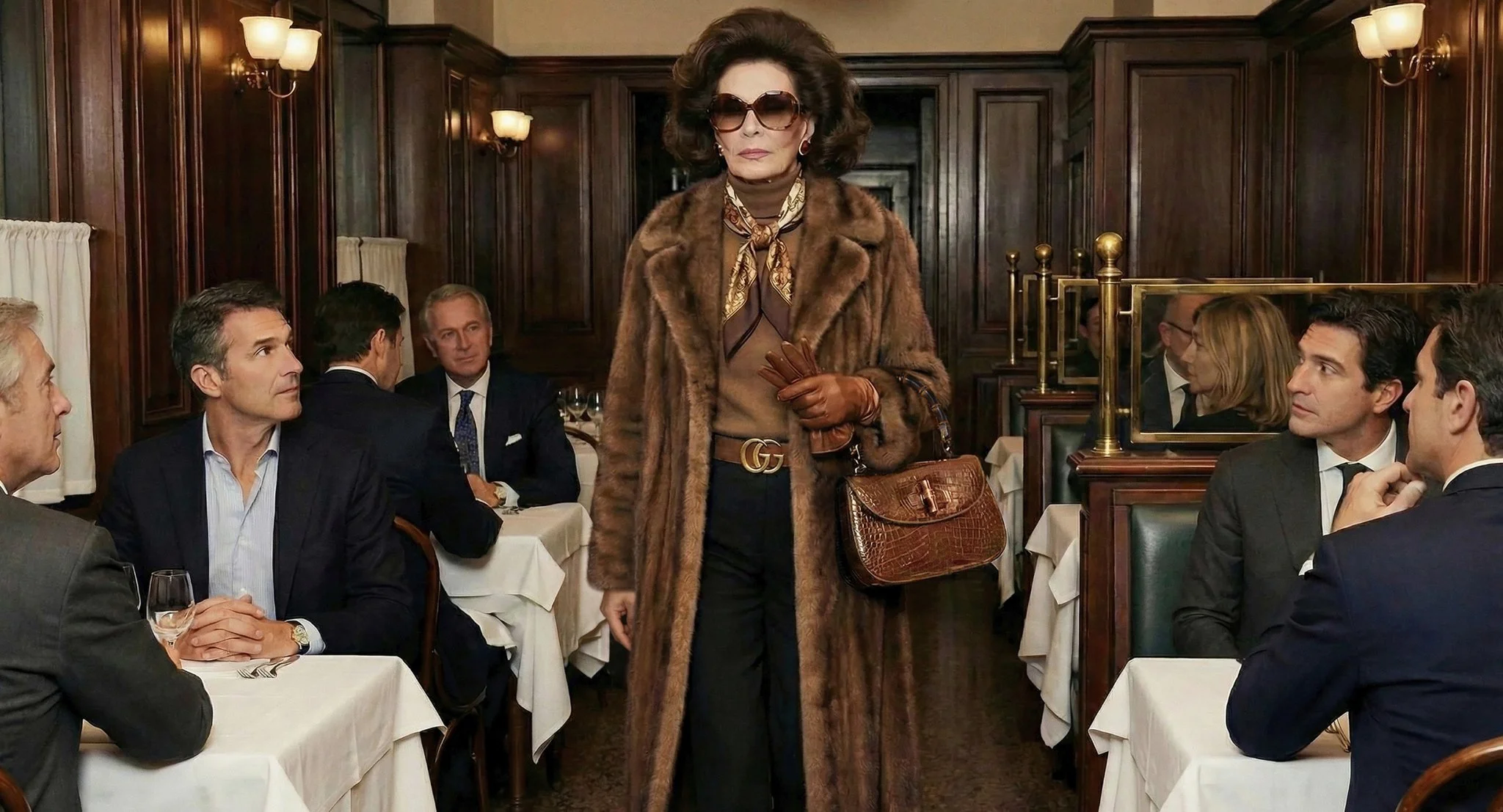
image Gucci Primavera campaign, courtesy of GUCCI
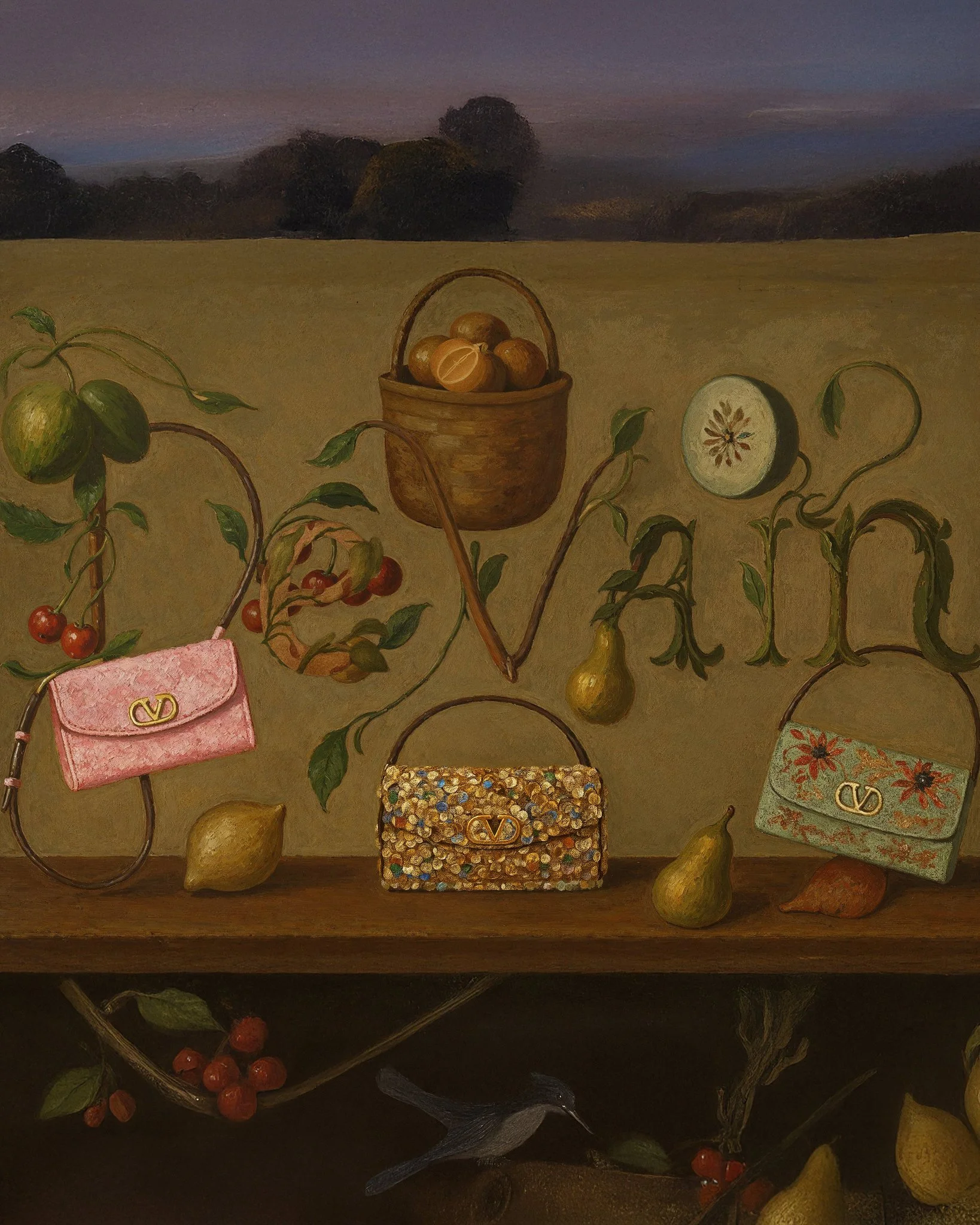
image De Vain Digital Creative Project, courtesy of VALENTINO
Amidst all of this, the animated campaigns landed almost as a relief. After all, in a world where AI slop is thrown at us from all sides (not only in fashion and culture), who wouldn’t appreciate a campaign that goes back to what we were once surrounded by? And maybe that’s the other thing we should look at: why does going back feel so good right now? It seems only natural, given we live in the times where nothing is certain. We are facing environmental degradation, the rise of extremist ideologies and general sociopolitical shifts. And then comes what we hate the most — a fast-paced professional life with no break, which even with tremendous effort doesn’t seem to bring a stable future either.
Balancing this tension between the future and past is difficult for a lot of us; we rarely live in the present. On Monday we plan for the weekend or long for the previous one. In September we already dream about the next vacation destination or sit on the couch, looking through our camera rolls from the month before. We plan for the version of ourselves who will finally have it all figured out, and the more uncertain that future looks, the more we catch ourselves drifting the other way.
Holiday campaigns have always known where to find us. They arrive when we are leaving the year behind us and bracing for one ahead, so they have long been built on nostalgia for the family tables of Christmases we barely remember. This year, that feeling takes a form of animation. A cartoon reaches us on a deeper level. It brings back the Saturday-morning screens and bedtime stories. And when that dreamy world, which was once real, is drawn by hand, it doubles as proof of craftsmanship.
It seems bizarre that what has been so obvious until now — the inseparable link between luxury and craftsmanship — has to be proven at all, or that it might even gain value because of it. But it also bears the question of who can buy it. Luxury has always been reserved for the minority, excluded from what all of us can(not) have. And now that everyone can generate a graphic, a new kind of luxury emerges — the luxury of human creativity and artistry. Will human craft and skills become something we have to pay extra for? What we’re starting to see online already — “Art for the rich, AI for the poor” — seems to be pointing to that new reality, and it might be sooner than we think.
Value has a way of moving once the novelty is gone — photography was once waved away as mechanical, a trick of chemistry. Worth over time is dictated by the scarcity, context and, it appears, a little nostalgia too. Do we, as a society, already experience nostalgia for the time when culture around us was fully human-made? It’s hard to say, as it’s just the beginning of this spiral. Today’s AI visuals’ abundance makes them worth so little, however, in 10 years the striking six fingers and overlapping faces in Dior’s holiday campaign will document the world that is currently our present.
That might be the irony of all of this. Those of us who scroll past AI slop today, longing for the hand-drawn, will one day sit on a couch, looking through the first attempts at generated campaigns, such as Dior’s Christian Dior’s Night in Colour or Gucci’s Primavera, and feel something tender about them. Our sleepless nights won’t change much, we will still be scrolling through the past to start dreaming about the future. For the majority, the feed will stay full of generated images, at least for a while. All of this will be happening while luxury sells the hand-crafted as the rarest thing there is. Nostalgia will be the death of us, and the hand-made will probably belong to the few who can afford it.