
PARIS FASHION WEEK MENSWEAR SPRING/SUMMER 2027: DAY 2
DIOR
review by MAREK BARTEK
all images courtesy of DIOR
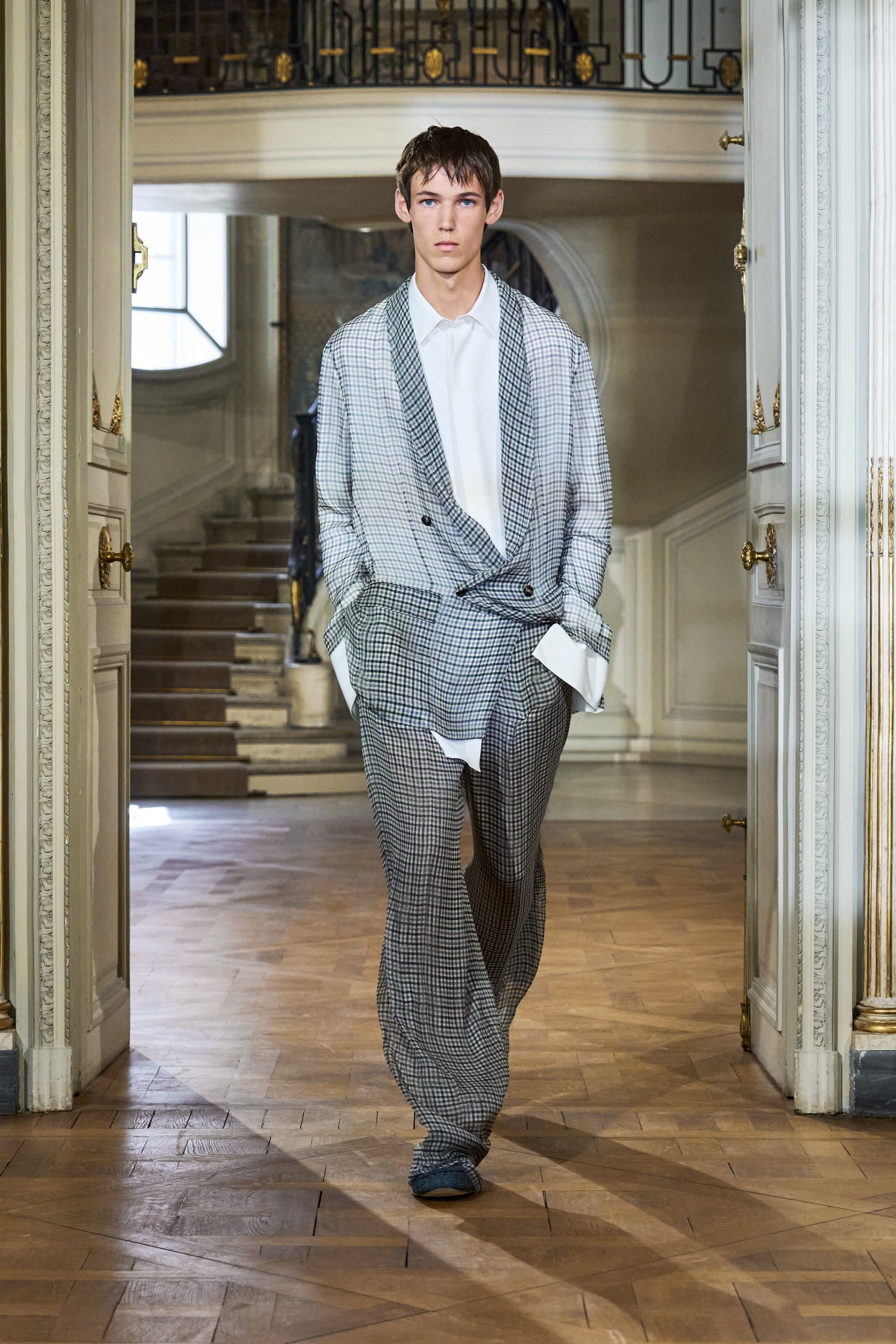
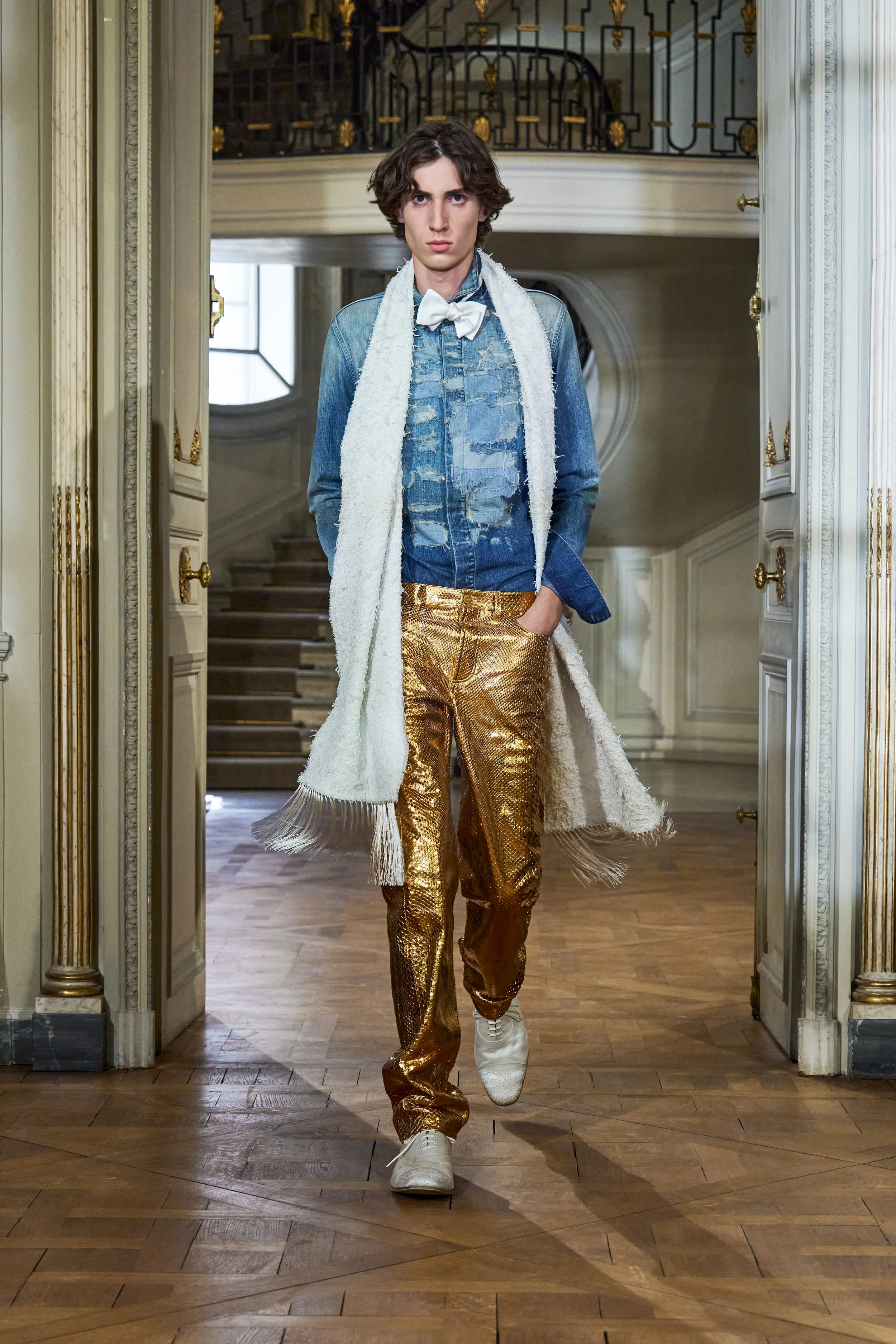
Somewhere between black tie and breakfast in the morning after sits Jonathan Anderson’s latest Dior collection. It invites into the world of boys who grew up in stately homes, disappeared into the library after dinner with a bottle of whisky, and never quite made it to bed. By morning, bow ties hang loose, tuxedo jackets are swapped for dressing gowns, cashmere sweaters are beginning to ladder, and yesterday’s glittering trousers somehow still feel appropriate. The mind might automatically go to Saltburn as a point of reference. Anderson, however, seems less interested in privilege as a subject than as a dress code. Still, the collection raises an interesting question: can the aesthetics of the bourgeoisie ever be fully separated from the values they have historically represented?
“For me, the collection is about what happens towards the end of a night out when everything gets a bit looser. It’s this idea of a soirée turning into a house party,” he explained. Presented inside the Musée Nissim de Camondo, itself awaiting restoration, the setting reinforced that mood of a grand Parisian home caught in an in-between state — the perfect backdrop.
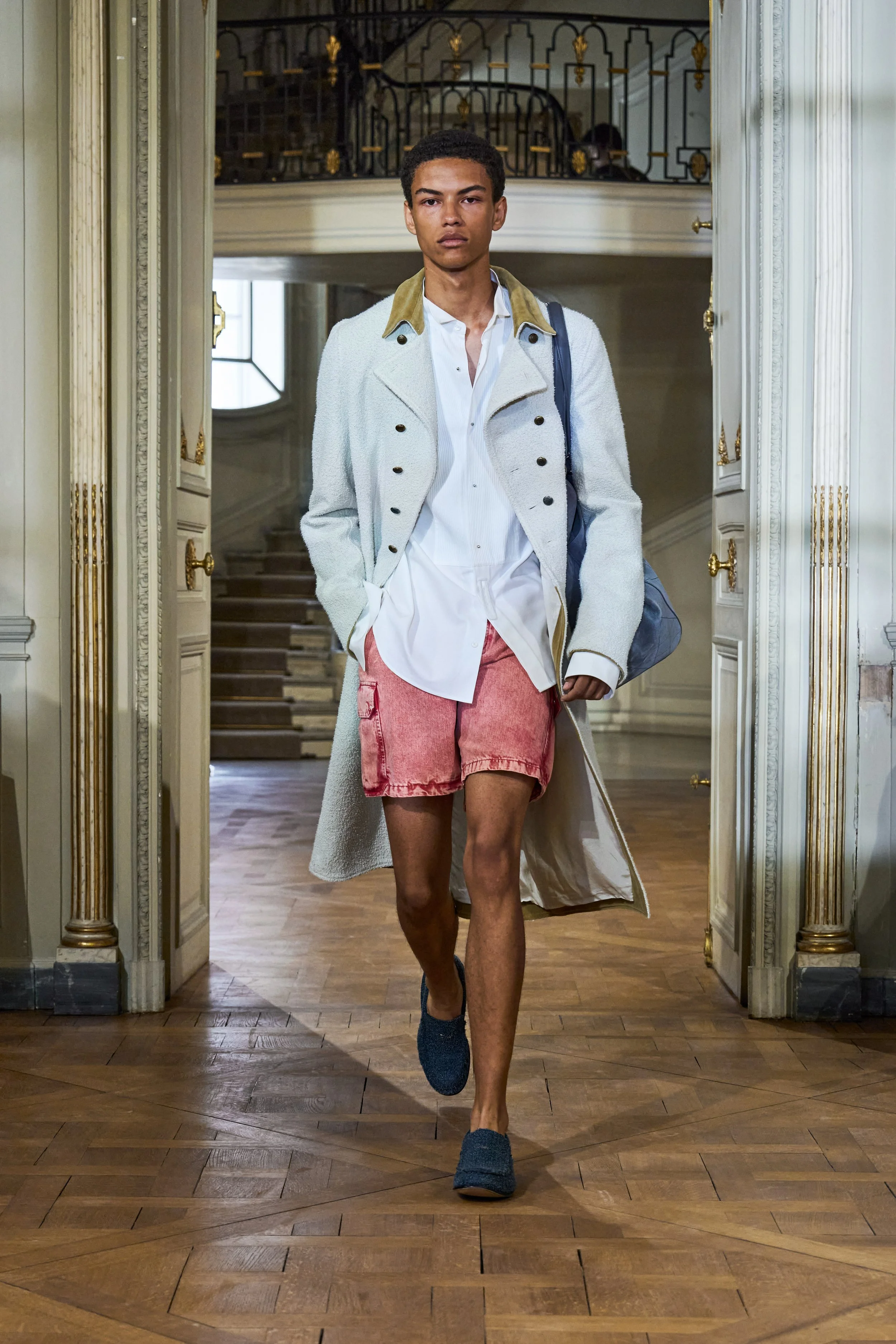
Anderson has built this collection around contradiction. Traditional tuxedos became bomber jackets, transparent silk chiffon featured printed pinstripes and houndstooth instead of woven cloth. Tailored coats appeared over pink denim shorts, while dressing gowns, trench coats and formal outerwear almost seamlessly bled into one another. The silhouettes remained recognisably Dior, yet each look contained a small disruption that stopped it from becoming too predictable.
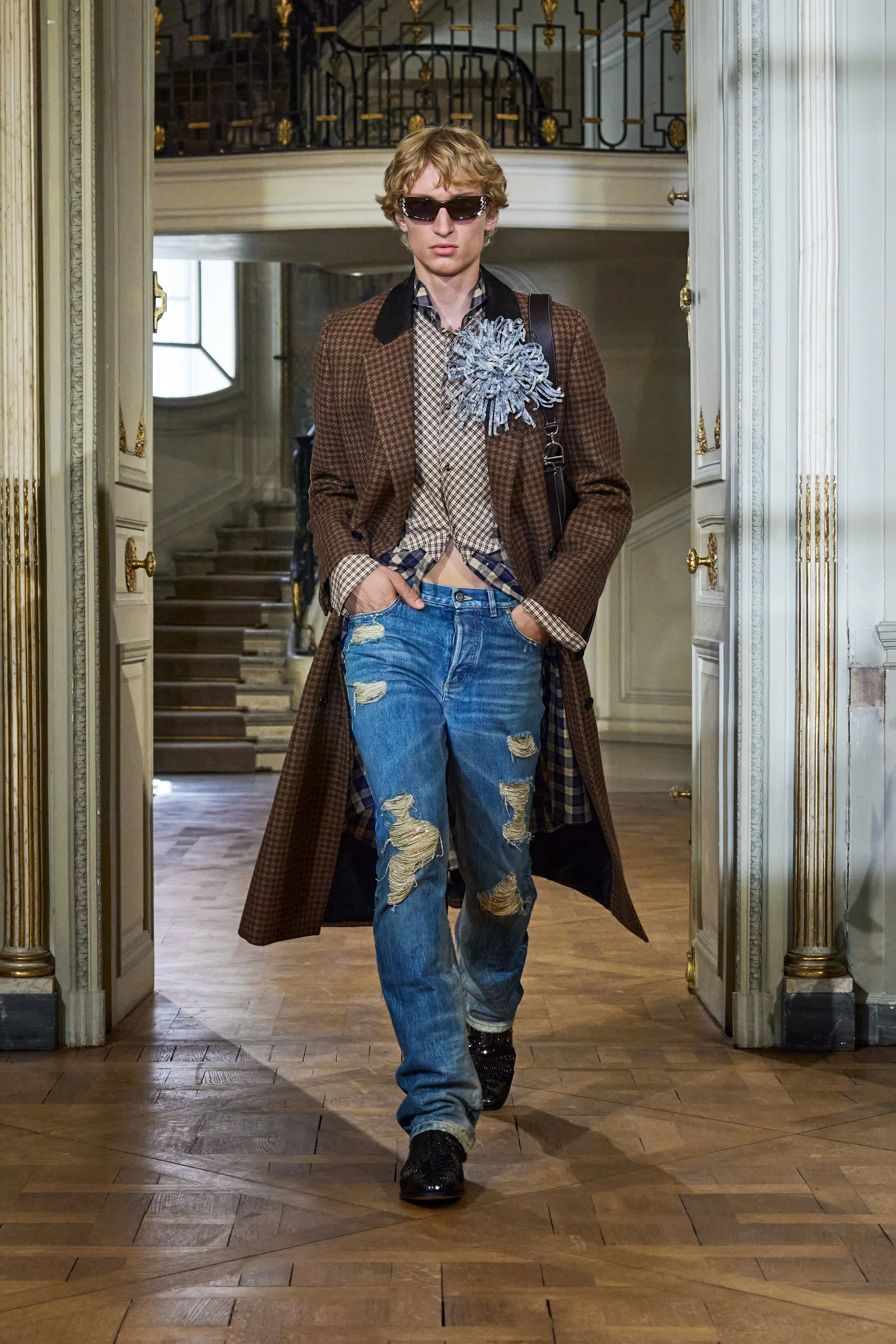
“There’s a fusion of the ideas and themes from the last two men’s collections – something quite formal becoming undone – a tuxedo meets a ripped jean, a tailored coat is paired with pink denim shorts,” Anderson said. It sounds almost too simple, but the success of the collection lies in its delicate play of the two worlds. Rather than fully dismantling Dior’s codes, Anderson gently nudges them off balance. A shawl collar suddenly resembles a blanket, sequins imitate five-pocket denim, and an embroidered silk vest recreates a scarf motif from Dior’s 1979 haute couture collection.
The humour is subtle but omnipresent. Crystal-covered jeans masquerade as everyday denim, tiny ladybirds wander across elaborately embroidered boots. Perhaps the clearest example came in a black embroidered coat, completed entirely by hand over three weeks. It was extraordinary in its execution, yet felt so aligned with the rest of the collection without ever overshadowing it. Even the oversized woven blanket tote introduced near the finale felt as though someone had absent-mindedly picked up the nearest throw before leaving the house. Almost every look contained a detail worth looking twice at.
What makes the collection particularly compelling is that it never mistakes carelessness for rebellion. These aren’t outsiders challenging the establishment. They are, unmistakably, its beneficiaries. Even when knitwear frays or denim tears, everything remains impeccably made, rooted in couture-level craftsmanship and Dior’s history. The clothes never stop looking expensive; they simply stop looking perfectly stiff.
That balance between irreverence and respect of past has quickly become one of Anderson’s defining strengths at Dior. He understands that the house’s heritage doesn’t need to be fully rewritten to feel contemporary. The collection may never answer whether bourgeois aesthetics can exist independently of the class they signify, but it certainly proves they remain fertile ground for fashion.
LEMAIRE
review by FRANCESCO PIZZUTI
all images courtesy of LEMAIRE
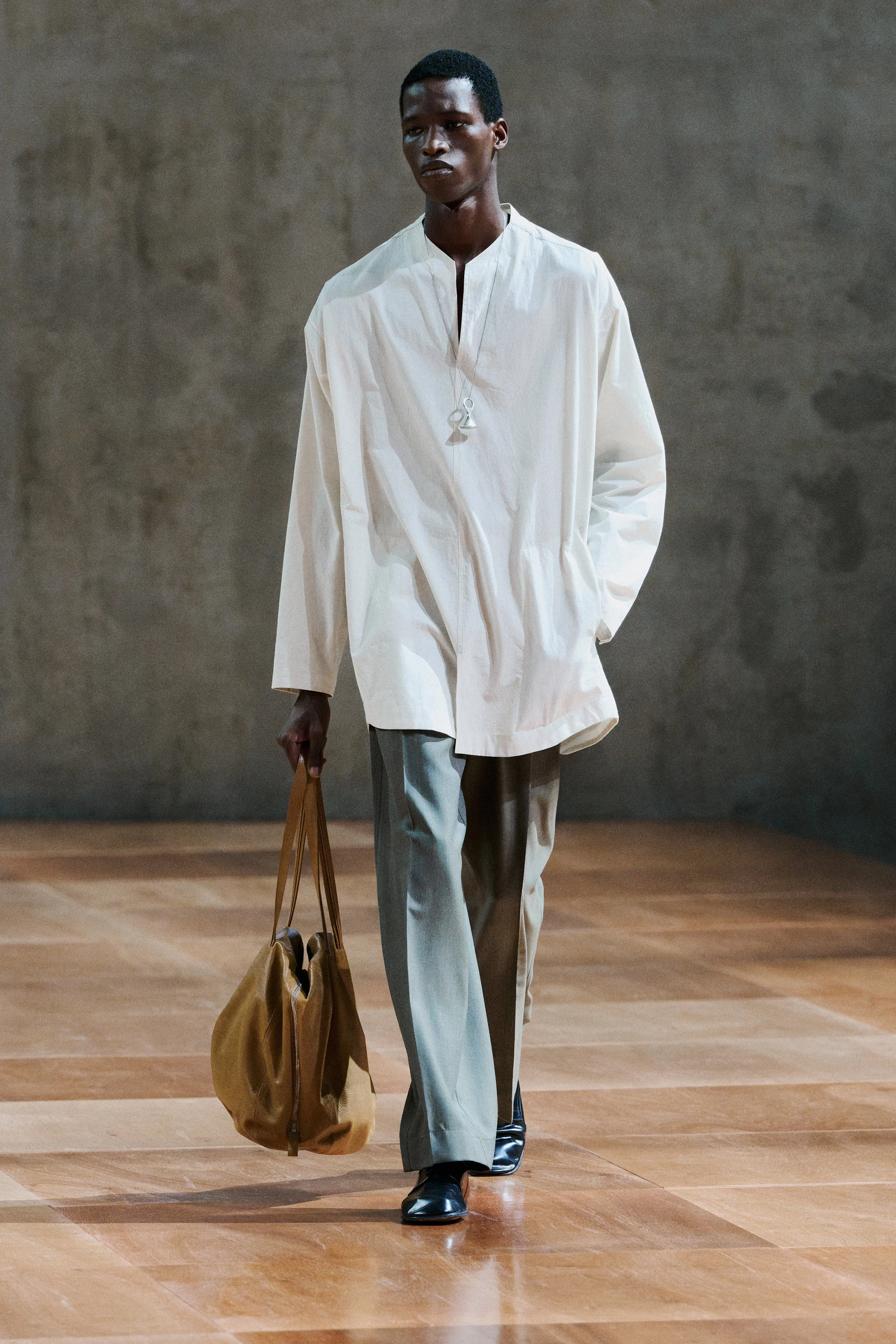
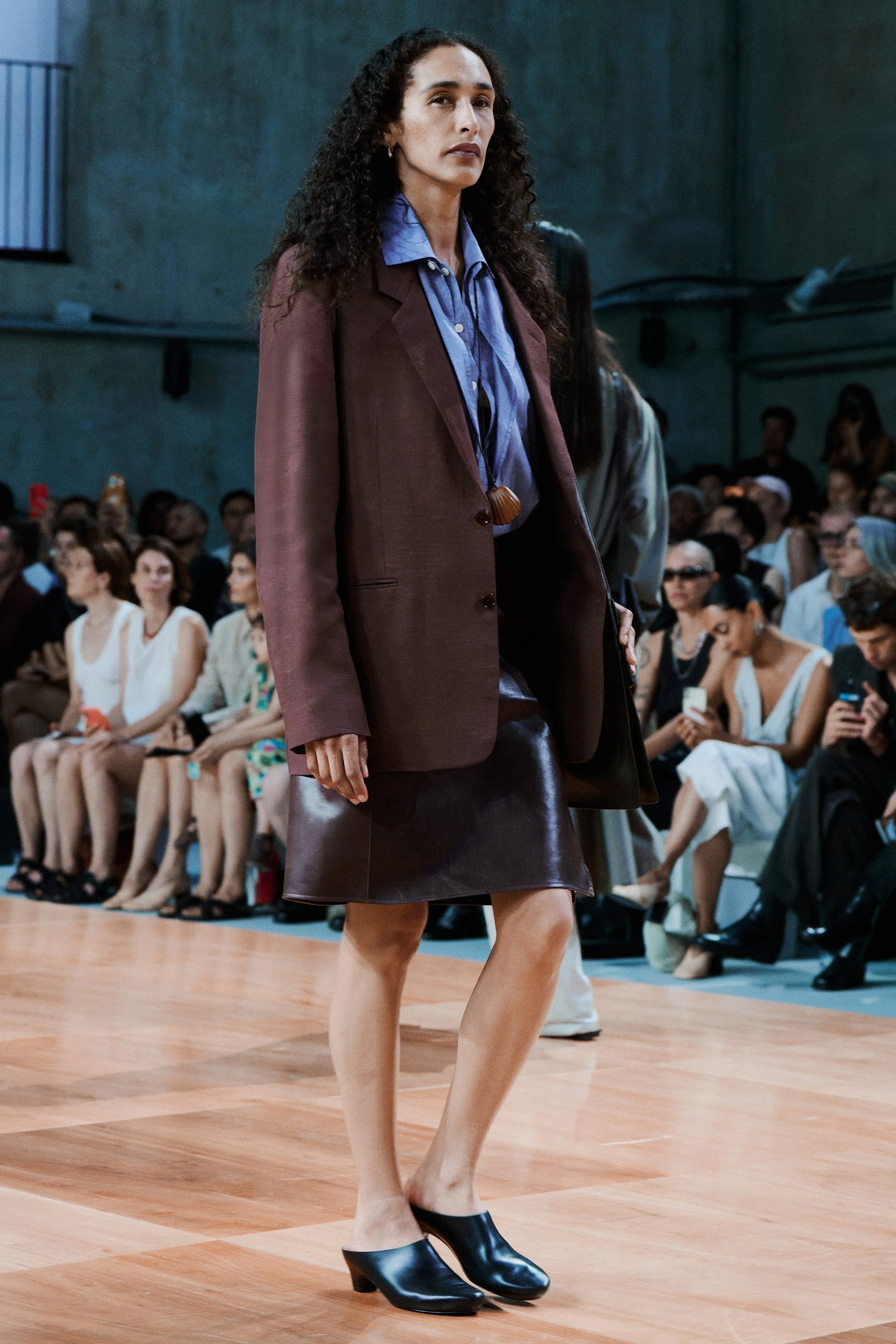
Lemaire’s Spring/Summer 2027 collection is built around the idea of collecting and assembling disparate references, and that sense of curiosity comes through clearly. The collection feels open-ended, fluid, with pieces that seem designed to be interpreted and worn differently by each person.
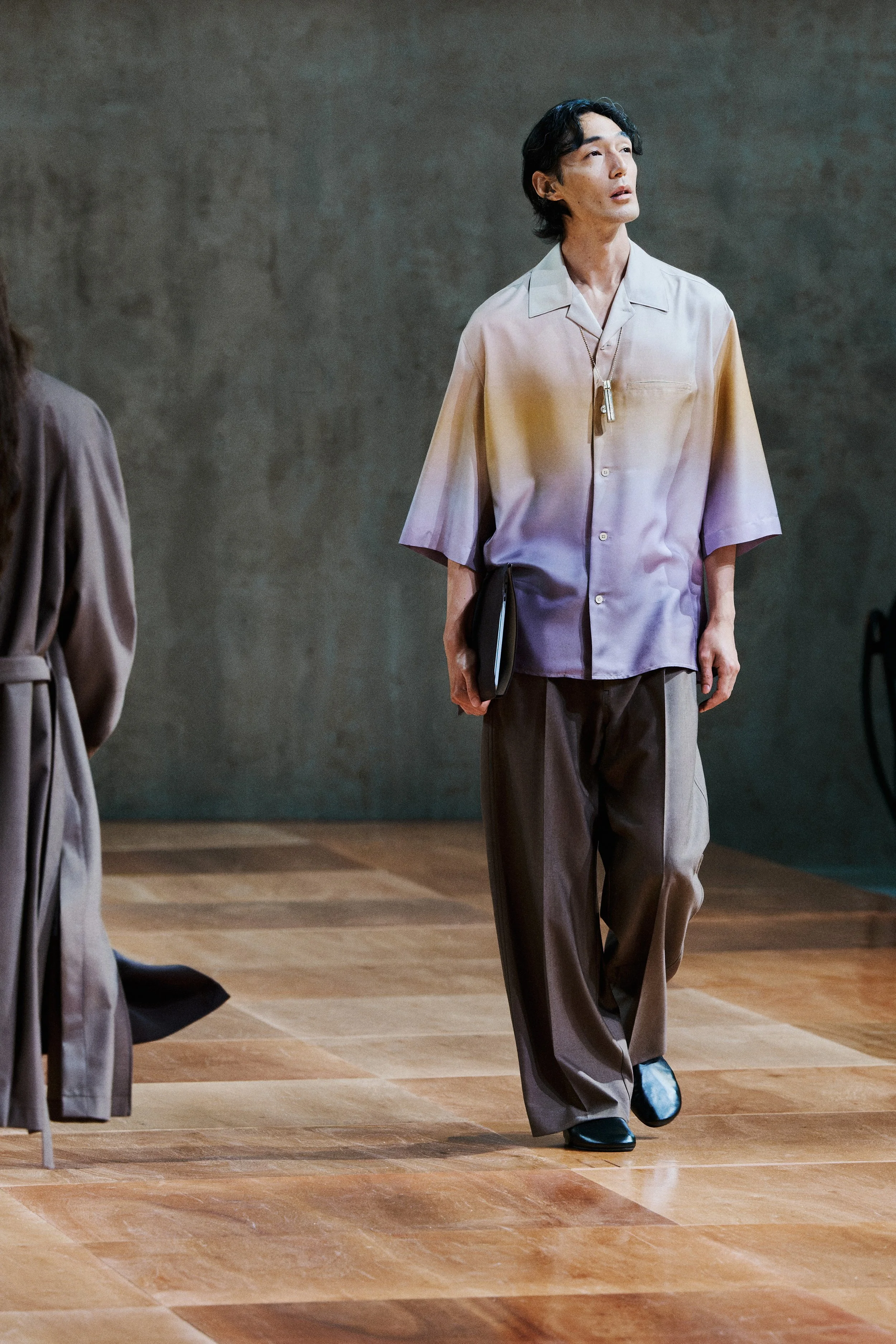
The strongest aspect of the collection is the balance between structure and fluidity. In the menswear, tailored silhouettes sit next to softer shapes, while materials shift between matte, weathered finishes and subtle shine. The tropical inspiration is present but understated, expressed through prints and lightweight fabrics rather than obvious resortwear clichés. Pieces like the yukata-inspired wrap shirts and leather Mandarin jackets are interesting in the way they fit in the collection without prompting any overly conceptual remark.
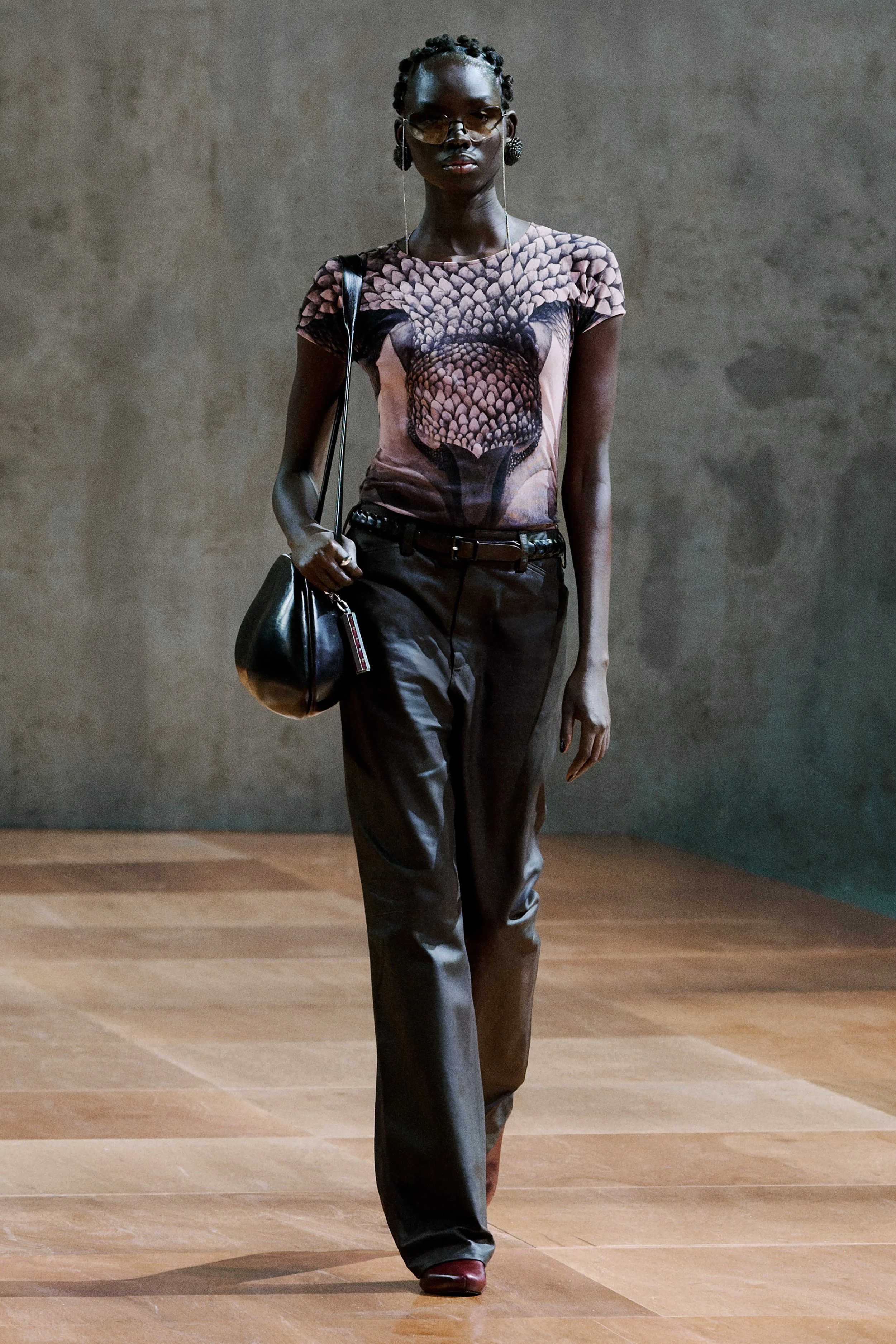
The womenswear offered a softer, more romantic counterpoint, at times with an almost adolescent sensibility, drawing on the openness of the 1970s. Claudine Wick’s dreamlike prints stretched across transparent mesh, tracing the body like a second skin, sensual and quite unexpected.
What makes Lemaire compelling is its attention to the smallest details, where every element calls for a second glance. With pine-cone earrings, hidden colour linings, bags layered over garments, and vice-versa, it feels like a world you want to spend time in.
ACNE STUDIOS
review by FRANCESCO PIZZUTI
all images courtesy of ACNE STUDIOS
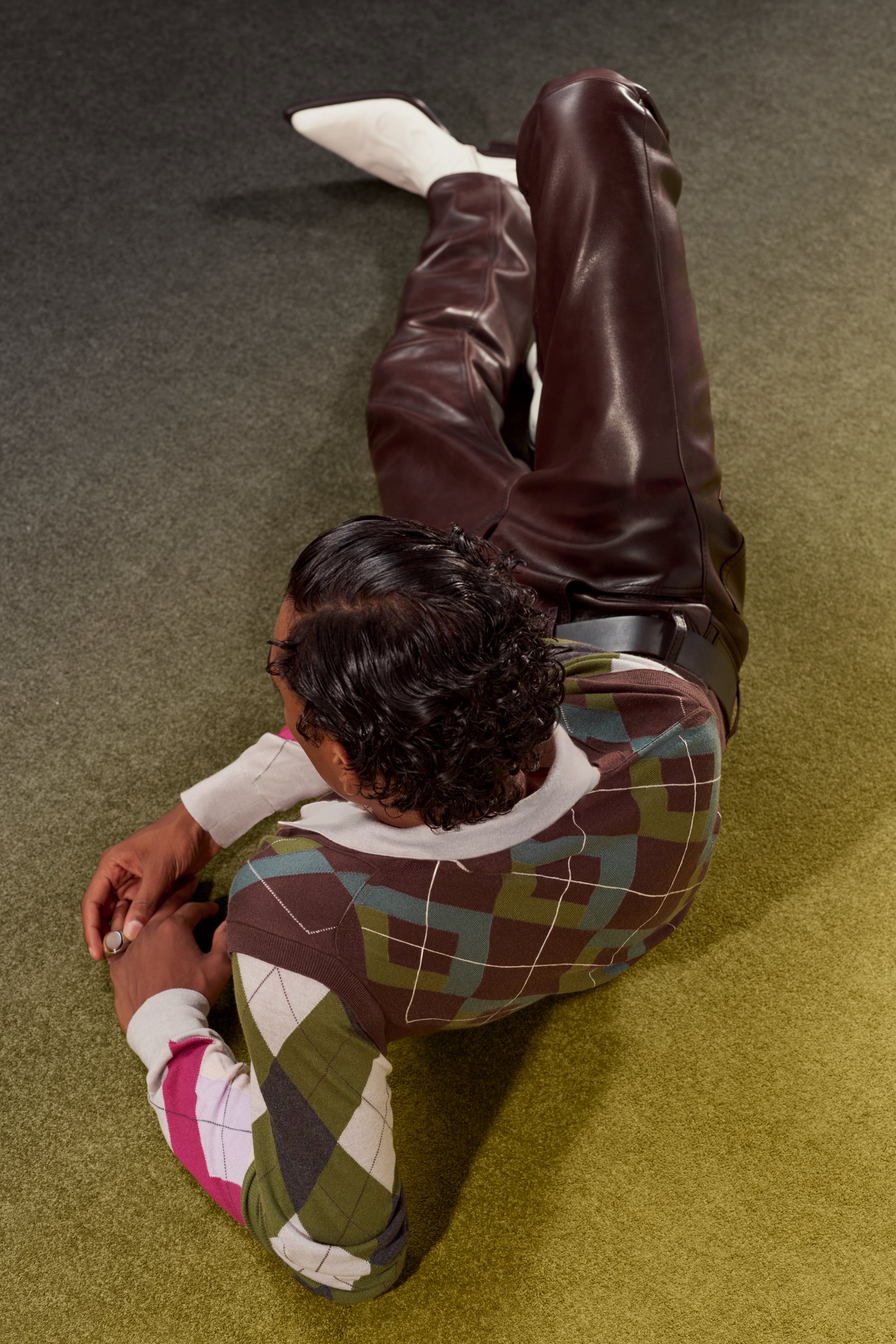
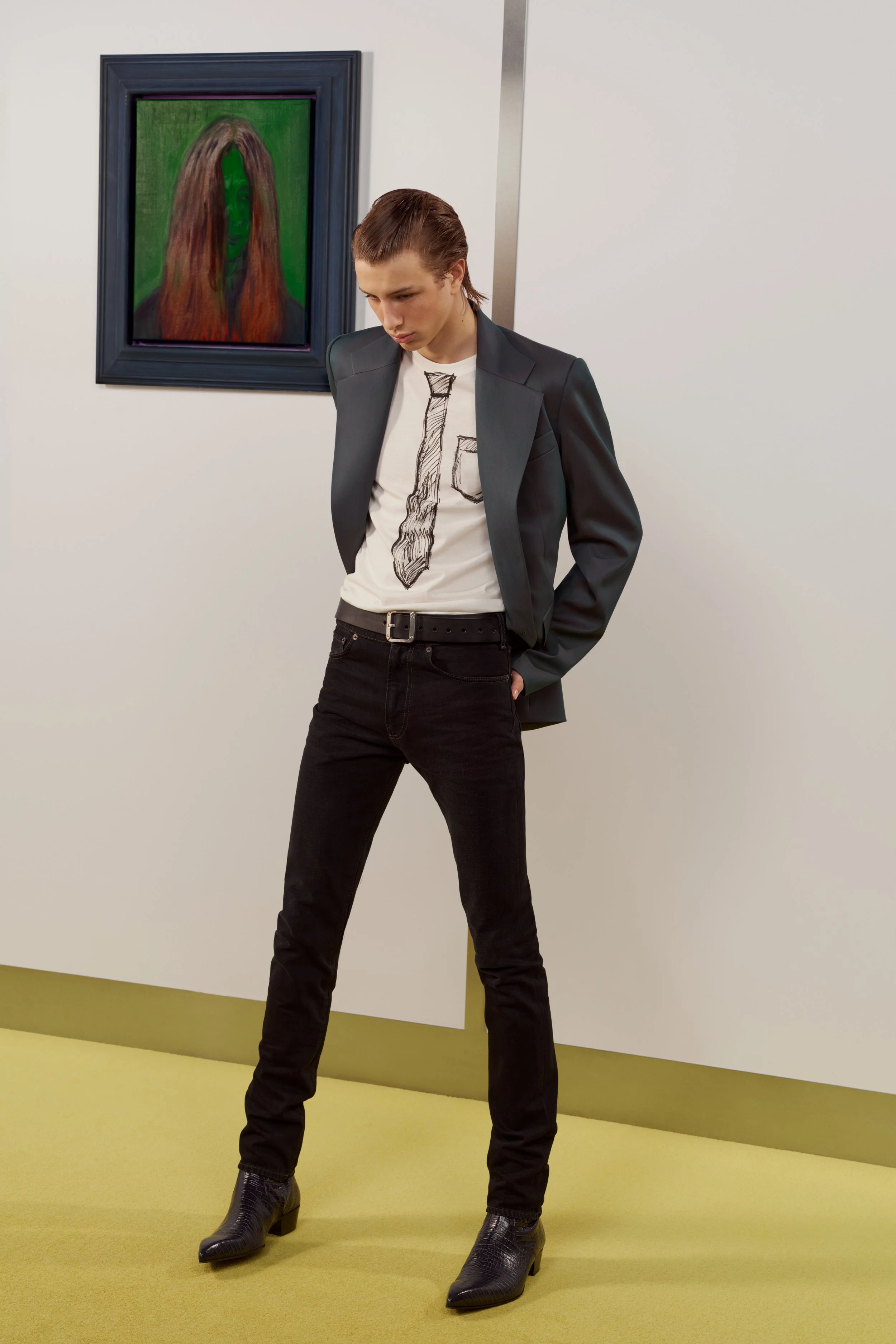
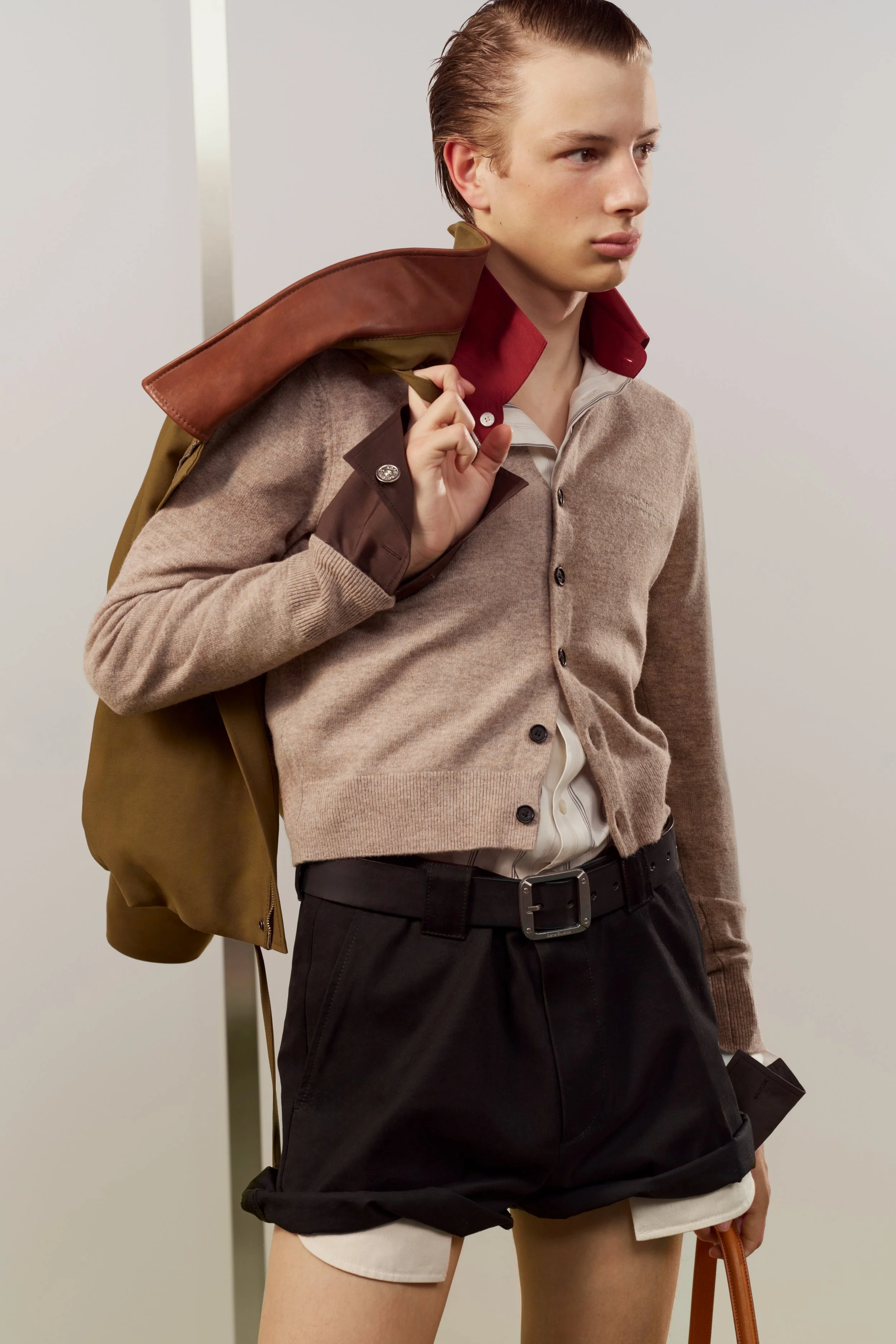
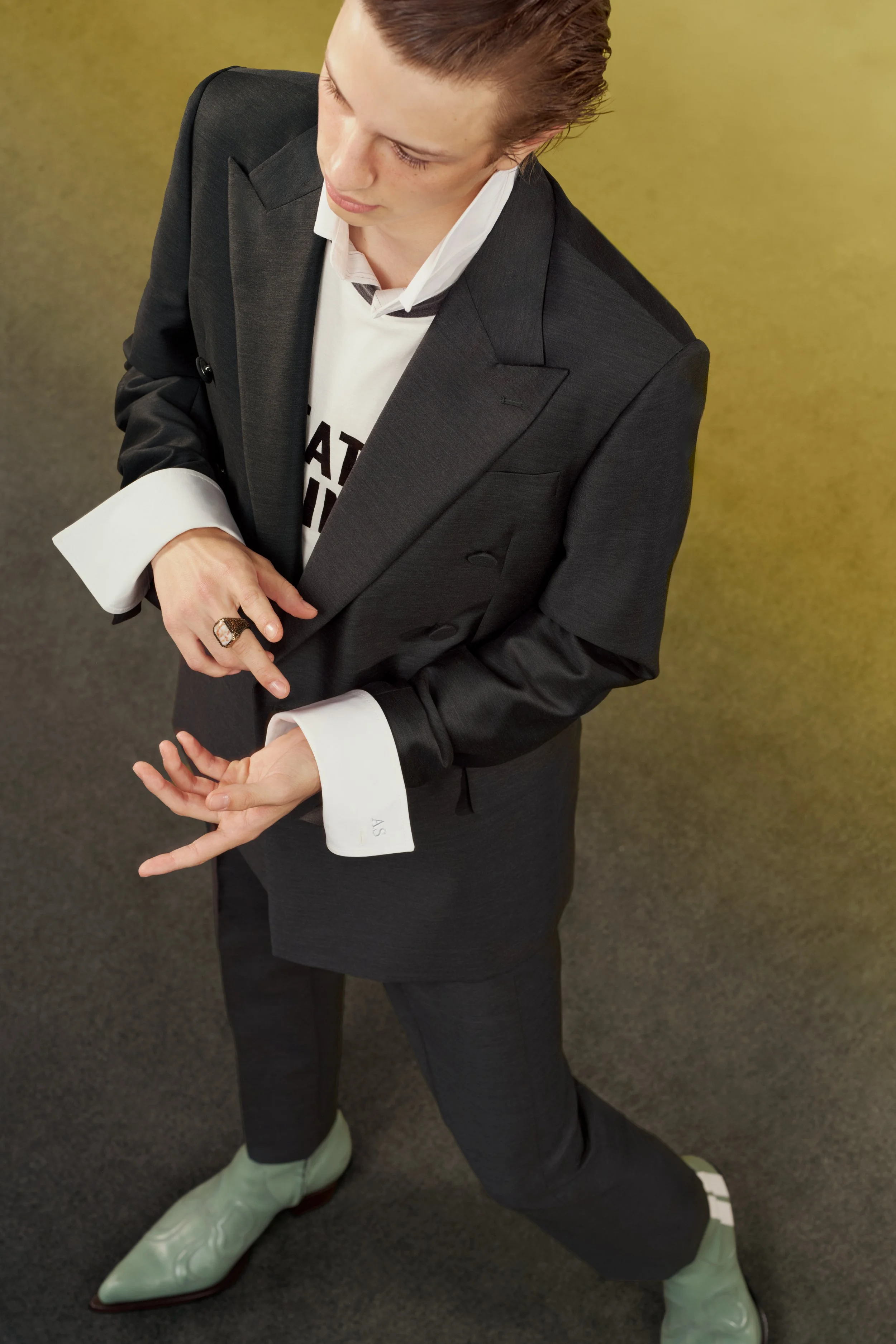
Rules, forms, protocols, and strict binaries are incredibly fertile ground for fashion and creativity, and Acne Studios knows that very well. For Spring/Summer 2027, in fact, it turned its attention to the office and its subversion. Rather than treating corporate dress as something restrictive, Jonny Johansson approached it as a space where people subtly negotiate identity, status, and individuality every day. The result is a collection that delves into the hidden, the masked, the personalities enclosed behind workwear.
The collection doesn’t really settle into a single character. A tie is reduced to a trompe l’oeil sketch on a T-shirt, suits are disrupted by clashing patterns, and leather jackets often replace tailoring altogether. There is a constant mixing of references between 1950s rockabilly, 1980s office attire, inherited knitwear, and denim in every possible variation. While that could easily feel chaotic, it mostly comes together through Acne’s familiar sense of irreverence and transgressiveness that renders it incredibly charming.
Some looks are stronger than others, particularly when the collection leans into its awkwardness rather than trying to appear polished. The studded denim, exaggerated cowboy boots, and layered jersey pieces capture that tension between wanting to fit in and wanting to stand apart. At times, the office concept feels more like a loose starting point than a fully developed thought, yet the idea of performance persists nicely throughout.
3.PARADIS
review by FRANCESCO PIZZUTI
all images courtesy of 3.PARADIS
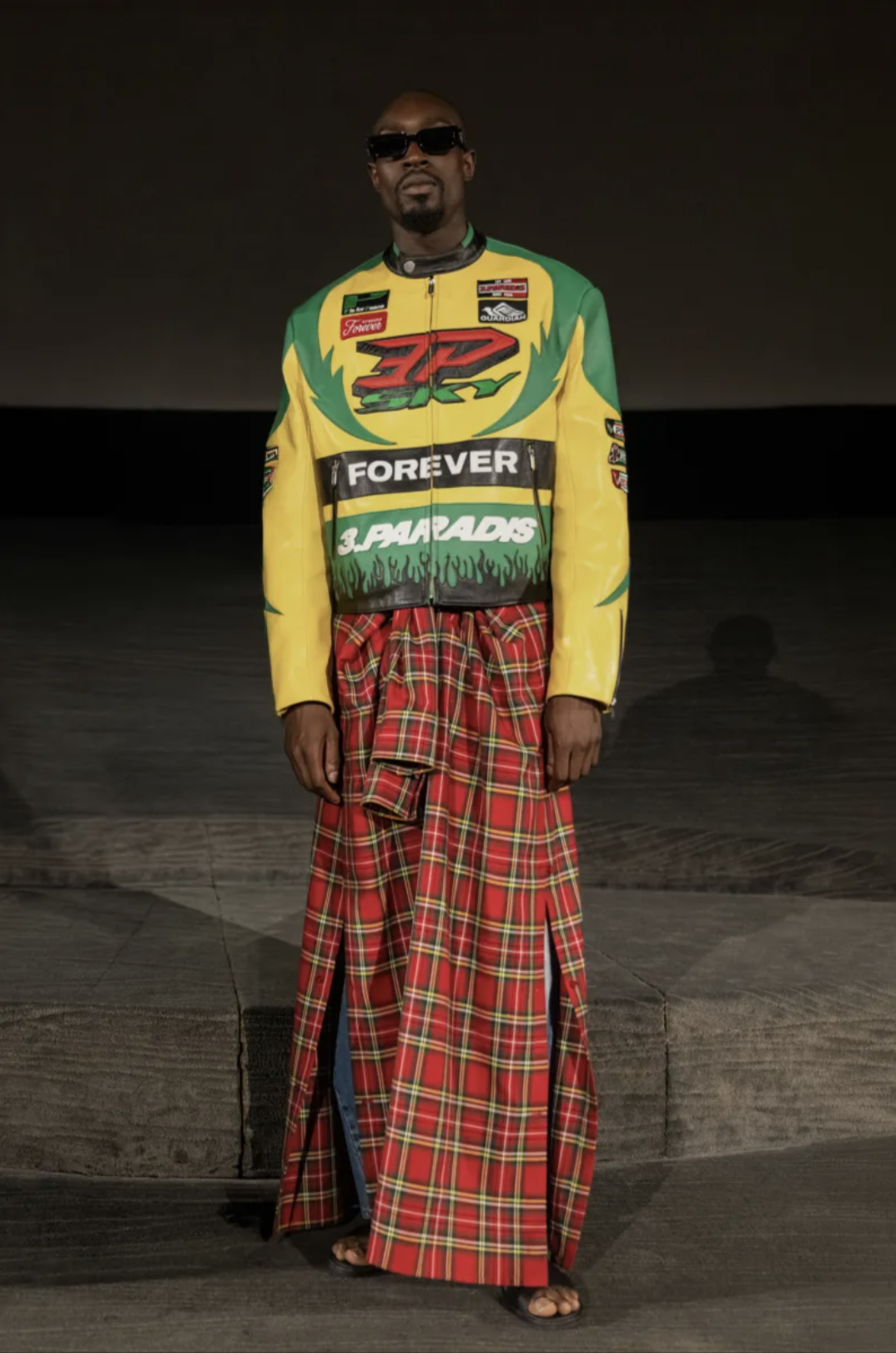
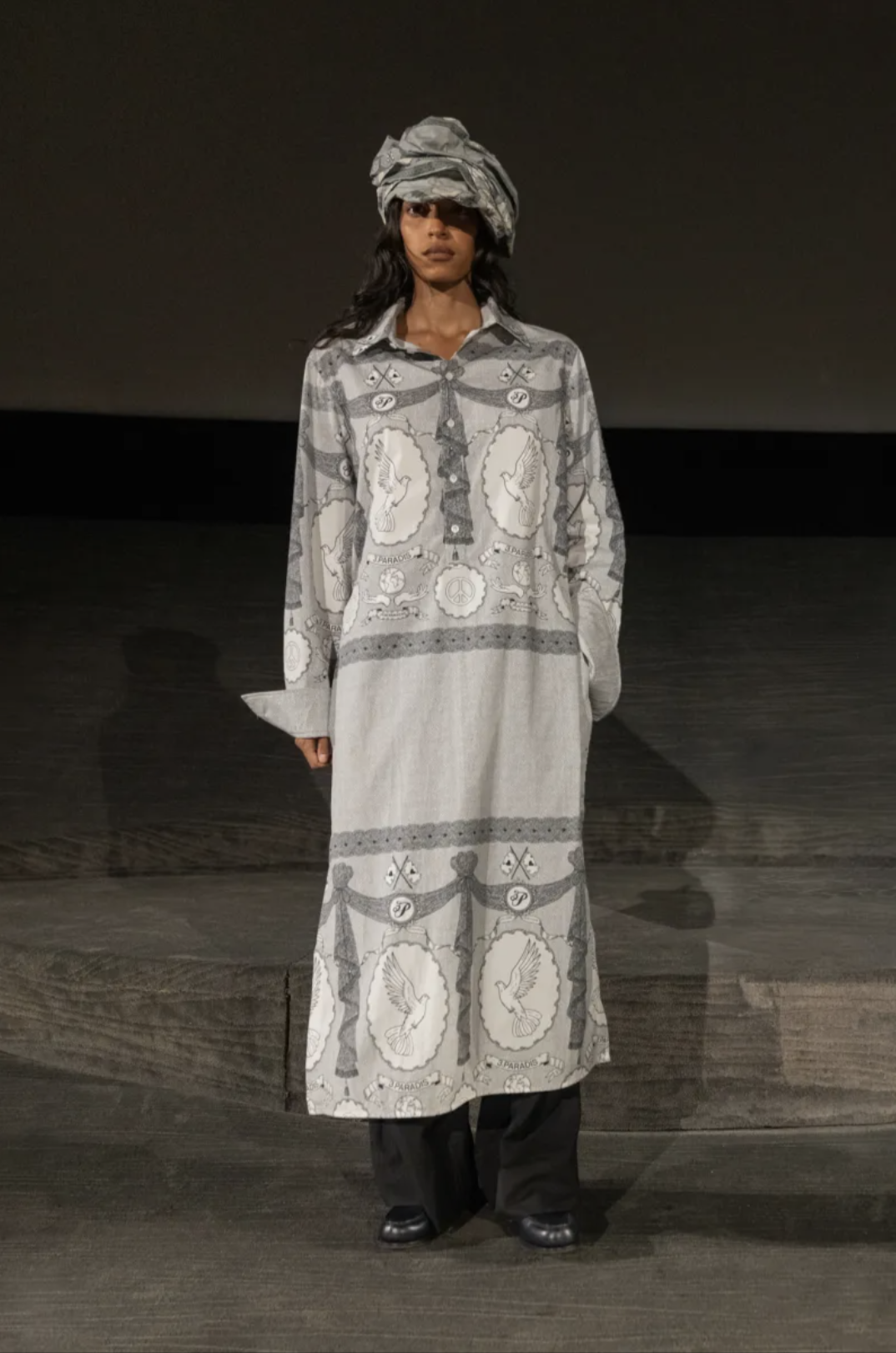
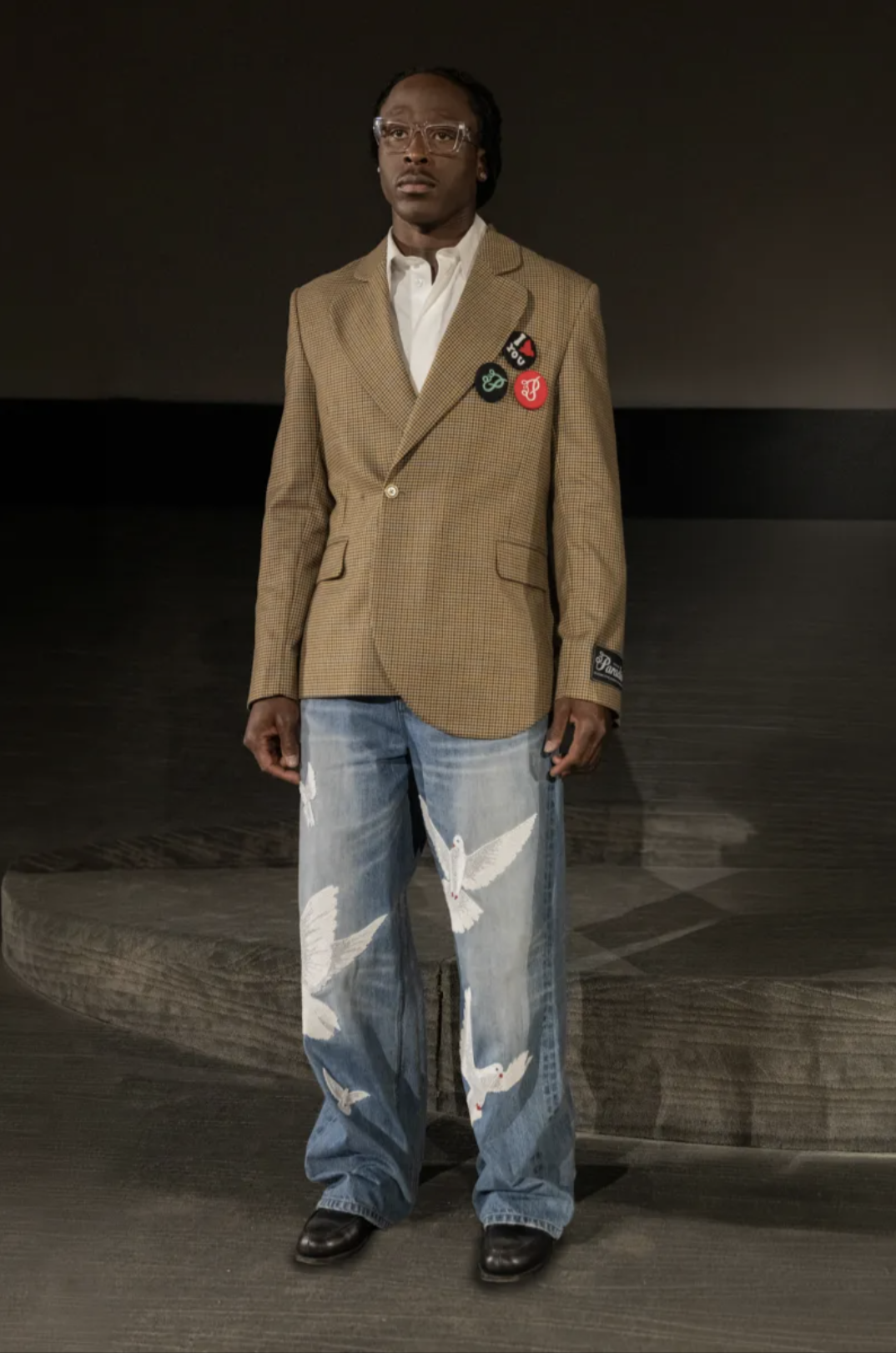
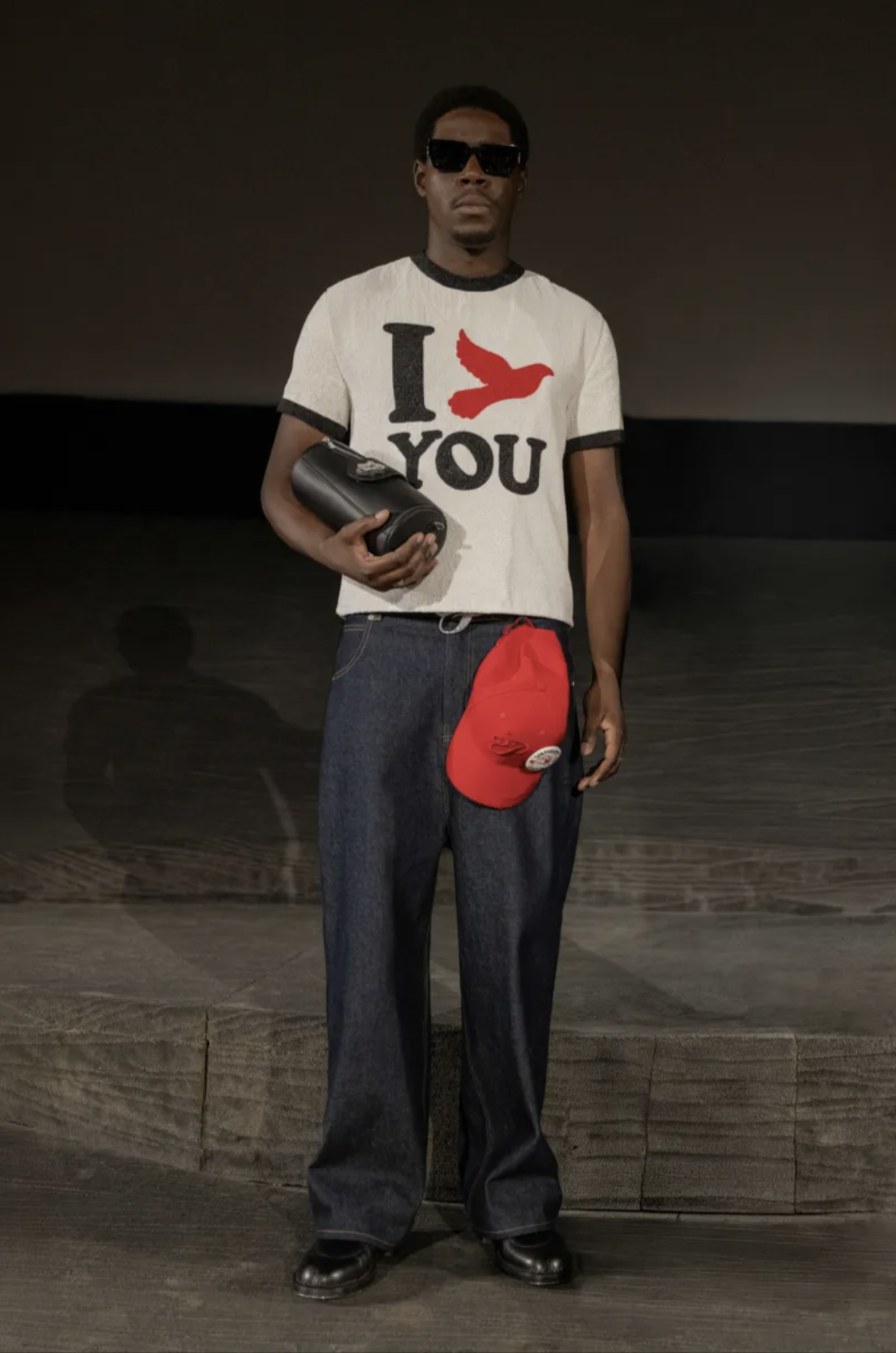
This season, 3.Paradis chose to confront the world directly with a collection titled PEACEMAKERS. Presented through a documentary, the collection asks a deceptively simple question, one that stays long after the clothes: if war can be organised, can peace be organised too?
Emeric Tchatchoua’s fictional movement of “Peacemakers” functions as both narrative device and a political metaphor, imagining a network of ordinary people committed to pacifism. At a moment when images of conflict feel inescapable and global tensions continue to escalate, the collection’s insistence on peace feels necessary, and its directness and materiality feel refreshing.
The collection develops a visual language of clear recognition: dove motifs, checkered fabrics, cloth caps, shirtdresses, and slightly off-kilter tailoring become signs of belonging to a community built around care. From the beaded “I *dove* YOU” T-shirt to the recurring embroidered “P”, familiar symbols are conveyed into gestures of solidarity.
There is a level of conviction and coherence to this collection that is truly admirable. With its storytelling, PEACEMAKERS seems to ask what responsibility might fashion have in imagining alternatives to current events. In that sense, its most important contribution is not the clothes themselves, but the conversation they attempt to start.
EGONLAB
review by MAREK BARTEK
all images courtesy of EGONLAB
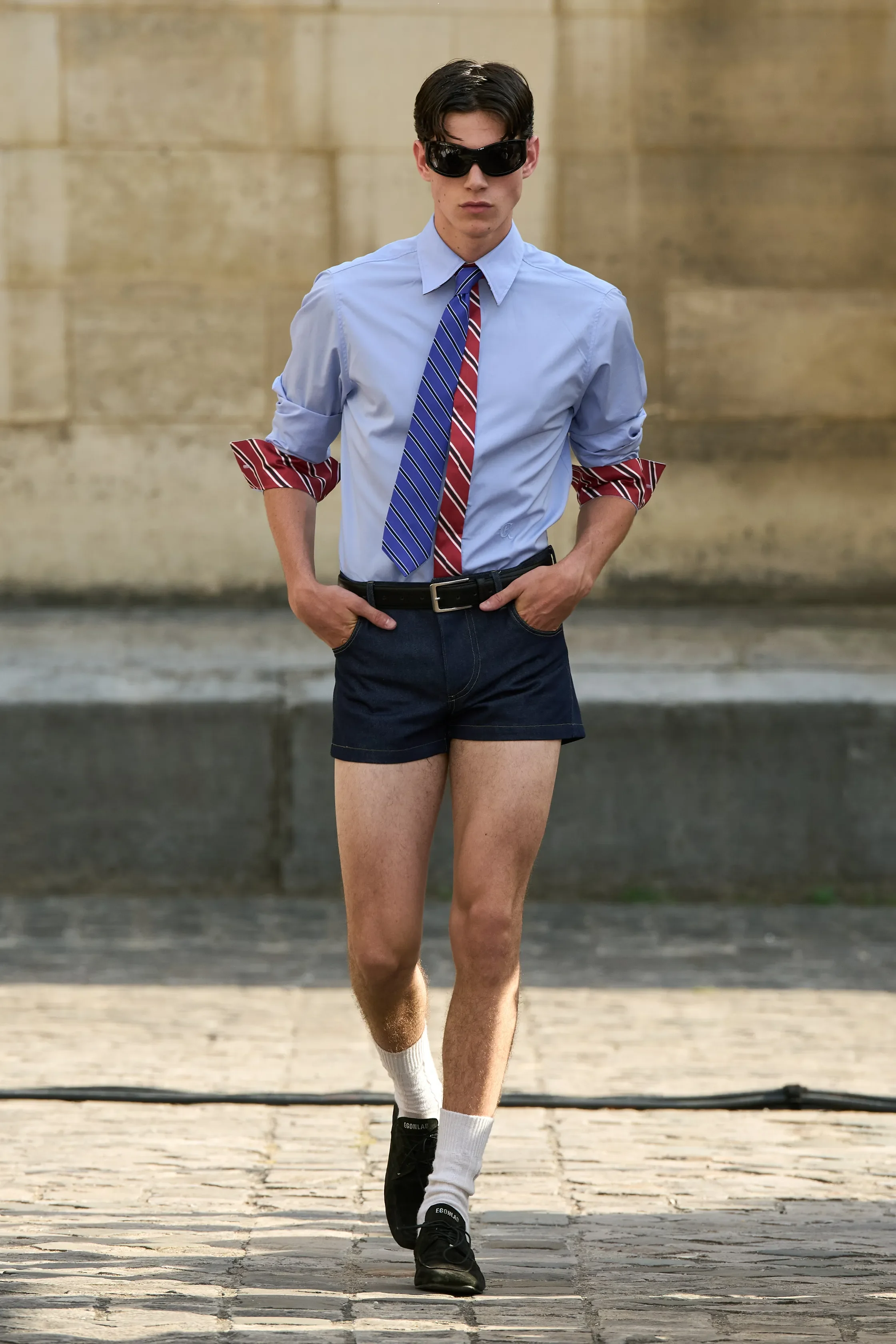
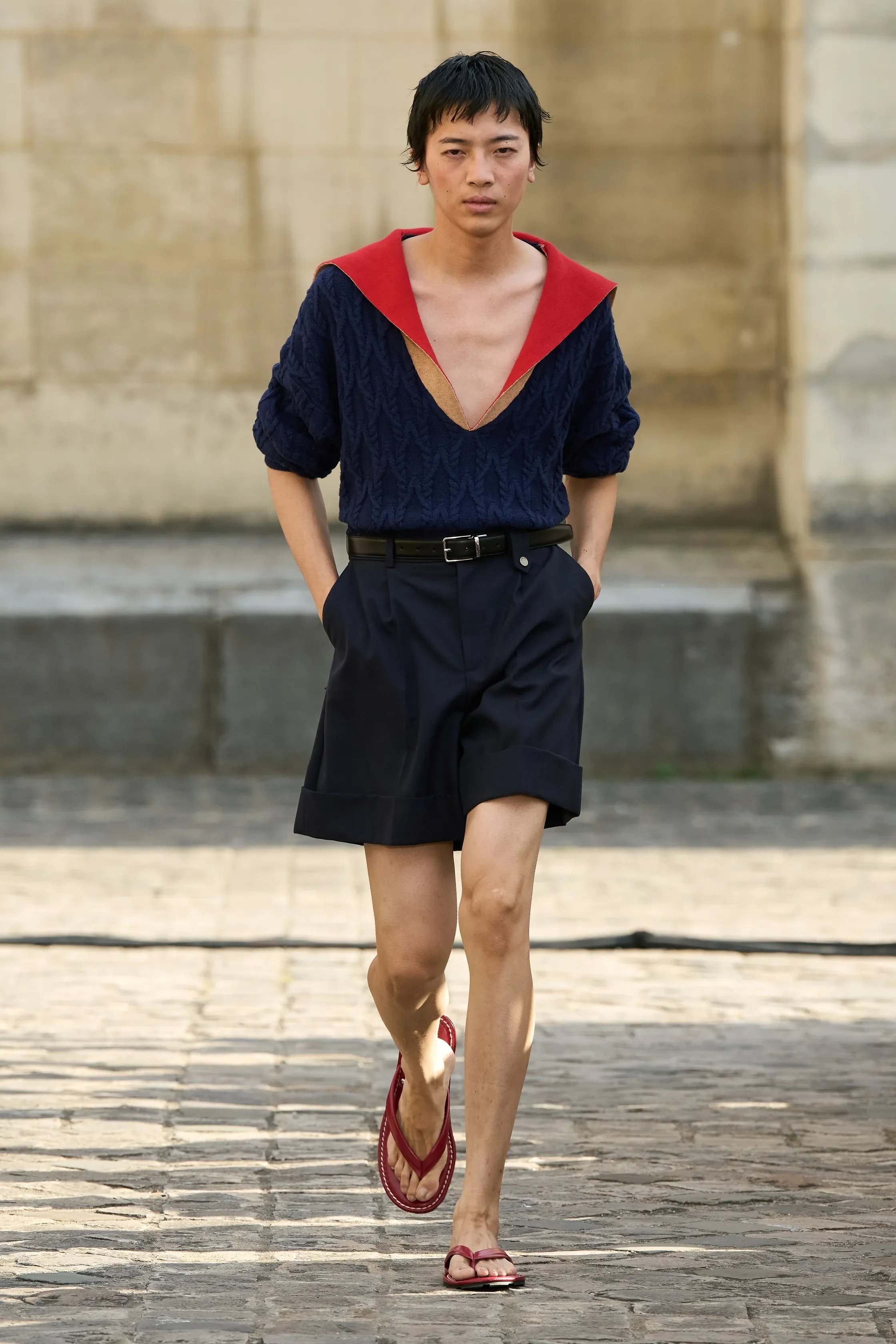
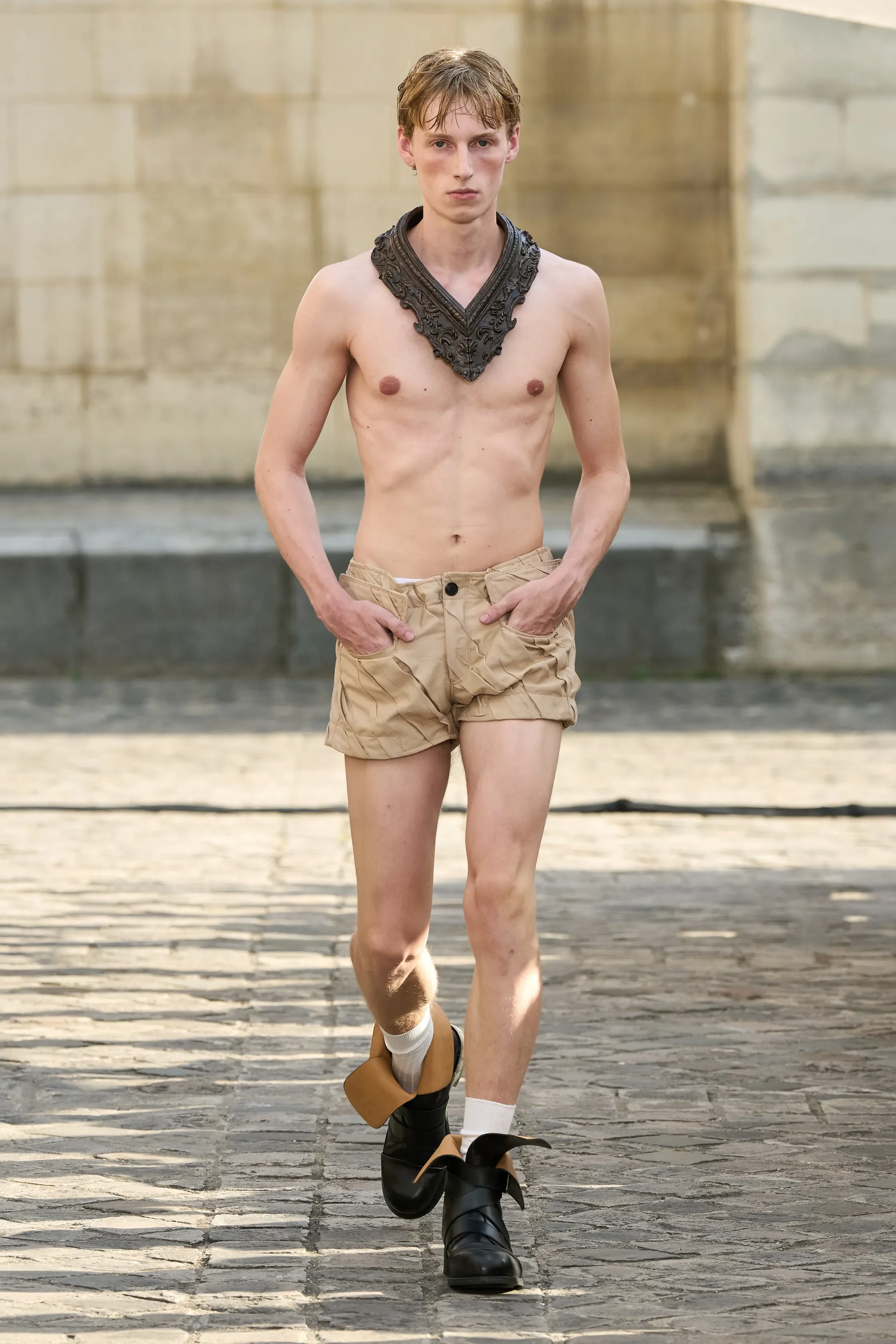
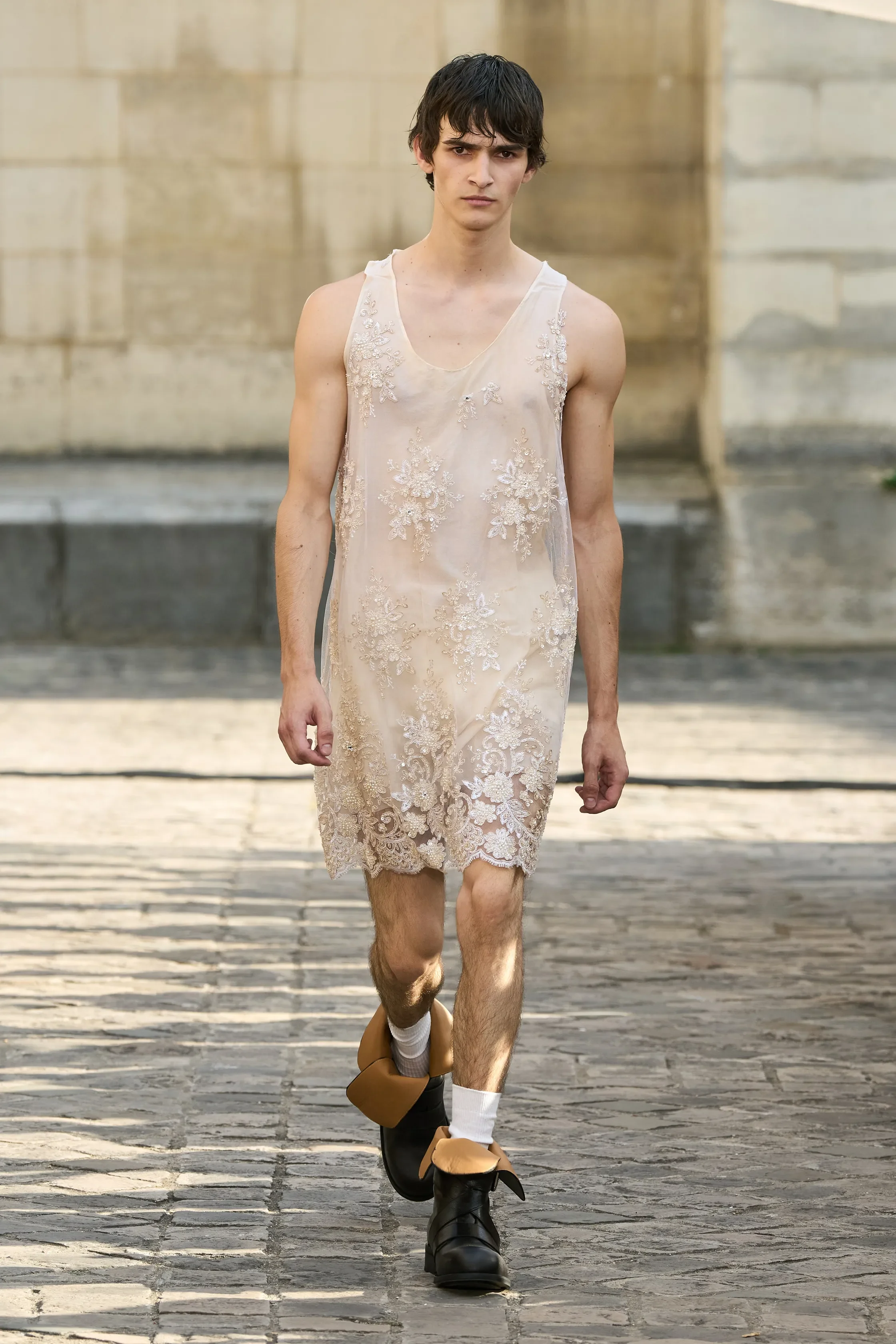
In a world dominated by doomscrolling and uncertainty, Egonlab offered an antidote. Titled Ataraxia – the Ancient Greek concept of serenity in the face of chaos – the collection imagined clothing as a space for optimism rather than escapism.
Rather than relying on grand statements, Florentin Glémarec and Kevin Nompeix let that optimism emerge through subtle contrasts. The brand’s signature tailoring became lighter and more fluid, while trompe l’œil details blurred the boundaries between garments: ties appeared as prints, T-shirts seemed to emerge beneath track jackets, and denim jackets grew crisp poplin collars.
The collection’s strongest moments came through its craftsmanship. Delicate lace sourced from French monasteries, Swarovski-trimmed silk shirts and wave-like embossed leather referenced Magritte without feeling overly literal. Meanwhile, the designers’ take on “coquette core” introduced bows, satin and sleepwear-inspired silhouettes that challenged what menswear could be in 2027.
Previous seasons have been gradually establishing Egonlab’s aesthetic, and Ataraxia felt very mature and self-assured. The collection remained playful, but beneath all the tricks and surrealist references lay a reminder that fashion can still offer moments of hope without losing its cool.
