
IN CONVERSATION WITH ANALESA FISHER
interview by JANA LETONJA
Analesa Fisher is part of a new generation of multifaceted talents redefining what it means to have a voice in Hollywood. With credits spanning Netflix’s Metal Lords, Monster High, Miraculous: Tales of Ladybug & Cat Noir, and popular video games such as Honkai: Star Rail, their versatility continues to open new creative doors. Next, Analesa stars in the coming-of-age film Rise and Shine, a moving story inspired by true events that places disability representation at its heart. It is set to premiere in AMC theaters nationwide October 23 and will stream on Angel later this year. Beyond the screen, they use their platform to champion disability rights, environmental activism, and shark conservation, proving that their impact extends far beyond the characters they bring to life.
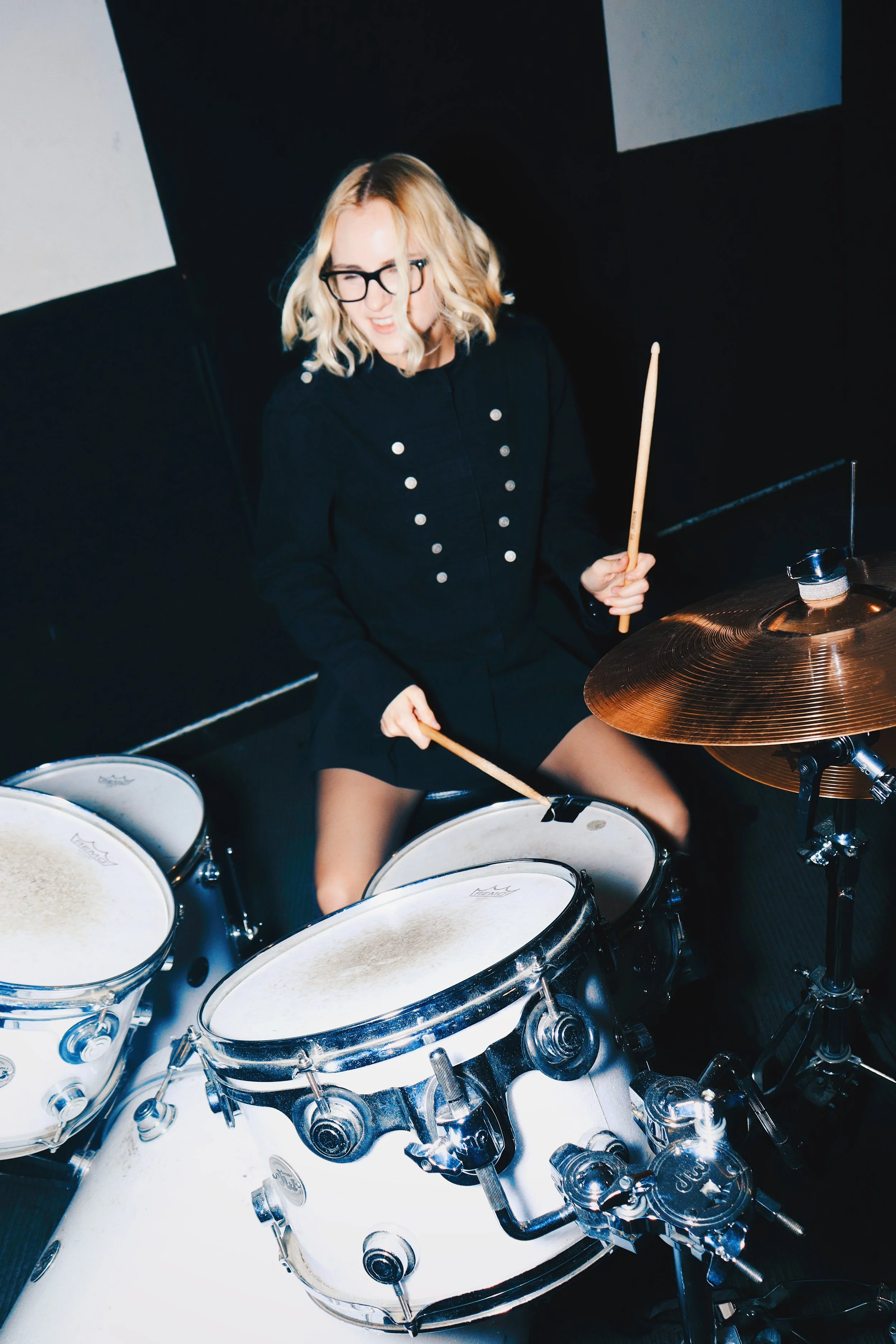
Your career spans acting, voiceover work, writing, and music. When you look back at your creative journey so far, what first sparked your passion for storytelling, and how has that passion evolved?
I think I’ve always had this weird, inherent need to understand humans. Why they communicate, how they communicate, what makes us tick, and how our upbringings change the ways we interact with each other. I found myself being very analytical about it from a very young age, and when I started in acting classes, it was like my brain exploded. I finally understood not just why people do what they do, but how. Then as I got older, and we started actually working on real scripts, I got the itch for writing. I knew how to work up a world someone else already wrote, but what if I flipped the process around? What if I was the architect for how a character grows? And I would say I’m still curious. I get auditions all the time for characters who I don’t fully get, and it’s like solving a fun puzzle box trying to get to the bottom of what makes them tick, what drives them. For writing, voice over, and on camera work, I don’t know if that’ll ever really go away. Even with all the rejection, it’s that innate desperation to understand people that keeps me coming back.
You’re set to star in Rise and Shine, a coming-of-age film inspired by a true story. What initially drew you to the project, and what made you feel connected to your character, Amanda?
What initially drew me to the project was just how positive it was. When I found out there was a coming-of-age story that actually centers a character with a disability just “being a teenager”, I was pretty much sold on the spot. Don’t get me wrong, Janice and Doc’s love story is one of my favorite sub-plots of all time. Danny Burstein is truly one of a kind in this movie as Doc. But, getting to see a story about a teenage girl with a disability going after what she wants? I was immediately in. Getting to see Amanda’s journey throughout the script just solidified it for me. I am very much like Amanda, I’m autistic, I’m stuck in my ways, I like what I like, I think boys are a waste of time, but sometimes, and I know this about myself, I could be a little more willing to try new things. Her friendship with Terri and how they help each other grow in confidence, branch out, and just want more for each other? It’s hands down my favorite part of the movie.
At its heart, Rise and Shine explores friendship, independence, and the desire to experience milestones that many people take for granted. What do you hope audiences, particularly younger viewers, take away from the film?
That it’s never too late to go after what you want. Whether that’s a date to the prom, going to public school for the first time, starting a club, or just wearing that outfit you thought might get you made fun of. When you see how Terri moves through the world, without a care in the world of what anyone thinks, it’s hard not to be inspired. I hope young people everywhere take away that message, but even more so, I hope disabled youth see that they too are worthy of great coming-of-age stories. They are worthy of that John Hughes fist pump at the end of high school. And I hope they go after it with as much gusto as Terri and Amanda did.
The film features more than a dozen speaking roles portrayed by actors with disabilities, making authentic representation an essential part of its storytelling. As someone who personally advocates for disability rights, what did being part of this production mean to you?
It was an honor. And I don’t say that lightly. Similarly to Sian Heder’s Being Heumann, coming out in November, I hope people in this industry who see Rise and Shine can see that it’s not hard. It’s not hard to hire kids and adults with disabilities. We’re all professionals. We all auditioned to be there, we all got the part, and we’re all showing up wanting to work. This isn’t charity. We’re not a liability. It’s not “harder to accommodate for us.” And I really, really hope that having more stories like this out in theaters and on major streaming platforms leads to a great change in the business.
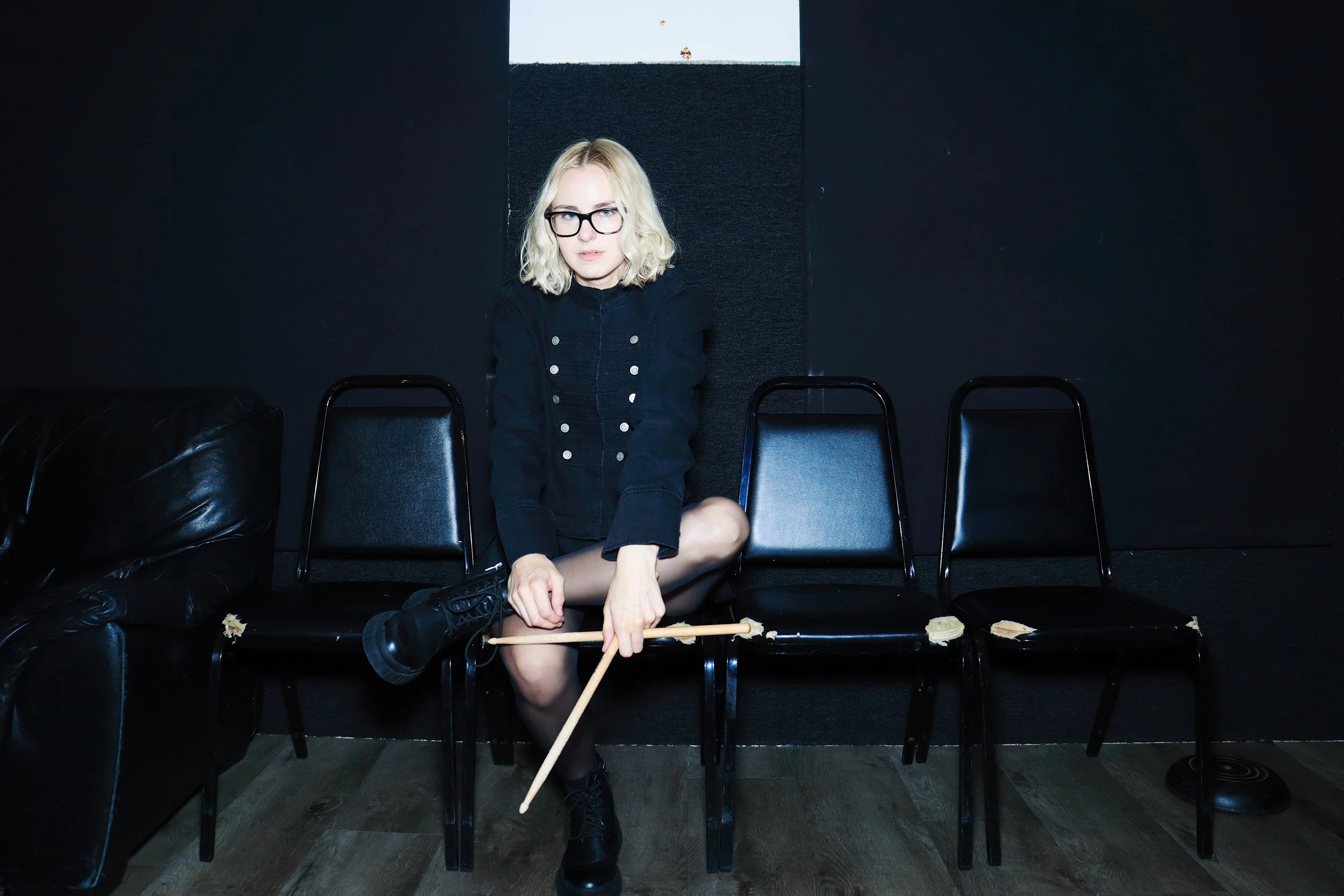
You’ve spoken openly about being part of the autism community and living with juvenile idiopathic arthritis. How have these experiences shaped your perspective as a performer and influenced the kinds of stories you want to tell?
I hid from my disabilities for a long time. I didn’t want anyone to know. Not my agents, not casting directors, not the public. I was really ashamed about them. But behind the scenes, it was what shaped me as a performer. I’ve been told by coaches that the way I specifically break down a scene is different than anyone they’ve ever taught before. That the way my brain is wired is actually giving me a unique perspective about life, and about acting. I try to use that to my advantage. I think because I’ve spent half my life in the hospital, I have access to certain emotions and real-life experiences that not everyone gets. And while that’s terrifying, and I may not wish it on anyone, it has definitely helped me as a performer.
Conversations around diversity and inclusion in Hollywood have evolved significantly in recent years. Where do you think the industry is making meaningful progress when it comes to disability representation, and where is there still work to be done?
In truth, it’s come a long way, but we’re still really far off. I mean, how many great actors who have disabilities and have been series regulars on shows like Everything’s Gonna Be Okay, or Oscar winning movie CODA, have you seen truly skyrocket in the same way Zendaya or Andrew Garfield have? They don’t get the Jennifer Lawrence treatment of doing a great role and then getting hundreds of offers for other projects. They usually putter along, hoping another perfect role will come along that they can play. And I hate that. So many amazing disabled, once-in-a-generation talents have come through this industry, and we’re lucky if we ever see them outside of one or two movies. 1 in 4 people will become disabled at any point in their life. I wasn’t even diagnosed with my juvenile idiopathic arthritis until I was twelve. So why isn’t that reflected in our movies and TV? Why isn’t 1 in every 4th character someone with a disability?
Your voiceover career has taken you into some incredibly imaginative worlds, from Monster High and Miraculous to Honkai: Star Rail. What excites you most about creating characters through voice alone?
I love voice acting. It’s something I don’t ever see myself stopping. Even when I was filming Rise and Shine in Kansas City for a few months, I had ongoing voice over projects that had to book studios for me on my off days from set. I don’t think I could escape it even if I wanted to at this point. My favorite part about building characters through voice alone is that, at its very core, it’s all about instincts. When I’m in the booth for a new character, ninety-percent of the time, when I see those lines on the screen it’s the first time I’ve ever seen them. We don’t get scripts in advance most of the time. The directors give me a little spiel, some background, and then we just go.
As an actor who’s used to preparing heavily for a role, I had to learn to trust my instincts at lightning speed. If I feel a twinge of a tear coming on, I have to learn to lean into it and let it go. If something is touching me in the story, I can’t second guess it or think too hard about it, I have to be completely open. Same when it comes to working with a director in voice over. They know way more than we do stepping into that booth. I mean, we almost never even record with other actors, and never on a fully dressed set, so you have to trust your director with your life. If they say jump, or scream, or fall to your knees, you have to trust they know more than you do about what’s going on. Creating characters that way, as opposed to for on-screen, is beyond thrilling, and really tests my boundaries as a collaborator.
The entertainment industry can be demanding, particularly for young performers navigating multiple creative disciplines. How do you maintain a sense of balance and protect your individuality in an environment that often comes with external expectations?
Honest answer, I don’t know. I’ve really struggled with the “Am I enough?” question. Casting directors want to know so much these days. How intense my disability is, if I always use crutches or just sometimes, whether I’d be a liability on set, whether I’m too autistic or not enough of the “autistic” they’re looking for. I have a lot of issues with imposter syndrome not just in this industry, but within myself. I’ve had a really weird couple years where I’m actually afraid that if I don’t post about something, it must not be real. And I think unfortunately that sometimes results in me sharing too much. Too much of my health, too much about what meds I’m on, where I am, what I’m doing, and how I navigate the world. The truth is, I want to share that stuff, most of the time, but sometimes I have a hard time separating myself from it, from the person everyone wants me to be, versus the complex human I actually am. I forget sometimes we’re not these 2 or 3 dimensional characters written for TV and movies, but often 100-dimensional humans with much more going on than anyone will ever know. But this business always wants pieces of you, and it wants to put you into these tiny boxes, so it’s all about figuring out how many of those pieces to keep for yourself.
In addition to acting, you’re an accomplished writer. Writing gives you the opportunity to shape an entire narrative rather than stepping into a character someone else has created. Has becoming a writer changed the way you approach acting or understand the characters you portray?
I kind of think of the whole thing like a big equation. When I’m breaking down a scene as an actor, my first thought is “Okay, this scene was written for a very, very specific reason”. In a great script, nothing is by accident so If I can figure out that why, everything unlocks really fast. After years of doing that as an actor, it’s unlocked my ability to do it backwards when writing. If you apply the same why, suddenly, every word out of a character's mouth is by design. And I think that’s important.
Writing has really allowed me the ability to see those things from both sides. Especially when it comes to character arcs. Nothing is more disappointing as an actor than to get a script where your character either stays the same or drops off the story entirely. I’ve really made it my mission to make sure you can follow a through line with every character I write, and if it’s not in a script I’m auditioning for, I try to force a complete arc through my choices. Sometimes it’s hard to switch hats so fast, from voice over to writing to on-camera, especially when I’m on hard deadlines, but honestly, I wouldn’t trade it for the world.
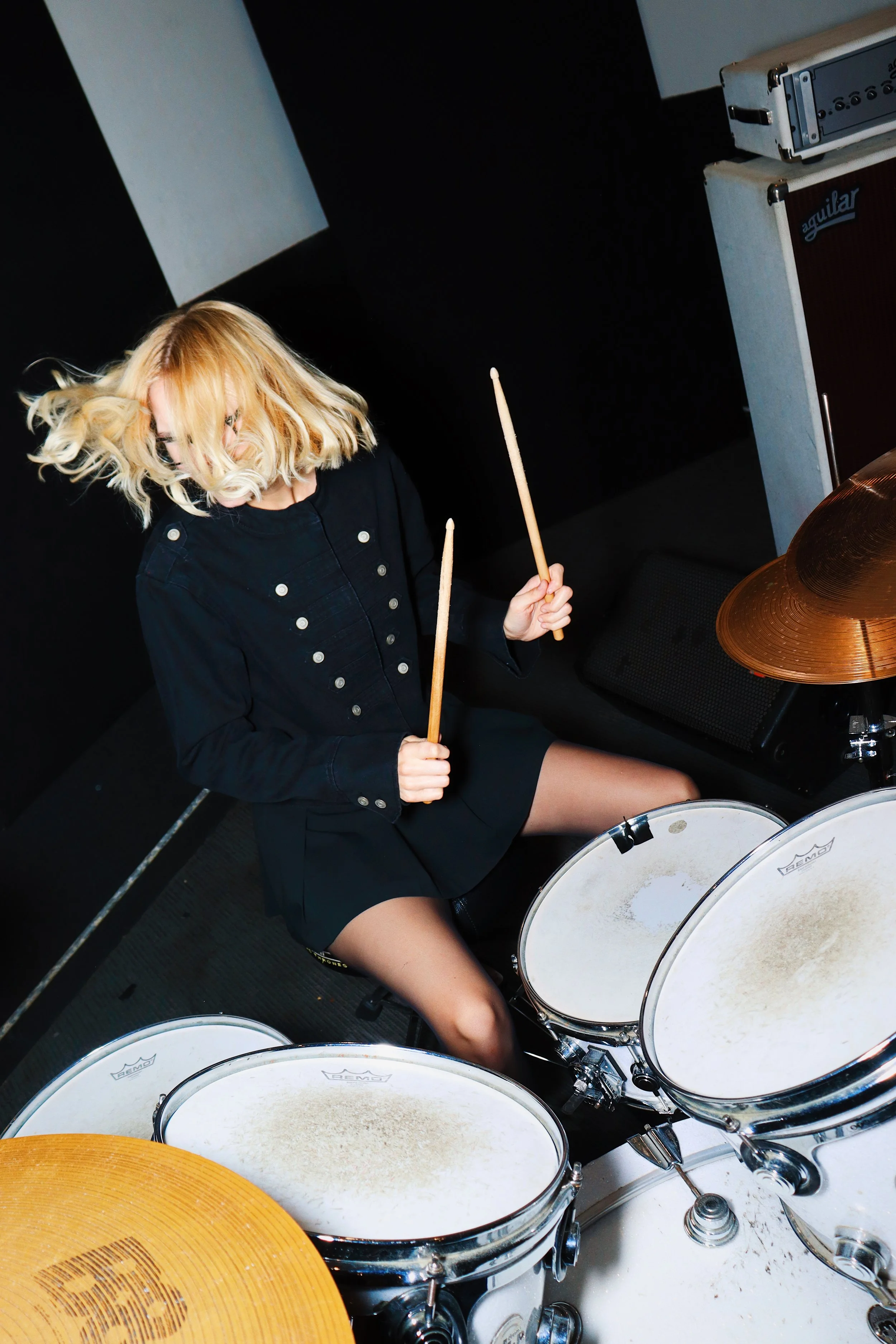
You’re also a pop-punk drummer, which adds another dimension to your creative identity. What role does music play in your life, and does it offer a different kind of expression from acting?
I had played piano for the first fifteen years of my life, like classical piano training. It really drained me. I hated it. I hated practicing, I hated going to lessons, and my poor mom knew that. But she was trying to build this discipline in me, trying to show me that nothing that comes easy in life is really worth having. I like to think I’ve taken that lesson to heart. After working on Metal Lords, I started drumming everyday. I found a great teacher, who is still shocked that I religiously practice forty-five minutes every single day, much to my neighbors' chagrin, I’m sure.
Drumming, unlike piano, is my happy place. I could sit at my kit for hours, running through every song on My Chemical Romance’s Black Parade album, and just vibing. It’s allowed me a space to quiet my head. This business is really all-consuming. Between auditions, meetings, writing deadlines, long sessions stuck in the hamster cage, what I call the voice over booth with no windows, sometimes it becomes too much. Too much “everything I do must feed into the machine of my career,” and I think it was really starting to hurt my mental health. Drumming allows me to step away from it all, and just enjoy something for fun, not to make money off it.
As a member of the Environmental Media Association’s Young Hollywood Board, you’re actively involved in environmental advocacy. What inspired your commitment to protecting the planet, and how do you hope to use your platform to encourage change?
I love this question because it’s so important. Gen-Z is having a really hard time getting motivated when it comes to this stuff, and I don’t blame them. The news is so horrible. We have X days to save the planet or we’re all doomed. Global warming. More animals going extinct. It really feels like, “Okay, what’s the point? Why even try?” Our goal with the Young Hollywood Board is to show our generation that you don’t have to do everything. No one can do everything, and I promise, if you try, you’ll burn yourself out bright and fast. But you can find one thing you’re really passionate about, one thing you want to become an expert on, one thing you do 100%, and that will make a real difference.
Hayden Begley, who’s on the board with me, her whole platform is public transportation. Taking it, trading your car in for the bus, she even worked for Metro for a bit. If you ever had a question about the environmental impacts of taking the bus versus driving, Hayden is your expert, and people know that, so they listen to her. For me, it’s sharks. People know that if they have a question about the environmental impacts of shark conservation, I’m going to know the answer. I’ve influenced so many people just by being an expert. So whether that’s sustainable fashion, public transportation, organic farming, ocean conservation, veganism, etc., we’re teaching an entire generation to find one thing they want to do, and do that 100%. We’re trying to inspire hope in that.
Shark conservation is a cause particularly close to your heart. Where did that fascination and passion begin, and what is one misconception about sharks that you wish more people understood?
Oh man, sharks have been my special interest for as long I can remember. I started collecting anatomically correct stuffed animal versions of sharks when I was super little, and that led into doing a bunch of research about them, their migration habits, their temperaments, the hundreds of different species, etc. Once I realized they were in danger, I knew it was my duty to step up and say something. My friends call me the Lorax for sharks. I speak for them, as best I can. If I have to choose just one misconception, I think it would be this myth that they hunt and enjoy the taste of humans.
I’m sorry but, Jaws is lying to you. The Meg is lying to you. Sharks use their teeth like we use our hands, and chewing on things is how they feel around their environment. Their diets are mainly targeted towards seals and other fish that are rich in blubber and high fat content. They really have no interest in us at all. And okay, I know you just said one, but this is a part of the last one. There’s a misconception that sharks are deadly predators out to kill humans. But did you know that an average of 1-3 people are attacked by a shark every year in the entire world. That’s attacks, not deaths. Do you want to know how many sharks we kill a year? 3 sharks every second. 274.000 every day. Over 100 million every single year. That’s just something to leave you with to think about.
Looking at the industry today, are there particular kinds of characters, genres, or creative collaborations you feel drawn to exploring next? Is there a dream role that would push you completely outside your comfort zone?
My dream role is Spider-Gwen. Hands down. I’ve read every single comic she’s ever appeared in, seen every movie and TV show that has mentioned her name, and I really think young girls are yearning for a Spiderwoman. Spiderman is a beloved superhero for a reason. It could be anyone. Any kid who dawns the suit looking to make a difference. That’s what makes her so cool.
Look, I’m a pop punk drummer, I have stunt training, I was even told in a green room at a convention this year that I look just like her. All I’m saying is give me a chance. But other than that, I’d love to do some kind of grounded horror. I just finished watching Carrie and man, that was amazing. I love the mystery elements mixed with supernatural and horror. I would love to continue doing coming-of-age stuff, I’ve just had too much fun between Metal Lords, Chad, Rise and Shine, and Saving Buddy Charles to put that chapter to bed just yet. But honestly, I’m kind of going wherever the wind takes me. I kind of believe the right parts will find you.
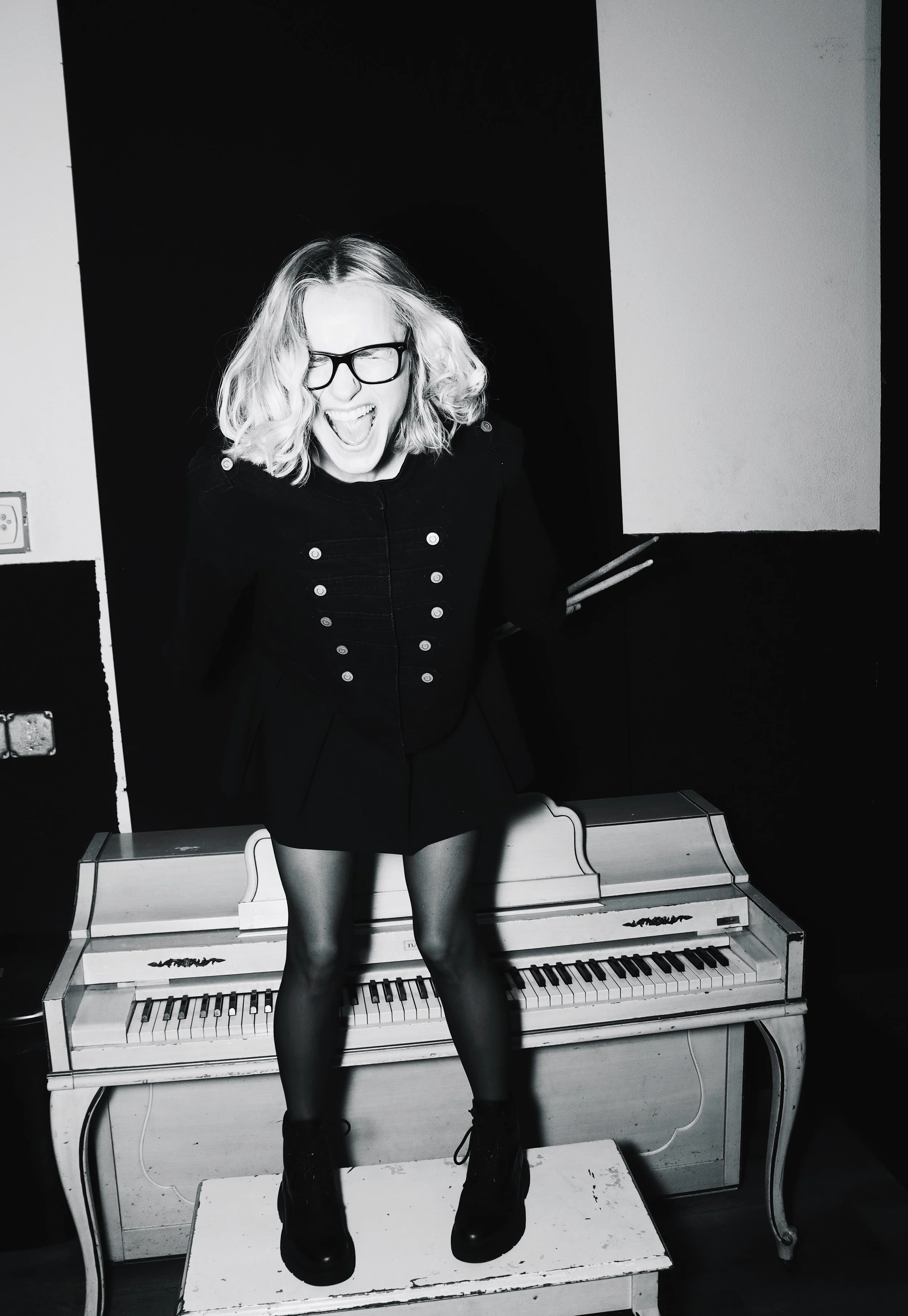
TEAM CREDITS:
photography GRACE WETHOR
styling STYLED BY LMC
