
IN CONVERSATION WITH CORENTIN HUARD
interview by MAREK BARTEK
Corentin Huard is a French director, visual artist, and former international model whose journey, from growing up in the mountains of Alpe d’Huez to founding one of Europe’s leading robotic-arm video agencies, 1001 FILMS, has shaped him into one of today’s most innovative creative forces. After debuting on the runways of Milan Fashion Week for houses like Dolce & Gabbana and Armani, he moved behind the camera, driven by a deep passion for image-making and cinematic precision. His company now produces ultra-premium Glambot-style content for luxury clients including Louis Vuitton, Moët & Chandon, Louboutin, and the amfAR Gala, delivering polished, real-time footage through a proprietary motion-control workflow. Having directed striking visuals for icons such as Kim Kardashian, Selena Gomez, and Demi Lovato, Corentin is now expanding 1001 FILMS globally while developing new AI-powered production tools. As he celebrates his 30th birthday with a new editorial inspired by the Alpine landscapes of his childhood, he unites the raw beauty that shaped him with the cutting-edge innovation defining his career.
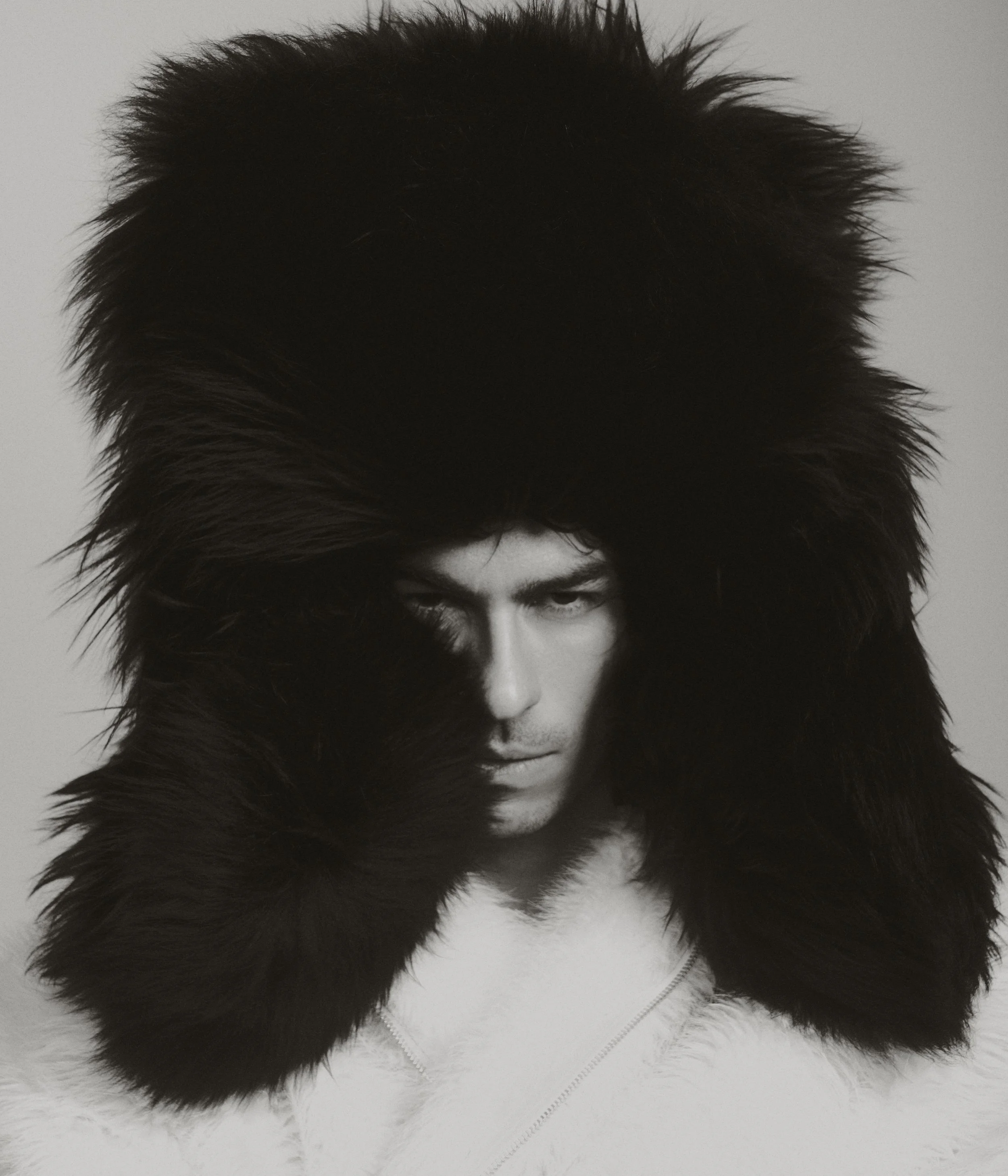
hat ETRO
jacket 3.PARADIS
First of all, Happy Birthday! We’re starting off by looking back; how did growing up in Alpe d’Huez shape who you are today?
Thank you ! Growing up in Alpe d’Huez shaped me more than I realised at the time. As a kid, I didn’t fully appreciate the privilege of being surrounded by such raw nature, but now I see how extraordinary it was. We were always outside, skiing every weekend, sometimes even after school. I had this small group of friends, and we were incredibly independent from a very young age. The mountains gave us that freedom. Being raised in that environment meant being constantly connected to something real, something bigger than yourself. It grounded me. It taught me resilience, simplicity, and a deep sense of balance. Even today, every time I go back, it feels like a reset, a return to who I am at my core. It’s the place where I disconnect completely and reconnect with myself. I also grew up alone with my mother, and that created a very strong bond between us. There’s a lot of emotion tied to that landscape, the snow, the silence, the altitude. I know exactly where I come from, and I know how long the road has been. Those early years shaped the way I work, the way I think, and the way I move through the world today.
You were first discovered during Milan Fashion Week and quickly started walking for houses like Dolce & Gabbana and Armani. Looking back, how did those early runway years influence your understanding of beauty, performance, and the machinery of the fashion world?
Walking for Dolce & Gabbana and Armani at barely eighteen was my first real immersion into the machinery of fashion and honestly, I had no idea what I was stepping into. I was completely new, almost naïve, and suddenly I was backstage at Milan Fashion Week, surrounded by people who had been in the industry for decades. It was overwhelming and fascinating at the same time. At that age, booking shows like these feels surreal; you’re proud, of course, but you also have no idea yet how the system really works. What people don’t often realise is how tough the modelling world actually is. Behind the glamour, there’s the day-to-day reality of endless castings, not knowing when you’ll be paid, the pressure to stay in shape, the uncertainty of everything. It teaches you discipline very early. It also teaches you humility, because you’re constantly being evaluated, compared, selected or rejected. Travelling abroad afterward for campaigns, catalogues, commercial jobs really helped me understand the full picture. That’s when I started to learn the craft, not just the surface of it. But back then, modelling was still perceived as something a little “untouchable”. Today, the industry has changed dramatically. Social media has reshaped what visibility means. Strangely, it’s when I moved into the influencer and content side of fashion that I truly understood how the industry functioned. Modelling is very straightforward — you show up, you pose, you deliver. But the world behind the camera, the brand relationships, the storytelling, the strategy… that’s when I began to see the architecture of fashion. And I think that transition is what eventually led me to build my own creative universe later on.
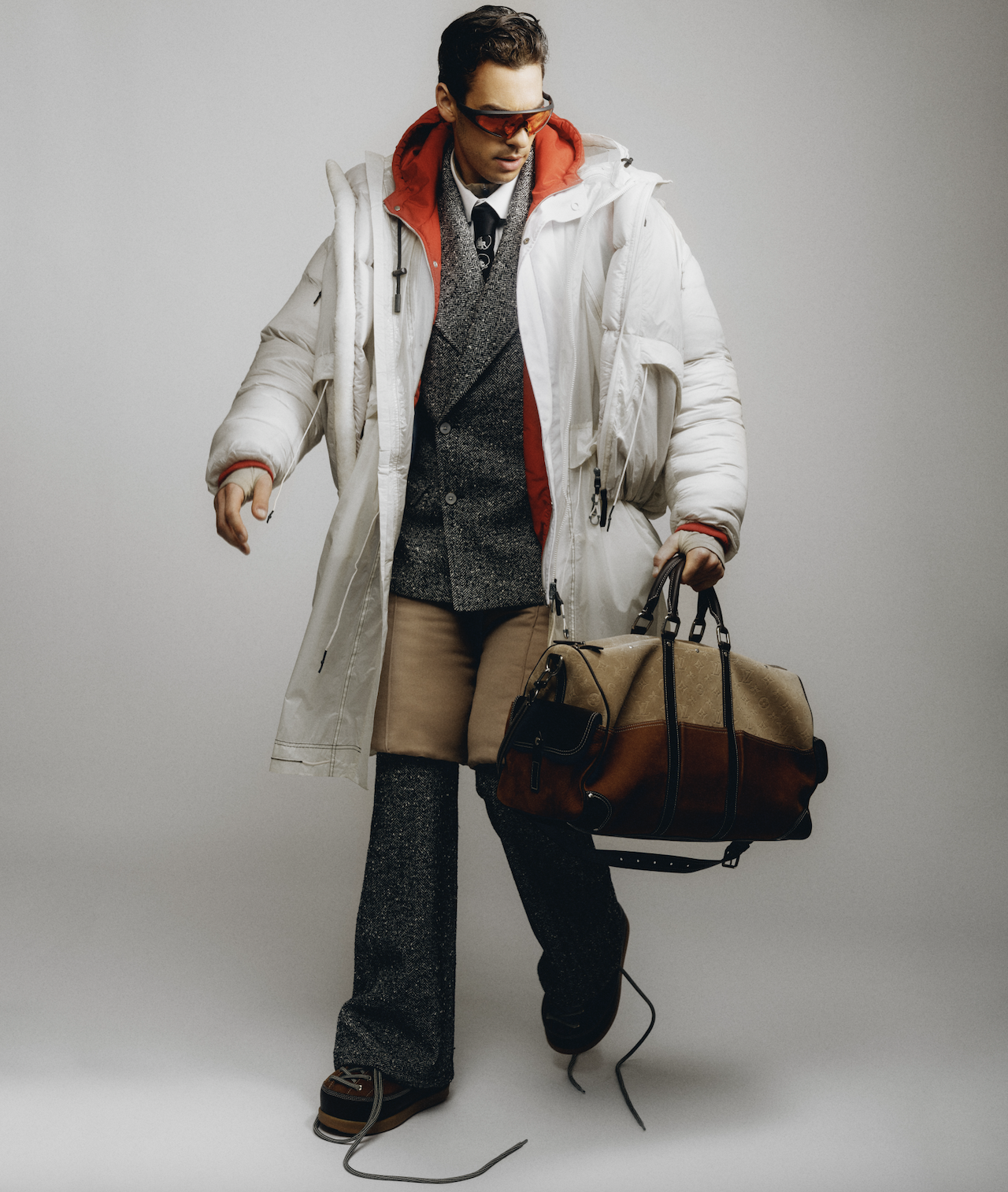
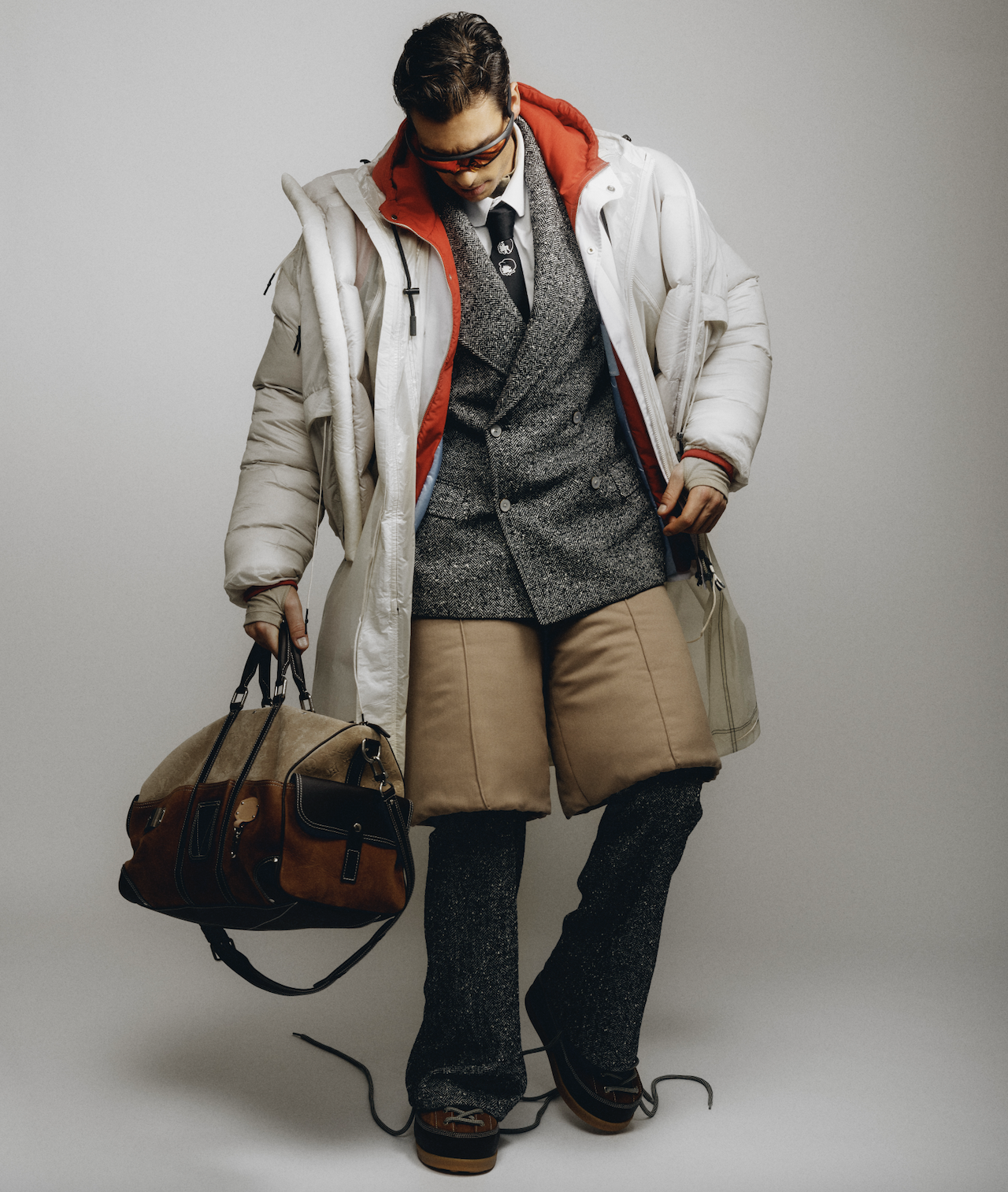
suit, shirt, tie, bag, and boots LOUIS VUITTON
short and jacket 3.PARADIS
top ICEBREAKER
parka, puffer jacket, and glasses OAKLEY
At what point did you realise you were more drawn to what happened behind the camera than in front of it? Was there a specific moment, a project, or even a frustration that made you switch direction?
I realised I was drawn to creation at the exact moment I started using social media. At the beginning, it was instinctive: I always wanted my feed to look cinematic, almost editorial. Even when everyone else was shooting with their phones, I was carrying a camera around, experimenting with light and framing. I didn’t think of it as “production” at the time, I just wanted my images to look the way I saw them in my head. What happened next was a natural transition. To get the quality I wanted, I started organising my own shoots. First alone, then gradually with people I trusted, until I found myself building an entire ecosystem around me. That’s really where the seeds of production were planted. At first, it was simply about having control over my own image. But the more I created, the more I realised that what excited me wasn’t just being in front of the camera, it was managing what happened behind it. Directing, shaping a story, assembling a team, designing the look and feel of a whole campaign… That’s when I understood I was no longer just a model. Social media also arrived at the perfect moment. The industry was shifting, the demand for high-quality content exploded, and I was obsessed with delivering the best possible visuals. That mindset eventually led me to producing work on a much larger scale, campaigns, events, branded films. Today, I love the duality of my role: being in front of the camera when needed, but also directing everything from A to Z. From the shoot to the post-production, I lead every part of the process with my team.
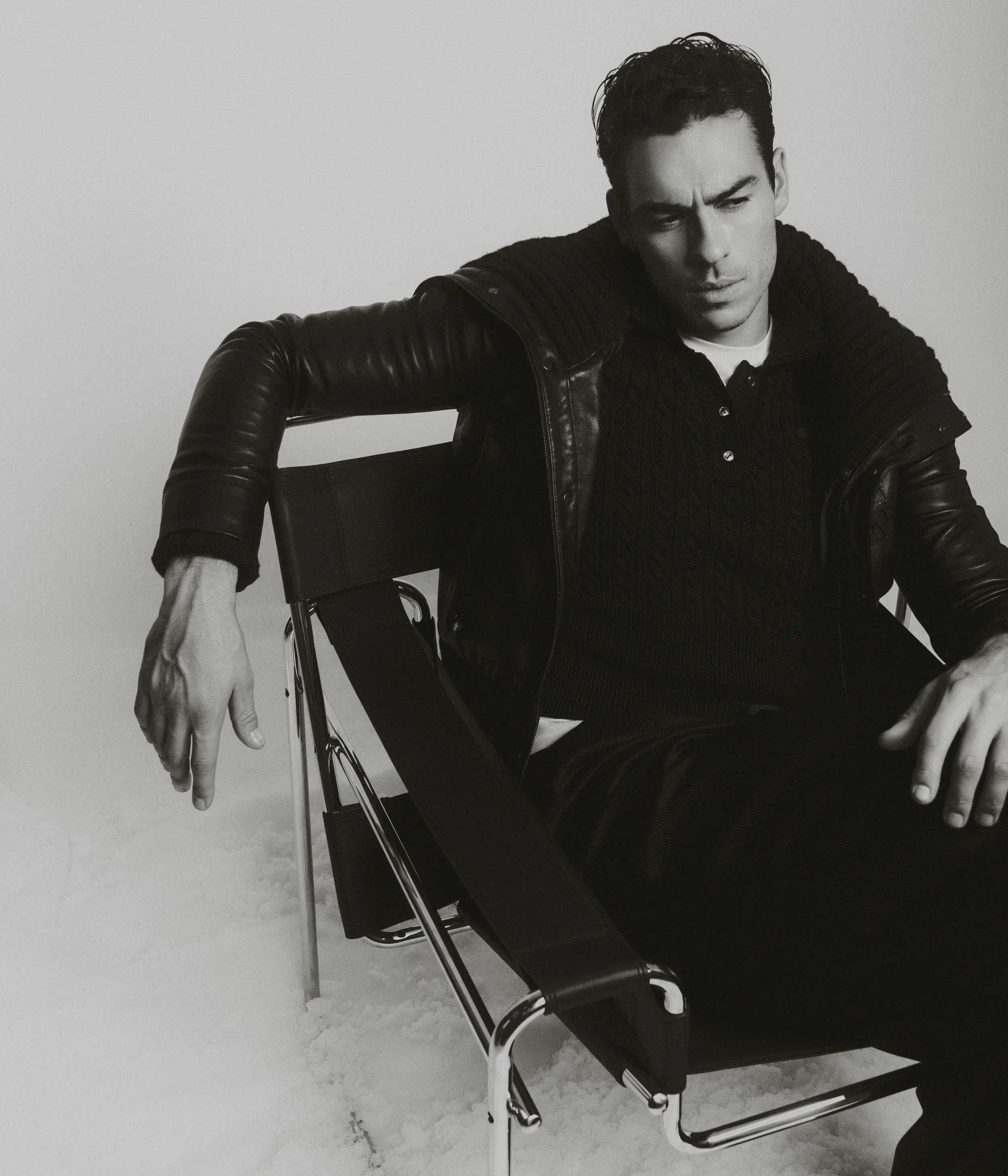
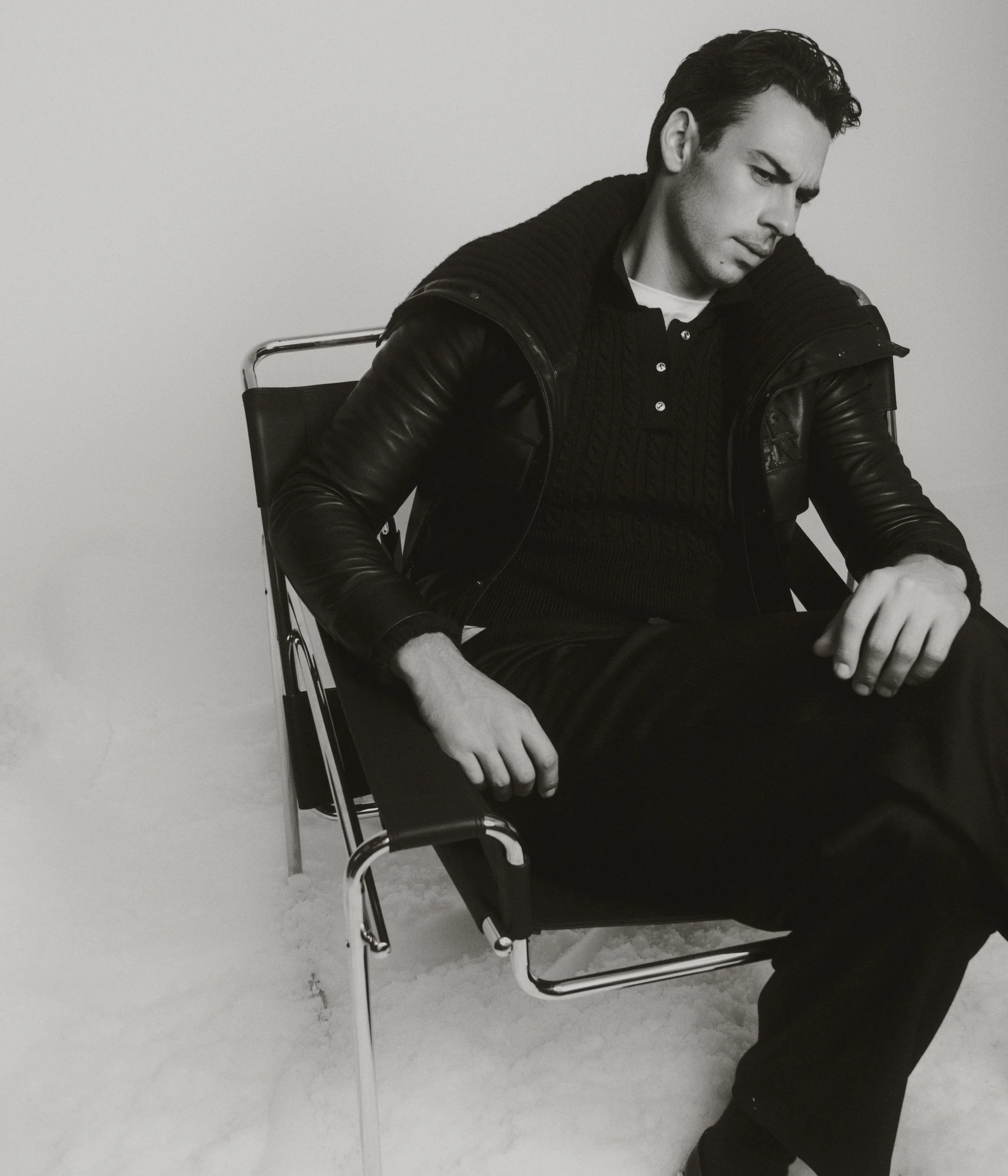
full look LACOSTE
1001 FILMS has become one of Europe’s leading agencies for robotic-arm Glambot productions. What was the impulse behind creating a company so deeply rooted in technology, and how did you develop its now-signature cinematic look?
I’ve always been someone who needs to create. Even when I was modelling full-time, I realised very early on that I wasn’t fulfilled unless I had a hand in shaping the final image. It wasn’t enough for me to just stand in front of the camera, I needed to understand how the whole thing worked, and how you could transform a moment into something memorable. That instinct naturally pushed me towards production. At some point, I wasn’t just participating anymore, I was directing. I was choosing angles, building teams, imagining sequences, and pushing for the kind of quality I wanted to see. That’s really how 1001 FILMS started: out of a desire to elevate what I was doing and to give brands a level of precision and speed they couldn’t get anywhere else.
The robotic-arm system was the turning point. It brought together everything I cared about: precision, beauty, technique, and impact. It allowed us to create a cinematic language that feels strong, clean, and instantly recognisable and to deliver it in real time. In a digital world where speed often kills quality, I wanted to prove that you can combine both. Today, 1001 FILMS has its own identity, its own aesthetic, and its own way of working. The technology is only a tool, the vision is what makes it powerful. And that’s the part I love the most — being able to move between both worlds, in front of the camera and behind it, while building something that feels truly mine.
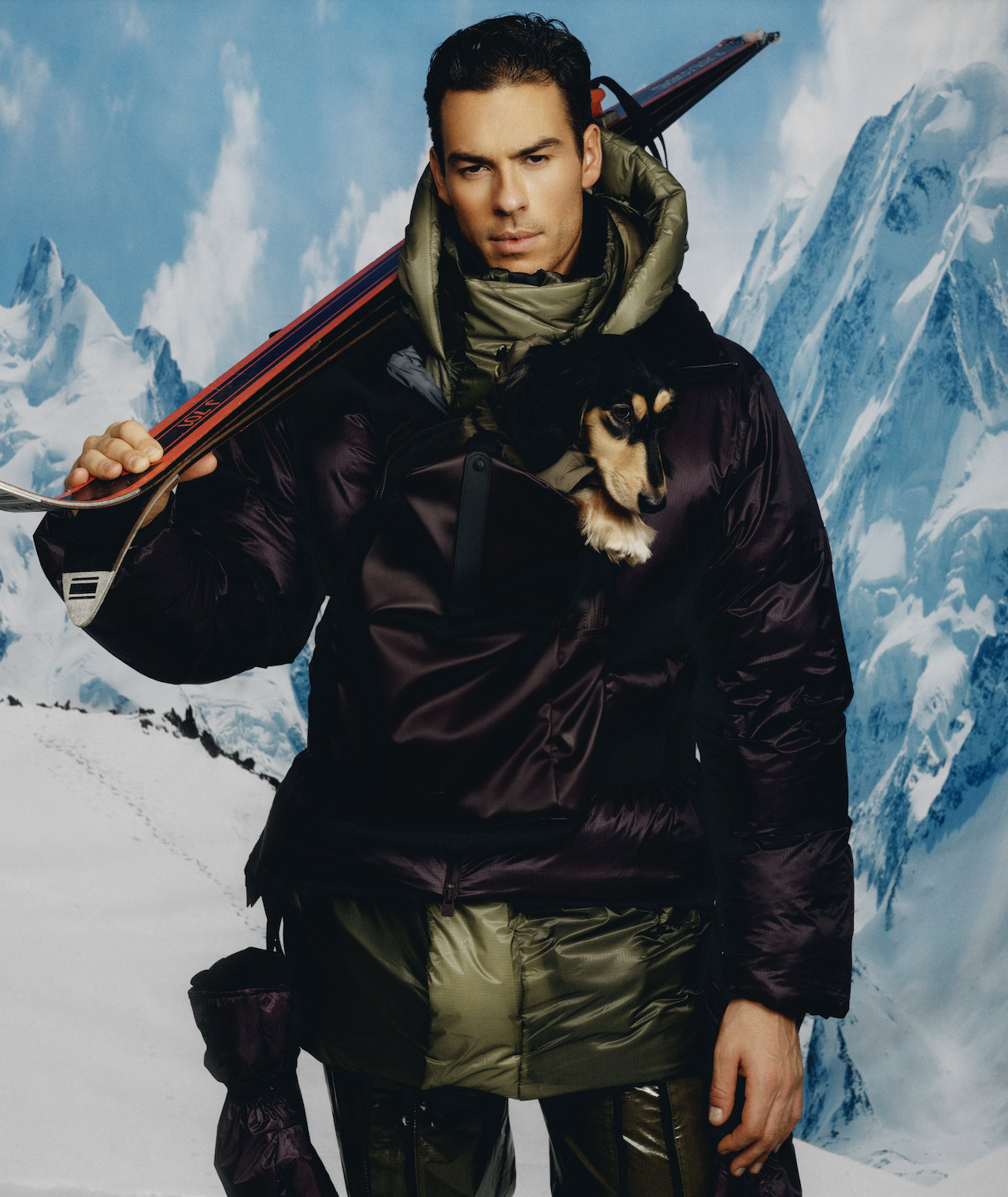
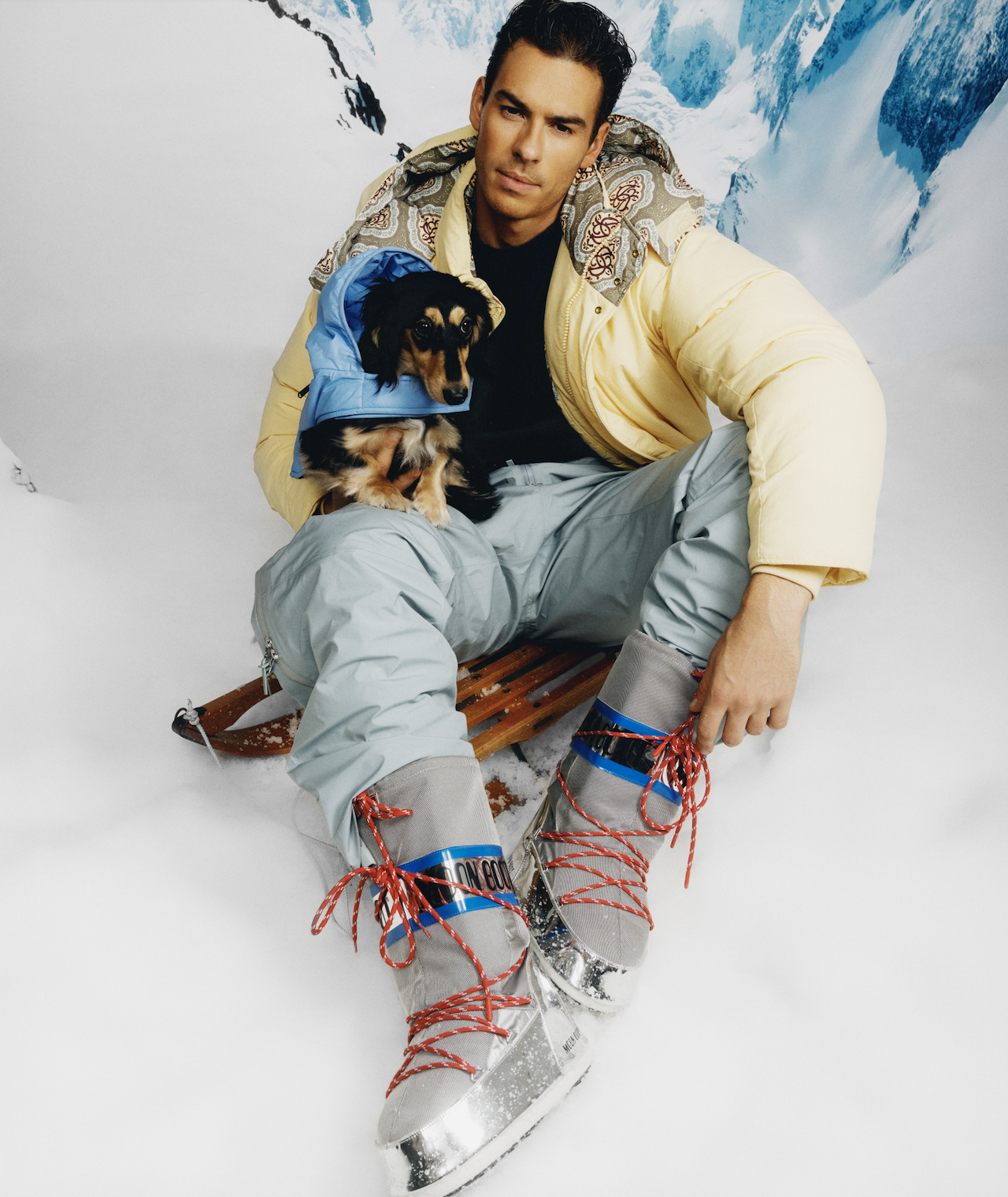
left:
puffer jackets, trousers, bag, and mitten RAINS
dog puffer jacket JOTT
right:
puffer jacket DRÔLE DE MONSIEUR
ski pants AIGLE
jumper PETER WU
boots MOON BOOT
dog raincoat JOTT
As you’ve already mentioned, your workflow is famous for delivering studio-level, colour-graded, stabilised videos within minutes. Can you walk us through what happens behind the scenes — what makes your system radically faster and more premium than traditional event capture?
What really makes us different is how much time we spend understanding each brand we work with. Before an event, we talk a lot with the client, and we build a creative direction that feels truly personal to them. Even the robot movements are decided in advance, everything is adapted and customised so the result matches the brand perfectly. On the day, everything is already organised. My team sets up, and I’m there to guide the talent so they feel confident and natural. It looks very technical from the outside, but for the guest, the experience is simple and fast. And once the shot is taken, the video goes straight to our post-production team who work on-site. They cut it, colour it, and finish it within minutes. Then we send it directly to the brand or to the VIPs. In the end, the secret is not complicated: a lot of preparation, a clear direction, and a team that knows exactly what to do. That’s what allows us to be so quick while still keeping everything beautiful and cinematic without overthinking it, and without ever compromising on quality.
You’ve crafted content for icons like Kim Kardashian, Jaden Smith, Demi Lovato, and Selena Gomez. When you’re directing someone with such established visual identities, how do you find the balance between their world and your own creative language?
With celebrities, the first step is always the same: make them feel comfortable. Even if they’re used to cameras, a robotic arm can feel unfamiliar, so my job as a director is to guide them gently into the experience. I keep it simple, two or three poses, a few movements adapted to their outfit, and always the option to redo a take if they want. It’s about creating a space where they feel safe, confident, and in control. What people often forget is that whether it’s Kim Kardashian or someone who’s never been filmed before, I treat everyone the same. I’m there to make them look their best, to help them find a position or gesture that feels natural, and to bring out the essence of who they are. That’s where my creative language comes in — in the way I guide them, in the rhythm I create on set, in how I adapt to their personality. Of course, we prepare everything with the brand beforehand. If a celebrity has preferences or limits, certain movements they don’t want to do, an outfit that restricts mobility, we adjust. The creative direction is always built with those details in mind. In the end, their identity is already strong, and my role is simply to frame it in a cinematic way. The robot is just the tool, the real connection happens in the direction, in those few seconds where I help them feel seen, elegant, and powerful.
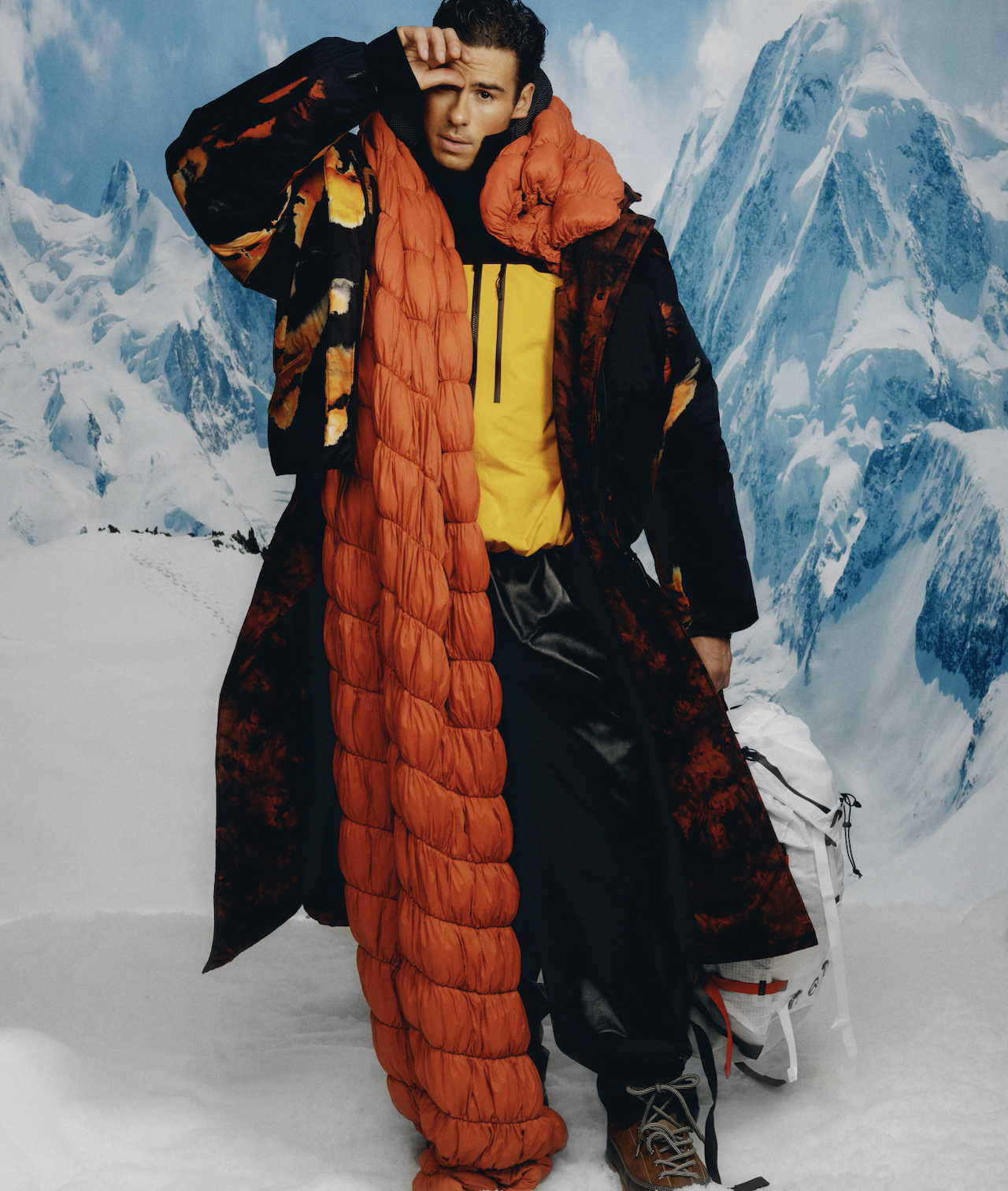
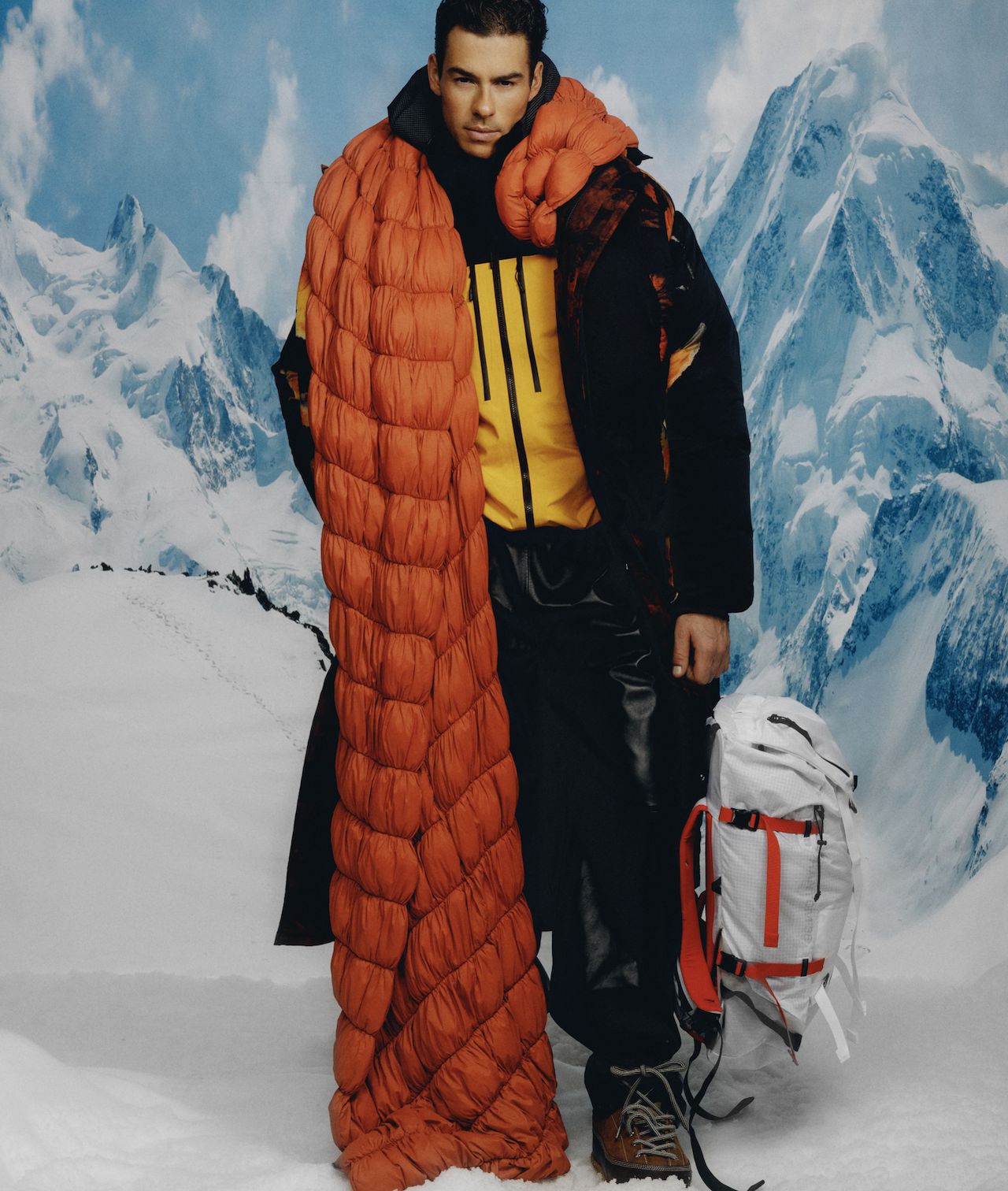
jacket and bag THE NORTH FACE
puffer jacket Y-3
trousers LACOSTE
shoes LOUIS VUITTON
scarf K-WAY
1001 FILMS is now developing AI-driven automation to push speed and precision even further. How do you see AI reshaping event filmmaking, and how do you ensure the technology serves creativity without diluting the human touch?
For us, AI never replaces creativity, it simply supports the experience. I’m very clear about this: everything artistic at 1001 FILMS is human. The direction, the feeling, the eye, the connection with the guest, that will never be automated. The creative process is something I value too much to hand over to a machine. Where AI becomes interesting is in the invisible part, the things the audience never sees. We’re working on tools that help us speed up certain logistical steps, mostly after the video is already created, so guests and brands can receive their content even faster. It’s not about replacing the team, it’s about making their work smoother and more efficient. And honestly, that’s where I see AI reshaping event filmmaking: not in the artistic decisions, but in everything around them. In the speed, in the organisation, in the way content is delivered almost instantly. I know AI can sound intimidating for some clients, but I always reassure them: the human touch is what makes our videos cinematic, emotional, and alive. Technology just helps us deliver that feeling in record time.
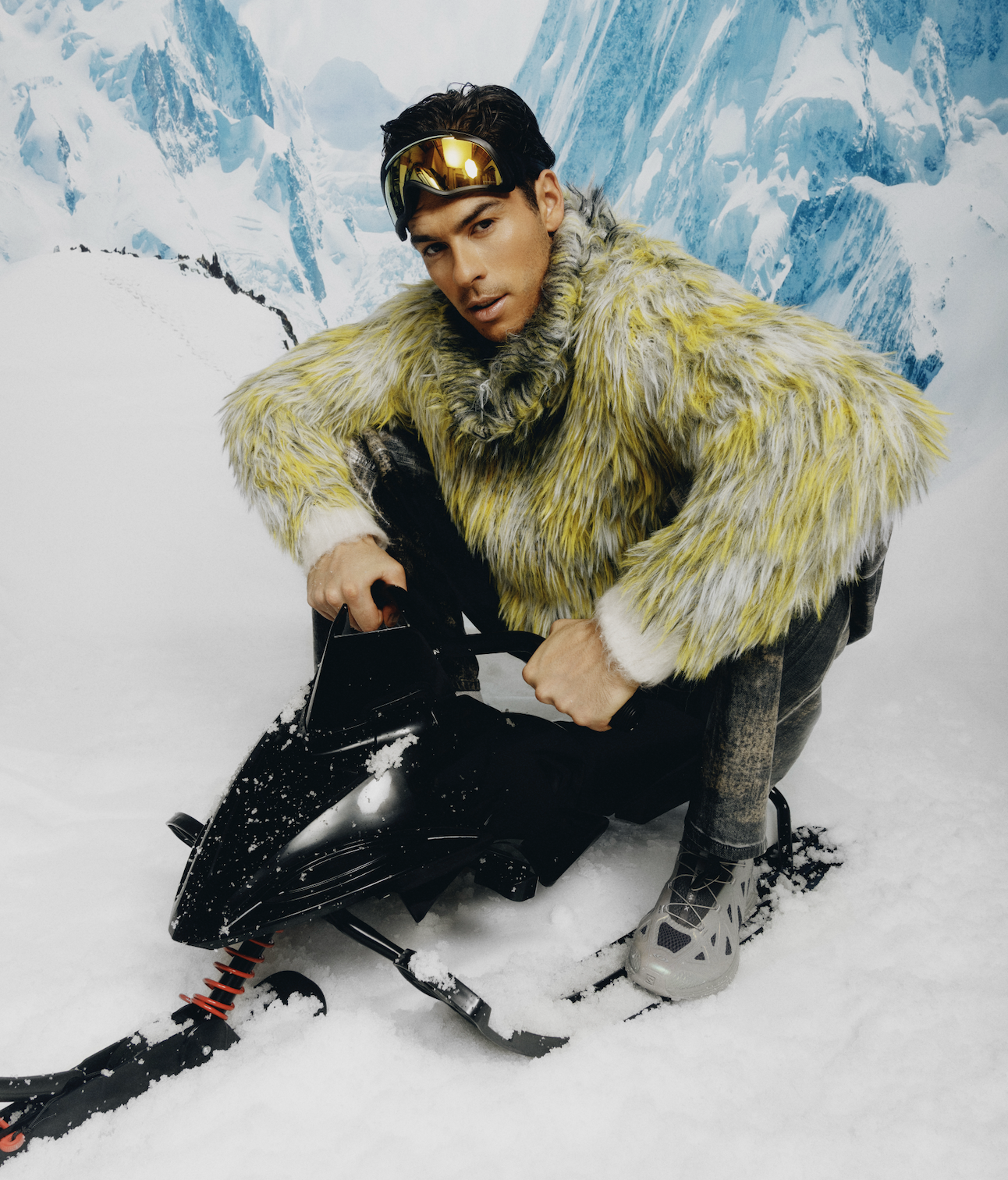
jumper, trousers, and collar DIESEL
sneakers SALOMON
glasses OAKLEY
Luxury brands like Louis Vuitton, Moët & Chandon, Louboutin, and the amfAR Gala trust your system for some of their most visible moments. What do you think brands look for today in terms of visual storytelling, and how do you keep evolving ahead of that expectation?
I’ve always believed that the purpose of these videos goes beyond aesthetics. At the end of the day, luxury brands want content that creates desire, something that makes people stop scrolling, feel something, and want to be part of the world they’re seeing. It’s not just a video; it’s a piece of storytelling that has to translate into emotion, and eventually into sales. So we always ask ourselves the same questions: How do we make the product the hero without making it obvious? How do we capture a moment with a celebrity or a VIP in a way that elevates the brand, the atmosphere, and the item being launched? Every activation — a fashion show, a gala, a product reveal, carries huge visibility, so the creative direction has to be extremely intentional. Today, people don’t buy products. They buy emotions, narratives, and the feeling of belonging to a universe. Luxury brands know this, and that’s exactly why they come to us: because our videos can turn a few seconds into a story and a desire. The only way to stay ahead is to keep listening — to the brands, to culture, and to the way people consume images now. Each house has its own identity and our job is to understand that deeply, and then reinterpret it in a way that feels modern, cinematic, and alive. That’s what keeps the work interesting, and what keeps us evolving.
As you look toward expanding across Europe and internationally, what is the long-term vision for 1001 FILMS? Beyond speed and efficiency, what new visual or technological frontiers excite you most for the future of luxury filmmaking?
The long-term vision for 1001 FILMS is very clear to me: we want to become a global reference. Not just in France, not just in fashion and beauty but across Europe and eventually worldwide. The technology we use isn’t limited to one industry, and that’s what excites me the most. It can serve music, sport, corporate events… any world where emotion and image matter. There are so many sectors we haven’t even touched yet. For me, the next five years are about scaling intelligently. Building teams, expanding into strategic cities, and bringing our level of quality and speed to new markets. I don’t want 1001 FILMS to be a local player. I want it to be a name that clients recognise internationally, a standard of what fast, cinematic content should look like. What excites me most about the future isn’t just the technology itself, but what it allows us to create. New ways of capturing people, new forms of storytelling, new interactions between humans and machines, without ever losing the emotion. I think luxury filmmaking is at the beginning of a new era, and I want us to be part of shaping it. In the end, the ambition is simple: to bring the same precision, the same experience, and the same creative energy to every major city we enter, and to build something that lasts.
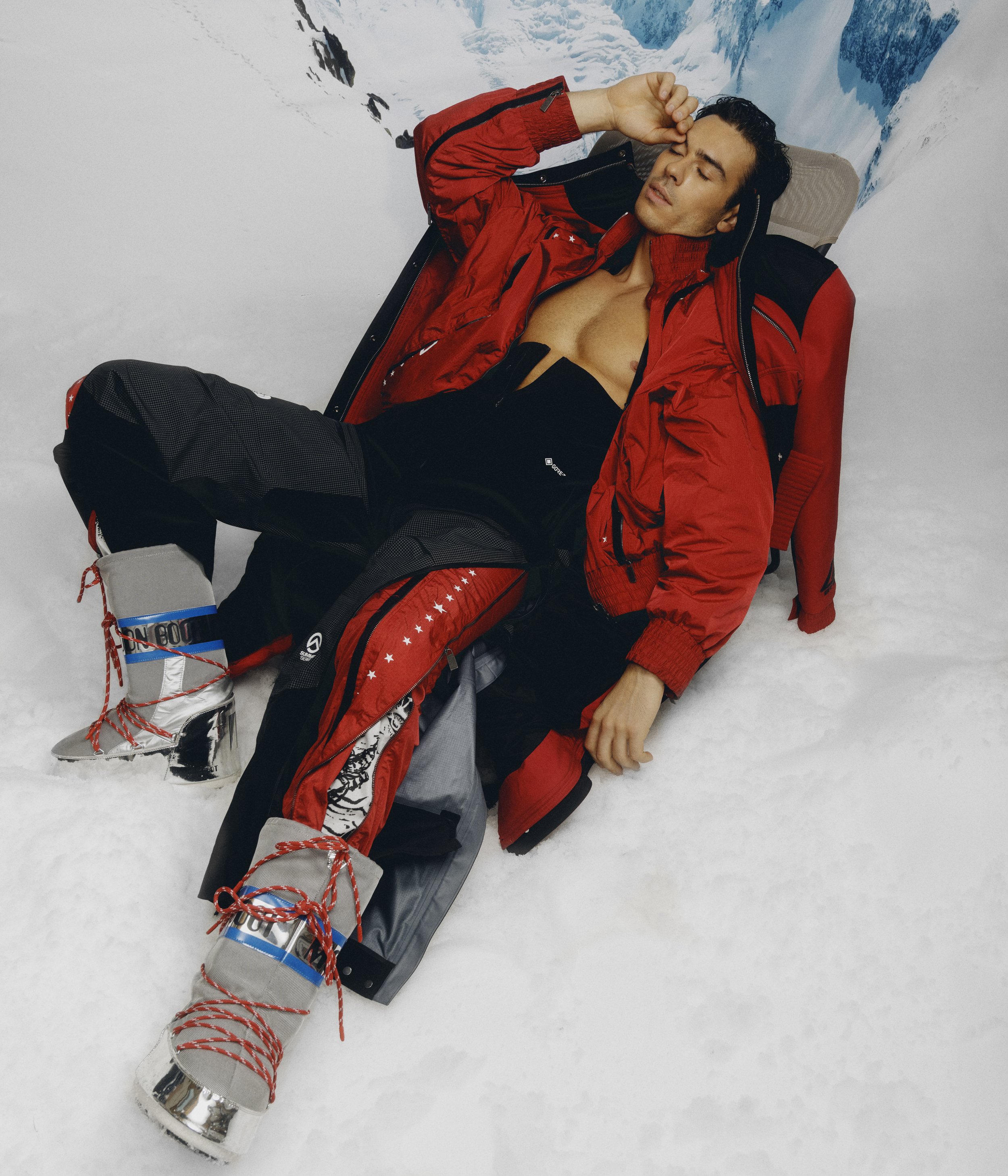
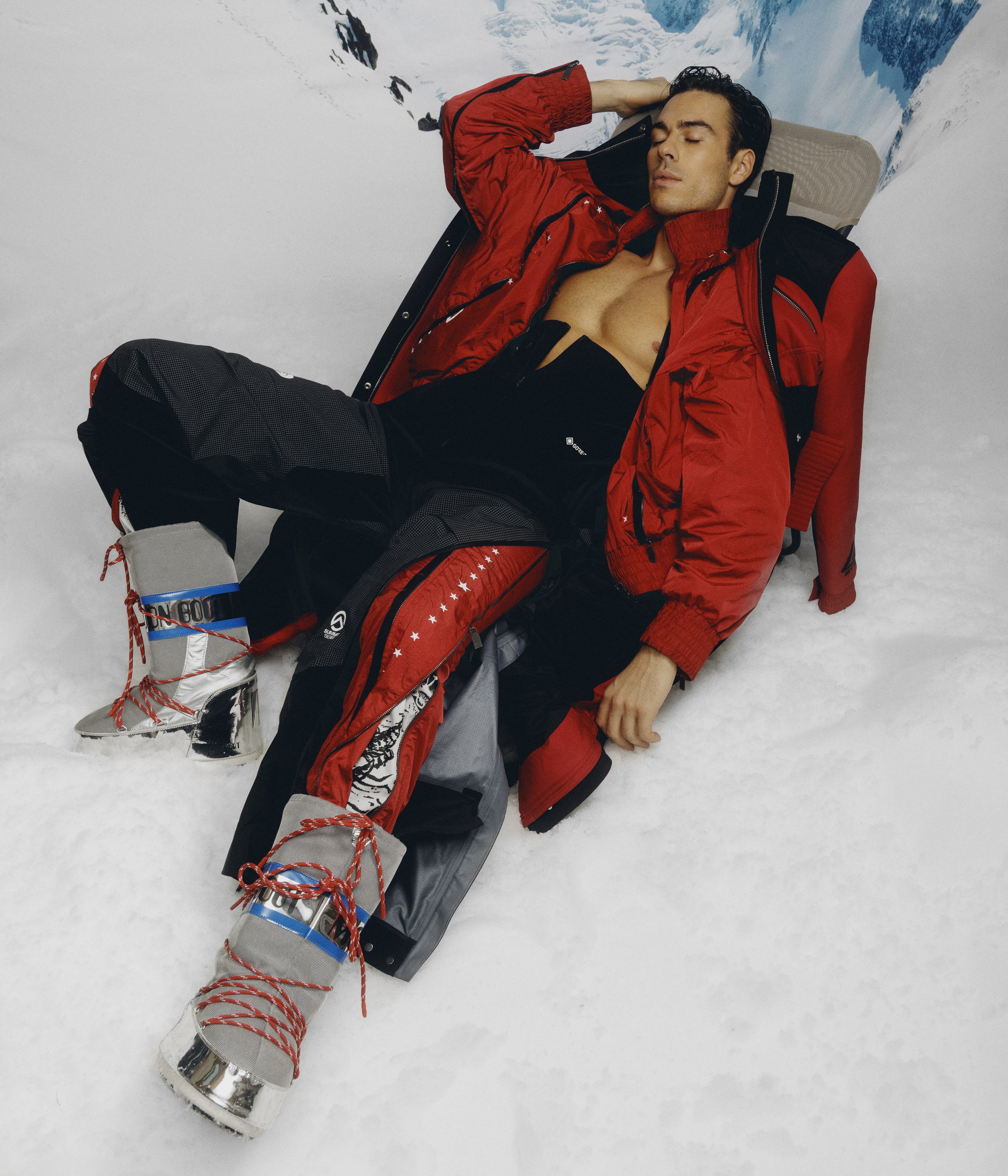
coat, bomber jacket, and trousers OFF WHITE
ski pants THE NORTH FACE
boots MOON BOOT
As someone who’s built a successful career in the creative industry. Do you have any words of advice for people who dream of the same success in the industry, which is notoriously hard to break into?
If I had to give one piece of advice, it would be this: do something you genuinely love. This industry is hard, competitive, unpredictable, and the only thing that keeps you going is passion. When you love what you do, you’re more persistent. You can take the hits, the rejections, the long nights, and still get back up the next morning. And you will get hit, everyone does. The difference is how many times you’re willing to get back up. In the creative world, nothing happens overnight. You start small, you take the projects you can get, you learn, you build references, you grow. It took me years before finding an idea that made sense, something solid enough to build a real company around. That part of the journey is normal. Every good thing takes time. I don’t pretend to have all the answers, but I do believe in following your curiosity, trusting your vision, and surrounding yourself with the right people. No one succeeds alone. The team you build, the people you trust, the ones who share the same energy, that’s what shapes the success of a project or a company. Everyone has their own path, their own timing. The important thing is to believe in what you’re doing, stay patient, and keep moving forward, even when it’s difficult. If you love it, the rest usually follows.
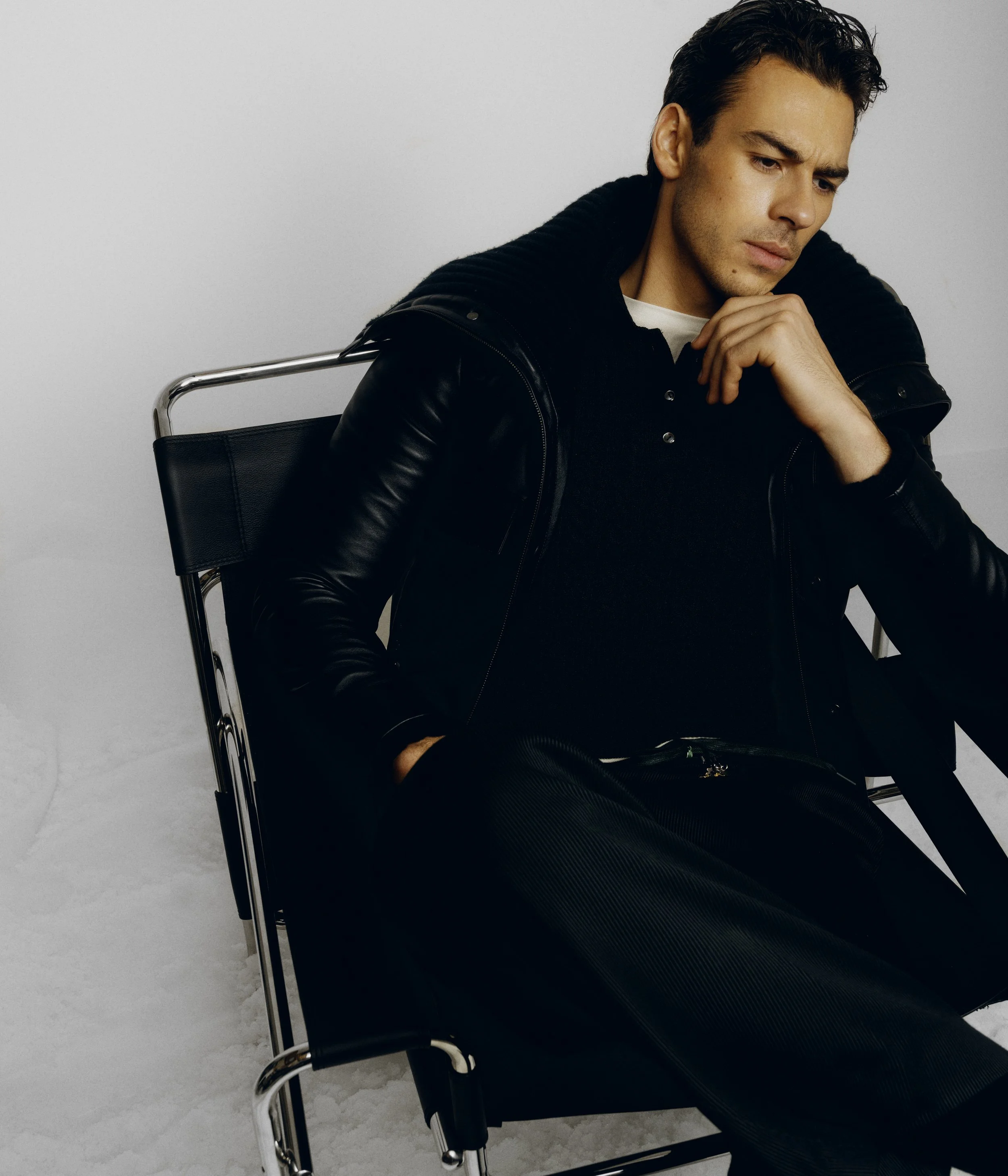
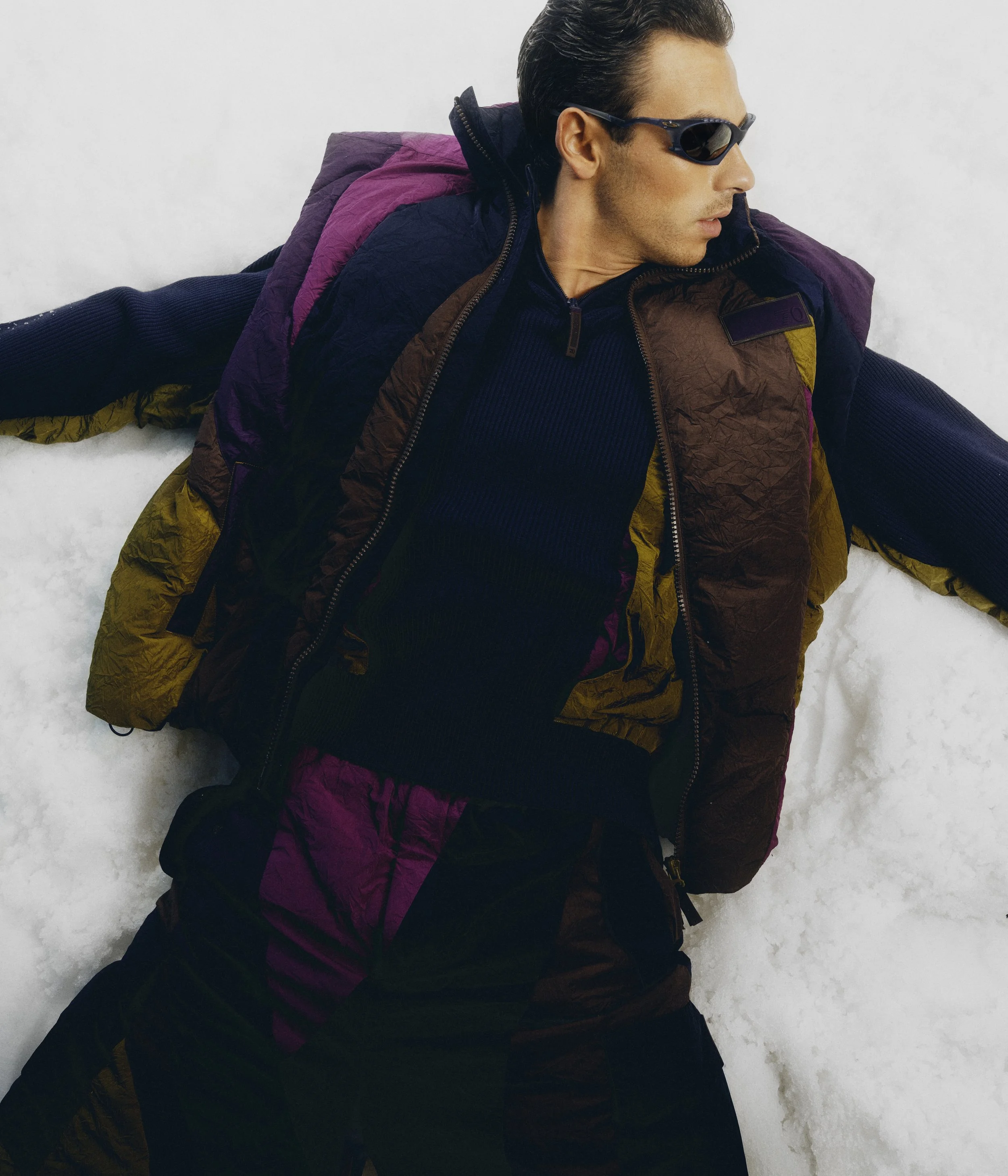
left:
full look LACOSTE
right:
jacket, jumper, and trousers EMPORIO ARMANI
glasses OAKLEY
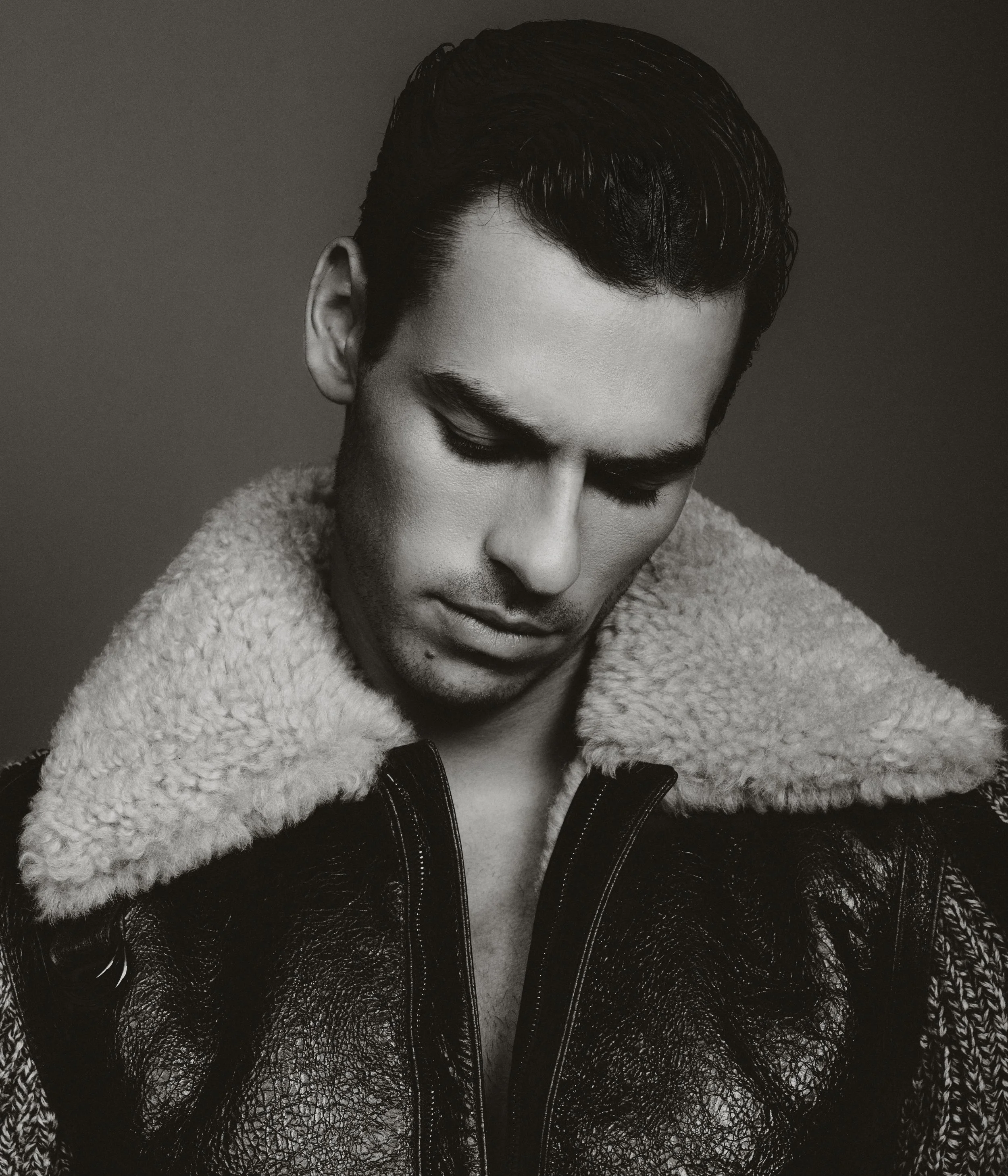
jacket ETRO
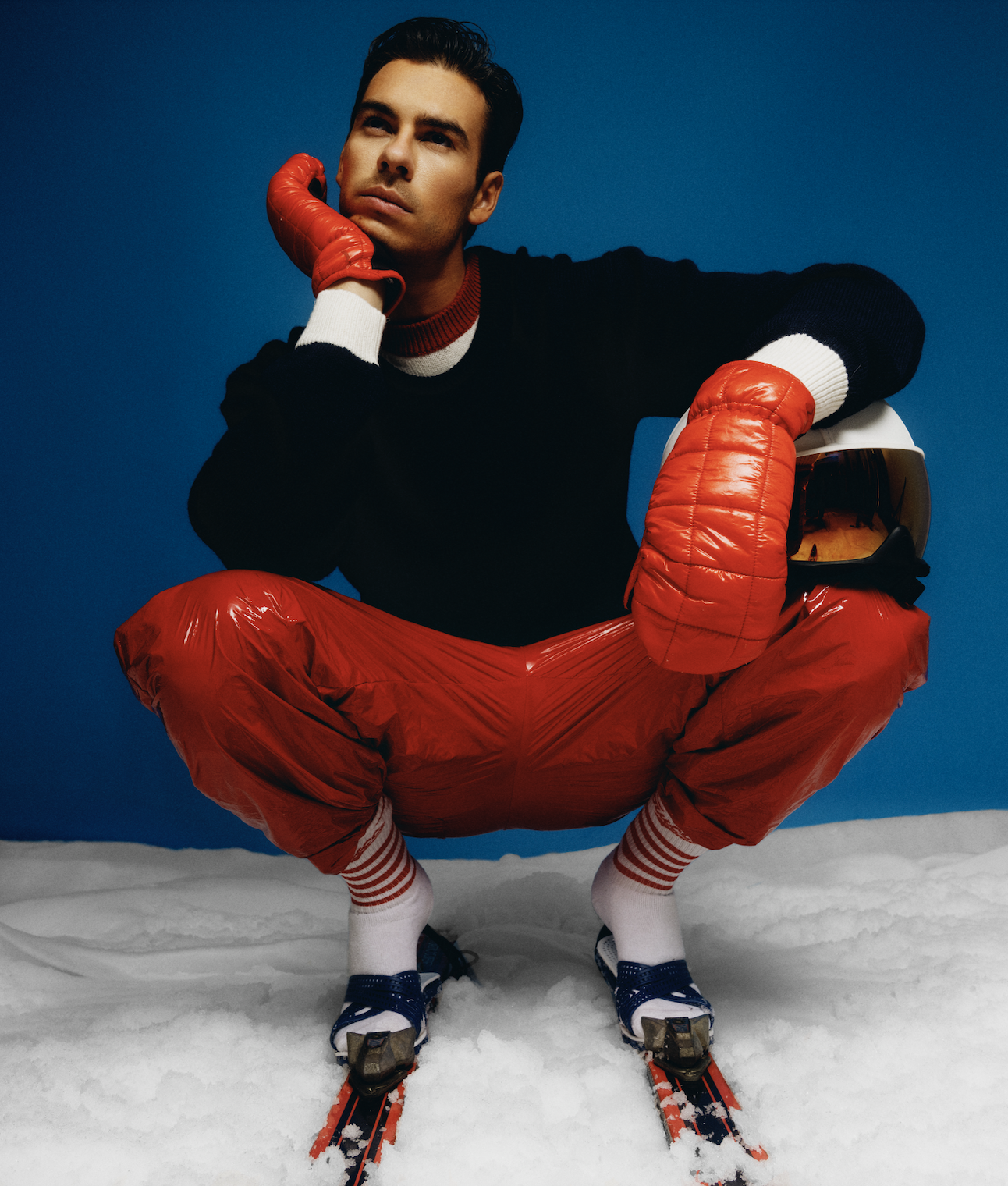
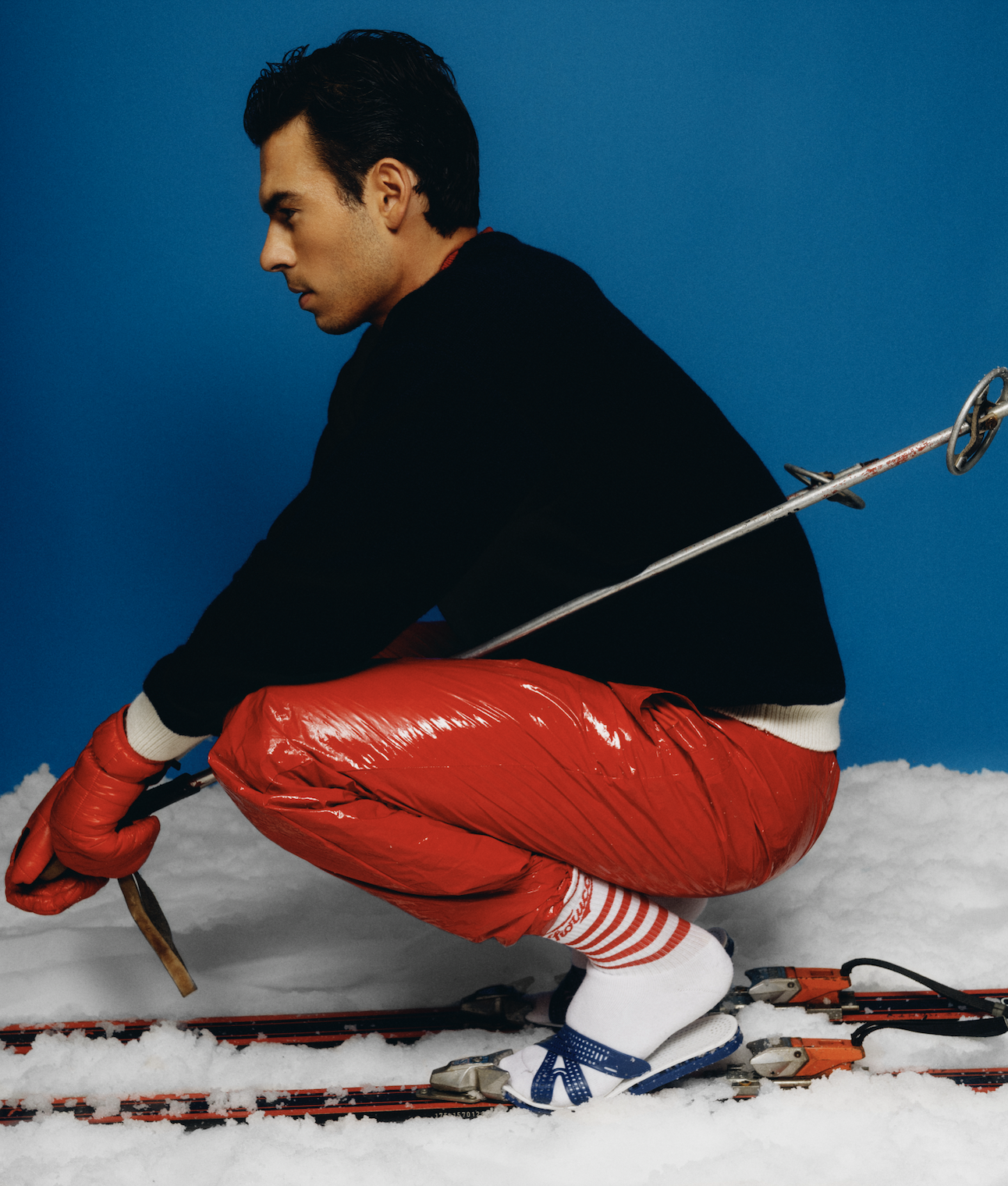
jumper, trousers, socks, and sandals FIORUCCI
mittens AIGLE
helmet FUSALP
TEAM CREDITS:
talent CORENTIN HUARD
photography ADAM AMOURI
artistic director ALEXI PAVLOV
styling JOY SINANIAN
hair and makeup MICKAEL JAUNEAU using Yepoda, Dior Beauty, and Color Wow Hair
behind-the-scenes PAUL OLINGER
styling assistants CAMILLE HUGUENIN and LENA PONTRELLI
production 1001 FILMS
editor TIMOTEJ LETONJA
interview MAREK BARTEK
