
IN CONVERSATION WITH GEORGE JAQUES
interview by JANA LETONJA
British filmmaker George Jaques has already built the kind of career many directors spend decades pursuing. A Screen International Star of Tomorrow, actor, writer, producer and founder of Athenaeum Productions, he first gained industry attention as a teenager before making his feature directorial debut with Black Dog, which premiered at the BFI London Film Festival and was selected for Cannes’ Great8 showcase. His sophomore feature, Sunny Dancer, marks an even bigger leap. Written, directed and produced by George, a coming-of-age story that refuses to define its characters by illness, premiered at the Berlin International Film Festival. Featuring a score by Este Haim and a soundtrack packed with contemporary artists, the film was developed in collaboration with Teenage Cancer Trust and includes young cancer survivors in its cast.
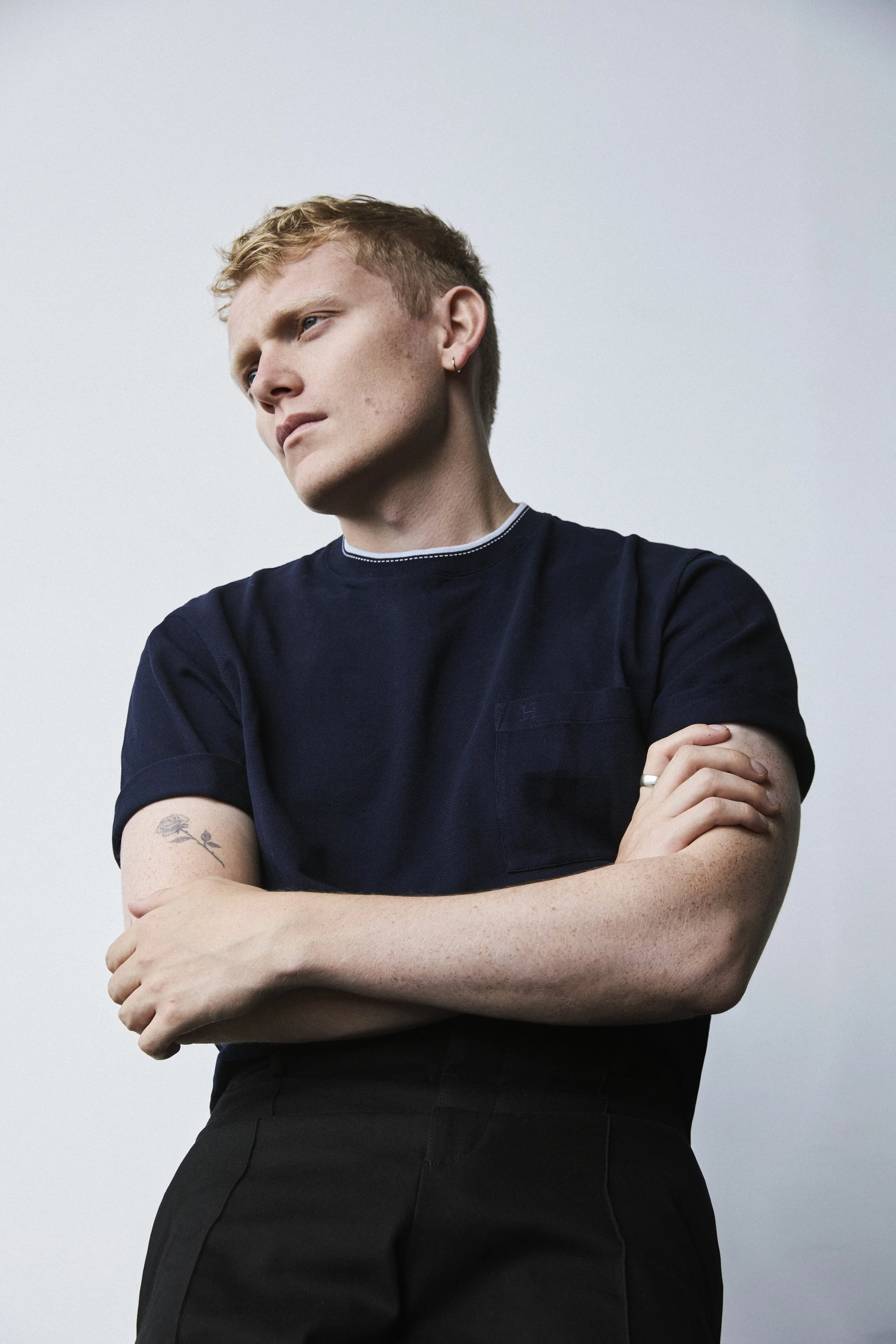
all photography by DAVID REISS
Sunny Dancer is being described as The Breakfast Club meets Lady Bird. What was the original spark for the story, and when did you realise you had a feature film on your hands?
I think the idea first came to me while I was in the edit of Black Dog and starting to think about what I wanted to do next. I’d always wanted to tell a cancer story because my mum was diagnosed with breast cancer when I was 15, but I knew I wanted to approach it in my own way. I wanted to make a comedy about cancer because while it’s obviously an incredibly difficult and painful experience, there are also moments of lightness and joy. You can’t live in darkness all the time, even in the hardest moments.
At the same time, I really wanted to make a 90s-style ensemble film because I was such a huge fan of The Breakfast Club and those coming-of-age stories where a group of very different people come together. Those two ideas were the starting point.
I also knew I wanted to level up from Black Dog. I wanted to bring together some of the most exciting young British actors and create something that felt bigger in scale, while still being rooted in character.
Then I started working with Teenage Cancer Trust as an ambassador, and that completely shaped the film. I spent a lot of time on their units meeting young people, and the thing you realise very quickly is that cancer is actually the least interesting thing about them. They’re funny, rebellious, full of life. They’re telling you about their first kiss, sneaking their boyfriend or girlfriend onto the ward, or all the normal teenage experiences they’re still having alongside everything else.
I remember seeing someone going through chemotherapy wearing Ed Hardy jeans and Jordans and thinking, »Where is that movie? Where’s the story that shows these young people as who they really are, beyond their diagnosis?«
Then my editor, Caitlin Spiller, mentioned that she used to go to summer camps for young people affected by cancer, and I remember thinking that’s the movie. That was the moment where everything clicked into place. It felt like the perfect setting to tell a story about young people finding friendship, freedom and themselves again.
Many films about cancer focus primarily on illness. Why was it important for you that cancer became “the least interesting thing” about these characters?
I think we’ve had so many incredible cancer films, and it’s almost become its own sub-genre. But what fascinated me was exploring the part that often comes afterwards, the moment when these young people are trying to figure out how to just be young people again.
I really wanted to make a cancer film with no hospital scenes, and instead focus on friendship, joy and what it means to find your way back into life after something so life changing. Because that process can be incredibly difficult too.
We don’t often see the moments where young people have to relearn how to fall in love, how to make friends, or how to navigate the parts of growing up they may have missed while going through treatment. That was the story I was really excited to tell, and my work with Teenage Cancer Trust gave me such an incredible insight into that experience.
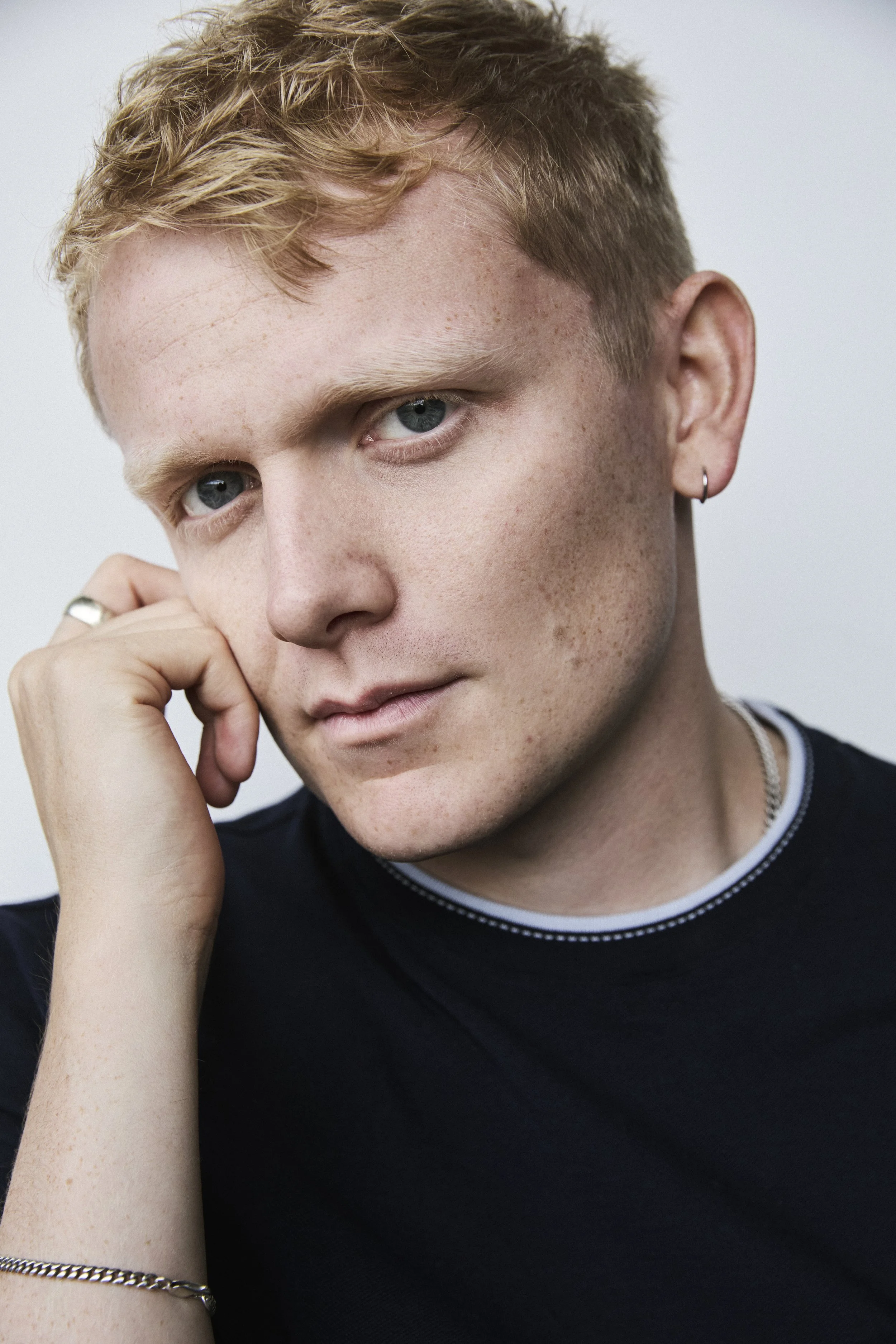
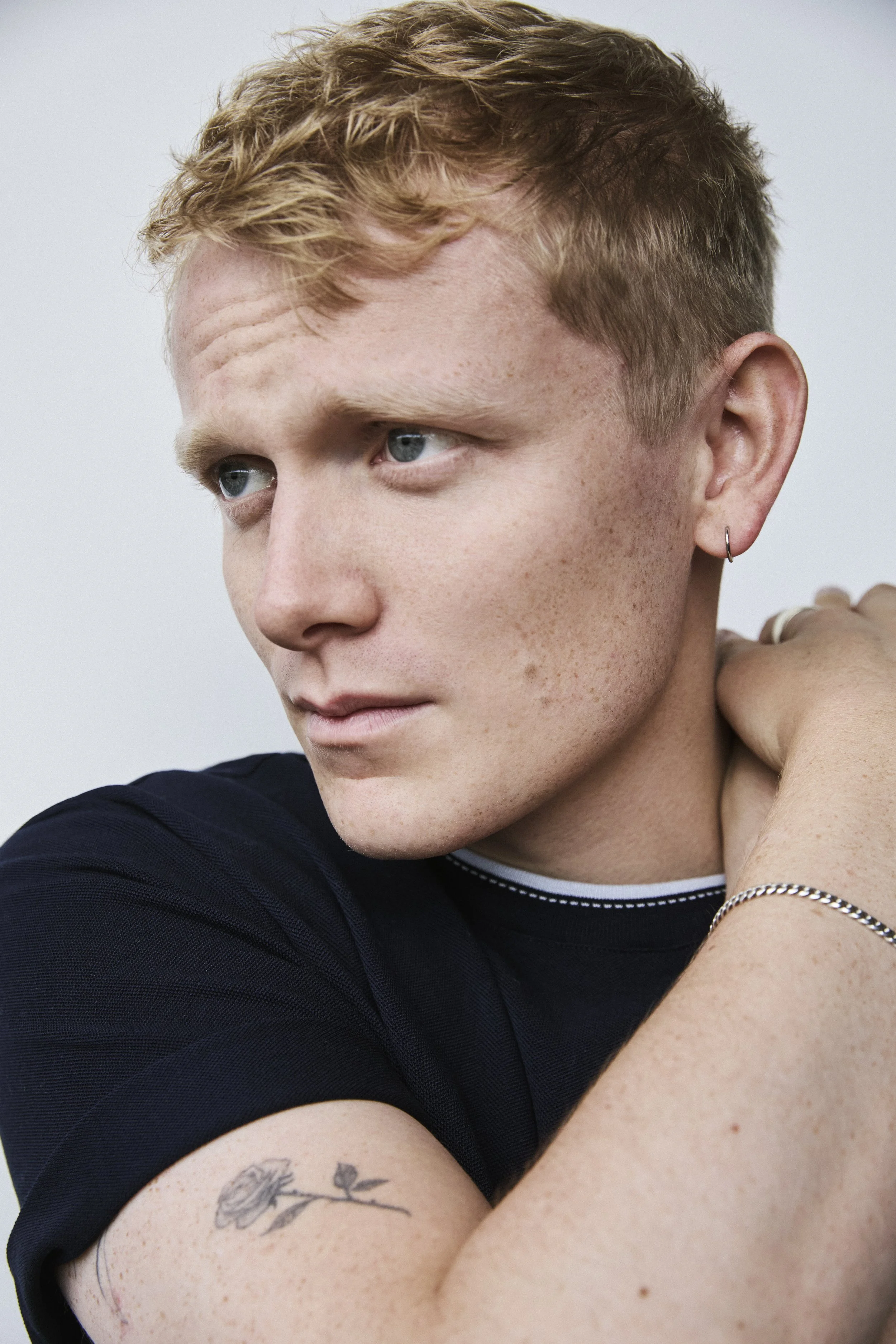
full look HERMÈS
The film is set in a summer camp for young people in remission from cancer. What kind of research and real-life experiences informed the world of the film?
I actually attended a three-day residential camp for young people who had been through cancer, run by Teenage Cancer Trust, called Find Your Sense of Tumour. What struck me immediately was that, while they had workshops around their experiences, like hair workshops and conversations around health, they were also just given the space to be young people again.
There was one moment where they did a talk about things like banning alcohol and fire extinguishers, and I remember thinking, this is such an incredible place. These young people had been through something so difficult, but here they were able to just be teenagers again, have fun and make memories. That was incredibly powerful.
The moment that really stayed with me was when everyone started introducing themselves and saying where they were from — Manchester, Leeds, all different parts of the country — and then someone mentioned Royal Holloway. I remember realising those weren’t just places on a map, they were the hospitals and units where these young people had received treatment. It suddenly hit me how much weight and importance there was behind their stories.
I became much more closely involved with Teenage Cancer Trust after that because I wanted to make sure these young people were represented authentically. We were also lucky enough to cast two people in the film who had their own lived experience of going through Teenage Cancer Trust units. Seeing them go on to have agents and build careers as actors has been incredibly special.
We also worked closely with medical experts, including Professor Rachel Howe at UCLA, who helped ensure the medical details in the film were accurate. We went through everything from the medications the characters would be taking, including Dexamethasone (or “Dex”), to make sure we were representing those experiences truthfully.
My editor, Caitlin Spiller, also brought her own experience of having cancer when she was younger, which was invaluable. Holly Bennett, our movement coach, worked with the young cast on what it can feel like to move through the world after long-term illness, and we had workshops with our medical advisers for the cast and makeup team, including discussions around scarring and the physical realities of treatment.
Because the subject matter was so personal and research-heavy, it was really important to me that everyone felt supported. We provided access to 24-hour therapy on set through Solas Mind, because cancer has affected so many people, whether personally or through someone they love. In fact, we created an “In Memoriam” section in the credits to honour people connected to the cast and crew who we had lost to cancer.
Ultimately, while cancer is the undercurrent of the film, Sunny Dancer is a story about joy, friendship, falling in love and finding your way back to life. That was always the heart of it.
As an ambassador for Teenage Cancer Trust, how did your relationship with the organisation shape the project from development through production?
Teenage Cancer Trust were involved with me throughout the entire journey of making the film. That access was incredibly important during the script stage because it helped me understand the language and the nuances around these experiences.
There are so many different ways of talking about cancer, illness and loss, and I learnt that the words we choose really matter. For example, Teenage Cancer Trust are very intentional about saying “young people” rather than “kids” and being careful with words like “brave” because they can sometimes feel patronising. Learning that helped me approach the story with much more authenticity.
Obviously, my mum had cancer when I was growing up, so I understood my own experience of it, but I hadn’t experienced what it was like to be a young person going through cancer. Listening to those voices and learning from them was invaluable.
Now that we’re at the stage of releasing the film, it feels incredibly special to continue that relationship. We’re actually holding a screening for Teenage Cancer Trust, we’ve included their logo at the end of the film, and I feel so proud of the connection the movie has with the organisation.
We’ve also started working with another charity, Flynne’s Barn, which is essentially a real-life version of the kind of place we’re portraying in Sunny Dancer. It’s amazing to know that these spaces exist in the UK and to be able to use the film to help raise awareness of the incredible work they do.
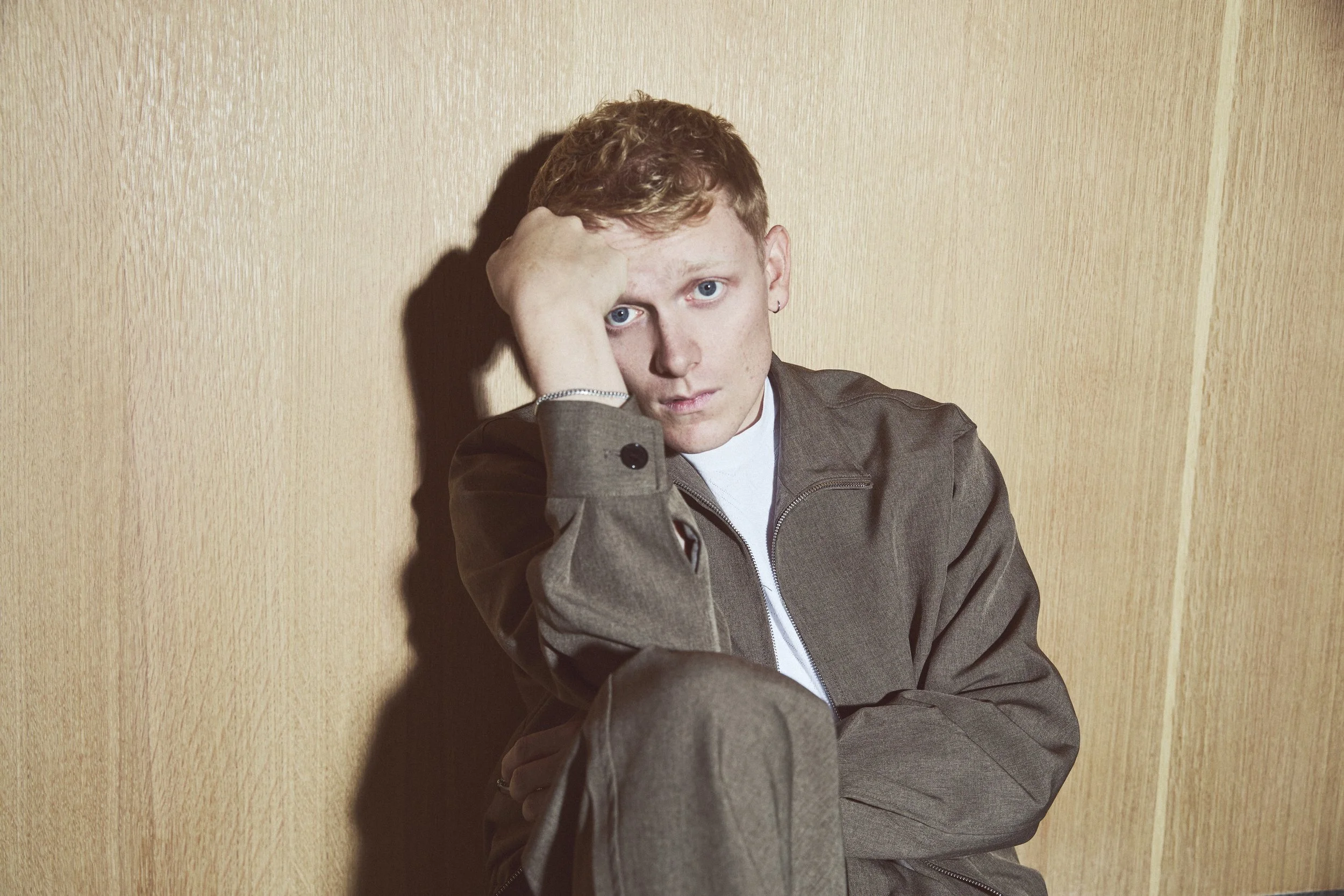
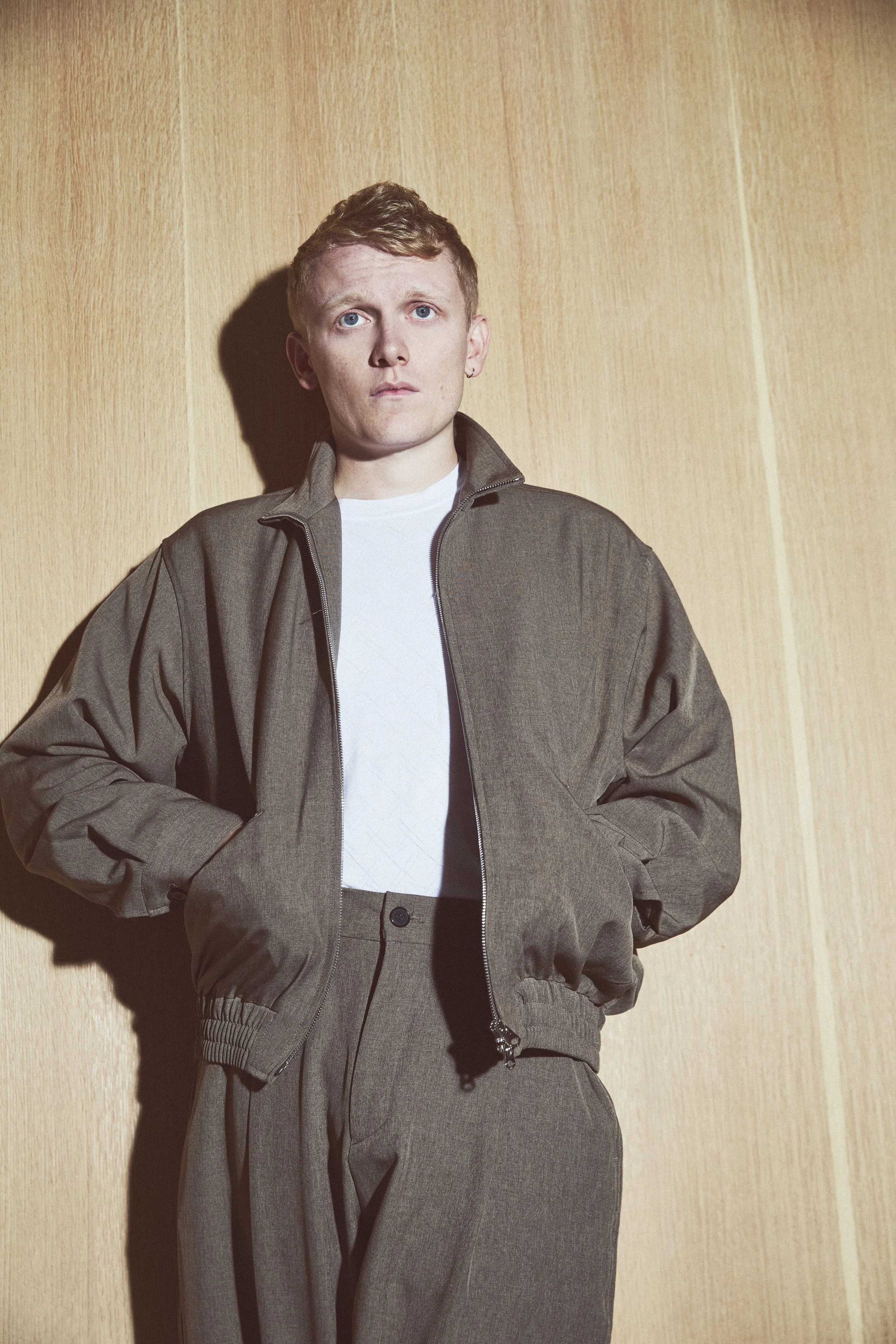
suit THE FRANKIE SHOP
t-shirt HERMÈS
socks LONDON SOCK COMPANY
You cast young cancer survivors alongside established actors. What did that bring to the authenticity and emotional texture of the film?
What I was really excited about was that we weren’t just putting them in the background of a shot. They have lines, they’re proper characters in the film, and they’re a real part of the story. Seeing them go on to get agents and start working professionally as actors has been incredibly exciting.
For me, it was so important to create an opportunity for two young people who had actually experienced this themselves. Often when you’re making a film, the focus can be on casting the biggest name possible, but I was really proud that we were able to include people with that lived experience and give them a genuine place within the film.
That said, they were always treated as actors, because that’s what they are. We didn’t approach them differently or give them special treatment, they came onto set as professionals. They just also happened to have lived through something incredibly difficult when they were younger, which gave them their own personal connection to the story.
When we asked them what their favourite scenes were, they both had moments that really resonated with their own journeys, and that was incredibly moving. They brought something unique to the film, but ultimately they were there because they were talented actors, and that was the most important thing.
You’re credited as writer, director and producer. How do you balance those different creative responsibilities, particularly on a film of this scale?
It’s really challenging because there are moments where each of those roles can almost be fighting against the others. For example, as a director you might want a huge crane shot, but then your producer brain is thinking, can we actually afford that? And then your writer brain is reminding you that you originally wrote this as a small, intimate moment between two characters. You’re constantly negotiating with yourself.
The way I handle it is by separating those roles as much as I can. When I’m wearing my writer’s hat, I try to block out the pressures of directing and producing. It’s just about the story, the characters and what’s important for them in that moment.
Then, when I move into directing, it becomes about asking, “How do I elevate this story? How do I make it feel expansive and transatlantic? How do I create that feeling you get from films like Juno, Lady Bird or Little Miss Sunshine?” That’s where I think about everything, the casting, costume, production design, makeup, sound and all the elements that build the world.
Then the producer side of me comes in and asks, “Okay, I know what I want creatively, so how do we actually make that happen?”
I always call it the “fire escape moment”. When your back is against the wall, especially on an independent film where there isn’t a huge studio coming in to top up the budget, you have to find creative solutions. You have to ask “How do we get ourselves out of this? How do we achieve the feeling we want with the resources we have?”
It’s a constant balancing act, and honestly, it’s really hard. I was 24 when I did it, which still feels slightly mad to me.
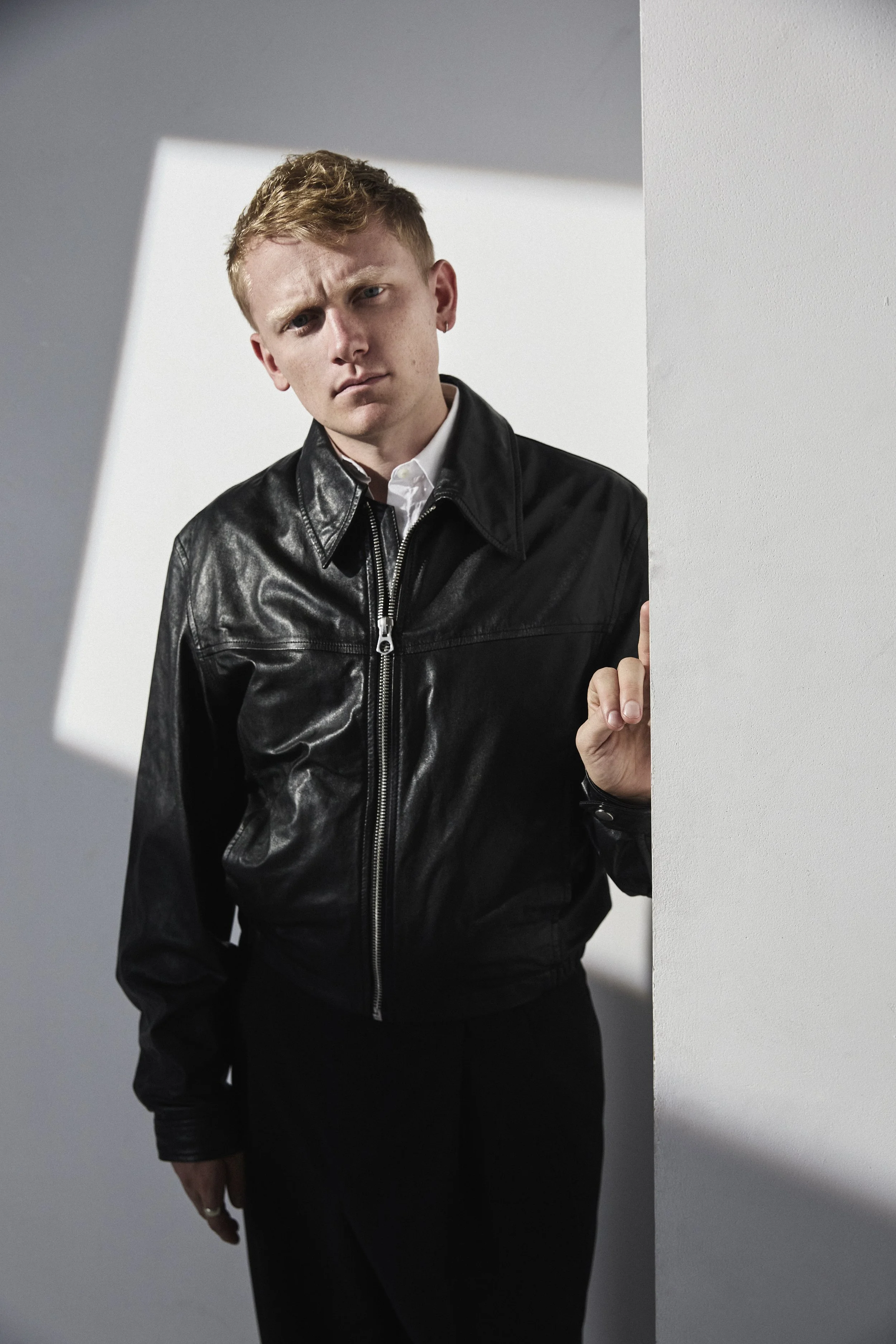
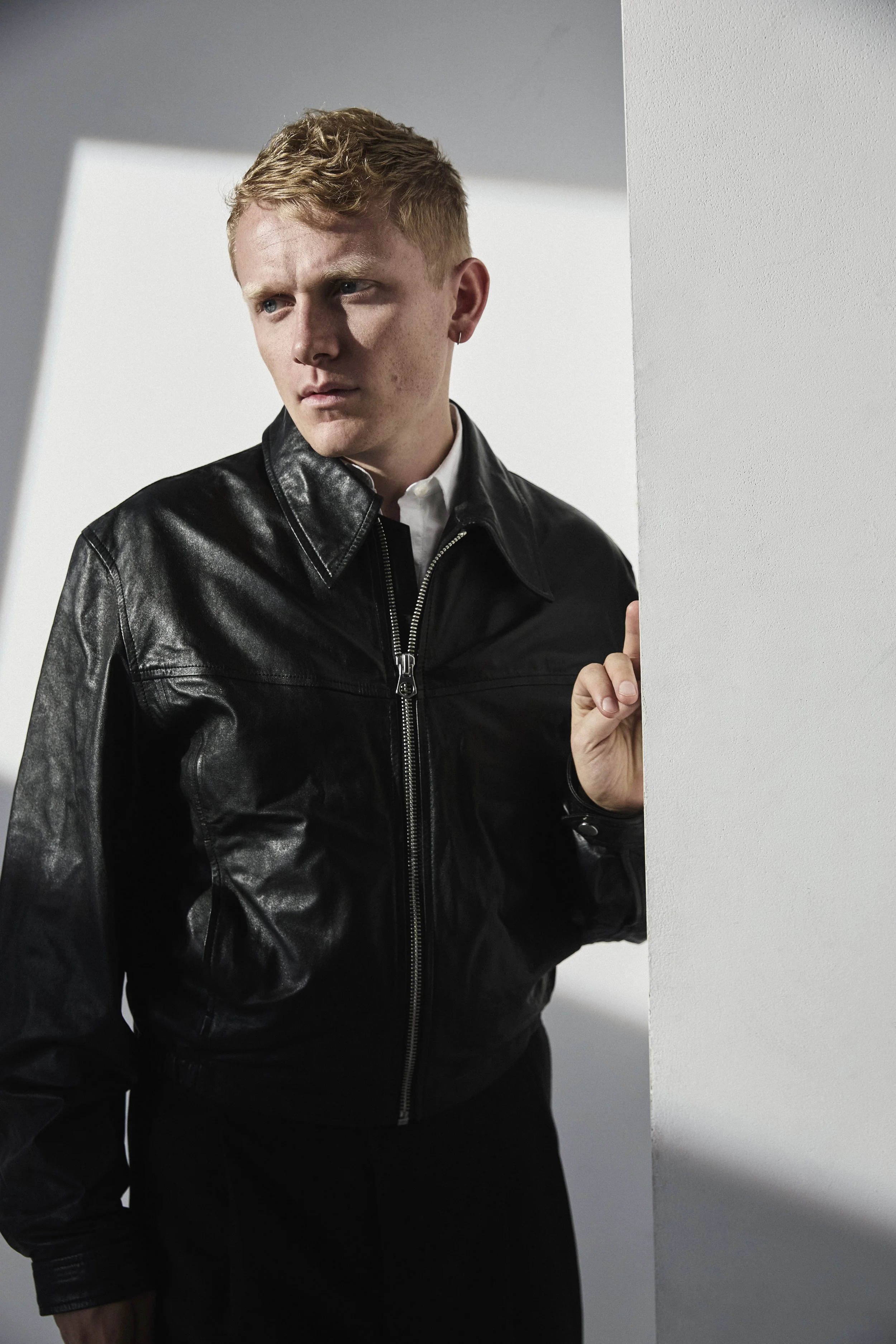
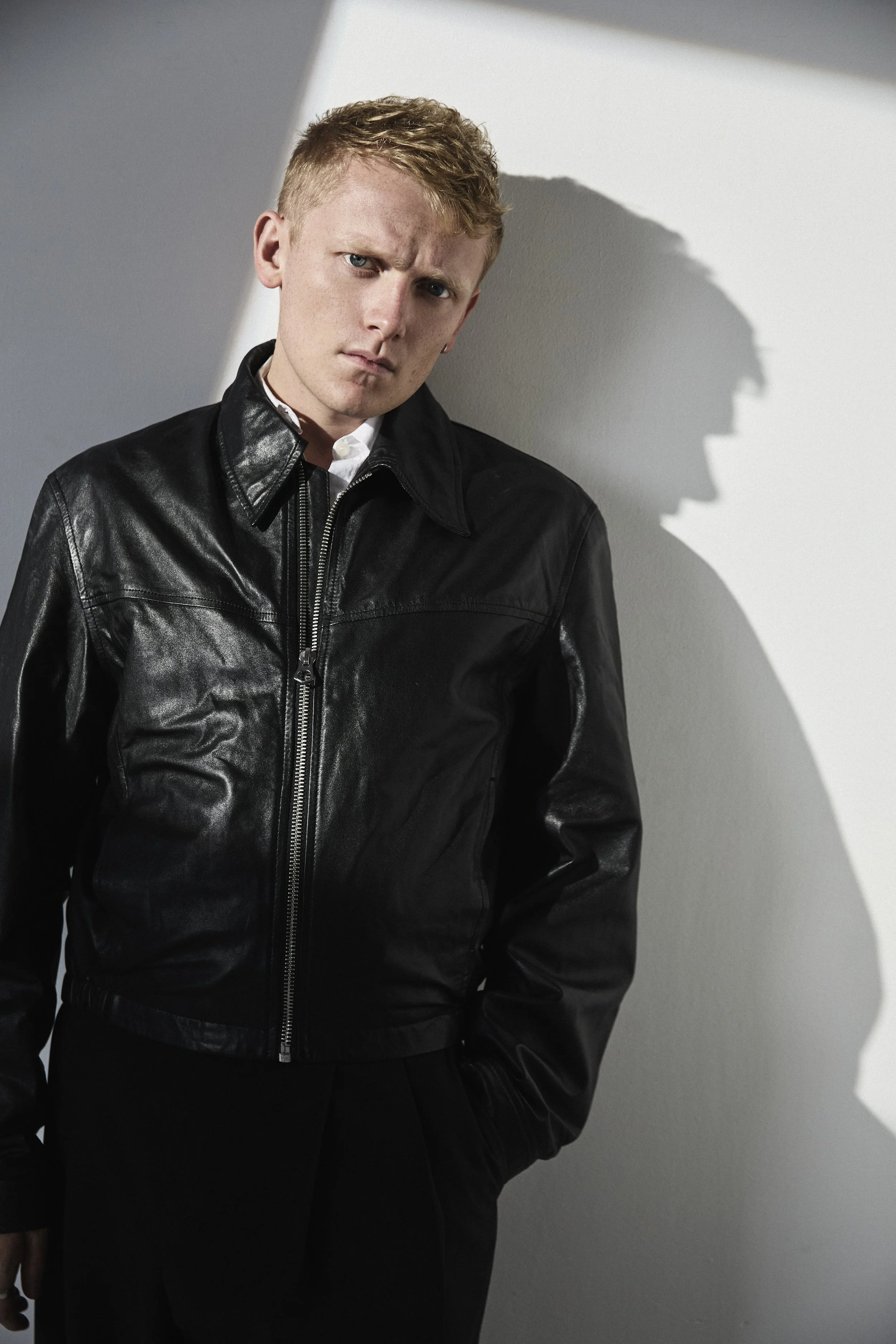
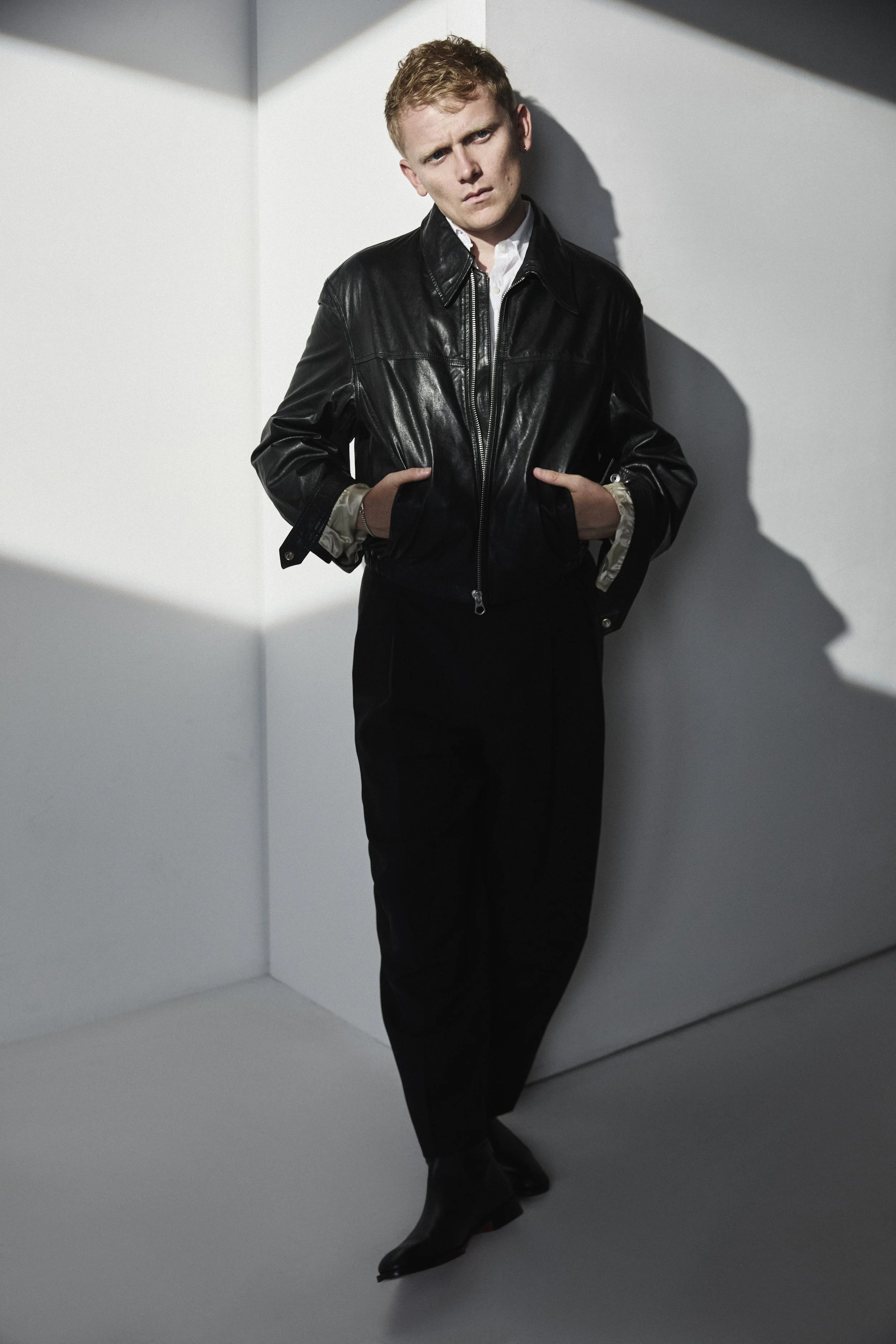
trousers JIL SANDER via Harvey Nichols
shirt SUNSPEL
jacket LEMAIRE via Harvey Nichols
boots HERMÈS
One of the film’s greatest strengths appears to be its refusal to sentimentalise its characters. Was avoiding clichés a conscious goal from the beginning?
Absolutely. Caitlin Spiller, my editor, who had been involved with me from the very beginning of the project, always said that if we were going to tell a story about young cancer survivors, we had to make it feel alive. It had to be outrageous, funny, messy and full of personality.
That was the approach from the start. We weren’t interested in making the kind of cancer film where there’s a slow-motion hospital scene or a dramatic moment of someone fighting for their life. We wanted to move away from those familiar images and simply treat these characters as young people, because that’s what they are.
They have talents, insecurities, stresses, anxieties and dreams. They’re capable of making mistakes, being silly, falling in love and getting things wrong. They’re not defined by what happened to them.
That’s what coming of age is, it’s messy. These characters are complicated and three-dimensional because that’s what real young people are.
Black Dog established you as a filmmaker to watch. In what ways did making that film prepare you for Sunny Dancer, and in what ways did you have to reinvent yourself?
That’s a really good question. Black Dog was my first feature film, I wrote it when I was 18 and directed it when I was 21. I was still very young, and in many ways it was the film I grew up making. I’m incredibly proud of the performances, the intimacy of it, and what it says about masculinity, vulnerability and emotion.
Especially in a moment where we’re having more conversations around young men and emotional expression, I think films like Black Dog are really important. It’s a film where boys can cry, and do cry, and that vulnerability is something worth showing.
The scale was also deliberately small, it’s essentially a film set in a car travelling from London to Scotland, and we made it for half a million pounds. I’m incredibly proud of what we achieved with those limitations.
But after finishing Black Dog, I knew I wanted to challenge myself and step up. I wanted to make something that was still distinctly British, but had that Americana feeling I love from films like Juno, Lady Bird and Little Miss Sunshine. I wanted it to feel bigger in scale, more expansive and transatlantic in its humour and sensibility, while still keeping that British heart.
That became the exciting challenge with Sunny Dancer. And I think that’s still the goal moving forward with my production company, which I started when I was 16, to create films, television and theatre that make people laugh, make people cry, and hopefully challenge what audiences expect from a genre. I want to make work that feels ambitious, emotional and international, something that has the energy and polish of a studio film, even when it’s made with an independent budget.
You founded Athenaeum Productions at 16. Looking back, what were the biggest lessons from building a company while still a teenager?
I was a kid when I started the company. I was 16, I wrote my first play, directed it, produced it and acted in it. I definitely wouldn’t recommend doing all four of those jobs on one project anymore because it was a lot, but it came from a real desire to tell stories.
Athenaeum was born out of ambition, but also out of something very personal. We lost a friend when we were growing up, and I always wanted to tell a story about teenage drug culture in London. Then my mum was diagnosed with cancer, and I started the company the following year. Looking back, I think part of it was also about having something I could control during a time when so much felt out of my control. But you can’t build something forever from that place, you have to rediscover why you’re doing it and fall in love with it in a new way.
What I’m most proud of is that we’ve always tried to approach everything with kindness. People enjoy working on our projects, and we’ve built really meaningful relationships over the years. There are people I worked with when I was 16 who I’m still collaborating with now, and that feels incredibly special.
It’s been a real journey over the last 10 years, from increasing budgets and bigger productions to working with incredible actors and growing the scale of what we do. But the thing I’m proudest of is that we’ve always stayed true to ourselves. We’ve never wanted to just follow what everyone else is doing or take the easiest route.
If someone tells us something is too difficult or impossible, our instinct has always been, “Well, let’s try.” We have a bit of a head-in-the-clouds mentality, and I think that’s a good thing. It’s much more exciting to dream big and then adjust when reality catches up than to limit yourself before you’ve even started.
As someone who acts, writes, directs and produces, do you see yourself ultimately specialising in one discipline, or do you thrive on wearing multiple hats?
Truthfully, I’ve been wearing multiple hats since I was 16, so it’s always felt like a natural part of how I work. But what I’ve learnt is that I don’t want to do everything on one project anymore. That was definitely a lesson from the early days.
There are projects we’re making as a company where it feels right for me to direct, and there are others where I know I’m better served focusing on writing, producing or acting. I think there are parts of each discipline that I absolutely love, and there are parts that are more challenging, but that’s why I enjoy having the balance. When I spend time away from one area, I find myself missing it and coming back to it with fresh energy.
I also think the industry has traditionally been quite focused on putting people into boxes, but I love that we’re seeing a shift away from that. The rise of Gen Z talent especially shows that people don’t have to be just one thing. They can be actors, musicians, writers, creators, they can explore lots of different forms of storytelling. I think that’s really exciting.
After Berlin and ahead of the film’s theatrical release, what has been the most rewarding response you’ve received from audiences so far?
When we tested the film, we were lucky enough to get a 93% response from young audiences, which absolutely blew me away. But I think the responses that have meant the most have come from people with a personal connection to the story.
We screened the film for a group connected with Teenage Cancer Trust, and they said, “I wish we’d had this when we were going through chemotherapy.” I remember walking away from that screening and just crying because it was such a beautiful and meaningful response.
The other thing that has really stayed with me is people saying they leave the cinema dancing. They leave feeling grateful to be alive, wanting to call their mum, make the most of their time, go travelling, try something new, take that leap, just really embrace life.
I think that’s such a special reaction for a film to inspire. If people leave the cinema feeling more connected to life and the people around them, then that’s everything I could have hoped for.
For young filmmakers looking at your career and thinking “that’s impossible,” what practical advice would you give them?
I always say that you should never compare your journey to someone else’s. My path has been quite unusual and very specific, from starting a company at 16 to where I am now, 10 years later, but everyone’s journey looks different.
The biggest piece of advice I’d give is go and make your own work. Don’t wait for permission. A script can be four pages long or 100 pages long. You can film something on your phone, make a short film, write a scene, film yourself acting. Whatever it is, just start creating. That’s where opportunities come from, because making work is how you meet people.
People always ask, “How do you meet these people?” and the answer is by putting something out into the world and being brave enough to share it. Email people, reach out, ask questions. They might say no, but even then, you’ve created a connection and started a conversation.
The most important thing is to be passionate and stand behind what you make. Of course you’re going to learn and improve with every project, but you should still be proud of what you’ve created. Be able to look at it and say, “I learnt from this, I’m proud of this, and I put it out into the world.” Because once it’s there, it’s part of your journey forever.
Finally, what excites you most about the future, both for Sunny Dancer and for your own next chapter as a filmmaker?
I’m just so excited for Sunny Dancer to become the audience’s film. I can’t wait for people to discover it this summer, but also hopefully continue to find it years from now. I feel like I’ve made something that has a timeless quality to it, and the idea that it can live beyond this moment and connect with people in the future is really special.
I’m also excited that it’s no longer just mine. It belongs to everyone who watches it now, and that feels like such an amazing part of the filmmaking process.
Looking ahead, I’m really excited about continuing to explore the space between music, film, fashion, television and theatre, the crossover between all those worlds. Collaborating with artists like Haim again, and working with brands like Hermès, Dior, Prada or whoever it may be, to find new ways of telling stories feels incredibly exciting.
Ultimately, I just want to keep making work that makes people laugh, makes them cry and allows me to collaborate with amazing actors and creative people. I’m so proud that I got to make my second feature film at 24 and that it’s now being released when I’m 26. I love this industry, it’s such a huge part of my life, and I’m excited to keep growing within it.
But I’m also excited for the things outside of filmmaking too. I’m going to Thailand this Christmas, and I’m really looking forward to stepping away, experiencing new things and having a bit of adventure.