
IN CONVERSATION WITH THE SCRIPT’S DANNY O’DONOGHUE
interview by MARIA MOTA
Ahead of today’s release of The Script’s new album, The User’s Guide to Being Human, we sat down with Danny O’Donoghue to talk about the inspiration behind the record, reconnecting with the people who helped shape the band’s sound, and what it means to stay human in an increasingly digital world.
Led by the single Man in the Arena, the album explores themes of connection, identity, vulnerability and finding your way through life. From the nostalgia of The Crowd Was Singing Wonderwall to I’m 100 Different People, the record is ultimately about the messy, contradictory emotions that make us who we are. As Danny puts it, the album is an attempt to make sense of what it means to be alive, and to remind us not to lose sight of real human connection along the way.
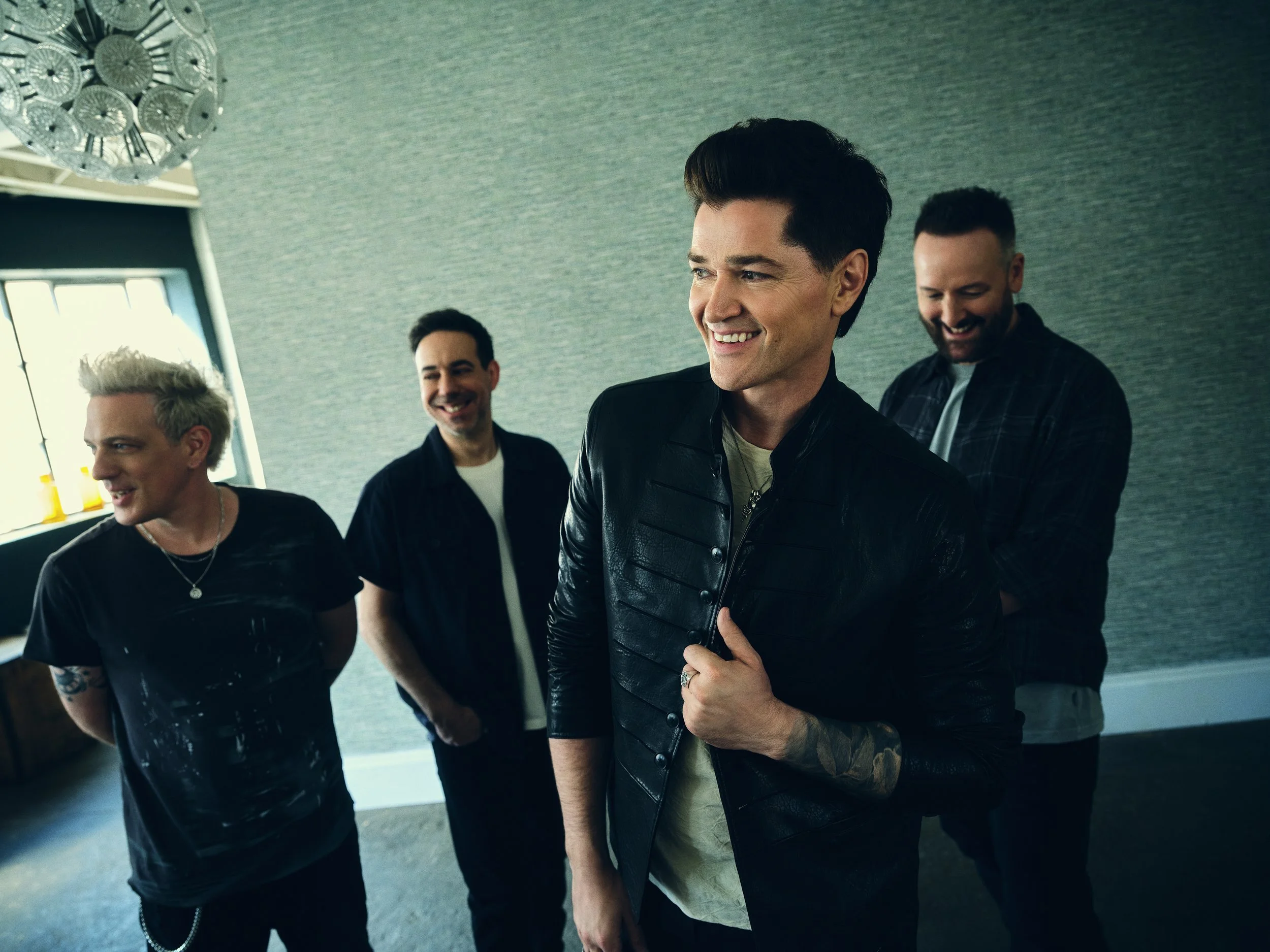
all photography by SIMON EMMETT
The album is called The User’s Guide to Being Human. Was there a particular moment while making this record when you realized that was exactly what the album was about?
It was pretty much when we were creating the song itself. We were up in the hills of LA, and they have these tiny delivery robots driving around. One passed us, and there was a homeless man lying in its path. The robot was trying to get over his legs but couldn’t move forward. It felt like this crazy dystopian scene, this shiny vision of the future literally running into the brick wall of the reality of how difficult it is to live as a human being.I went back into the studio and said to the boys, “This is crazy. We’re forgetting what we were or who we are.”
I’m really grateful that I grew up in a time when we had no phones, no social media, maybe five television channels and newspapers. I know I’m making myself sound really old, but I do long for a simpler time. So I think that was the moment I thought: we need a user’s guide, just in case we completely forget who we are and what we are.
There's a lyric that stood out to me: "I'm a hundred different people, but we all love you." It feels like such an honest acknowledgment that none of us are one fixed identity. What does that line mean to you?
Exactly, it’s about all the different versions of yourself that you can be in a single day. You can be an asshole in the morning until you’ve had your coffee, then you can be incredibly kind and romantic at night. You can have an argument with someone in the street and then come home and be incredibly nurturing. The idea is that I might be all of these different things, but actually, I’m all of them at once. That’s what makes us human.
This album is our best attempt at explaining what feelings actually feel like. And sometimes you can experience so many different emotions within a single song. That’s one of the things I love about music. It can hold all of those contradictions at the same time.

Music has clearly been your way of processing life. You've poured some of your hardest experiences into your songs over the years. Do you think songwriting has become your own user's guide to being human?
Songwriting is like the refining process for me. You know how coal or oil goes through a refinery before it becomes something useful? I think that’s what songwriting is for me. It’s taking a feeling and trying to make sense of it. You start with this raw emotion and you think, “I don’t need this part. I really want this part.” You strip away what’s irrelevant until you get to something that feels true.
And I think that’s what everybody is ultimately trying to do — make sense of the world and of what it means to be alive. I’m incredibly blessed that people want to listen to what I have to say, but honestly, if nobody was listening, I’d still be doing it anyway.
When did you start writing?
I was about 11 or 12. I’d already been playing music and singing other people’s songs, but that’s when I started writing my own. It began mostly as little songs, poems and cards for my mum or some of her friends.
If someone was feeling down, or someone had passed away, I remember writing a poem about how much they were missed, but also about the idea that they were still somewhere up there. I think I instinctively had this way of trying to transform a certain feeling, like sadness, into something else.Because it is sadness, but what sadness is, is actually love. Even as a kid, I was always trying to flip a lyric or turn an emotion around.
The lyric “Find the one you love, look into their eyes... that's the user's guide to being human.” It's such a simple but necessary reminder. The album keeps returning to connection, not just romantic love, but eye contact, presence, community. It feels almost radical to suggest that simply looking someone in the eye is enough. Do you think intimacy has become rarer?
My wife and I are constantly astonished by how our own interests can work against us. We can be sitting on the same couch, looking at the same thing, but somehow we’re seeing two different worlds. You find something online, you go down a rabbit hole, and that rabbit hole leads you into a completely different ecosystem of ideas.
I remember showing her the same funny video. At the end, she said, “Oh my God, have you seen all the comments?” I looked at them and thought, “They’re not really that funny.” Her top comments were funny, while mine were much more heartfelt or emotional. And I thought, this is insane. We’re looking at exactly the same thing, trying to connect over the same thing, but our algorithms are showing us completely different realities.
That’s when you realise you need to get back to connecting again — to take the phone out of your hands. And, like I say in the lyrics, it sounds radical to simply look into someone’s eyes and say, “Nothing else is real but what we feel inside. Hold on to each other in this crazy life. That’s the user’s guide to being human.” Because at the very end of all this technological striving, if technology wins and humanity is lost. We’ll look back and realise we had it right before. And I think, at the end of the day, everybody knows that connection is what actually makes life meaningful. Even the people building these technologies know that. Connection, dopamine, all of these things, that’s what they’re using to keep us engaged. And that’s what makes it so difficult for an ordinary person to step outside the cycle, because it’s coming at us from everywhere.
It’s incredibly hard, because the phone isn’t just a phone anymore. It’s your social media, your bank, your window to the world, your favourite artists, your music, it’s essentially your whole life. It’s sad that we’ve been sold this dream of connection with the world, but that connection has to happen through a piece of glass that’s only a few inches wide.
One thing gives me hope is whenever I talk to people, being friends, people I’ve just met, whoever, everyone seems to feel the same thing. Everyone feels that we need real connection and we are lacking it.
The problem is that knowing you need something doesn’t necessarily mean you’ll do it. Everyone who smokes knows they should quit. We all sit around saying, “I probably drink too much, I probably eat too much, I probably smoke too much.” Awareness doesn’t necessarily stop something from becoming harmful. We know it’s happening, but taking that first step is incredibly difficult.
The hardest thing is actually putting your phone away. For me, I’ve tried to dedicate the morning to myself. The phone is always going to be there. People are always going to be able to reach me. But if you start your day with a good intention, get some sunlight in your eyes, take some time for yourself, you can somewhat form your personality and decide who you’re going to be that day before you allow external input to shape you. Because if the first thing you do is pick up your phone and start checking this or that, you’re immediately opening yourself up to whatever the outside world wants to throw at you. And the morning can be such a vulnerable time. Something can set you off in one direction or another before you’ve even had the chance to decide how you want to feel. So just put it away. Give yourself that first part of the day.
As a band, what are some practices that make you feel human and connected?
Just playing music together. I mean, I’m not against technology, we use it all the time to make music, but there’s something about physically playing with other people. When I’m playing with someone, I’m completely engaged with their entire being, their energy, their aura. I’m constantly trying to anticipate where they’re going next: Are they enjoying it? Where’s the rhythm going? So I feel like playing music with people you connect in a different way than you do conversationally.
There's different receptors, no words, so you have to get it from everywhere else.
Your senses become much more attuned and alive because you’re losing one of the things you normally rely on. You become much more aware of sound, tempo, timing, tuning, all these things that you don’t necessarily experience so consciously in everyday life.
The lead single, Man In The Arena, is incredibly powerful. The message is essentially that it's always braver to step into the arena than to criticise from the sidelines. Why did that idea resonate with you so strongly right now?
Not necessarily right now, but I think because when I read Man In The Arena, which is a speech by Theodore Roosevelt, I just feel inspired. I think it’s probably something every sportsman or musician turns to when they’re trying to deal with criticism, and especially with social media, which has become a kind of blood sport.
I think the reason social media discourse has gone so far down the toilet is because conflict sells. If you post a nice photo and someone says, “Nice photo,” that doesn’t generate anywhere near as much engagement as someone saying, “You look like a fucking bag of shit.” Then you respond, “How dare you call me that. Look at you!” And suddenly everyone else is watching.
People love watching other people fight because it gives them that dopamine hit. There’s something deeply addictive about the conflict. So I think The Man in the Arena is a reminder that it’s much easier to stand on the sidelines and criticise than it is to actually step into the arena and put yourself out there.
So don’t give a fuck what people say, just do what you want to do, because they’re gonna say shit anyways.
It’s so different listening to music live, or on a speaker, on your headphones, on the car going somewhere, alone or with a group of people, but what is the one feeling you want the person who’s listening to this new album to feel or experience?
Maybe it’s the feeling of honesty in the songs. What I think people resonate with most is when they hear a truth that you’ve said about yourself, but they recognise it in themselves.
It’s the same with movies, and it’s the same with comedy. You hear something and think, “Fuck, I’ve always thought that, but I’ve never said it out loud.” Comedy does that beautifully. It can be social commentary, and you hear so much of life in it.
Music can do the same thing, but it has this other dimension to it as well. It can explain so much of the unexplained. You can have a moment with a guitar that just soars, after you’ve already said everything that needed to be said, and suddenly the music just launches you off into this other euphoric place. So I guess it’s that recognition of being human within a song.
This album feels a bit like a rebirth, but also a reunion in some ways. You brought together Andrew Frampton, Steve Kipner, Jimbo Barry, Charles Melling, all people who helped shape some of The Script's biggest songs. What was it like having everyone in the same room for the first time?
Insane. It felt great, it felt right, it felt like home. I think we’ve all experienced so much together. We’ve all grown up being part of The Script and everything we’ve done around the world, so reconnecting again felt really special. But even after all that time, there was this feeling that we had some unfinished business.
There’s a song on the album called Living Our Life Without Me, which could almost be a continuation of The Man Who Can’t Be Moved. It’s like, okay, let’s go ten years later. What happened?
So while we were writing it, we were thinking, “This could be the next chapter of The Man Who Can’t Be Moved.” I mean, that song became this fucking cultural behemoth that everybody around the world knows. I don’t know if this one could ever reach those heights, but it’s definitely a good try.
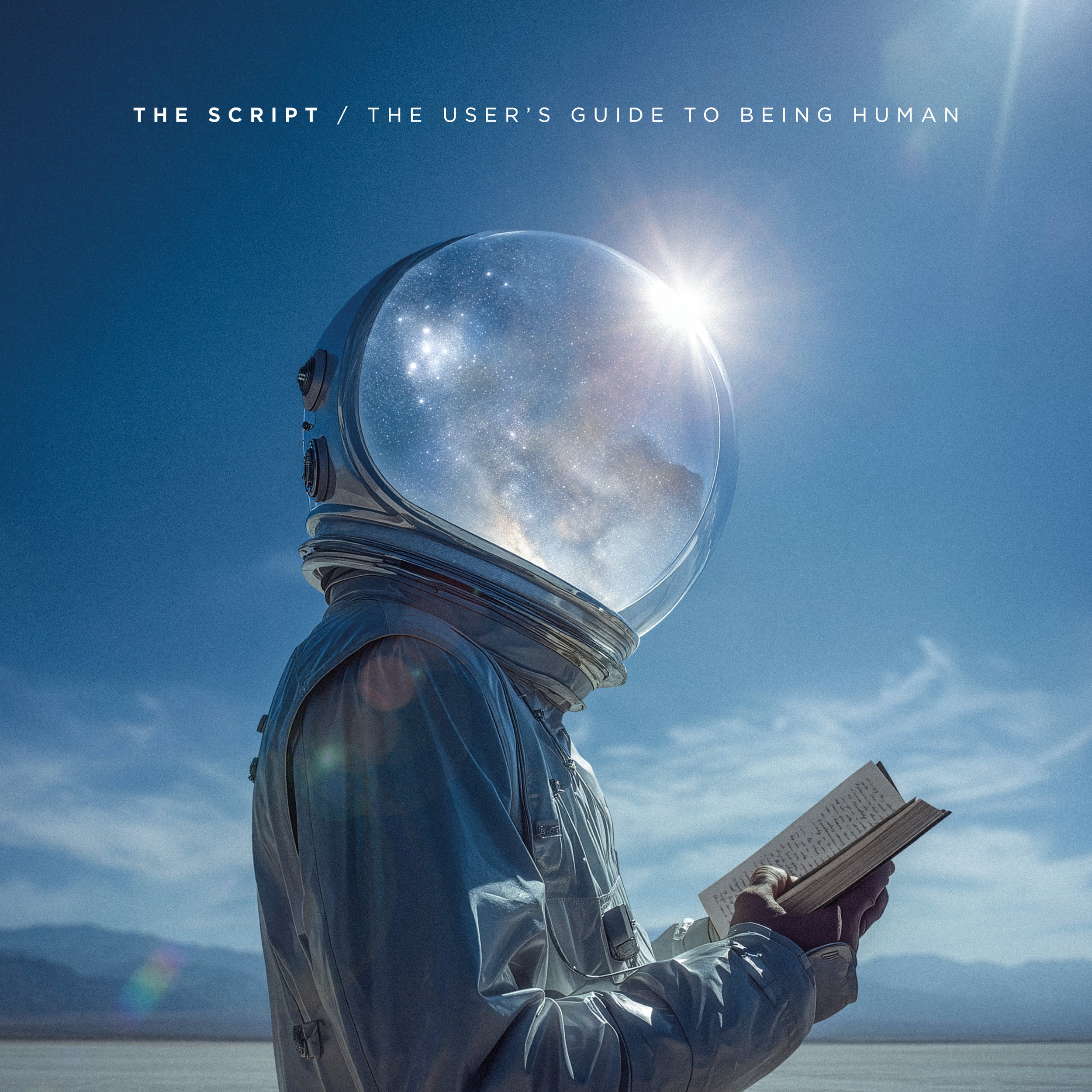
image courtesy of THE SCRIPT
Is there something beautifully irrational about being human that you'd never want to lose?
Passion. In both ways, love and hate.
You want the world to be rid of hate, of course, but then you probably wouldn't know the heights of love because everything needs an opposite. So I don't know if you can have one without the other like world peace, because in order for peace to exist there must be war, so I don't know. I wouldn't want to mess around with god's recipe.
Is there anything that obsesses you creatively at the moment?
We’ve made a 16-minute short film that we’re calling a “micro-drama,” and I’ve been obsessing over how we’re going to bring that whole project to life. We’ve actually made four one-minute micro-dramas that are like little movies set to our music, each ending on a big cliffhanger. They lead into the 16-minute short, which will use parts of the new album as its soundtrack.
Micro-dramas are this huge format across Asia at the moment. They’re essentially short films that are broken up into one-minute episodes and released on TikTok or other platforms. People aren’t necessarily sitting down to watch a two-hour movie anymore — they’re watching a minute, then another minute, then another. There’s this whole industry built around it.
I wanted us to be one of the first bands to really do that with music, so we’ve made our own version. And now I’m obsessed with how we roll it out and how people are going to perceive it.
There are also connections between the different pieces. For example, the Man in the Arena video connects to another video we’ve just released, where a crowd is singing Wonderwall. You start to realise, “Oh shit, this is all set in the same place.” It’s all part of the same world.
Are you becoming more of a visual person as you create music, or has that always been part of the way you think?
I’m becoming more so, yes. Our songs are like mini movies. I mean we are The Script. So it makes complete sense for us to go into that area.
A lot of the social media platforms are changing, especially with younger people. In places like Ireland and the UK, there are now restrictions around under-16s using social media, and we’re already seeing conversations on that having a positive effect on things like anxiety and depression.
So naturally, you start thinking about where young people are going to migrate instead. I think that’s going to become a really interesting space because it brings three things together — personality, music and visuals. It’s almost a safer space, but it’s also a more complete way of experiencing an artist.
Although I’m saying all of this like I know what I’m talking about, and I have absolutely no fucking idea. I think everyone is just trying to figure it out as they go. And maybe that’s the point. That’s life, really. We don’t know exactly what we’re talking about, but we’re talking about it anyway. And I think that’s a pretty good description of what it means to be human.
Man In The Arena is about courage, but I kept wondering whether courage is really just another word for vulnerability. Do you think they're the same thing?
They’re cousins. Totally. Because in order to have courage, you have to have the strength to do something even though you feel vulnerable. To move towards something even though you’re afraid of it, and that takes both courage and vulnerability. It’s saying, ‘I might not be good enough, but I’m going to try anyway.’
I’m glad people are hearing that in the songs, because that really is what the song is about. It’s not about winning or losing anymore. It’s about simply trying. Because even when you try, you’re going to lose sometimes. I’ve lost so many fucking times in my life. For every hit song we’ve had, there are probably ten that came out that were shit.
So it’s about participation. It’s about getting in the ring. You might lose the fight, you might win the fight, but if you’re not in the ring, you’re just somebody standing outside watching. Nobody wants to be the person who didn’t get to dance at the dance.
And that’s where the vulnerability comes in. You might get rejected. You might get a “no.” You might sound terrible. You might write a bad song. But without those experiences, you can’t experience the highs of life either.