
IN CONVERSATION WITH JULIA SAUBIER
interview by JANA LETONJA
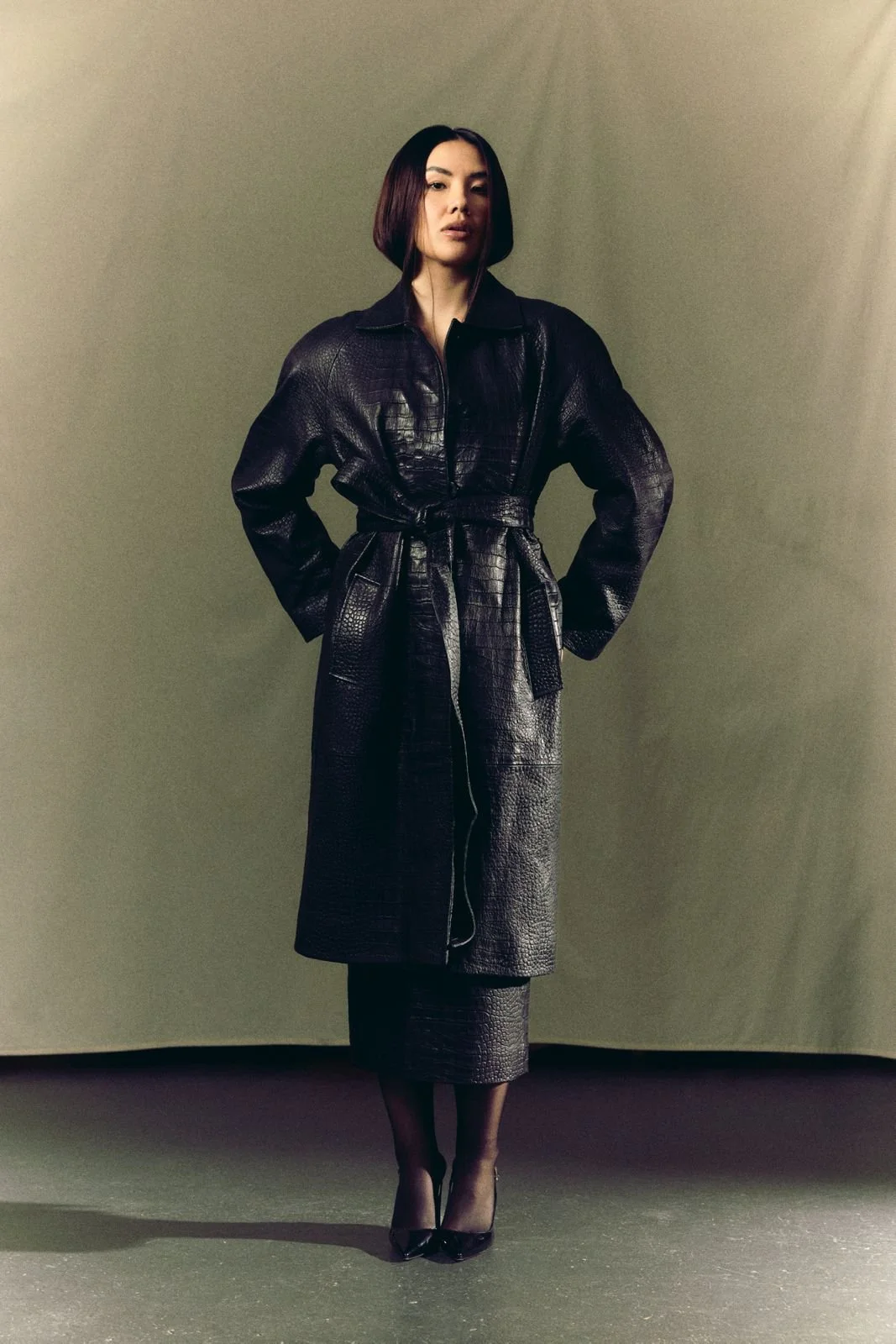
Filipina-French actress Julia Saubier’s career sits at the rare intersection of global storytelling, intellectual rigour, and physical discipline. She brings a truly international perspective to her work—one shaped by journalism, economics, and a deep commitment to reframing how Asian women are represented on screen. Her recent and upcoming projects span major studio films and independent cinema, including Panic Carefully, The Magic Faraway Tree, and the British-Filipino feature When Autumn Comes, now streaming on Amazon Prime Video. Trained in Shaolin kung-fu, Filipino martial arts, and classical acting, Julia is building a career defined by intention, range, and a belief in storytelling as both cultural and political force.
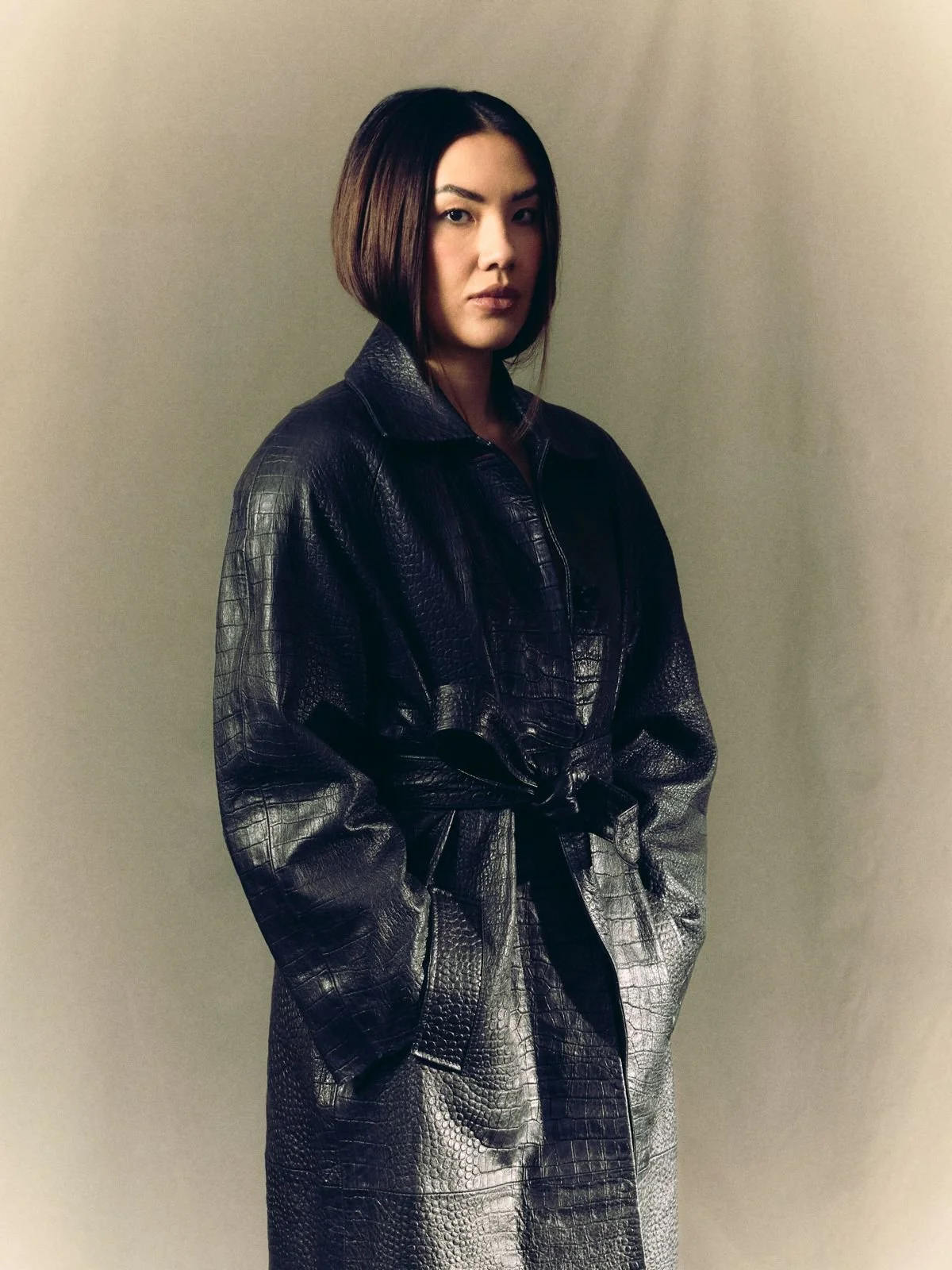
Your background spans continents, cultures, and disciplines. How do those global experiences shape the characters you’re drawn to?
My global experiences have made me sensitive to nuance and aware of perspective. They've made me curious about the unseen forces shaping a character’s life, their cultural inheritance, their relationship to power, race, class, gender, community. I’m drawn to characters who are navigating those tensions, whether they’re negotiating with those systems or actively resisting them. Ultimately, though, I’m most drawn to the resilience of the human spirit. In all the characters I play, regardless of their circumstance, I always try to find an inner strength in them.
You’ve worked across studio films, indie cinema, and shorts. What excites you most about moving between those worlds?
Whether it’s a large studio production, an indie, or a short film, being on set is my happy place. I’m energised by the opportunity to inhabit different worlds, step into complex, layered characters, and be at the heart of the story alongside the other cast and crew who become the pulse of each project. I’m excited by how a director’s vision and the contributions of everyone on set can challenge me to bring out my best work. That creative exchange—the conversations, the discoveries, the risks—is what keeps the work alive for me. I’m also deeply motivated by the impact storytelling can have. If the work resonates with audiences or helps someone feel seen, that’s meaningful to me. I feel so blessed and grateful to call this work.
In When Autumn Comes, you play a lead in a British-Filipino story. What did that project mean to you personally?
This was my first project straight out of training, and as a Filipina-French actor working in London, stepping into the lead role, a Filipina-British character, felt very multiversal, very everything everywhere all at once,like I was playing another version of myself in the multiverse. There was something beautifully surreal about that overlap of identity and experience.
I was inspired working alongside other Filipino-British and Filipino-European cast and crew, and it was affirming to be part of a narrative centred on the Filipino diaspora experience. The filmmakers were fresh out of film school. It was a skeletal, intimate crew. It reminded me of being back in film school myself, like we were all figuring things out together, improvising, experimenting. There was space to take risks, follow instinct, and shape the work in a personal way. The film was experimental, and my work was not without its imperfections, but it was later acquired by Amazon Prime. That journey was such a powerful reminder that you never quite know where a project will end up. It taught me to say yes to stories and characters that truly resonate, commit to the work wholeheartedly, and trust that, in time, it will find its place.
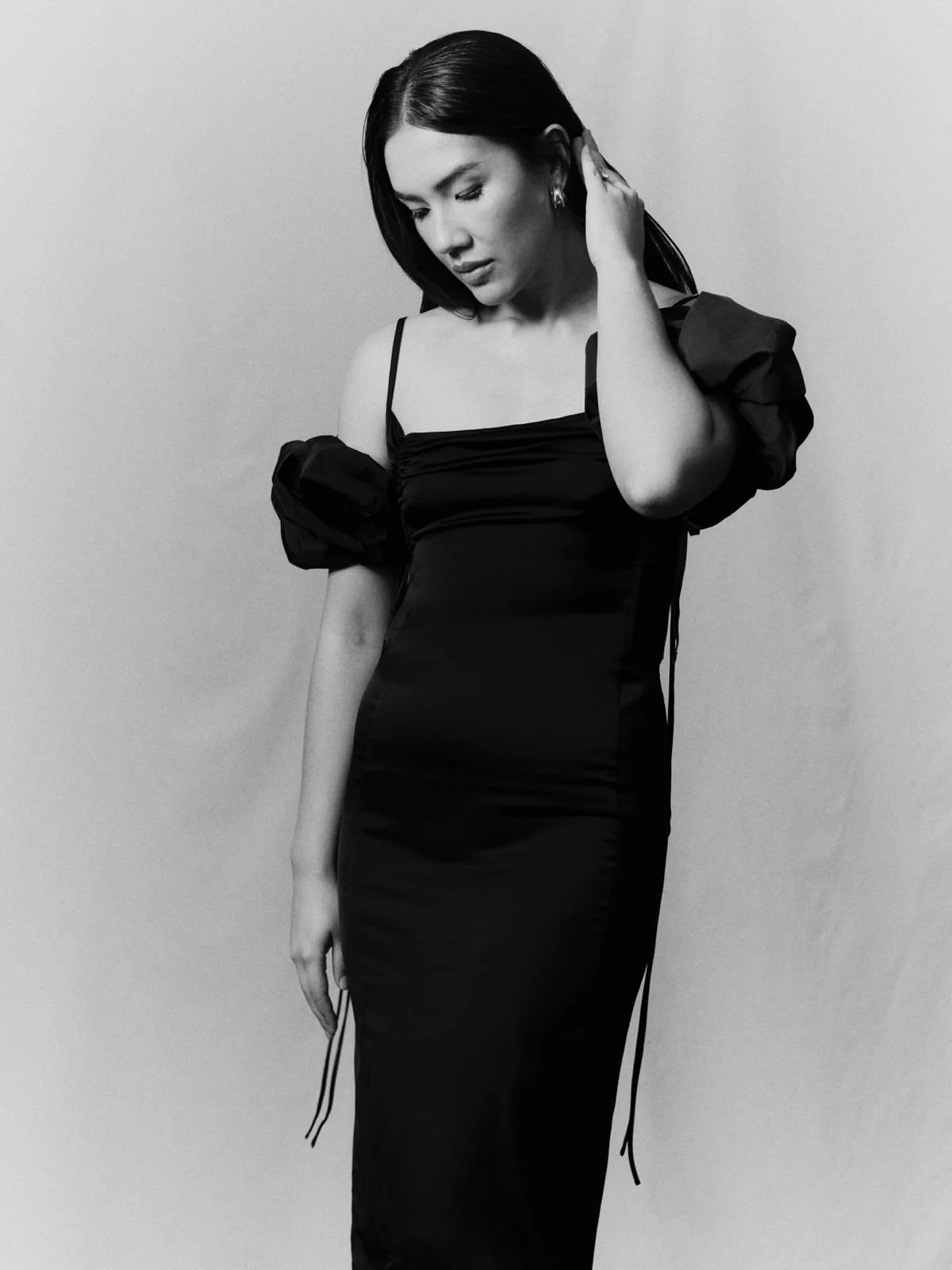
You studied sociology and international politics before fully committing to acting. How does that lens inform your performances today?
My academic background has taught me that every action exists within a system of culture, history, politics, and power. When I build a character, I think about these macro-level forces like institutions, race, gender, class, and inequality. What pressures are on them? What narratives are they living inside? Because I’m aware that systems shape individual lives. At the same time, my classical acting training in Method and Meisner keeps me focused on the micro-level – communities, families, psyche, and the self. For me, the most compelling work happens at the intersection of the two approaches, where the personal and systemic meet, and a character fully comes to life. The interplay between these two ways of approaching character is where I like to work.
Film has the power to expand our sense of possibility, and so while it’s important for me to understand where a character would traditionally sit within the world and its systems, I’m equally interested in consciously challenging or subverting those expectations, creating space for something more expansive, truthful, or unexpected.
Having interned at the UN, CNN, and Reuters, what parallels do you see between journalism and acting?
Both are forms of storytelling to communicate the human experience, albeit done in very different ways. Ultimately, I see both as a way to be of greater service to humanity because journalism and acting should move people to take action in their own lives and in their communities.
You’ve spoken about discovering Asian women portrayed as leaders through Chinese cinema. Why was that moment so transformative?
I did a master’s in Economics at Yenching Academy of Peking University in Beijing, and my thesis and degree focus was on Chinese cinema. I watched a lot of wuxia, a genre of Chinese martial arts films and at the helm of them were strong Asian women. Asian women were consistently the image of strength, power, and leadership, which was foreign to me. Being from the Philippines and growing up in an international setting, many of the films and TV shows we imported were American, and I didn’t grow up seeing many examples of Asian women on screen. When we were represented, a lot of the stereotypes attached to Asians were negative, that we were domestic, smart but not creative, and quiet. Consistently seeing Asian women as the symbol of power and central to their own narratives completely transformed my sense of self; it instilled in me this mission to continue to work towards being this example in my own career, and also affirmed the power of filmmaking and culture in shifting narratives, be it personal or collective. It was the definitive moment in my career where I decided to pursue acting because of how, on reflection and in real-time, I had witnessed how massively film had shaped my own self-concept.
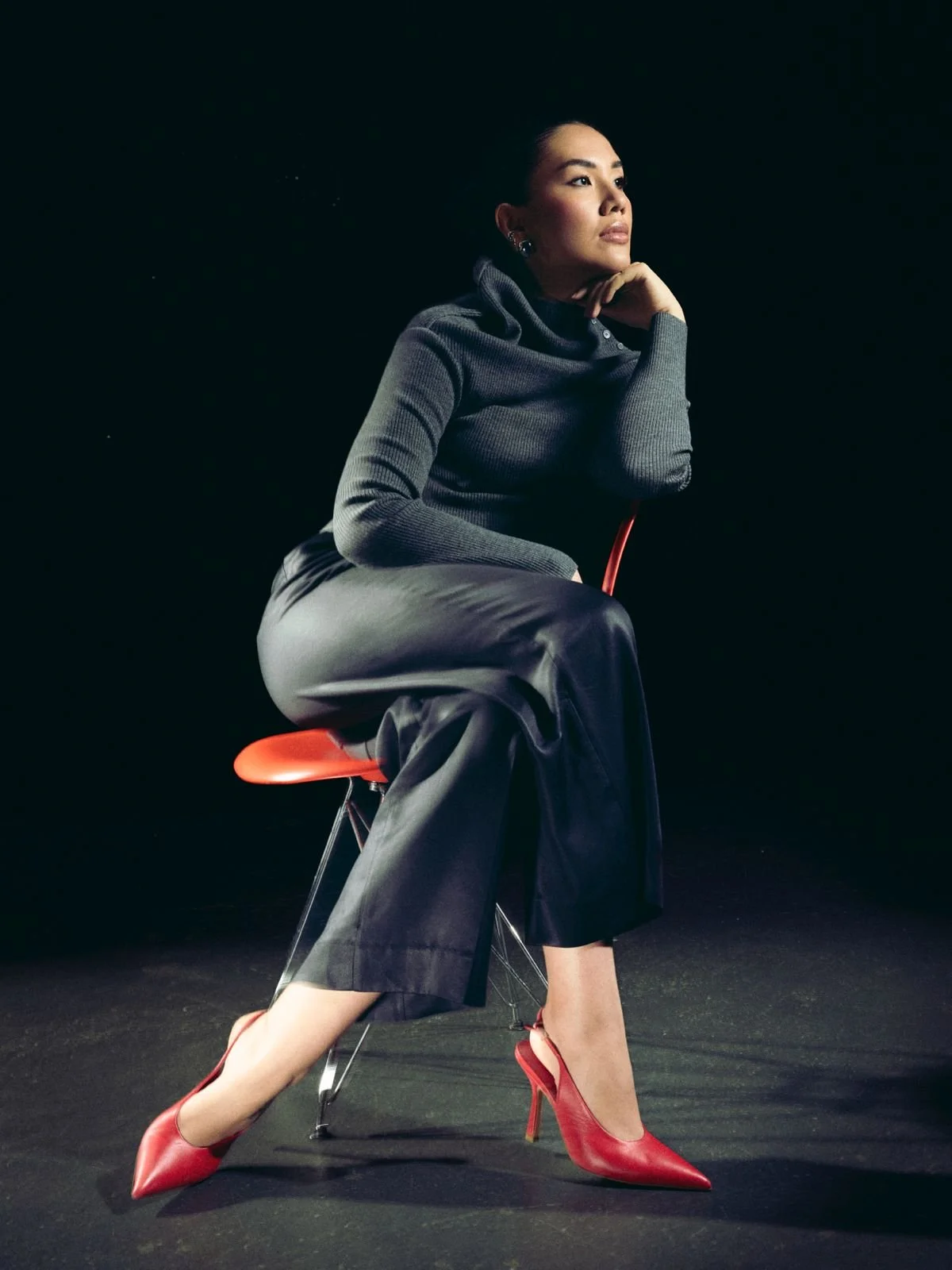
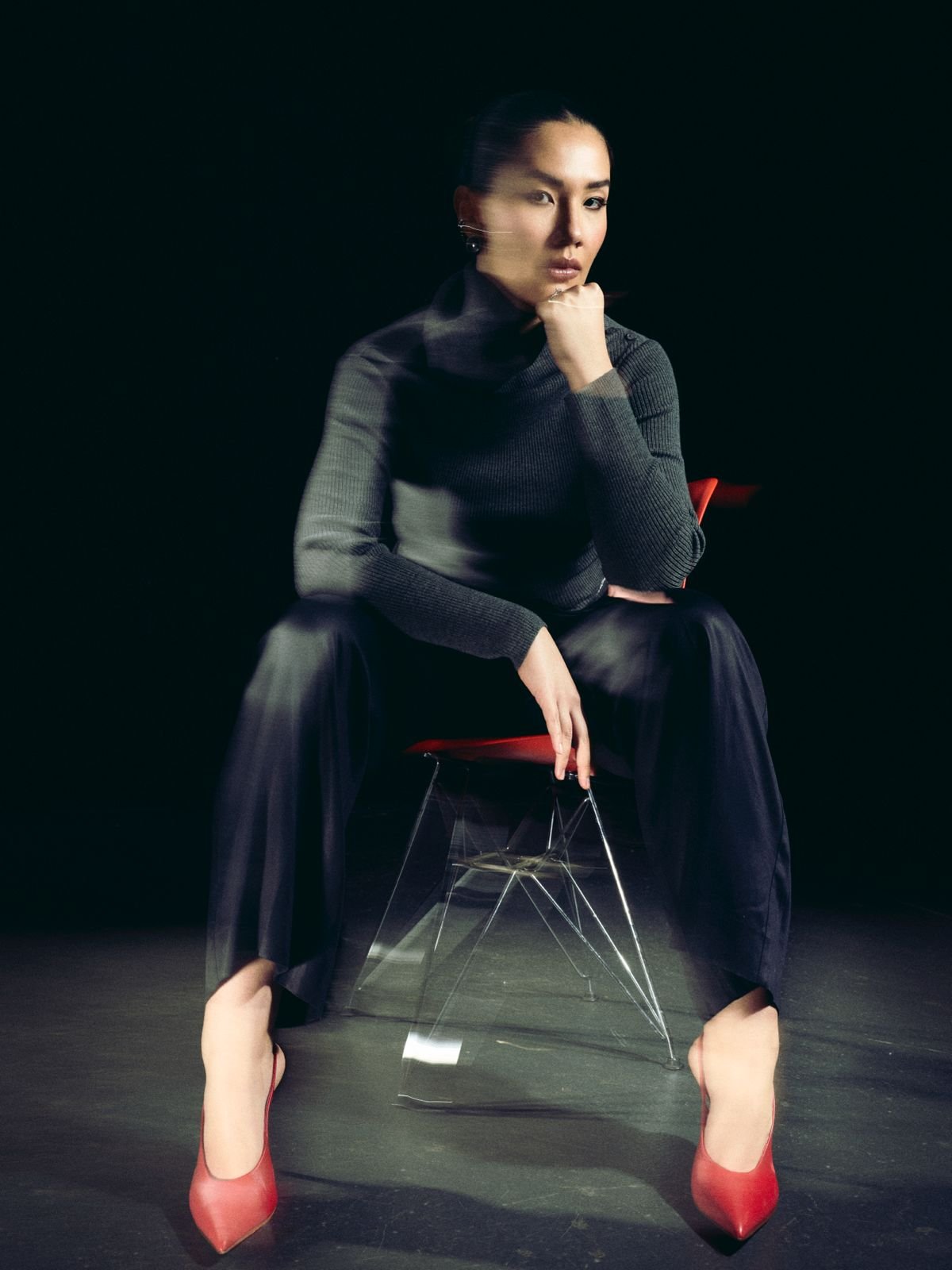
Training in Shaolin kung-fu for up to eight hours a day is intense. What did that year teach you about discipline and resilience?
It was one of the most intense experiences of my life, but also one of the happiest. That year brought me an unusual clarity. I was away from all distractions and deeply connected to my primal instincts. When you train for that long every day, you simply don’t have the energy to overthink. You are forced out of your head and fully into your body. I spent part of that time living and training alongside monks and another part with military school students. Being immersed in both communities taught me that personal sacrifice and discipline are the true costs of mastery, and that resilience isn’t just enduring hardship. It’s the ability to return time again, with focus and commitment. I was proud I rose to the occasion. My life experiences have revealed to me that the human spirit is endlessly resilient. That understanding continues to inform the work I do as an actor.
You’ve also trained in Pekiti-Tirsia Kali with a focus on women’s self-defence. How does activism show up in your creative choices?
PTK is a close-quarter, blade-based indigenous Filipino martial art that emphasizes being on the offense and direct engagement. Training in this capacity has made me an all-in actor, fearless and instinctual, navigating high-pressure situations comes natural to me and at the core of any drama is a high pressure situation. Some of the women I trained with were survivors of sexual and physical violence, and that experience showed me the true meaning of strength and bravery. I like to honour this in my work. A character, regardless of her circumstance, is not a victim. I always try to find the humanity, a hope, and a quiet strength to every character I play.
You’ve worked both in front of and behind the camera. Do you see yourself producing or directing in the future?
Working behind the camera in film school is where my love for filmmaking all started. I’d love for my career to encompass working both in front of and behind the camera. My parents named me after Julia Roberts, and I was born in Lyon, the birthplace of cinema. There is something so poetic about this all being written into my own story.
How do you choose roles that feel aligned with your values without limiting your creative range?
To me, alignment comes from the impact of the overall story, not necessarily the likability of the character. I’m comfortable playing flawed or controversial roles if the narrative has clarity over what it's exploring. That would allow me to stay true to my personal mission while still taking creative risks. At the auditioning stage, actors don’t get much information about a project, so in addition to the sides and breakdowns, I also like to see which casting office and creative team is behind the project, and this often informs whether or not a project resonates with me.
What challenges you most as an actor at this stage of your career?
Staying patient when all I want to do is the very thing I love to do the most, act.
TEAM CREDITS
talent JULIA SAUBIER
photography JOE WHITMORE
stylist PRUE FISHER
hair and makeup MEGAN MCPHILEMY
editorial director and interview JANA LETONJA
editor TIMOTEJ LETONJA
