
IN CONVERSATION WITH KOSTAS PAPATHANASIOU
interview by TIMOTEJ LETONJA
Kostas Papathanasiou is the culinary director of Michelin-starred Lita in Marylebone, London. Raised in the agricultural heartland of Central Greece, where family meals centered on seasonal produce and long-held traditions, Kostas has spent the past two decades quietly becoming one of the most accomplished chefs of his generation. His career has taken him through some of the world's most influential kitchens: from Heston Blumenthal's three-Michelin-starred The Fat Duck and Brett Graham's The Ledbury to Jason Atherton's The Social Company and Björn Frantzén's acclaimed restaurant group, including a tenure at the three-starred Frantzen in Sweden.
This experience shaped a culinary philosophy that balances technical precision with an instinctive respect for ingredients. Today, as Culinary Director of Michelin-starred Lita in London's Marylebone, where the restaurant retained its star just months after his arrival in 2025, Kostas brings together the discipline of fine dining with the warmth and generosity of his Mediterranean upbringing, creating an ingredient-led menu focused on fire. We sat down with him to discuss the journey that has taken him from his grandfather's farm in Lamia to some of the world's greatest kitchens, and why, after all these years, cooking still begins with the simple pleasure of gathering people around a table.
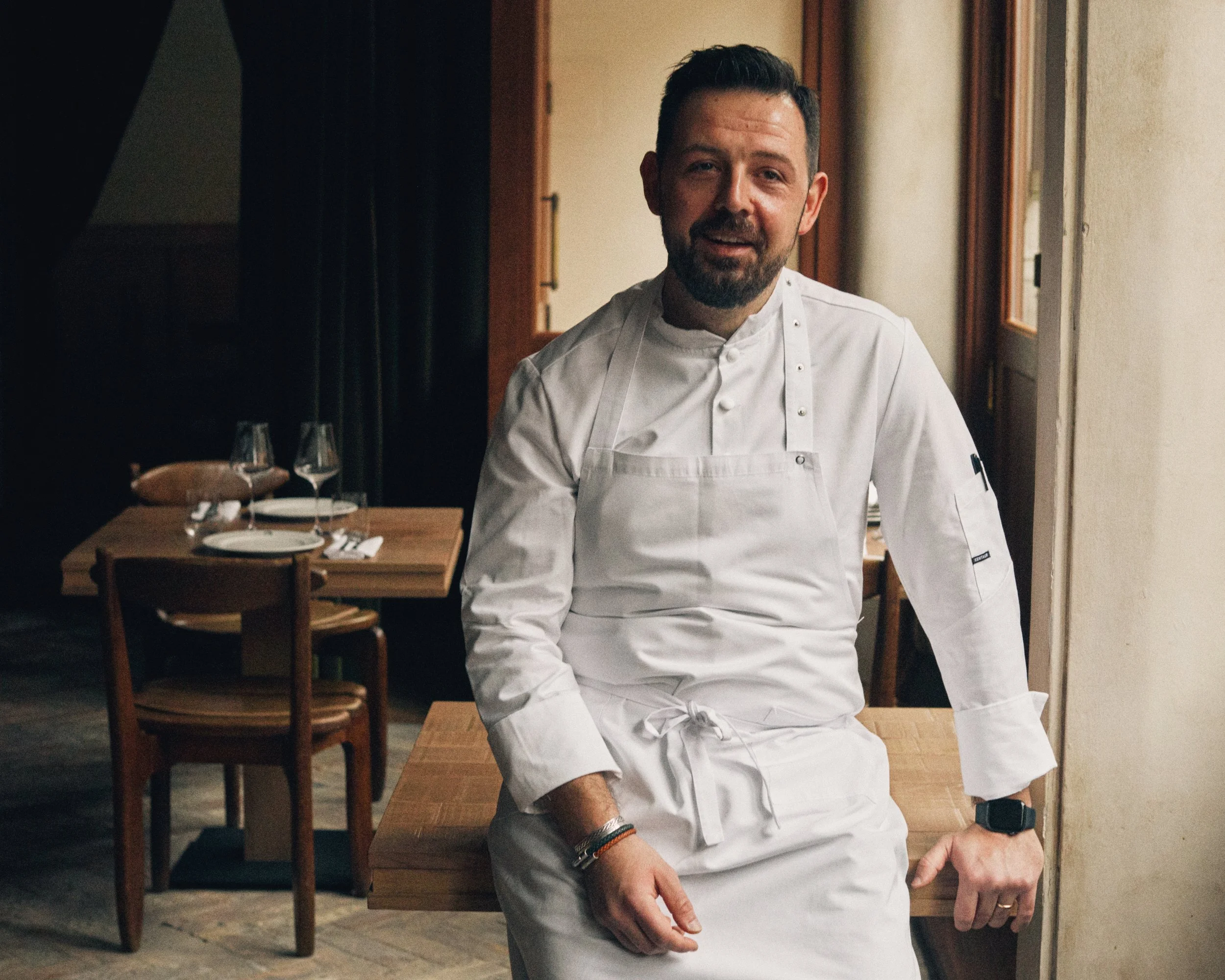
You grew up in Lamia in Central Greece, surrounded by strong agricultural traditions and land. How much does that upbringing still influence the way you cook today?
It still influences everything…growing up around agriculture teaches you early that the ingredient comes first. You respect seasonality, simplicity, and the work behind the product.That way of thinking never leaves you. Even today, my cooking is still centred around clarity, balance, and letting the ingredient speak for itself.
You’ve spoken about watching Jamie Oliver’s ‘’The Naked Chef’’ when you were 12 and deciding you wanted to become a chef. What was it about that programme that resonated with you so strongly to influence you to get into cooking?
It made cooking feel accessible and exciting.Until then, chefs felt distant and very formal. Jamie brought energy and simplicity to it; he made food feel natural, relaxed, and creative. At that age, it was the first time I looked at cooking and thought: this is powerful and something I could really do.
The story of you arriving at The Fat Duck with your CV in hand is fantastic. Looking back, do you think that fearlessness is still part of your personality today?
I think so, yes.I still believe that if you want something, you have to ask for it. Nothing really happens if you sit back and wait. At the time, I was probably too young to overthink things, but that mentality stayed with me. Most opportunities in my career came from being willing to take risks, put myself in uncomfortable situations, and go after things before feeling completely ready.
You’ve worked in London, Singapore, Stockholm, Mykonos and beyond. Which city or restaurant had the biggest impact on your identity as a chef?
Each place shaped me differently, but three restaurants had the biggest impact on me. At The Fat Duck, I learned discipline and attention to detail at an incredibly high level. It showed me how far creativity can go when it’s backed by precision and structure. At The Ledbury, I connected more deeply with ingredient-led cooking. There was a simplicity and confidence to the food that really influenced the way I think about flavour today. Living and working in Singapore also broadened my horizons significantly. The culture, the intensity of flavour, and the diversity of cuisines pushed me to think differently about balance, acidity, spice, and freshness.And at Restaurant Frantzén, where I became Executive Chef, I learned what true consistency and leadership at a three-Michelin-star level really means. That experience refined not only the way I cook, but also the way I lead and build teams.All of those experiences shaped me in different ways, and together they form a big part of who I am as a chef today.
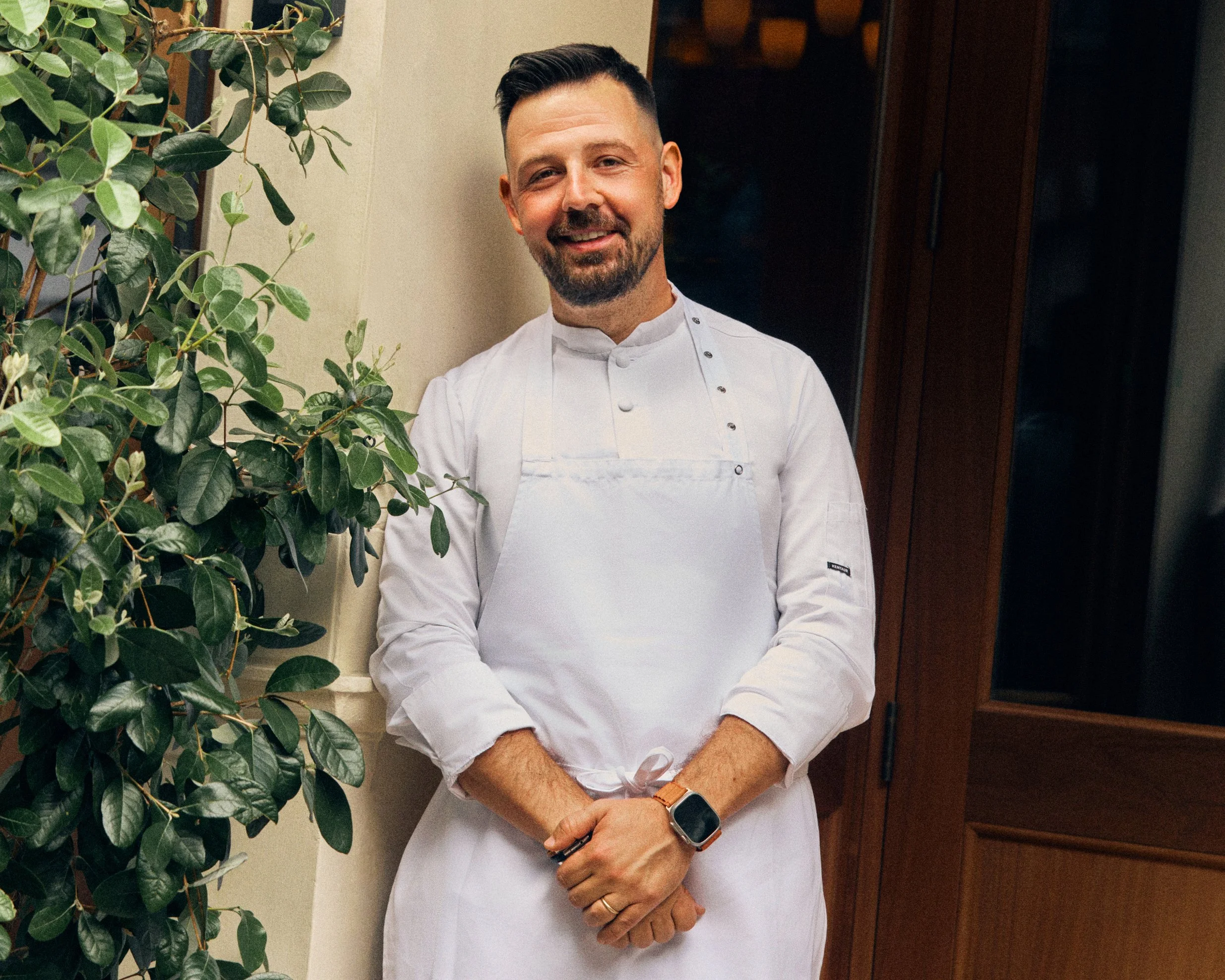
What was it about Lita that made you feel it was the right next step for you?
What struck me most was the balance Lita already had a clear identity - refined food, but with warmth and a real neighbourhood spirit. It didn’t feel intimidating or overly formal, it felt alive.I also felt there was real potential to grow. Not to change what Lita is, but to refine it, strengthen it, and push it forward while staying true to the atmosphere and energy that made people connect with it in the first place.That felt exciting to me.
When you joined Lita, it already had a Michelin star that you then won again and a strong neighbourhood following. How do you balance preserving what guests already love while still bringing your own perspective?
You start by understanding and respecting what’s already there.Lita already had a strong identity and a loyal following, so for me it was never about changing it completely. It was about refining and strengthening it bringing more clarity, consistency, and structure while keeping the warmth and neighbourhood spirit that guests connected with.Over time, your perspective comes through naturally in the details in the food, the rhythm of the kitchen, and the overall experience. It’s about evolution, not reinvention.
Fire seems to be a key element in the kitchen at Lita. What do you enjoy aboutcooking over fire?
I like the honesty of it. Cooking over fire feels very natural and instinctive, but it still requires precision and understanding. You have to constantly read the ingredients, the heat, and the timing.For me, it comes down to understanding cooking at its core technique, precision, and how products react. Whether it’s fire or a more controlled environment, the principles are the same if you truly understand the ingredient. And when it’s done properly, fire brings a depth and character to food that’s difficult to replicate in any other way.
Simplicity is often much harder to achieve than complexity. How do you know when a dish is finished?
The hardest part of cooking is restraint knowing when the ingredient already says enough. If the balance is right, adding more often takes away rather than improves. For me, a finished dish should feel clear, natural, and effortless, even if a lot of work went into achieving that simplicity.
Has becoming a father changed the way you think about your career and leadership style and in what aspect?
Definitely. Becoming a father is an incredible milestone in life. I think it grounds you and gives you a very different perspective - both personally and professionally. It made me calmer, more patient, and more aware of the environment I create around me. You still maintain high standards, but you understand more clearly the importance of people, communication, and balance. It changes the way you think about responsibility, leadership, and what really matters over time.
What do you hope guests feel when they leave Lita?
Comfortable, satisfied, and genuinely looked after. Of course I want them to enjoy the food, but more importantly I want them to feel the overall experience was warm, natural, and memorable.And ultimately, I want them to leave feeling like they want to come back again soon.
