interview by JANA LETONJA
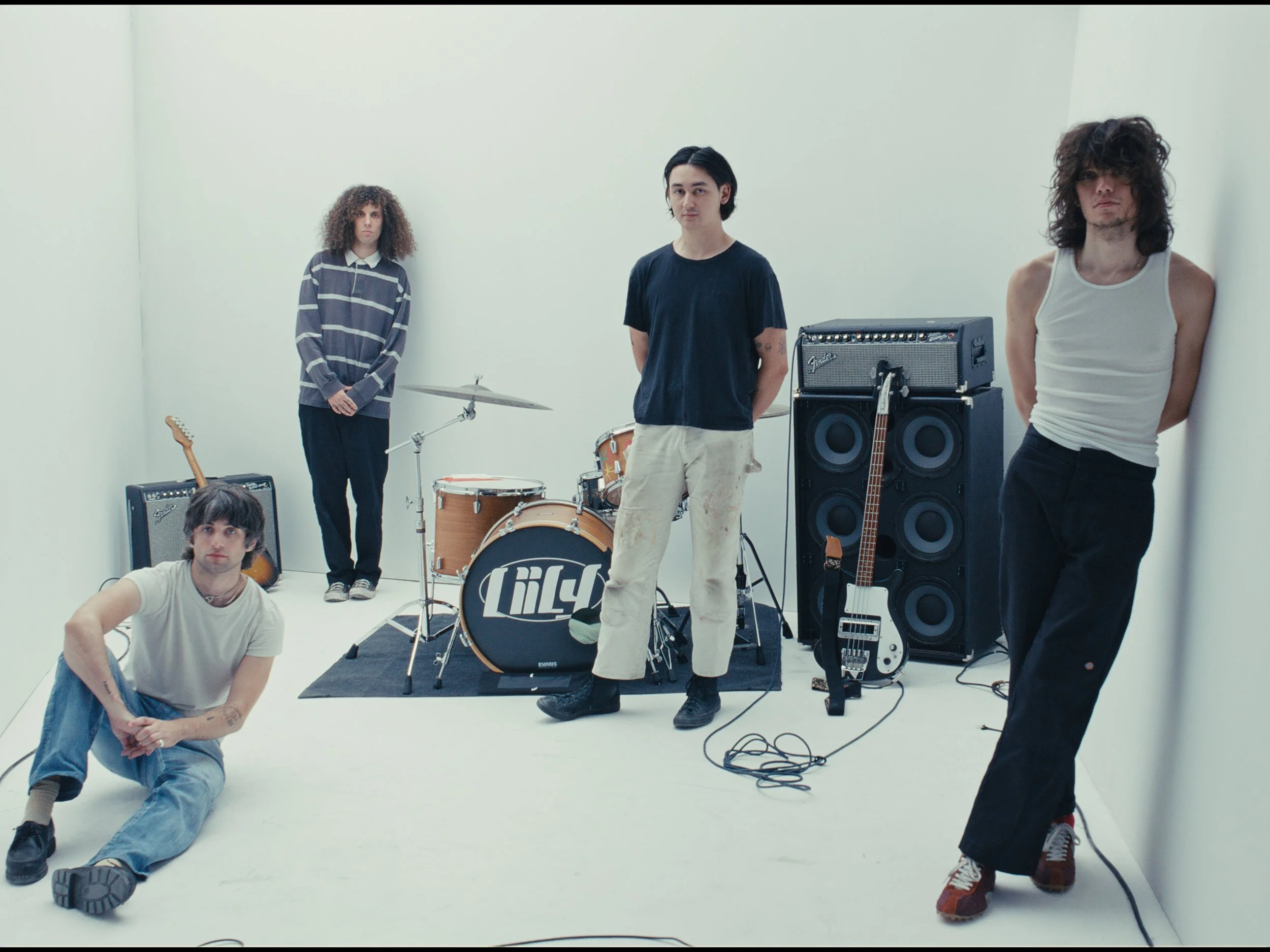
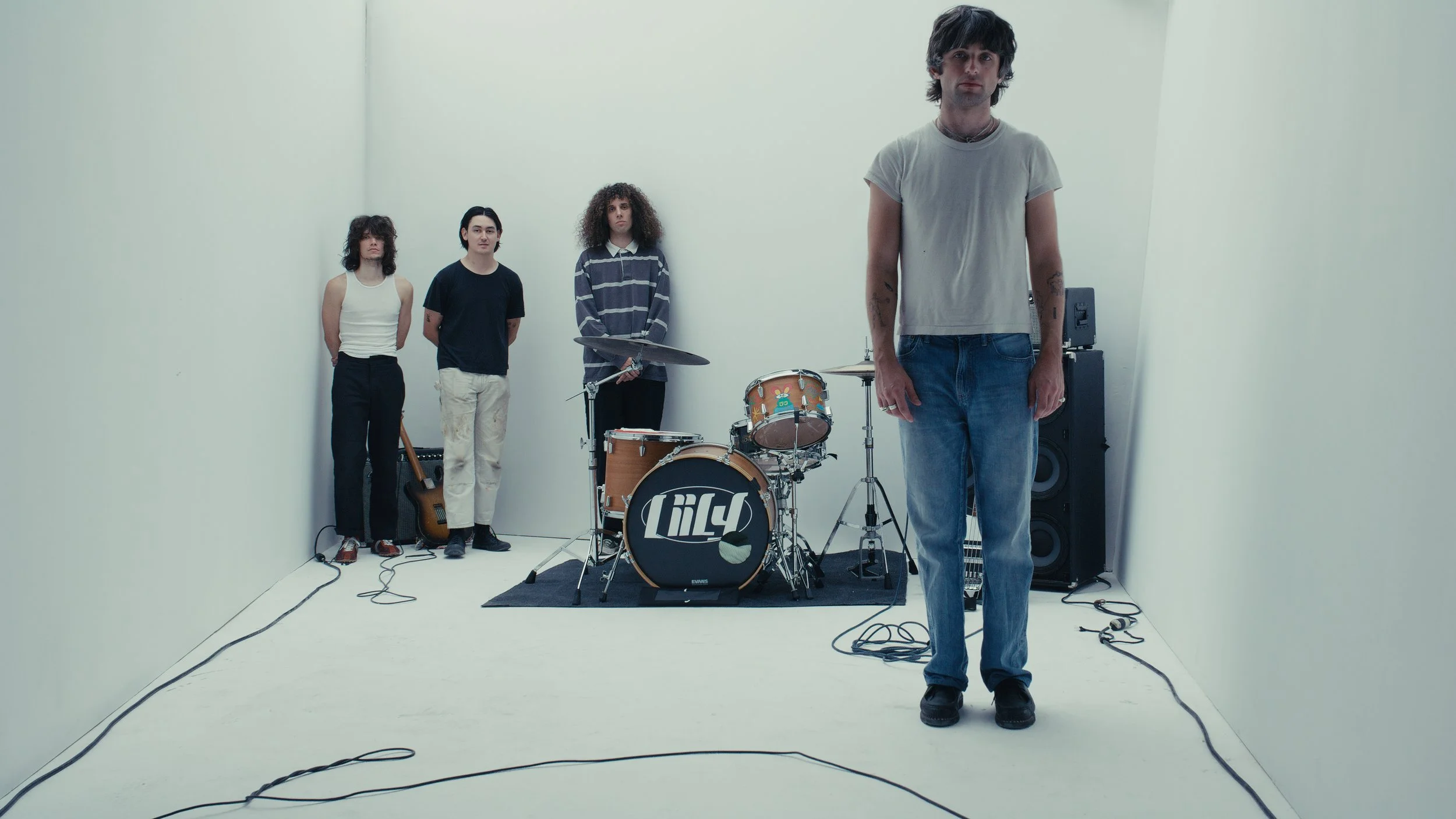
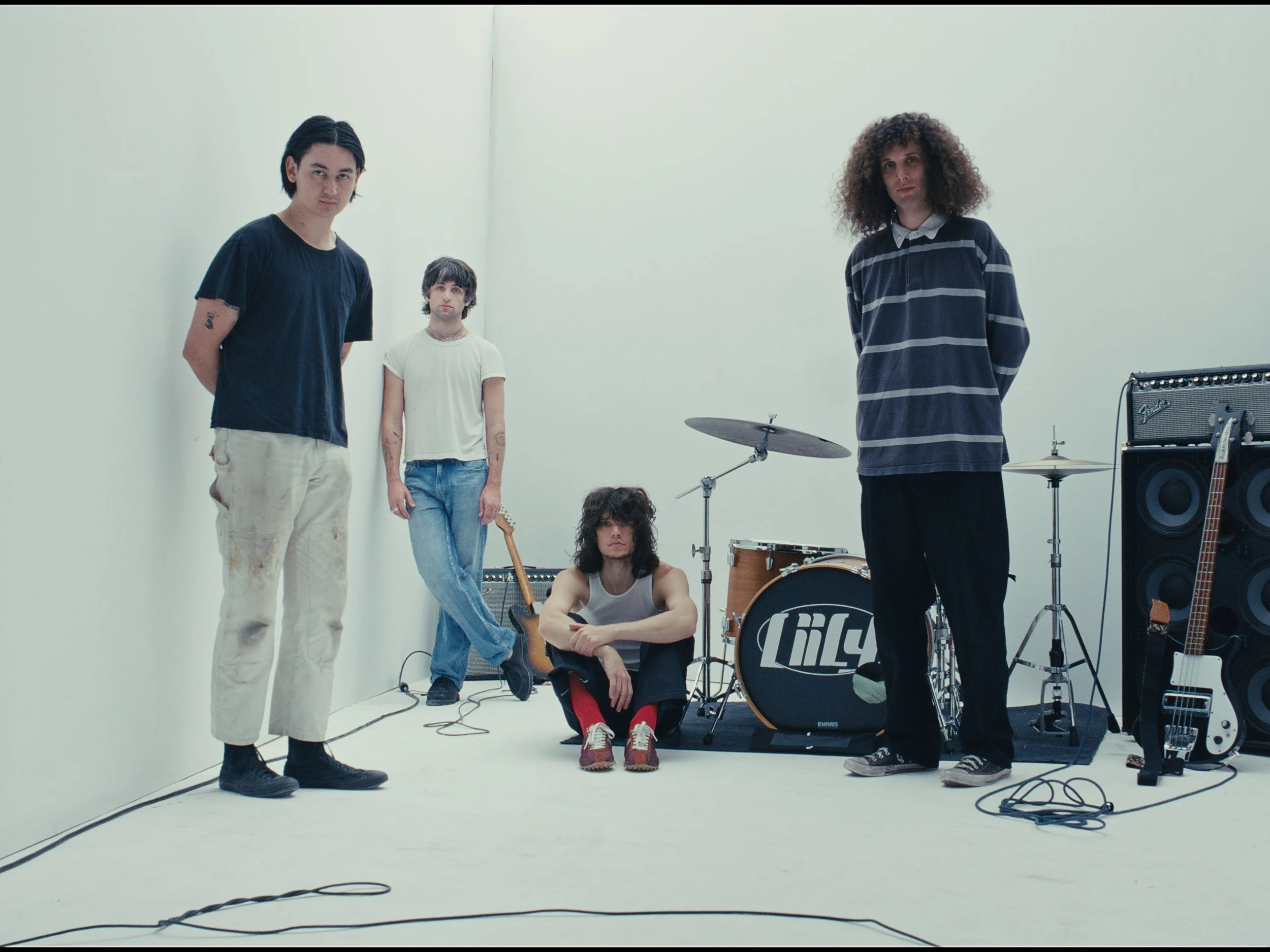
Raw, restless, and unapologetically intense, Los Angeles rock band Liily are carving out their own space in a new generation of alternative rock. Blending the visceral energy of post-punk with the explosive spirit of bands like Rage Against the Machine and At the Drive-In, Liily have built a reputation for unpredictable live performances and a sound that refuses to sit comfortably within genre boundaries. Now, with their major-label debut album WAX, arriving November 13, the band are entering a new chapter defined by introspection, emotional honesty, and artistic transformation. Inspired by frontman Dylan Nash’s experiences with therapy and personal growth, the record confronts ambition, anxiety, grief, and the complicated relationship between creative fulfillment and external validation. Following performances alongside blink-182, Weezer, and FIDLAR, Liily are moving beyond the chaos that first defined them, revealing a more vulnerable and self-aware side without sacrificing their signature intensity.
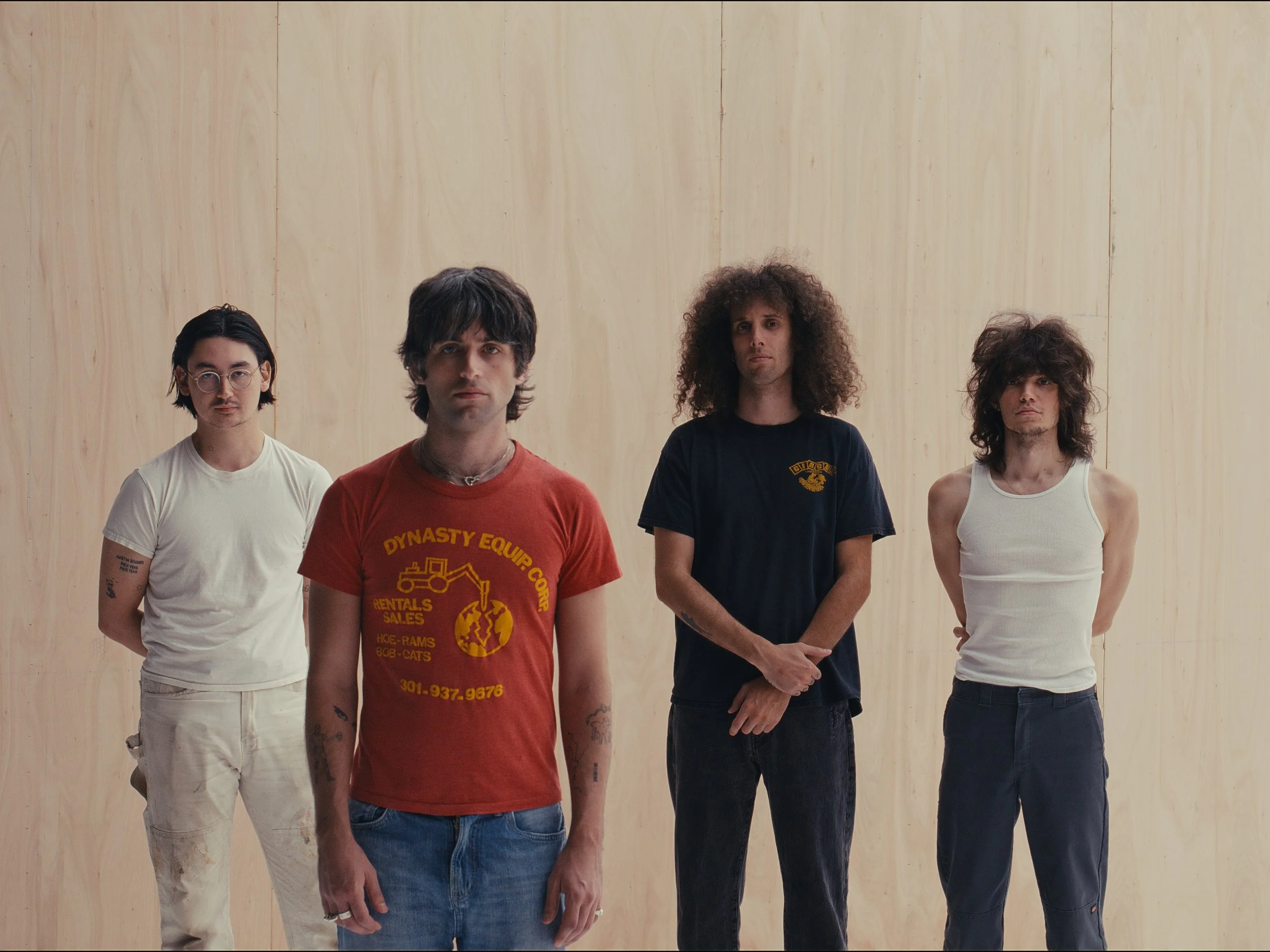
photography by AARON KOHN
Your upcoming album WAX marks your major-label debut and a significant new chapter for Liily. What does this moment represent for you, both personally and collectively as a Band?
Charlie: When we started making this record, we were completely on our own. We weren't thinking WAX was going to come out on a label at all, let alone Atlantic Records. When our manager told us that they were interested, we were all shocked. Not because we didn’t believe how good the record was, but because it totally changed our perspective on the scope of what it could be. To go from an independent release to a major label release overnight is pretty life-changing.
The album was inspired in part by your experiences with therapy and personal growth. How did that process influence your songwriting, and did making this record change the way you understand yourselves?
Dylan: I believe that a lot of it has to do with my diction and knowing when to speak. I’ve spent so many years not knowing which parts of myself to share and how to articulate them correctly, and now I have a much better understanding of where I place in the world, so it’s a much smoother process when trying to be deliberate and connect.
Charlie: We’re able to just solely focus on making music now and drown out any noise related to what other people will think about what we are doing. It also helped our personal relationships and the way we communicate. Those are truly my brothers, and this record has made us closer than ever. The type of personal growth we are working towards is the kind that helps us be a part of a community.
WAX explores the tension between creative fulfillment and external validation. In an industry increasingly driven by numbers, algorithms, and visibility, how do you protect your artistic instincts from outside expectations?
Charlie: A few years ago, I was in such a bad place, consumed by comparison. I used to spend so much time reading what people would say about our band. I was just looking for validation anywhere. I didn't care who, but I needed someone to tell me everything was going to work out and that this wouldn't fail. I really leaned on Maxx, Sam, Dylan, and our co-producer Danny Nogueiras during the making of this album to not end up back in that place. I think this album turned out the way it did because we went into it with no backing and really were making it just to make something we loved. Anything related to success while making this album was an afterthought. You protect your artistic instincts by finding ways to remind yourself you make music because it's simply what you love doing and how you want to spend your time.
The title WAX is intriguing because it suggests something that can melt, transform, or preserve. What does the title symbolize to you, and how does it connect to the emotional world of the album?
Charlie: Naming a record is always the hardest part of the entire process for us. We were thinking about it for months. We were thinking about words that phonetically sounded like the record to us. WAX just cuts through the way the album does, and after we had sat with that title for a few weeks, a lot of the definitions of WAX felt like the record. I think the idea of something transforming is the core of what the record is.
Your music has always carried a certain urgency and volatility. With this new record exploring more vulnerable territory, did you find yourselves approaching intensity differently?
Dylan: We’ve always loved going as hard as possible, but what we’ve realized is that it’s sometimes even more rewarding to be intense without having to go crazy. We have a few songs on the record that crawl down your neck and do so through melody and simple song structure, and I think those songs have really added another dimension to our band.
You’ve introduced this new era with FOREVER and EVERYDAY. Why did these two songs feel like the right introduction to WAX, and what do they reveal about the record as a whole?
Charlie: Those two songs are the perfect pillars of what the album as a whole sounds like. FOREVER is the more aggressive side of the album, and EVERYDAY is the more melodic side of the album. Together, they kind of lay out the whole spectrum of everything.
There’s something inherently physical about your music, particularly in the rhythm section and the way your songs build tension. How does the chemistry between the four of you influence the creative process?
Charlie: Everyone in my band has such a big sound. I think it comes from this fight for volume, which just makes everyone's sound that much bigger. So over time, writing a song for us becomes a game of Tetris, trying to fit all of these massive sounds together. Sam, Maxx, and Dylan are all so good at what they do. The only thing I ever feel like I need to do is support them.
You’ve developed a reputation for chaotic, high-energy live performances. What happens emotionally when you step onstage, and has your relationship with performing changed as you’ve grown older?
Dylan: I can really only speak for myself, but I’ve always kept the same ethos when it comes to performing, and that’s controlling an audience, not with words or actions, but with how much I can confuse them. I like seeing what comes of that. I’m conducting my own little experiment every show. I’ve just gotten better at it as time has gone on, learning to relax and understand that the crowd is just there to have a great time.
Charlie: Our live show is the only part of the band that has ever only been about the four of us. We all have our pre-show rituals or just different ways we like to spend our time. For me personally, before shows, I harbor a lot of anxiety in hopes it goes well. The moment we get on stage, all of that dissipates. It is the only time I’m thinking of nothing, and I know you hear that sort of thing a lot, but it’s the truth. When I was younger, I thought the more I physically exerted myself, the more it would convince people of how good our show was, but as I've gotten older, I’ve realized that the chaos of our live show comes without me thinking about it or forcing it at all. It just happens.
Signing with Atlantic Records brings new opportunities but also new expectations. How have you navigated the transition to a major label while maintaining the independence and spontaneity that define Liily?
Charlie: We’re lucky because that spontaneity is what got us signed in the first place. We have also been a band for a long time now, so I think we’ve cut our teeth enough to know that this is just a really incredible opportunity, and we just need to keep doing what we have been doing for so many years.
Rock music seems to be experiencing another cultural shift, with younger bands challenging traditional ideas of what the genre should look and sound like. Where do you see Liily within this evolving landscape?
Charlie: Yeah, streaming has pretty much made genre loyalty obsolete, which I think is great. I also think a new problem with that is it’s really easy for bands to cherry-pick different styles and aesthetics from different years and repackage them for today. Something we have tried to do and will continue to do is not make a record for 2026, but try and make a record for 2027. If everyone is going right, we try to go left. There have been times where that hasn’t been the case, but I think we finally know where we are going.
Fashion and music have always influenced one another, particularly within punk and alternative culture. How would you describe Liily’s visual identity, and does personal style play a role in how you express yourselves as artists?
Dylan: I’d love to say that we’re an “everyman’s band.” How we dress on stage is how we dress every day. I’m not one to wear crazy eye-catching pieces. I do care about what it’s made of, but it’s always very simple. That goes for all of it. We like to keep the visual identity very simple: no crazy light tricks, no bells and whistles, just us, our stark red light, and our instruments. That really deeply plays into our personal identities. We’re not super complex humans. We like our mundane things.
Charlie: I think our style musically and the clothes we wear are pretty reflective of where we are at in our lives and our age. There was a time when I was wearing dolphin shorts and coveralls. I think as we have gotten older and become more comfortable in our own skin, our music and style both reflect what we like and not what we think will make us cool.
With WAX about to enter the world, what do you hope listeners discover about Liily that they might not have understood before? And beyond this album, what kind of artists do you want to become?
Dylan: I want them to see from this album that we’re more than just a heavy rock band. We have more dimensions and more to say. The evolution of Liily is one that’s gonna be defined by our passion for all types of music and how we can dose our own music with those styles.