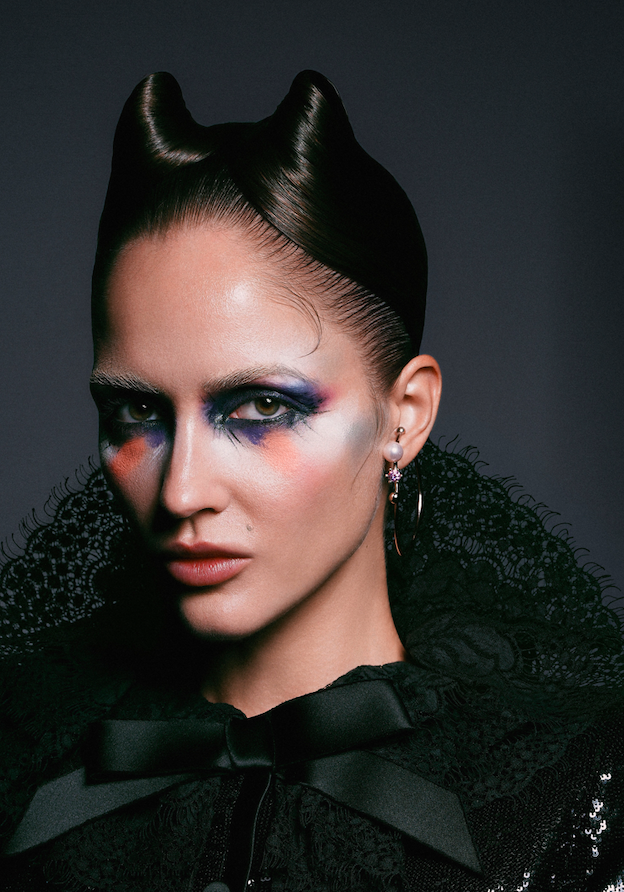
IN CONVERSATION WITH MARIA TE
interview by MALIA
For Maria Te, taste never exists separately from life. It reveals itself in the spaces she creates, the art she chooses instinctively, the vintage pieces she is drawn to, and even in the way she welcomes people into Lobster Studio. For her, aesthetics are neither decoration nor a way of making an impression. They are simply another language.
In her visual world, old and new, industrial and personal, technology and craftsmanship coexist naturally. Yet behind all of it, there is one constant: people. Perhaps that is why Maria imagines her own life not as a perfectly composed fashion film, but as something closer to a Woody Allen movie, slightly ironic, occasionally dramatic, and always driven by human relationships.
If you had to turn your life into a single visual image, what would it be?
Probably a Woody Allen film. Not because of New York or the visual language, but because of the way relationships work in his films. A single conversation can be funny, uncomfortable and quite tragic at the same time. I relate to that. Relationships have always been more important to me than the setting around them. When something difficult happens, humor is often how I deal with it. That is probably why his films feel so familiar to me. Nobody lives perfectly in them, and somehow that imperfection is exactly what makes everything feel real.
People often use the word “taste” when they talk about you. Can it be developed, or is it something you are born with?
It can definitely be developed. You travel, walk into different homes, visit galleries and hotels, watch films, notice how people dress, how objects are arranged in a room, how different materials work together. Eventually, all of that stays with you.
But being exposed to beautiful things is not enough. You can know every relevant brand and every interior reference and still simply reproduce what you have already seen. For me, taste begins when you can look at something beautiful and fashionable and still say, “It is not for me.”
Lobster Studio feels almost like a self portrait. What part of the space is unmistakably yours?
Probably the way everything is mixed together. I like putting an object with history next to contemporary technology, industrial elements or art. I have never been interested in spaces where everything was bought at the same time and matches perfectly. Sometimes I find a vintage piece while travelling and immediately know exactly where it should go in the studio. Then something completely contemporary appears beside it, and that contrast is what makes both objects work.
But Lobster is not really about furniture for me. I always tell the team that a person should feel less like a client receiving a service and more like a guest in someone’s home. Between shoots, people should be able to sit down, have a coffee, talk to colleagues and breathe for a moment. If someone finishes a long working day and does not immediately want to leave, then I know we have created the right atmosphere.
You are both an artist and a collector. How do you know when you actually want to live with a work of art?
I usually imagine it in a specific place almost immediately. Which wall it would be on, what would sit next to it, how I would see it in the morning or in the evening. It is never enough for me to think, “This is an important artist, so I should buy it.” The artist’s name is not my first criterion. I ask myself a much simpler question: do I want to look at this every day? If the answer is yes, the price and status of the artist become secondary. I am not buying an investment. I am buying a feeling that will become part of the space I live in.
Where does your fascination with vintage come from?
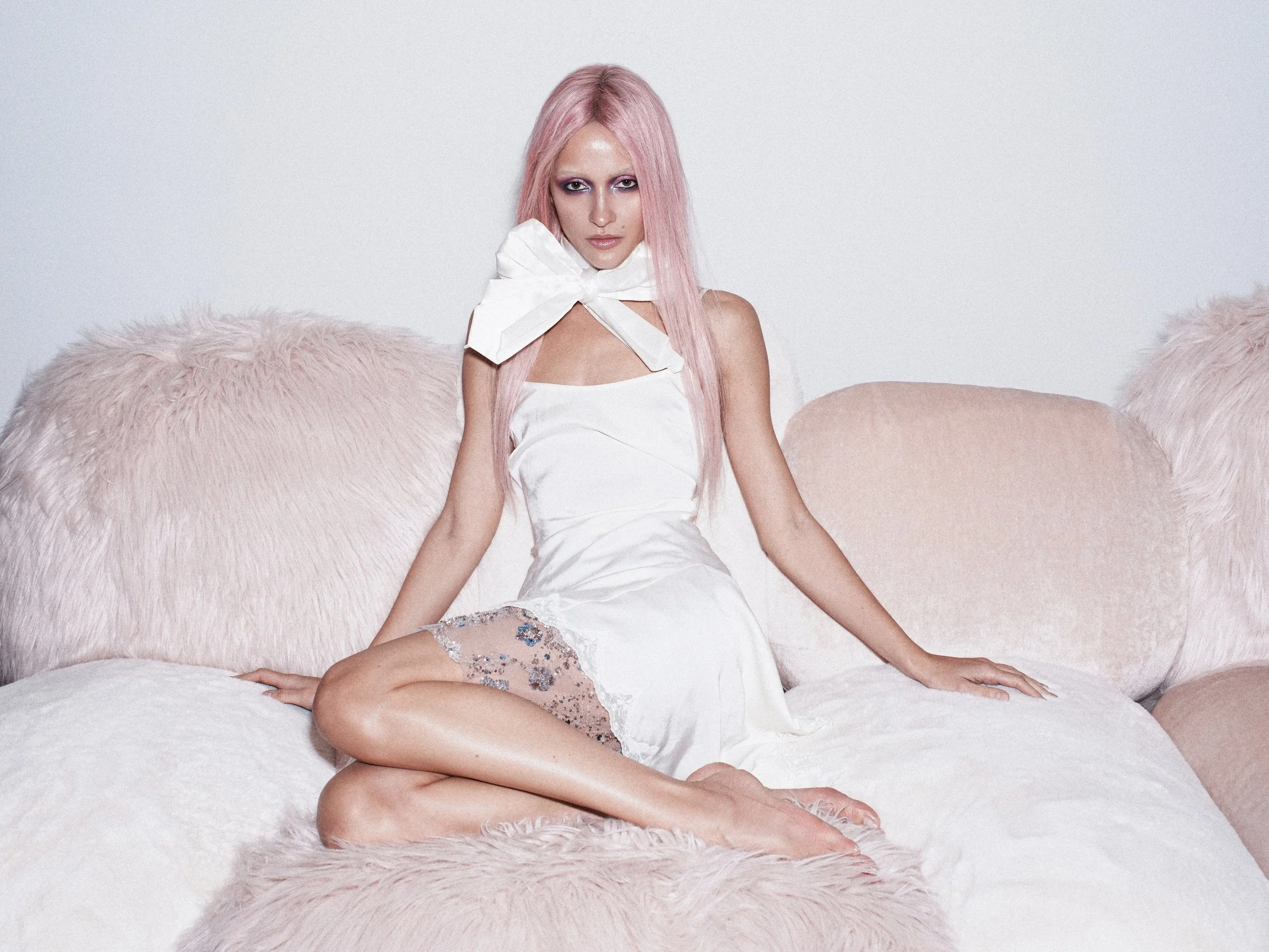
I have never liked walking into a room and seeing someone else wearing exactly the same thing. That happens much less with vintage. A piece already belongs to a particular period, a designer, a silhouette, sometimes even traces of another person’s life. I like the idea that you are not simply buying a dress. You are continuing its story. Especially now, when you can see the same trending item dozens of times in a single day on social media, vintage allows you to step outside that cycle. It gives you the possibility to build an image that is much harder to replicate.
Fashion constantly revisits its own archives. Does that feel natural to you, or does it suggest that the industry is struggling to create something truly new?
It feels completely natural to me. I do not think something new has to come from nowhere. If a silhouette created decades ago still feels relevant, there was probably something powerful about the original idea. I find it much more interesting to see how a designer takes that form and adapts it to the way we live now, to new materials or to a completely different kind of woman, rather than trying to create something strange simply for the sake of novelty. For me, an archive is not a museum. It is working material.
What looks genuinely luxurious to you today?
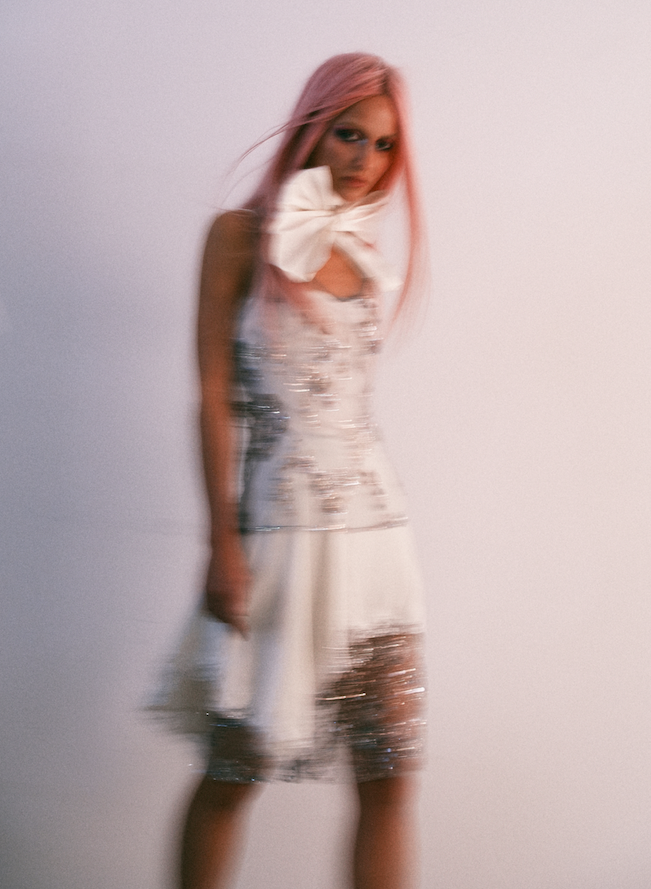
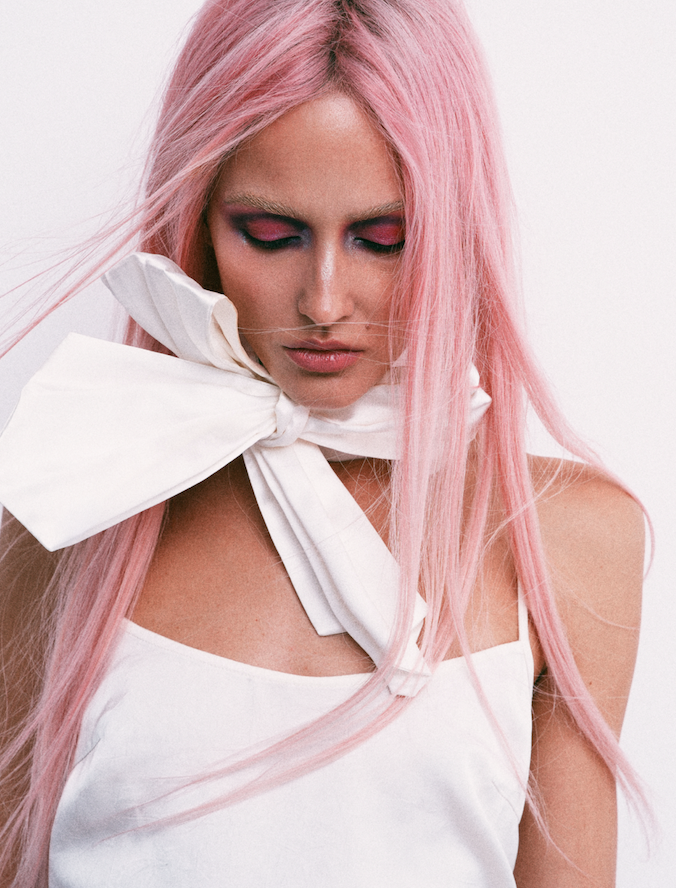
When someone does not look as though they are trying too hard to communicate the price of what they are wearing. I am much more interested in seeing an expensive piece mixed with vintage or something completely unexpected than a full look from the latest collection copied directly from the runway. Luxury is having enough confidence to wear something from an old collection simply because it suits you, without replacing it the moment a new trend appears.
How can you tell whether you genuinely like a trend or have simply seen it too many times?
I try to wait. If you see the same thing twenty times in one week, it is very easy to convince yourself that you need it. Give it some time and the answer becomes clearer. Either you are still thinking about it, or the desire disappears as soon as the algorithm moves on.
The same applies to silhouettes. I can love something that is current, but if I know it does not work on my body or I do not feel like myself in it, I will not wear it simply because everyone else is. For me, looking extremely fashionable while feeling like a stranger to yourself is much worse than missing a trend.
Can aesthetics be a form of power?
Yes, although I would probably call it a language. You enter a space and understand something about it before anyone speaks. You notice the art, the furniture, the lighting, the music. You feel whether the place is relaxed or formal. Clothing works in exactly the same way. You can wear a sharp suit in the morning and communicate one version of yourself, then choose a vintage dress that evening and communicate something completely different. It does not necessarily have to be about controlling how people perceive you. It is more about deciding which part of yourself you want to show that day.
AI can now generate a beautiful image in seconds. What does that leave to the human?
Choice. AI does not decide what you actually want to say. Someone still has to give it direction, look through dozens of possibilities, recognize what feels generic and understand what actually works.
I see it as another tool. Photography did not make painting disappear. They simply began to exist alongside each other. For drafts, visualisation and editing, AI is already incredibly useful and can save enormous amounts of time and resources. But I find it difficult to imagine a world where people stop valuing the trace of a human hand, physical material or even a beautiful mistake. At least not yet…
You used to be very attached to objects. Is there anything you would never sell?
There used to be many things I would have put in that category. I found it difficult to let go even of clothes because almost every object was connected to something specific: a trip, a person, a certain period of my life. I could go years without wearing something and still keep it because of the memory attached to it. That has gradually changed. I have realised that I can let go of the physical object without losing what happened around it. I like that feeling. Things are allowed to become things again.
If you remove the business, status, projects, collections and everything external, what actually matters?
Waking up and wanting to do something. Wanting to see the people you love. Wanting to go somewhere, start a new project, laugh, fall in love with a place, a person or an idea. For me, that is what energy, appetite for life and love really mean.