
IN CONVERSATION WITH MIDLAND
interview by JANA LETONJA
Few bands have embodied modern country’s love affair with nostalgia quite like Midland. The GRAMMY-nominated Texan trio broke through with their 5X PLATINUM anthem Drinkin’ Problem and never looked back, channelling a post-Urban Cowboy sound rooted in honky-tonks, heartbreak, and harmonies that feel pulled from another era. From the No. 1 Billboard Top Country Albums debut On The Rocks to dive-bar classics like Mr. Lonely and Barely Blue, Midland’s retro-Nuevo approach has earned praise from everyone from Rolling Stone and NPR to GQ and Vogue. Now, with a new single Marlboro Man setting the tone and a massive year ahead, Midland are stepping confidently into their next chapter, expanding their world while staying true to the sound that made fans fall in love in the first place.
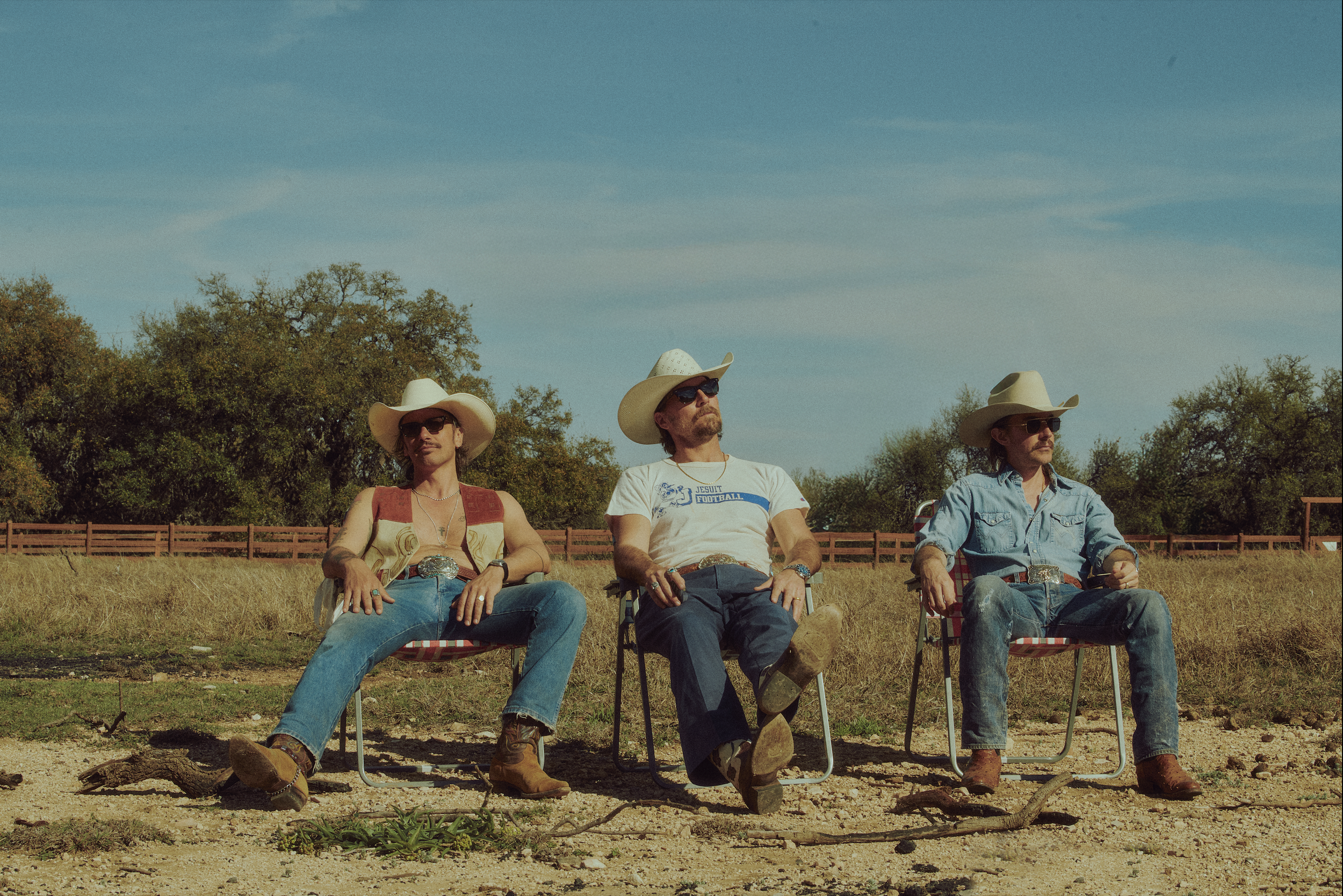
photo credit: HARPER SMITH
On The Rocks came out nearly a decade ago and still feels timeless. What do you think gives that record its staying power?
That album feels timeless because our influence in that moment was so rooted in an era of timeless-feeling songs. That's what we were going for when we wrote them, tapping into influences like Gary Stewart, George Strait, Alabama, people whose songs feel as current today as when they came out.
Drinkin’ Problem became one of those rare songs that live beyond radio. Why do you think it connected so deeply, especially in dive bars across the country?
As a writer, you capture those songs sometimes. People have tried to explain it, probably as long as people have been writing songs. Call it a God thing, call it a door that opens up, we were just blessed to be able to bring that one into existence. We think that song will last forever.
You’ve always leaned into a post-Urban Cowboy, throwback aesthetic. Has that ever felt risky in a genre that’s constantly chasing what’s next?
It was riskier when we first did it. We think we looked like we were from outer space wearing that stuff back in 2014. But we'd say the pendulum has swung in our direction, and it's not uncommon to have a vintage-inspired Western wear look. But yeah, Urban Cowboy was a big influence on our look, along with all the Austin, Texas, outlaw guys.
Your sound is soaked in harmony and restraint. How intentional is that in a time when country often favours maximalism?
Harmonies have always been one of the cornerstones of the Midland sound, ever since the very first demos we did. And we're influenced by a lot of bands that do harmonies like The Eagles, Alabama, The Beach Boys, The Stones, etc. And if it sounds restrained, that's just probably because we feel the need to be able to play whatever we recorded in the studio live on stage every night.
Marlboro Man feels cinematic and mythic in a very Midland way. What made that song the right next statement? How does it reflect where you are personally and creatively right now as a band?
Marlboro Man just feels kind of autobiographical in a way. We still feel like we are on the outside, not quite fitting in, like loners. That song manages to sort of glorify that feeling. Musically, it fills a void for us as well. We don't have another song like that.
Over the years, your albums have moved between rowdy honky-tonk and quiet, lonesome storytelling. How do you decide when a song needs boots on the floor or dust in the air?
Well, we start out just trying to write the best song we can. From there, we look at how we can put together a group of great songs in a cohesive way that feels like an album. And there are lots of great songs that get left out of an album because they don't quite fit the overall landscape.
You’ve been quietly working on a new body of music. How would you describe this next chapter sonically and emotionally? Is there anything about the upcoming material that might surprise longtime fans?
One of the first things we think people will notice is the addition of Fiddle. As said before, we try not to do things in the studio that we can't replicate on stage every night. But we are hiring a Fiddle player, which allowed us to finally integrate that into the songs. So many of our influences from past decades have used Fiddle, so that's an exciting development for us. This album is country. In a way, it's more country than anything we've ever done. We're working with a new producer, Trent Willmon. He does all of Cody Johnson's albums. We think this is also the most Texas-feeling album we've made.
The upcoming film Cowboy involves all three of you. How did the dynamic shift when you moved from bandmates to collaborators on screen?
The biggest ship in the dynamic on the film set was probably that Cameron was the one directing all of the moving pieces. Mark and I had our own roles in the overall process, Mark as an actor and me as a collaborator with Cameron in coming up with the story. But as the director, it was really Cameron's show in terms of what was happening on set. It was really impressive to walk onto that set and see how it works, all of the extras, crew, and everybody all working towards one goal.
Country music has always flirted with cinema and mythmaking. Do you see Cowboy as an extension of the stories you tell in your songs?
We all love Rodeo. We romanticise it; all three of us probably wish that we could have been a part of it. Being able to be around Rodeos, behind the shoots, becoming friends with people like Rocker Steiner, Lefty Holman, we kind of look at the whole thing in awe. We've tried to capture that feeling in songs over the years. It was kind of an obvious step to try to tell that story in a longer script form, and from there, it was all Cameron who got it over the finish line in terms of getting that film made.
With new music, a film, and a huge year ahead, what’s the one thing you’re most excited for fans to experience next?
Hearing the album and seeing the film. Maybe having the film out there in the world feels the most exciting. It's just a whole new thing for us. Especially for me. Cameron and Mark have been a part of that world for years, but it's a whole new unknown for me.
