IN CONVERSATION WITH VINCENT LAGRANGE
interview by AÏCHA PILMEYER
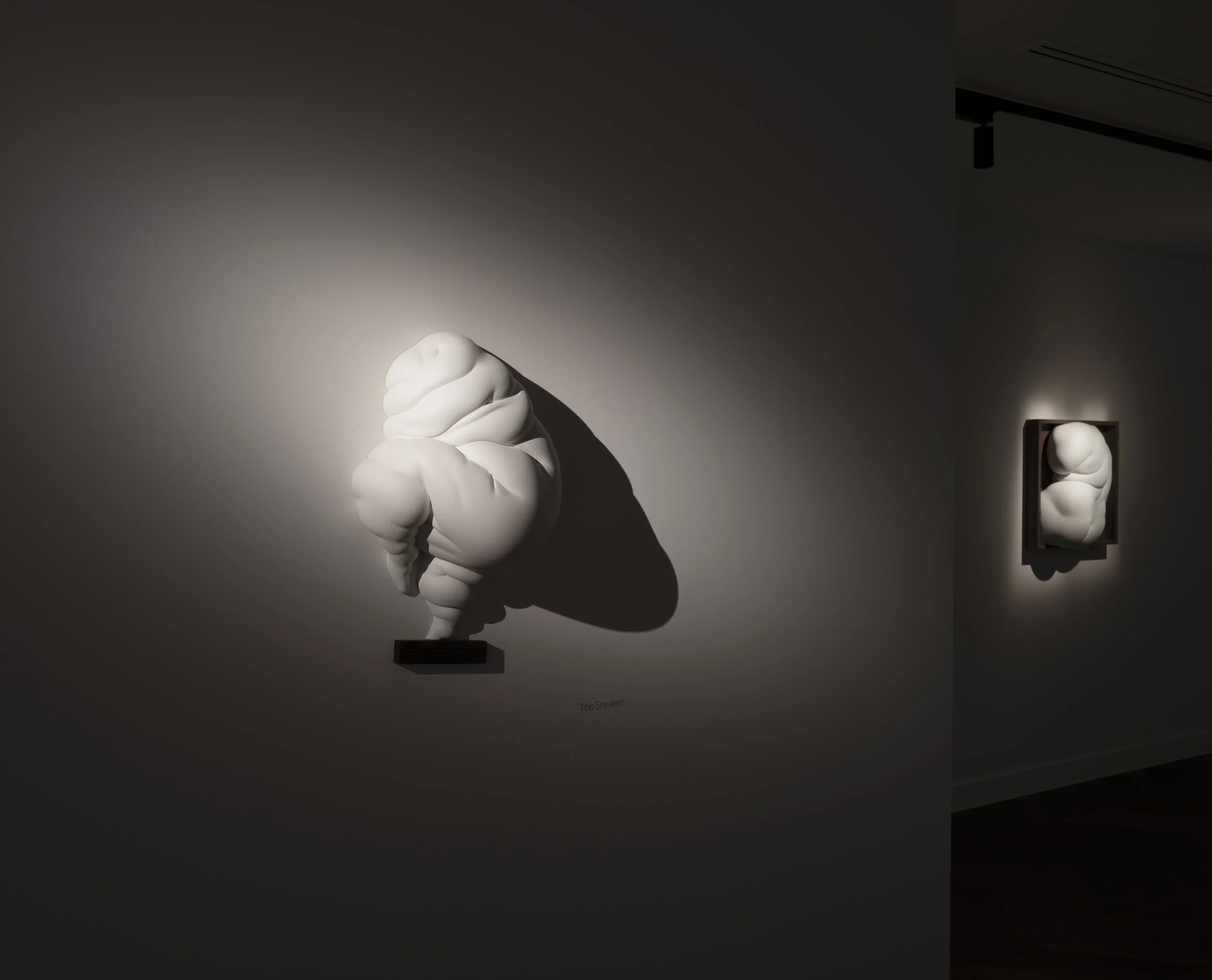
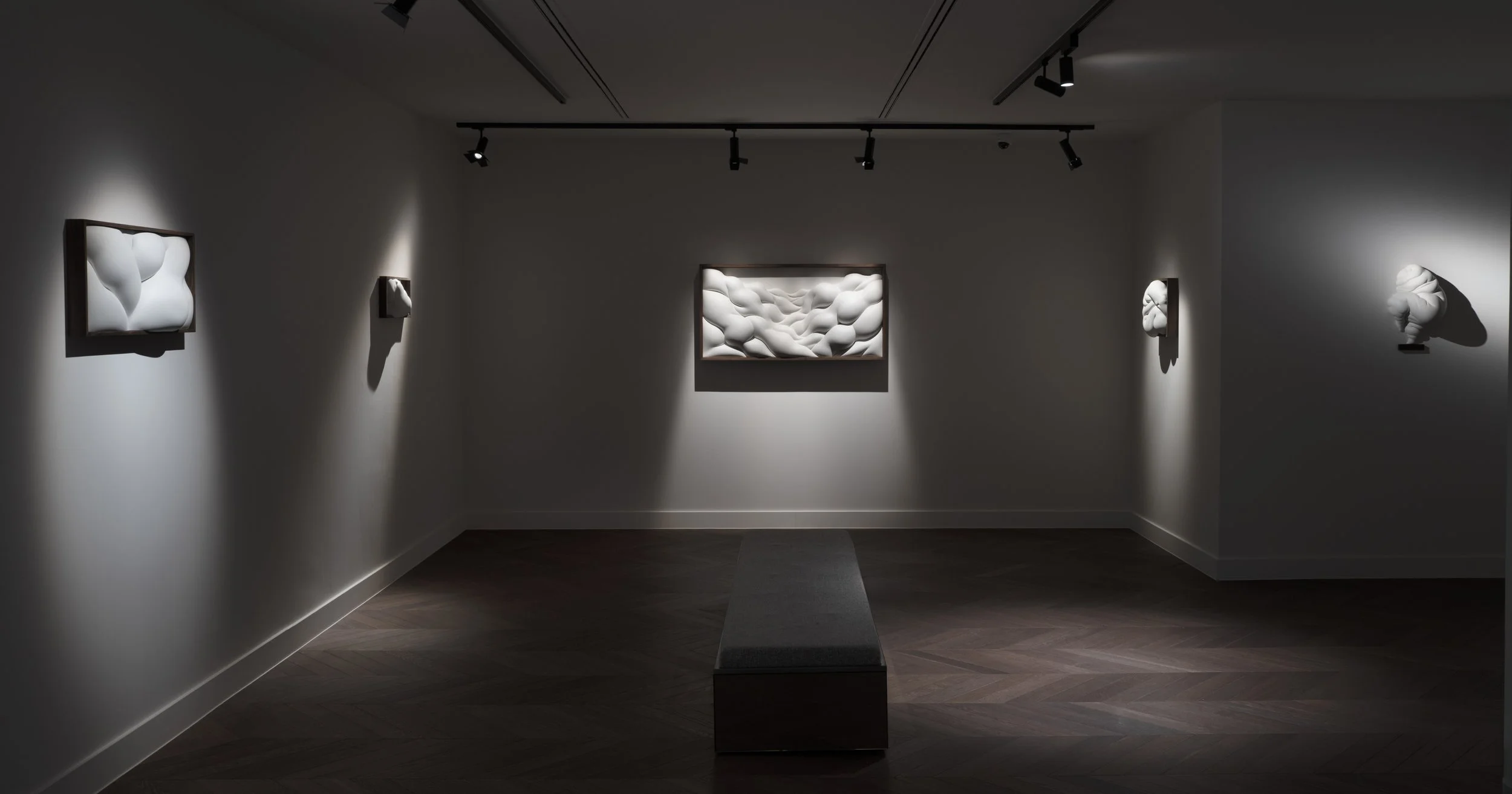
Vincent Lagrange presents Never Enough, his solo exhibition at Galerie 22MUSE in Antwerp, in which white, sculptural forms serve as a meditation on excess, physical boundaries, and the moment when beauty turns into a warning. Moving from his long-standing photographic focus on animals toward a more direct confrontation with human behaviour, Lagrange reflects on why the work had to move beyond the image and become physical.
From your series “Between Us” to “Never Enough,” your tone seems to shift from wonder to critique. What changed for you personally?
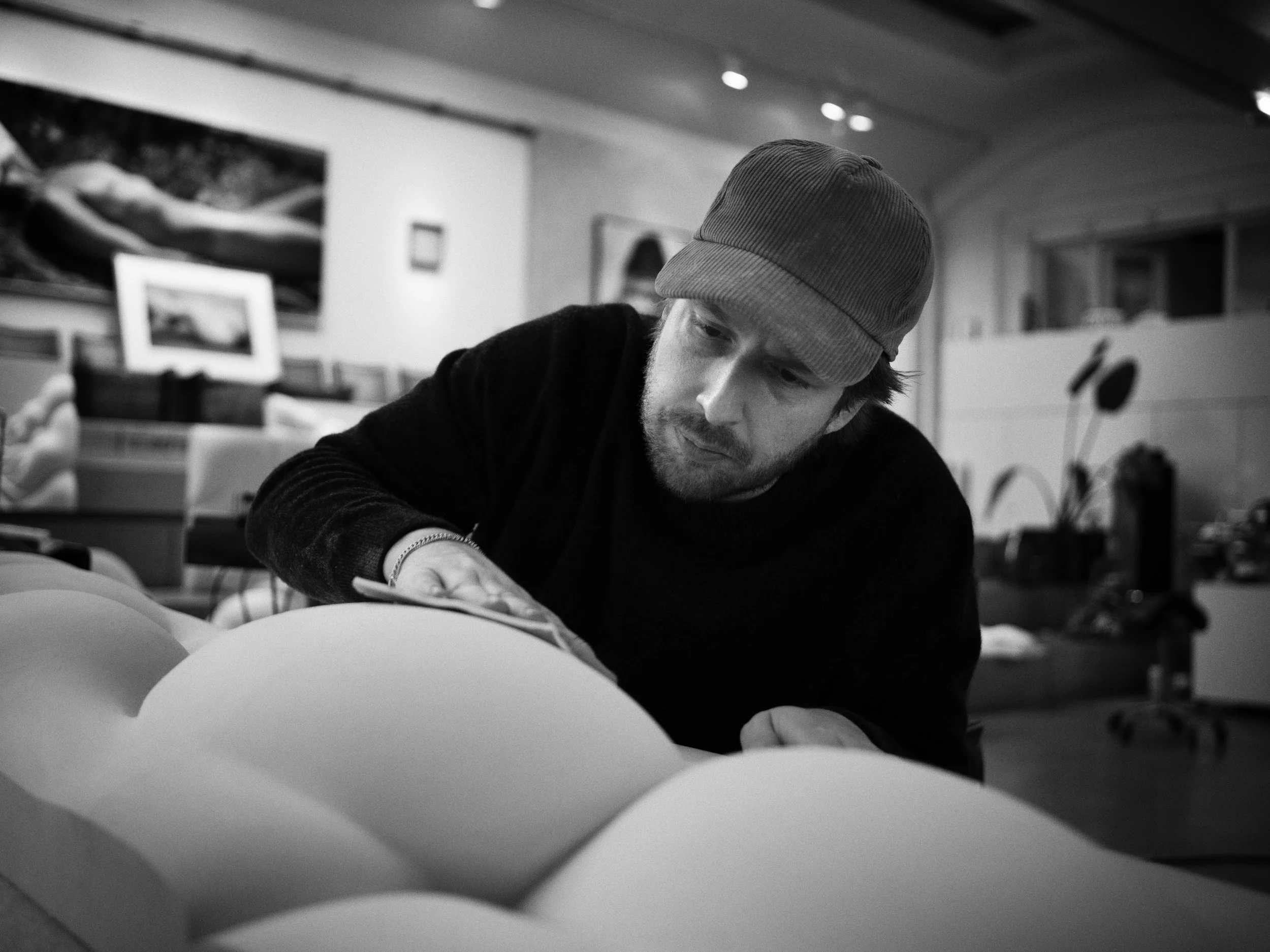
My love has not changed, only my point of view. For twenty years I photographed animals because they live according to a truth we have forgotten: enough. Between Us was a window. You looked outward, at beings of grace and self-restraint, at something we once knew ourselves. But if you look at that beauty long enough, you inevitably begin to ask what threatens it. At a certain point, the camera had to turn. The window became a mirror. I didn’t suddenly become a critic. I simply found the courage to put the perpetrator in the frame instead of continuing to show only the victim.
Was there a specific moment that pushed you from observing animals to questioning human behaviour?
Not one single moment, rather a growing awareness. For twenty years I photographed animals, and the longer I did so, the clearer it became why they are vulnerable today. Not because of themselves. Because of us. We cannot stop. At a certain point I could no longer keep showing only their beauty without also naming what threatens it. That would have been dishonest. The camera had to turn, away from the victim and toward the perpetrator. It wasn’t a one-day tipping point. It was the logical next step.
What was missing from the photographic format that made sculpture necessary?
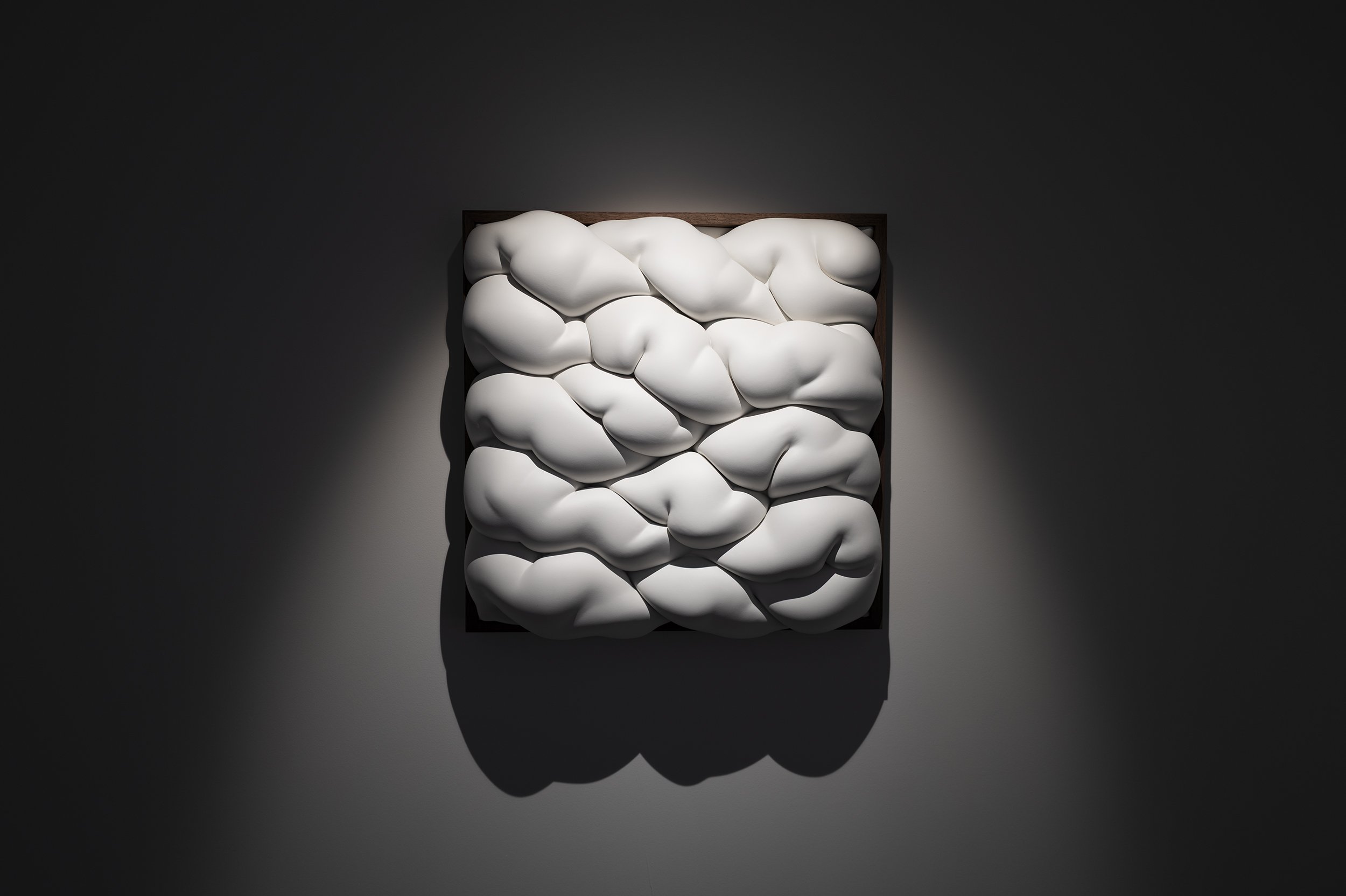
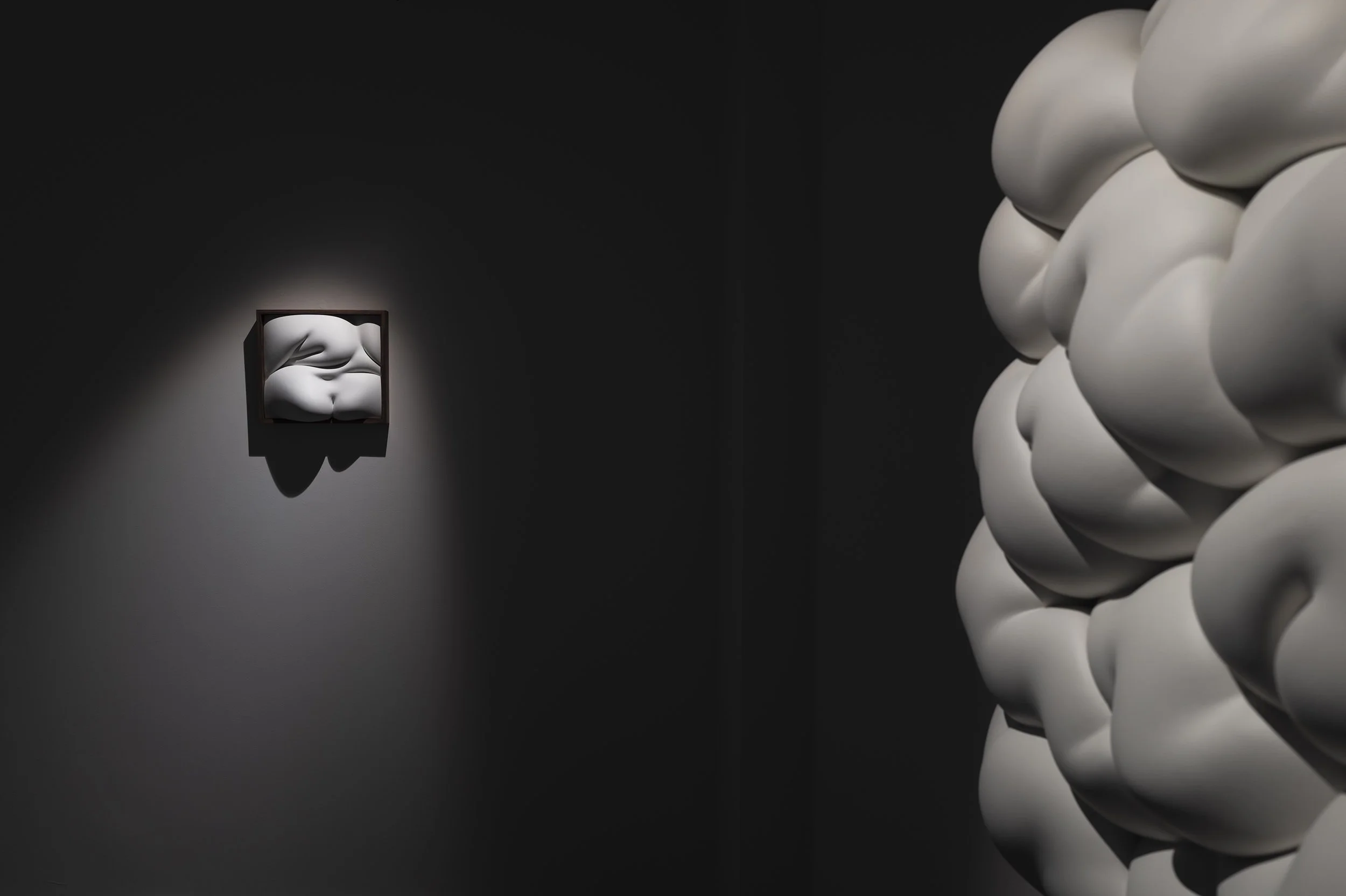
Pressure. The idea began as photography. I shaped the models, lit them from above, and produced prints in which the subject seemed too tightly confined within the frame. But the print could not hold what I physically felt while making the work. The tension lived in the volume, not in the image. A print can show, but it cannot press. For this story, that wasn’t enough. The volume could not remain an illusion. It had to become real. Real mass, real wood, a swelling against a boundary. Only then do you feel it.
Can you explain what the work is about for you?
It’s about the moment when excess becomes a burden. “Enough” has already been passed, but desire continues. That tipping point is everywhere: standing in front of the fridge at night, scrolling until your eyes burn, cutting down forests for things we’ll throw away in three years. Even our curiosity knows no restraint. Greed isn’t ugly, and that’s precisely the problem. It feels like love, like warmth, like life. It can be soft, beautiful, almost tender. But the bill always comes—just later. I don’t want to pass judgment, because I am complicit myself. The most honest thing you can do is let someone feel something without pointing a finger.
What role does the frame play within the work?
The frame is not decoration. It is the boundary—ecological, social, personal. The forms push against it. Some stay just inside; others break through. With the frame, there is drama. Without it, there is only chaos. That tension, that moment just past the point of no return, had to become tangible. Because without a boundary, you cannot show overflow. Only when something pushes up against a limit does excess become visible. The world is pushing against the frame. That is what this work is about.