
IN CONVERSATION WITH NUTRITIOUS
Interview by Samo Šajn
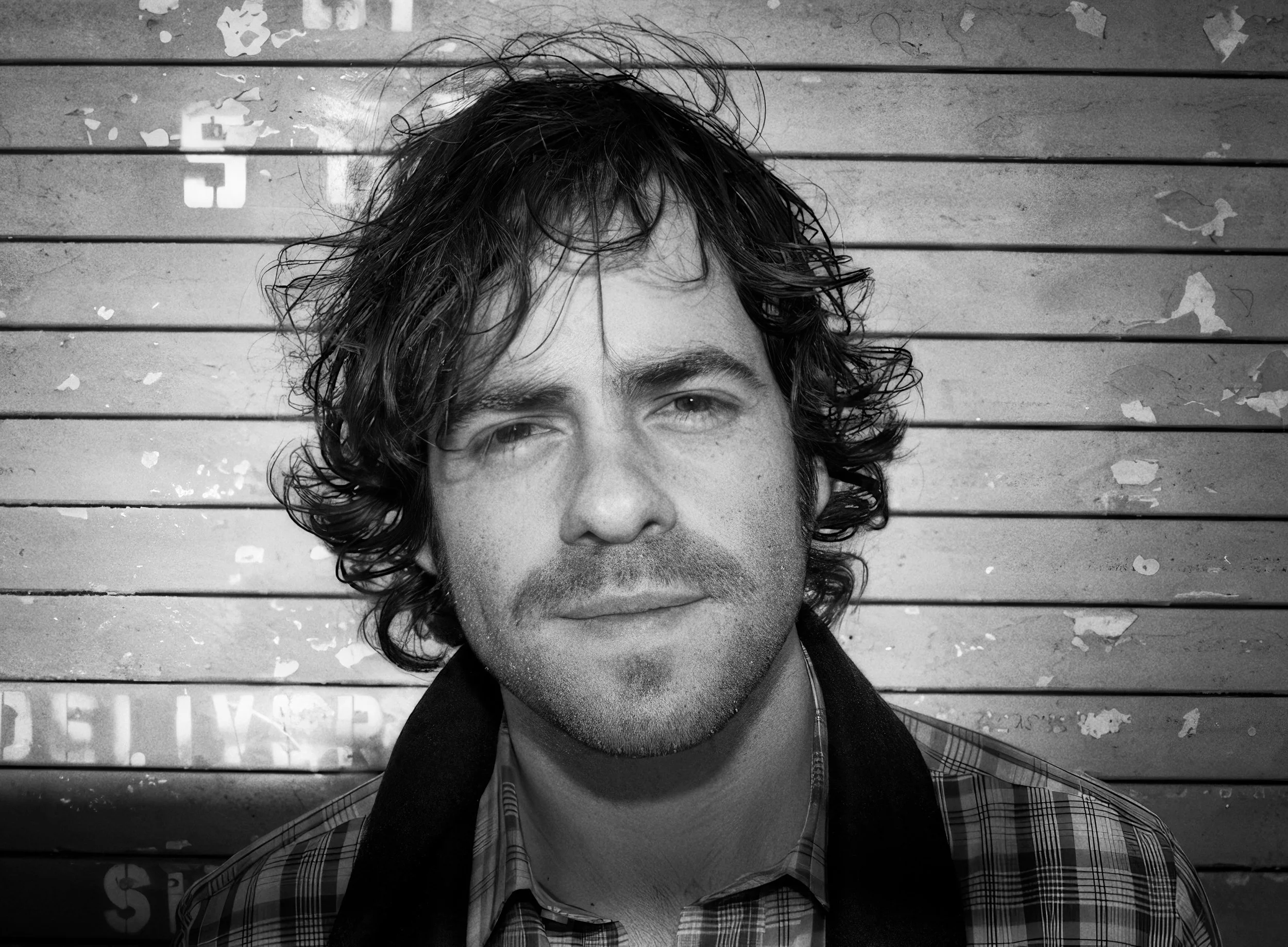
Nutritious is a New York DJ and producer with a rich musical history – the Liquid Culture label head is known for his eclectic sound, all night long vinyl sets and deep connection to dancefloor culture. Blending house, disco, techno and electronic music, he brings a hands on approach to both DJing and production, treating his 3-4 turntables like live instruments, improvising remixes in real time, threading rare edits and unique deep cuts. His new 6-track mini album ‘Solarmaxxing’, out on Liquid Culture, explores the energy of summer, movement and friendship.
Your new mini-album Solarmaxxing feels deeply connected to summer, movement and the energy of being outside. What inspired the idea behind this record?
The concept is solarmaxxing itself. Maximizing our relationship to the sun, which is the single most disregarded source of life on this planet. We exist among at least two hundred billion suns in this galaxy alone. Two hundred billion. With roughly two trillion galaxies beyond it. Just look up at night. We're swimming in solar energies and we've mostly forgotten.
The record is structured as a day you refuse to let end. Squeezing the electricity of a juicy day and keeping it flowing past dark. All the ways summer brings people together, whatever they have and wherever they are.
My mother loved the sun above almost everything else. She passed while I was finishing the last song. The record had already been moving toward everything she loved about a day like that. By the time I finished "Endless Summer," it had become a dedication.
You describe your sound as "Nu-house," a blend of cosmic disco, deep house, nu-disco and techno. How do you define this sound and what influences shaped it?
It borrows from my name. All these things I love that don't fit any single category finally sharing one word and a commitment to the dancefloor as somewhere sacred. I grew up appreciating an extraordinary range of music: Studio 54, Copacabana in the house, the incredible DJs of New York radio. My older brother had me playing drums in rock and funk and soul before I understood what genres were.
By the time I got to the Palladium at seventeen, deep house and techno were doing something completely different to the same bodies. I've never fit neatly inside any one of those boxes. So at a certain point it just made sense to name the thing I actually do, in reverence and profound appreciation for true house music.
You learned DJing through cassettes and vinyl and now perform with three or four turntables like live instruments. What does this hands-on approach allow you to express that a more traditional DJ setup doesn't?
Bending pitch by hand, finding harmony by ear. Slowing tape and records down and speeding them up, listening to what happens to the tone, to the texture of the sound. My first mixes were patched through guitar effects pedals into tape decks and Walkmans. It’s all I had to work with, and I just wanted to hear what was possible.
That impulse is completely intact. Four turntables now, outboard effects: it’s the same instinct, with more tools. I'm never executing a prepared set behind the booth, always improvising, going by feel, responding to the energy in the moment. Something shifts in the space and you reach for a record and run it through an effect until it becomes something the person who made it would not recognise. That thing exists for those two minutes in that room and then it's gone. You can't purchase it afterward. You can't Shazam it. It disappears the moment it's over. That's the entire point.
Your sets are known for rare edits, deep cuts and spontaneous mixing. How important is the element of surprise when you're creating a dancefloor experience?
The deep cut is a signal. When you drop something nobody expected, a record from thirty years ago, an edit that doesn't exist anywhere, something you have to explain to the next DJ in the booth, people look up. They look at each other. The room turns up a register. That's our conversation. Our ritual.
I started young in record stores, staying until closing, playing several sets through the entire weekend, chatting about music until dawn at the afterhours. That education lives in the craft. One thing that genuinely stops people is worth more than two hours of what they already know they love.
You came up in New York's East Village scene, playing all-night vinyl sets during a very different era of club culture. What lessons from those nights still influence the way you approach music today?
The East Village is Mecca. The Giuliani cabaret law was deliberate cultural erasure. Dancing in a bar or club without a special license was illegal in New York, and the city enforced it: raids, shutdowns, systematic targeting of queer spaces, Black spaces, downtown culture. I held the first residency as the former Save The Robots space transitioned into a mainstream destination. All-night, all-vinyl Saturdays, every week. New York partied to spite Giuliani’s efforts. Lines around the block past 2am, dancing on the bars, in the stairwells, wherever people could eke out space, in complete defiance of a law that existed to push people like us out of our own city. No phones. No content. You showed up or you missed it.
Then September 11th happened. The city went somewhere underneath language and propaganda. And those rooms became something you certainly could not find anywhere else: strangers from completely different backgrounds holding each other up, in deliberate defiance, together. No pretense. The music doing what nothing else could.
The East Village taught me what a dancefloor actually is. Not entertainment. Something people have always needed and governments have tried to suppress. I've never played a set since without carrying that.
With Solarmaxxing released on your own Liquid Culture Records, what made you want to create your own platform for your music?
My older brother was a violin virtuoso who turned to electric guitar. He was one of the most wildly creative, restless people I've ever known. Decades before anyone called it a wellness practice, he was exploring psychedelics, jamming constantly, pushing every sound somewhere it had not been. He could channel Page, Hendrix, Lifeson, Gilmour, the greats. Extraordinary curiosity, extraordinary gift. But there was no family infrastructure for any of that: no lineage of artists, no one who understood what being that kind of person actually required.
In his era, living that far outside any conventional path, the experimentation, the non-conformity, using psychedelics as a creative tool, all carried real stigma. It wore on him. He took his own life. Before he did, he made sure music was my path.
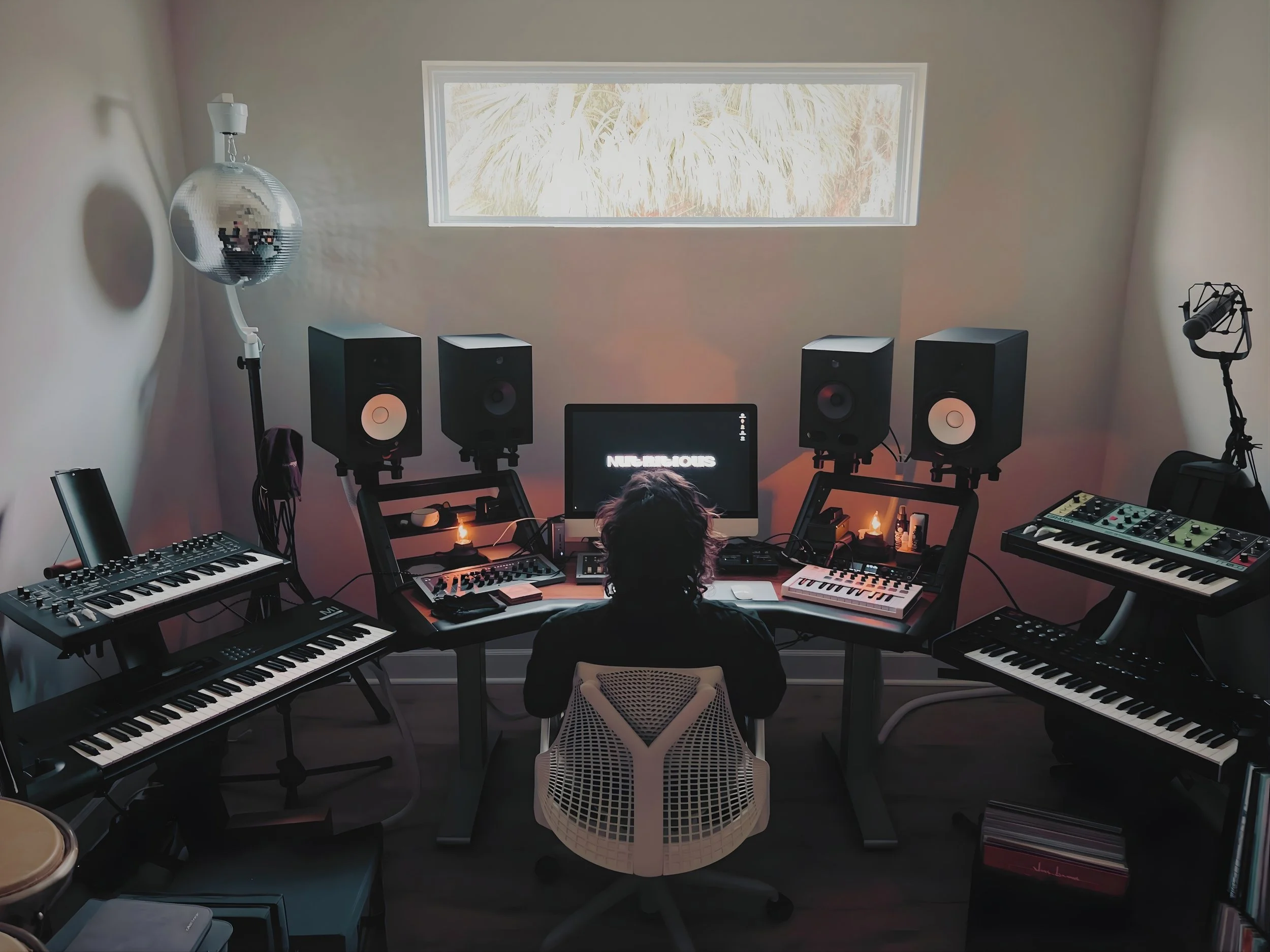
Liquid Culture exists because of him. Not as a tribute. As an answer. He did not have what we’ve built: a community where the music holds the standard, the artist keeps creative control, finds support and collaboration, and the world the work arrives in actually means something. That obligation shows up in every single decision we make.
The album features a lot of organic textures, including strings, percussion, vocals and warm synths. How did you balance the human feel of instruments with electronic production?
I experience figurative image synesthesia, sounds arriving as visual sequences before I know what to do with them musically, which means the question is never "organic or electronic" but "what does this scene look like, and what does it need?" The strings on this record have a specific job. The percussion on the title song literally mimics the physical contact of summer: a ball striking a surface, bodies moving outdoors. The sounds are designed to evoke specific moments, eras, places in time, things tangible. That specificity was the whole creative logic.
Phil Moffa at Butcha Sound has been my engineer for close to fifteen years. His analog approach gives the record soundsystem weight while keeping all the texture intact. He speaks the same language about what matters sonically. What lands in the masters is that relationship doing the work.
You've played iconic venues from Pikes Ibiza to The Whitney Museum and New York Fashion Week events. How does the energy of a location influence the way you perform?
Warhol understood something essential: the most charged thing that can happen in a room is when art and nightlife occupy the same space at the same time. The Factory was that experiment taken as far as it could go. The Andy Warhol Foundation carries that inheritance, supporting programming where those worlds genuinely and unglamorously converge. When the Whitney extended that invitation, inside that specific lineage, it was not a DJ booking. It placed the music in conversation with the history of the space, with what an audience already expects from a place built for art. People walk into a museum in a completely different state than they walk into a club. The attention is open in a specific way. You feel it the moment you start.
The question before every set is the same: what is this space doing before I play a note? At the Whitney, the weight of that answer is considerable. Places like Pikes have decades of history in their soul. Rodarte during Fashion Week wants the music to move the way the clothes feel. Each one is a completely different assignment. My core approach does not change: I'm reading and responding in real time. But what the room is asking for decides everything.
Your previous work has connected with artists like Daft Punk, Disclosure, Billie Eilish and Kaskade through radio and playlists. What does it mean to see your music reach such a wide range of listeners?
Mostly it's surreal. I’ve been in the car several times while "Freefall" came through the speakers next to a Disclosure and Daft Punk, “Ether” with Kaskade, Billie, Rüfüs Du Sol, and I just sat there, because their records have been in my heart for such a long time. They’ve shaped how I think about what a song can do. Hearing my music in that company is not something I process lightly and I’m extremely grateful for everyone listening deeply and appreciating the work.
After decades of DJing, producing and working across different creative fields, what still excites you most about making music and bringing people together on the dancefloor?
Joy. Catharsis. Fun. I released thirteen songs in 2025 across four EPs and a single. This year I'm already nine songs in across an EP and album, with more on the way. What that volume at that level does is sharpen the work. The precision is different. The music knows where it wants to go and we get there faster.
Nutritious six-track mini LP ‘Solarmaxxing’ is out now on his Liquid Culture records. Save it HERE. Connect with Nutritious on @djnutritious (IG), djnutritious.com, liquidculturerecords.com, and the We Are Liquid Culture playlist on Spotify.
Key upcoming shows:
Sept 19th - Liquid Culture pres. Solarmaxxing Release Party – Danger Danger Brooklyn
Oct 31st - Mark Farina’s Mushroom Jazz X Halloween – ZeyZey, Miami
Nov 5th - Phoenix Rising, Psychedelic Speakeasy, Analog @ Hutton Hotel, Nashville
