
IN CONVERSATION WITH OCTOBER LONDON
interview by JANA LETONJA
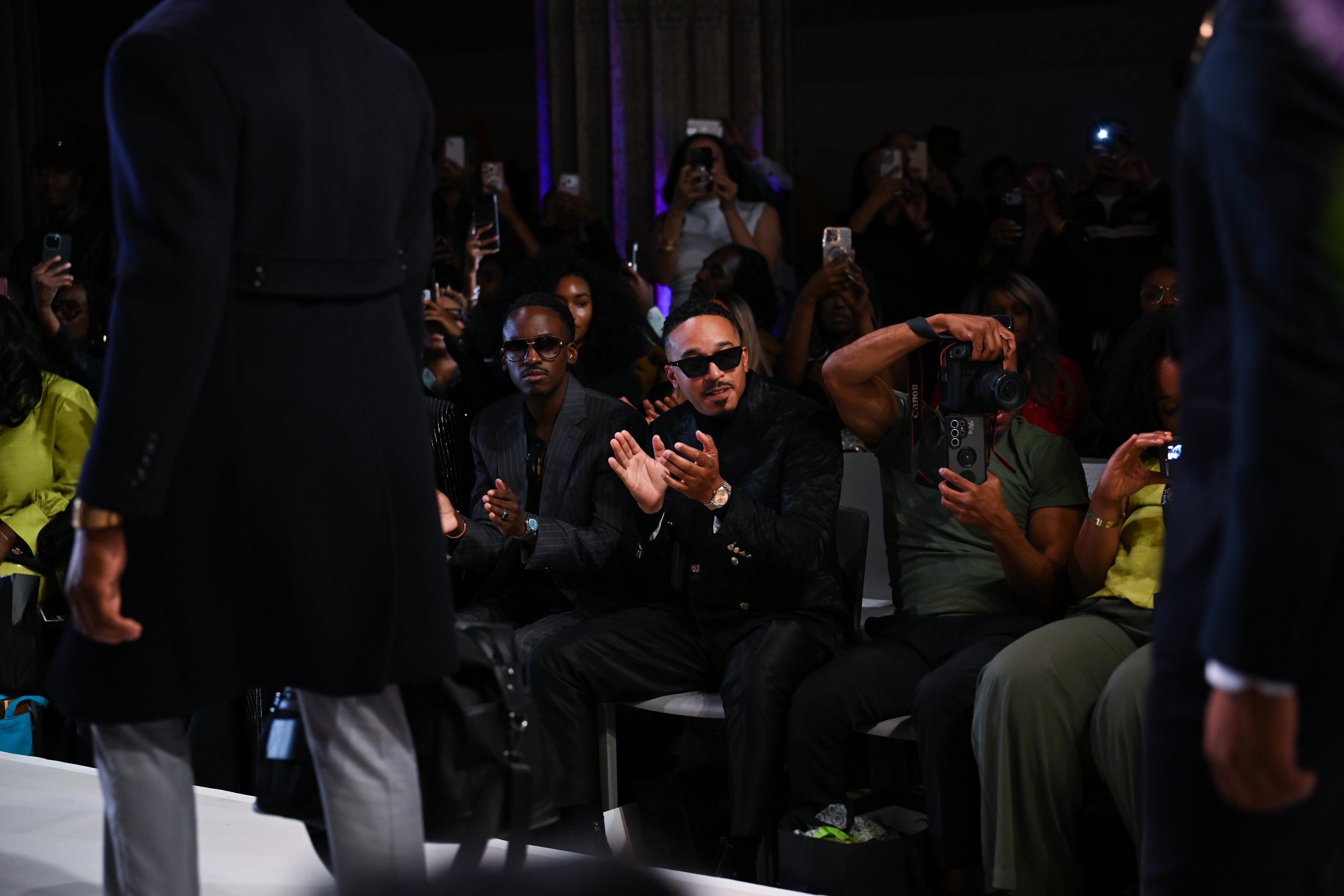
GRAMMY-winning R&B artist October London has built his musical identity by bringing the elegance and emotional depth of classic soul into the present, and now he’s translating that same sensibility into fashion. With Saint London, the new luxury made-to-measure tailoring house created alongside FEDÚ founder and designer Ilbert Sanchez, October is expanding his creative universe beyond the stage and into a world of craftsmanship, personal expression and modern tailoring. Following the brand’s September debut during New York Fashion Week, Saint London represents another dimension of an increasingly ambitious vision spanning music, fashion, culture and lifestyle.
photography by JAMES LAW
People know October London first through music. Why did fashion feel like the natural next chapter of your creative life?
Fashion never really felt like a “next chapter” to me because it’s always been part of the same story. Before people hear you sing, before you say a word, they see you. Your clothes introduce you first. Music gave me a way to express how I feel, and fashion gives me a way to express how I see myself.
With Saint London, I wanted to take everything people already associate with October London, the soul, the elegance, the romance, that timeless feeling, and give people something they could actually wear. So, I’m not leaving music to do fashion. I’m just giving the music another language.
Saint London shares your name. How personal is this brand to you, and what does putting your identity behind it mean?
It’s extremely personal. When you put your name on something, there’s nowhere to hide. London isn’t just branding to me. It represents my reputation, my taste and ultimately my legacy. And I take that seriously.
I didn’t want Saint London to be something where I just showed up for the campaign, took a few pictures and called myself an owner. I wanted something I would genuinely wear. Something I’d be proud to see my son wear one day. Something that could exist beyond whatever is popular right now. If my name is on it, I want people to know there’s intention behind it.
Your musical world draws heavily from the sophistication and romance of classic soul. Do you see Saint London as the sartorial equivalent of the sound you’ve created?
Absolutely. That might actually be the best way to describe it.
When you listen to my music, there’s a certain warmth to it. There’s romance. There’s elegance. There’s nostalgia, but it doesn’t feel old. That’s exactly what I want Saint London to feel like. If October London’s music were walking into a room, I think it would be wearing Saint London. I want the clothes to have the same quality as a great soul record. You can pull it out twenty years from now and it still works.
What did you feel was missing from contemporary menswear that made you want to create Saint London
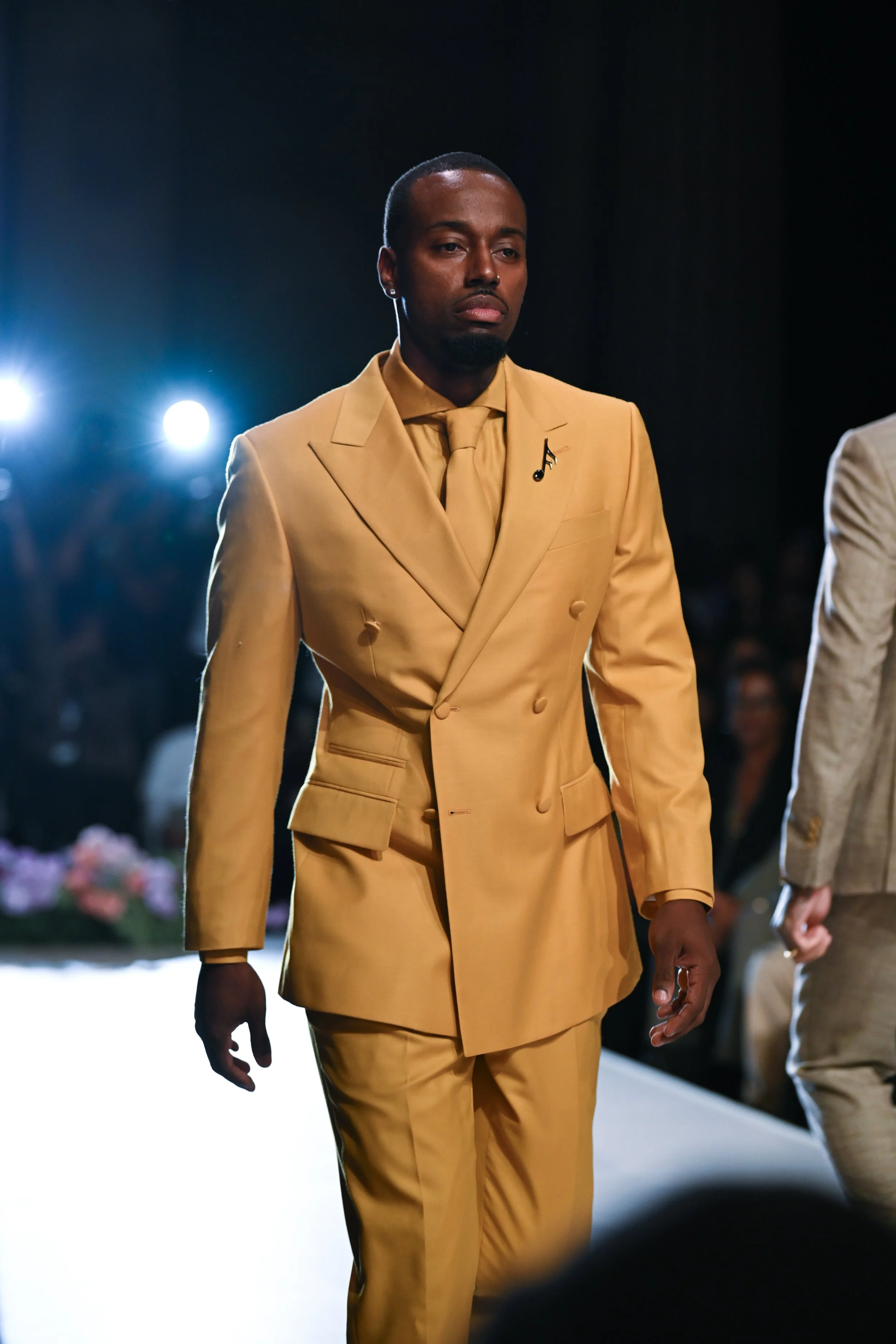
Intentionality. There are a lot of clothes being made today, but I wanted to create something that makes a man feel like he has arrived somewhere before he even opens his mouth. We’ve gotten extremely casual as a culture. There’s nothing wrong with casual, I wear it too, but I think somewhere along the way we started acting like dressing up was uncomfortable or unnecessary. I wanted to bring some ceremony back to menswear.
Putting on a beautiful suit should feel like something. Buttoning the jacket, adjusting your cuff, putting on your watch, looking in the mirror before you leave, that ritual changes you. Saint London is about bringing that feeling back.
photography by JAMES LAW
You’ve always had a very distinctive personal style. When did clothing first become a serious form of self-expression for you?
Long before anybody knew my name. I’ve always understood that presentation tells a story. I grew up watching men who took pride in how they looked. You didn’t need to be wealthy to be sharp. Your shoes were clean. Your shirt was pressed. Your clothes fit correctly.
Then, as I became an artist, I realized wardrobe could help build the world around the music. The suit became almost like another instrument for me. The song tells you what I’m feeling. The clothes tell you what world that song lives in.
Saint London is centered on made-to-measure tailoring at a time when fashion is often driven by speed and constant novelty. Why was craftsmanship and personalization important to you?
Because luxury should feel personal. We live in a world where everything is immediate. Click a button and something shows up tomorrow. There’s convenience in that, but Saint London isn’t supposed to feel disposable.
There’s something beautiful about somebody taking your measurements and creating a garment specifically for your body. Your shoulders. Your arms. Your posture. Your preferences. That changes your relationship with the garment because now it isn’t simply a suit. It’s your suit. I want Saint London customers to experience that distinction.
What makes a suit powerful to you—is it the construction, the person wearing it, or the way it changes how that person carries themselves?
All three. A great suit begins with construction, but the person gives it life.
The part that fascinates me is what happens after somebody puts it on. I’ve watched a man put on a properly tailored jacket and immediately stand differently. His shoulders change. His posture changes. He looks in the mirror differently. The suit didn’t give him confidence. The confidence was already there. The suit just introduced him to it. That’s powerful to me.
How involved are you in the creative process with Ilbert Sanchez, from fabrics and silhouettes to the overall visual language of Saint London?
Very involved. Ilbert and I have a great creative relationship because I can describe a feeling and we can start translating that feeling into clothing.
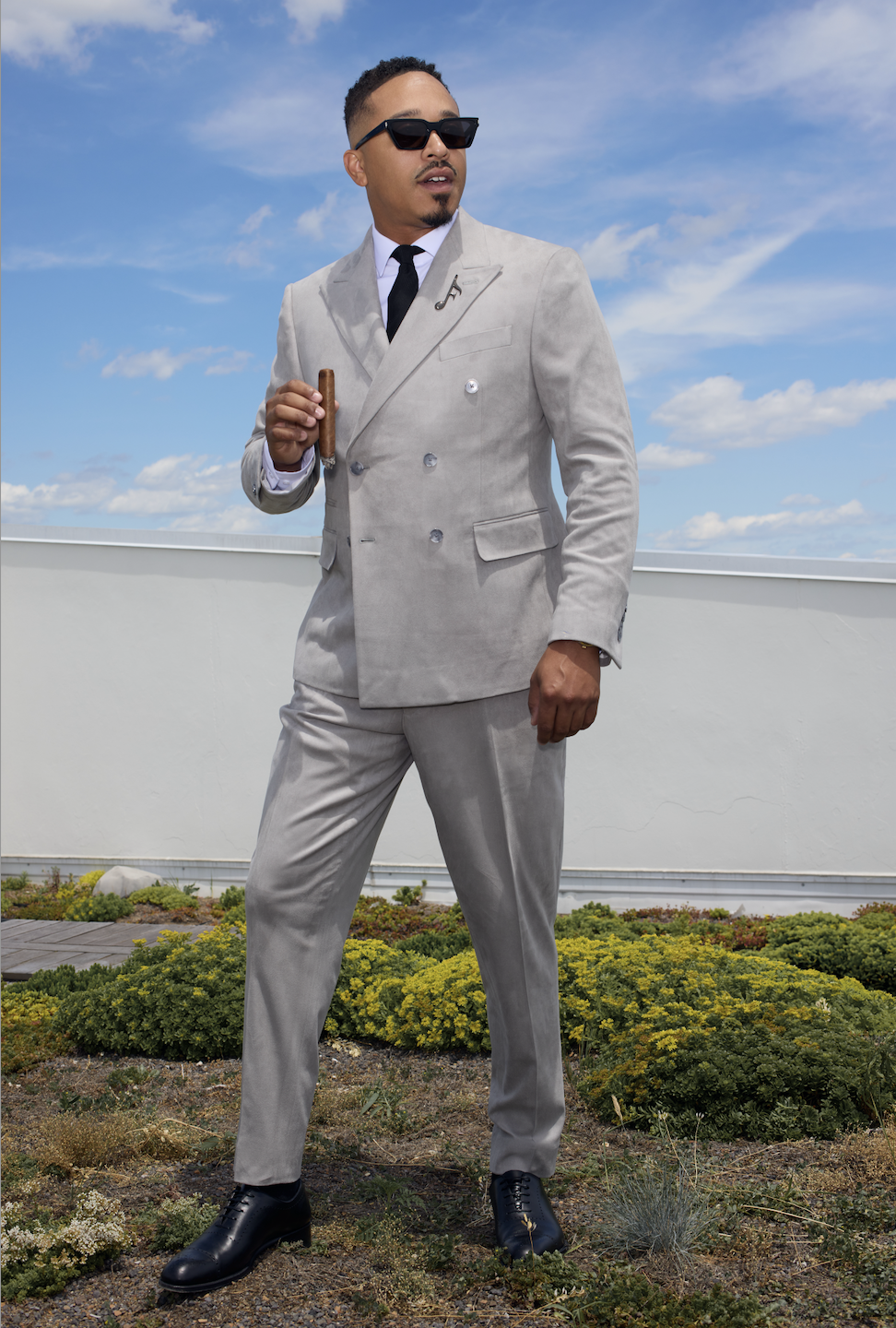
I might say, “This needs to feel like somebody walked into a jazz club in 1974, but he just stepped out of a 2027 Bentley.” That tells you a lot without talking technically about fashion. Then we start getting into fabrics, lapels, silhouettes, buttons, proportions and all those little details. Ilbert brings tremendous knowledge and craftsmanship to that process, and I bring my perspective, my world and the way I want Saint London to make somebody feel. That collaboration is really at the heart of the brand.
photography by GENE TOLAN
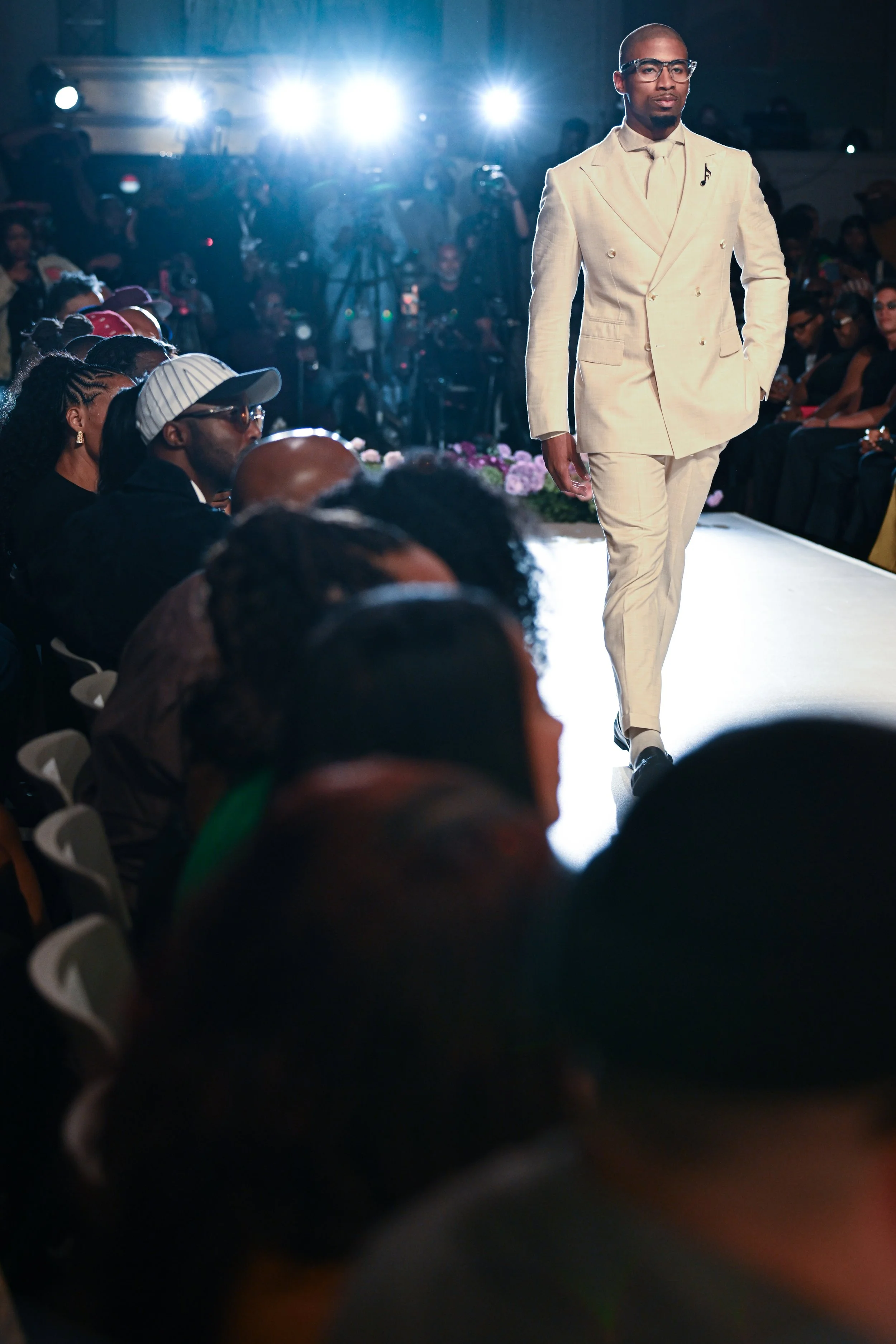
You launched Saint London during New York Fashion Week and performed live during the presentation. What was it like having your musical and fashion identities occupy the same space for the first time?
It felt like people were finally able to walk inside my head. Usually, you experience those things separately. You see me perform, or you see what I’m wearing. That night, the music, tailoring, atmosphere and emotion all existed together.
I remember looking around and thinking, “This is bigger than clothes.” People were hearing the soundtrack while seeing the visual representation of that same world. That’s when Saint London really made sense to me, not simply as a clothing company, but as an extension of everything I’m creating.
Music and fashion have always borrowed from one another. When you’re creating, do you think visually about your music, and musically about clothes?
One hundred percent. When I make music, I see colors. I see rooms. I see cars. I see what people are drinking. I see what they’re wearing. I see what time of night it is.
And fashion works the same way for me. I can look at a jacket and almost hear the record that belongs with it. Everything connects.
I don’t really separate music, fashion, film or design in my mind. They’re different instruments being used to build the same world.
photography by JAMES LAW
You’ve spoken about encouraging younger men to embrace intentional dressing. What do you think has been lost, or perhaps gained, in the way men approach getting dressed today?
I think men have gained freedom. There are fewer rules now, and that’s a beautiful thing. A man can express himself in ways previous generations probably couldn’t. But with that freedom, I think we’ve lost some of the ritual.
There was a time when a young man learned certain things. How a jacket should fit, how to tie a tie, what shoes worked with what trousers, how to dress for an occasion. I don’t want Saint London telling young men, “You need to wear a suit every day.” That’s not realistic. I want to tell them, “Know how.” Know how to walk into a room when the moment requires something more from you. That knowledge is part of becoming a well-rounded man.
Saint London is designed for significant moments—weddings, red carpets, professional milestones and cultural events. Why are you interested in clothing that becomes part of someone’s memory?
Because those clothes become witnesses to your life. Think about your wedding photos. Your first major award. Your first big business deal. Your anniversary. The night you accomplished something you spent ten years working toward. Twenty years later, somebody can show you that photograph and immediately you’re back in that moment. And what are you wearing? That’s what excites me about Saint London.
I love the idea that somewhere, years from now, somebody might pull out a wedding photograph and tell their son, “That was the Saint London suit I wore when I married your mother.” Now we’re not talking about fashion anymore. We’re talking about memories.
Your career is increasingly moving beyond the traditional definition of “musician.” Do you think artists today need to build worlds rather than simply make records?
I think the opportunity is there, but I don’t think every artist has to do it. For me, though, absolutely. Music is the heartbeat of everything I do. I’m never going to abandon that. But I realized the imagination that creates a song doesn’t suddenly stop when I leave the studio.
I have ideas about fashion, film, television, hospitality, experiences, products, architecture, business. Why would I tell that part of my creativity to be quiet simply because the world first met me holding a microphone? I’m building a world.
October London is the artist. But what we’re building around that artist can become much bigger than one album, one tour or even one career. That’s where Saint London fits for me. It’s another piece of the world, and we’re still building.
