
IN CONVERSATION WITH ORLANDO BLOOM
interview by SAMO ŠAJN and JANA LETONJA
Few actors have left as indelible a mark on modern cinema as ORLANDO BLOOM. From anchoring two of the most successful franchises in film history—THE LORD OF THE RINGS and PIRATES OF THE CARIBBEAN—to carving out a bold second act defined by risk, restraint, and reinvention, ORLANDO’s career continues to evolve. Recent performances in Sean Ellis’s THE CUT, which he also produced, and Amazon’s action-comedy DEEP COVER have earned some of the strongest reviews of his career, while upcoming projects with auteurs like Werner Herzog and Claudio Borrelli signal an actor increasingly drawn to complex, unconventional storytelling both on screen and behind the scenes.
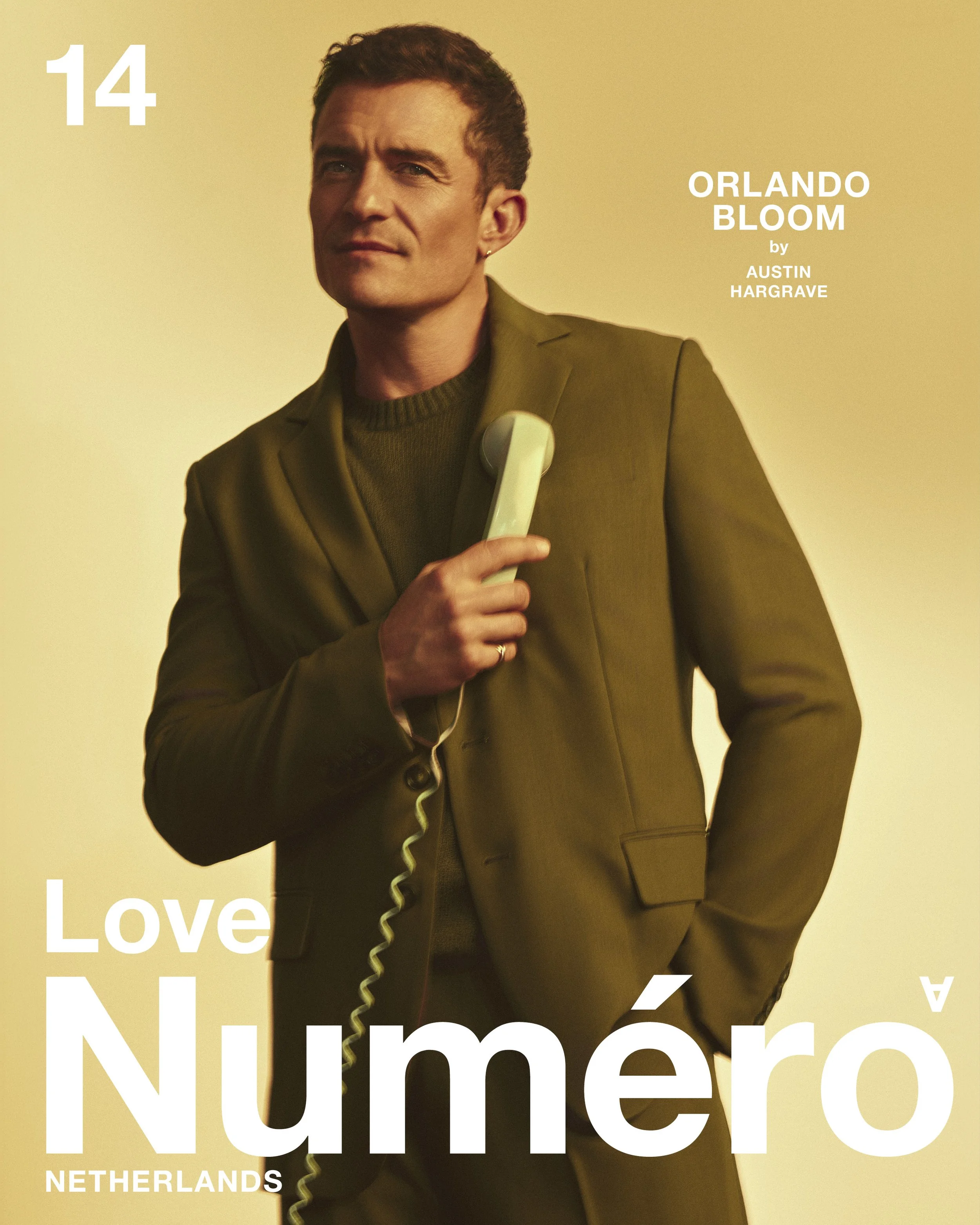
sweater, trousers and shoes TODS
bracelet CARTIER
Your first film role was very small, and then not long after, you were cast in LORD OF THE RINGS. What was your reaction when you got that call, and how did your life change once the films came out?
What an extraordinary experience. At the time, I was training at the Guildhall School of Music and Drama in London. Before drama school, I’d done a play at the Tricycle Theatre, and an agent happened to see it and sign me. My very first film was Wilde, with Jude Law and Stephen Fry. I had a tiny walk-on role, but when the film came out while I was still at school and someone recognised me in it, I remember thinking how surreal that felt. Even something that small gave me a glimpse into the world of filmmaking.
I had actually met Ros and John Hubbard, the casting directors for The Lord of the Rings, when I was about seventeen. It was one of my first general meetings after moving to London, and I’ve always been grateful that they remembered me and brought me in to read. Initially I auditioned for Faramir, but later they asked me to read for Legolas. I was in the final days of my training at Guildhall when I got the call telling me I’d been cast. I remember sitting there in disbelief. I must have rung my agent several times just to make sure it was real. Soon after, I flew to New Zealand with Billy Boyd, who played Pippin. We were actually the first actors to arrive to begin preparation — horse riding, archery, voice work, movement training. I remember walking into Weta and seeing this enormous warehouse filled with costumes. That was the moment the scale of it all really hit me.
Those two years in New Zealand were magical. I was learning how to be a film actor almost in real time, surrounded by an extraordinary cast and crew. And of course, once the films came out, life changed very quickly. Being part of something as beloved as Tolkien’s world was an incredible gift. Legolas didn’t have many lines, but he had a presence, and suddenly I found myself very much in the public eye. It was a strange and wonderful experience learning my craft quite publicly, but I’ve always felt deeply grateful for it.
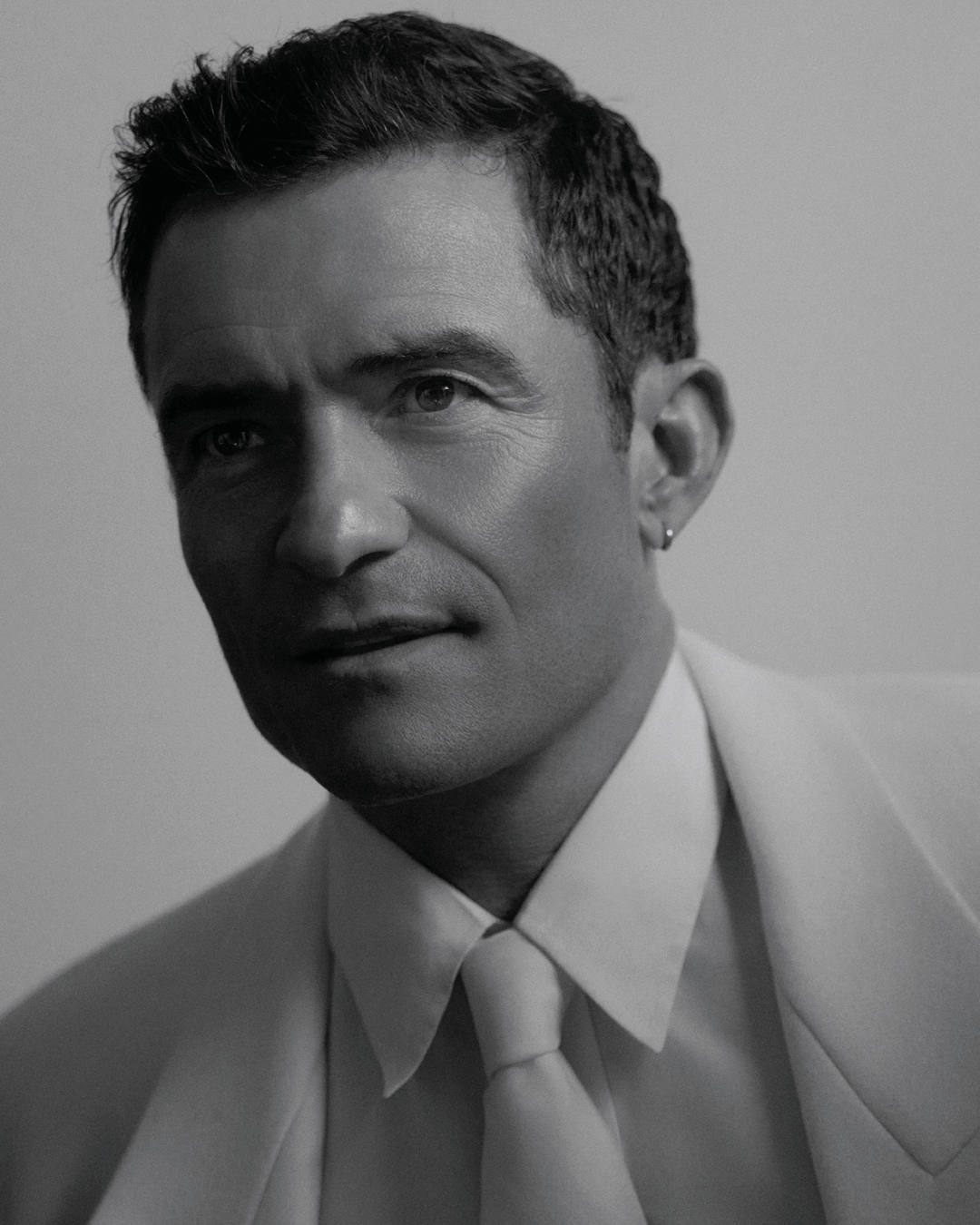
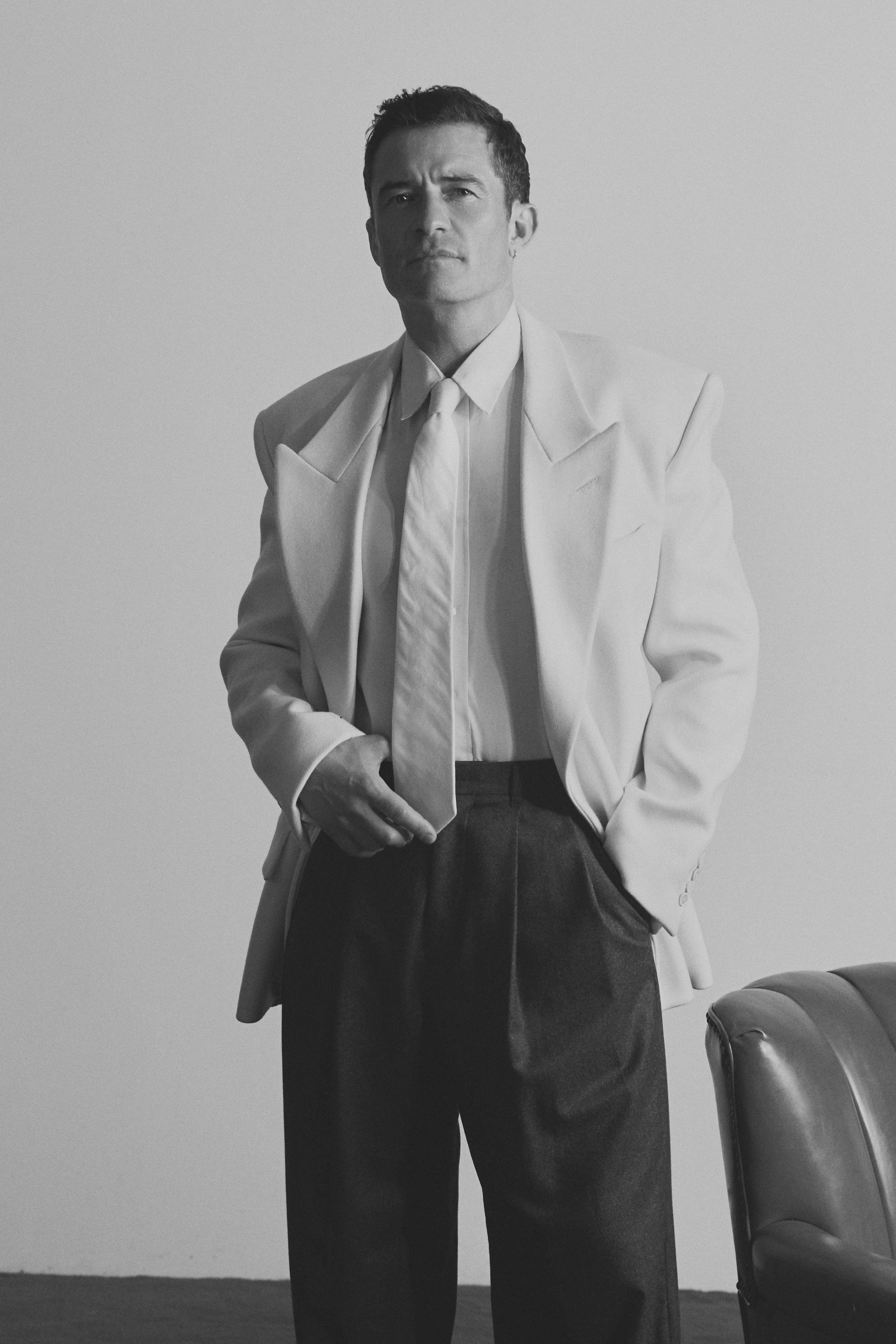
top, tie, coat and pant GIVENCHY
boot DOUCALS
After LORD OF THE RINGS, you went straight into PIRATES OF THE CARIBBEAN and TROY, one huge project after another. What was it like to suddenly be living inside that scale of filmmaking back-to-back?
It really was a bit of a baptism by fire. Suddenly I found myself moving from one enormous production to the next. After Pirates of the Caribbean, the level of exposure was something I hadn’t quite anticipated, and it had a significant impact on my daily life. But I was also incredibly fortunate to be working with remarkable filmmakers and actors.
I remember doing Ned Kelly with Heath Ledger in Australia, and Jeffrey Rush mentioned a script he’d read - a pirate movie. That immediately caught my interest. And when I heard Johnny Depp had signed on, I was thrilled, because he had long been an idol of mine. What no one could have predicted was just how successful Pirates of the Caribbean would become. At the time, the idea of a blockbuster film based on a Disney ride seemed rather unlikely.But Gore Verbinski had such a bold, almost rock-and-roll vision for it. Johnny created an iconic character, and Keira Knightley and I were fortunate enough to sit at the emotional center of the story. It turned into this wonderfully unique experience that I’ll always feel grateful to have been part of.
THE CUT earned some of the best reviews of your career. What drew you to that story, and why did you feel it was important to produce it as well as star in it?
I’d worked with the producer Mark Lane before on a UK film released during Covid. It was quite a brutal story that was originally called Romans, and later Retaliation. Through that experience I realized I was interested in exploring darker, grittier material. I’d spent much of my career working on large-scale films, but I hadn’t often been offered roles that really pushed me in that direction. No one would necessarily have thought of me for something like The Cut. When Mark pitched the idea, I was instantaneously drawn to it. The story touches on themes of mental health, body dysmorphia, and the mindset of athletes who push themselves to extraordinary extremes. I’ve always loved the boxing genre, but this was a different take on it — a story centered around a fighter’s relationship with his body and the psychological toll of that discipline.
Preparing for the role required a great deal of training. I worked closely with a nutritionist and underwent quite a significant physical transformation. Actors like Christian Bale and Robert De Niro have always inspired me in terms of that level of commitment to character. Producing the film felt important because I was so personally invested in the project. These smaller films really are labors of love. Everyone involved was there because they believed in it.We premiered at TIFF, which was an incredibly poignant moment, and the film ultimately sold to Paramount Plus. It was a challenging experience to make, but one I’m deeply proud of.
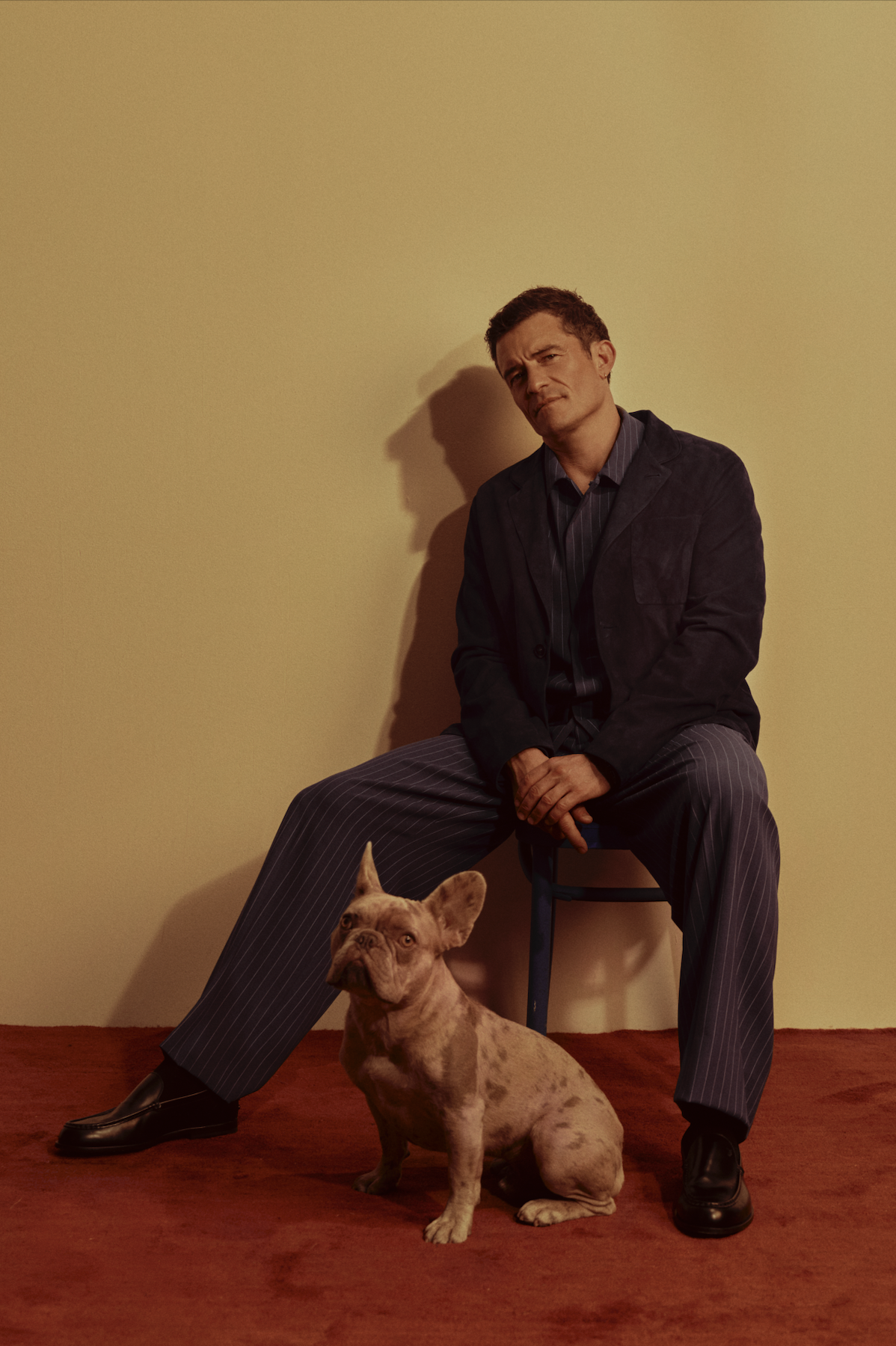
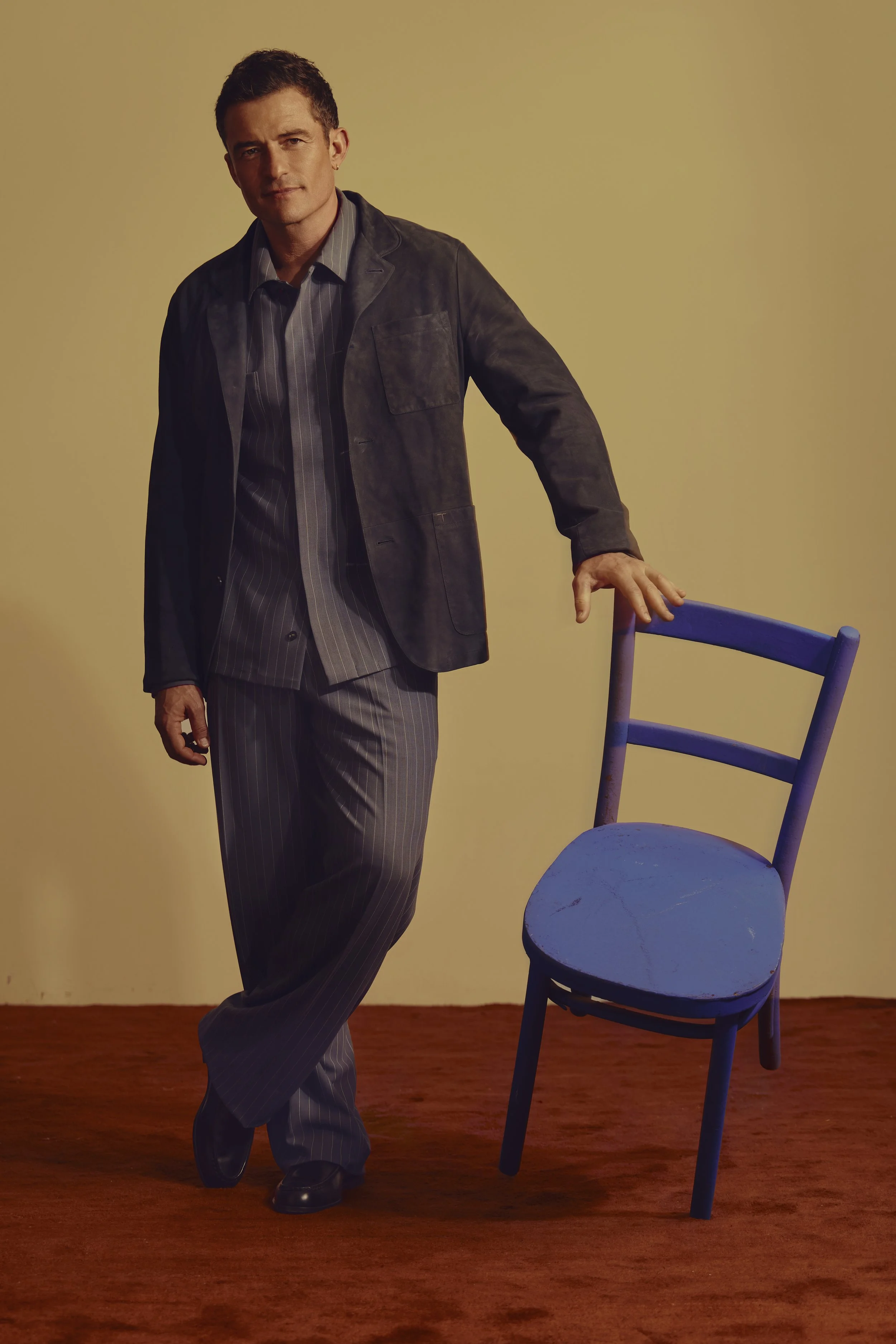
pant, shirt, jacket and shoe TODS
ring and bracelet CARTIER
After decades in the industry, what excites you now when you’re reading a script?
That’s such a good question.I think because I was fortunate enough to have those early opportunities, I now find myself thinking much more about the impact a story might have on audiences. I’m interested in projects that surprise me, that challenge me, or that offer an experience I haven’t had before. There’s so much content in the world now, and so many stories being told. What I’m really looking for are roles that push me to learn something new — about myself, about the craft, about the world. Ultimately, I’m still very curious. And that curiosity is what keeps it exciting.
ORLANDO BLOOM: TO THE EDGE revealed a deeply personal side of you—mentally, physically, and spiritually. What did pushing yourself to that limit teach you?
It showed me that I have gears I didn’t know were there.Originally, I had the idea of exploring something like the Blue Zones — communities where people live long, healthy lives. But the project evolved into something quite different. Suddenly I was skydiving, climbing, swimming deep underwater under one breath, really confronting fear head-on. Coming out of Covid, there was so much uncertainty and anxiety in the world. I think part of me wanted to see what I was capable of, and hopefully encourage others to confront their fears as well.
My Buddhist practice, which I’ve had since I was sixteen, has helped me approach life with a sense of positivity and respect for others. Through the show I realized that fear itself is often the biggest obstacle — it can paralyze you and stop you from taking risks. The wingsuit jump was particularly terrifying. But with the proper training and the guidance of someone like Luke Aikins, I was able to face it. What I took away from the experience is that we’re often far more capable than we realize.
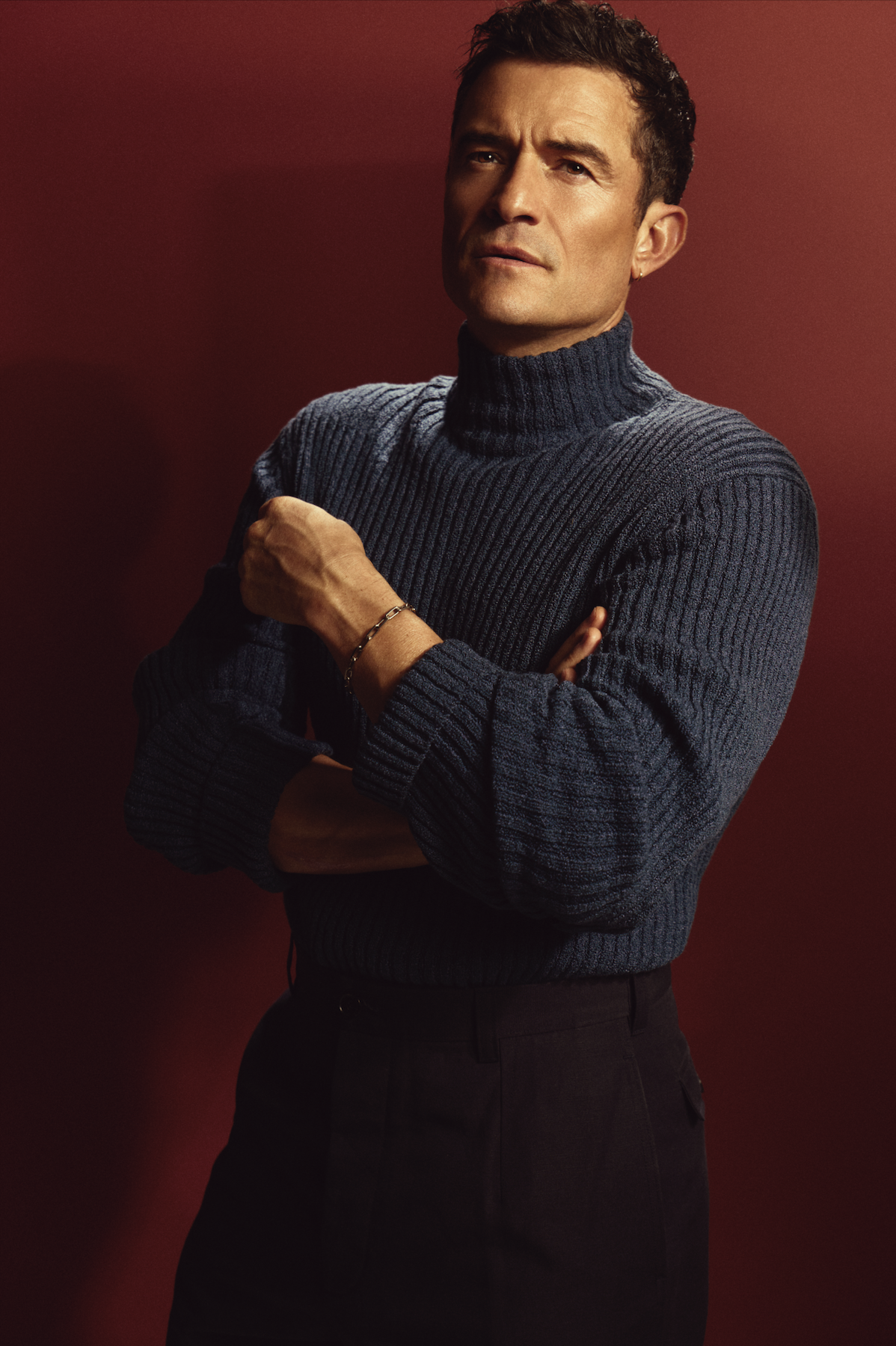
turtleneck look, sweater, pant and loafer LORO PIANA
bracelet CARTIER
Your humanitarian work with UNICEF has been a constant throughout your career. How has traveling with UNICEF shaped your worldview?
UNICEF first approached me in my early twenties, and my first trip was to Nepal.I remember meeting a young girl carrying contaminated water up a mountain. In that village, access to clean water was still a major challenge, and diarrheal disease was one of the leading causes of death for children. But what struck me most was the resilience of the community. The women in the village were taking charge — mapping homes, encouraging families to build outhouses, creating systems that would help prevent illness. Over the years, I’ve seen the impact of UNICEF’s work in many places — Liberia during the Ebola outbreak, refugee camps in Bangladesh, communities in South Africa and Ukraine. Being able to use my platform to support that work has been deeply meaningful to me. The world can feel incredibly complex and conflicted, but I’ve witnessed firsthand the difference compassion and collective action can make.
It’s also just been announced you’ll be starring in Claudio Borrelli’s THE LAST OF THE TRIBE, which is set in the Amazon and engages with themes of Indigenous survival and environmental tension. What compelled you to join this project?
I’ve always admired Ethan Hawke’s work, and when I heard about the project I was intrigued. Given my experiences with UNICEF, the subject matter — Indigenous survival and environmental tension — felt very relevant and important. It’s also a role that’s somewhat different from what people might expect of me, which I always enjoy. The script is fantastic, and filming in such unique environments will be an incredible experience. Making films sometimes feels like trying to capture lightning in a bottle. When the right collaborators come together, something special can happen.
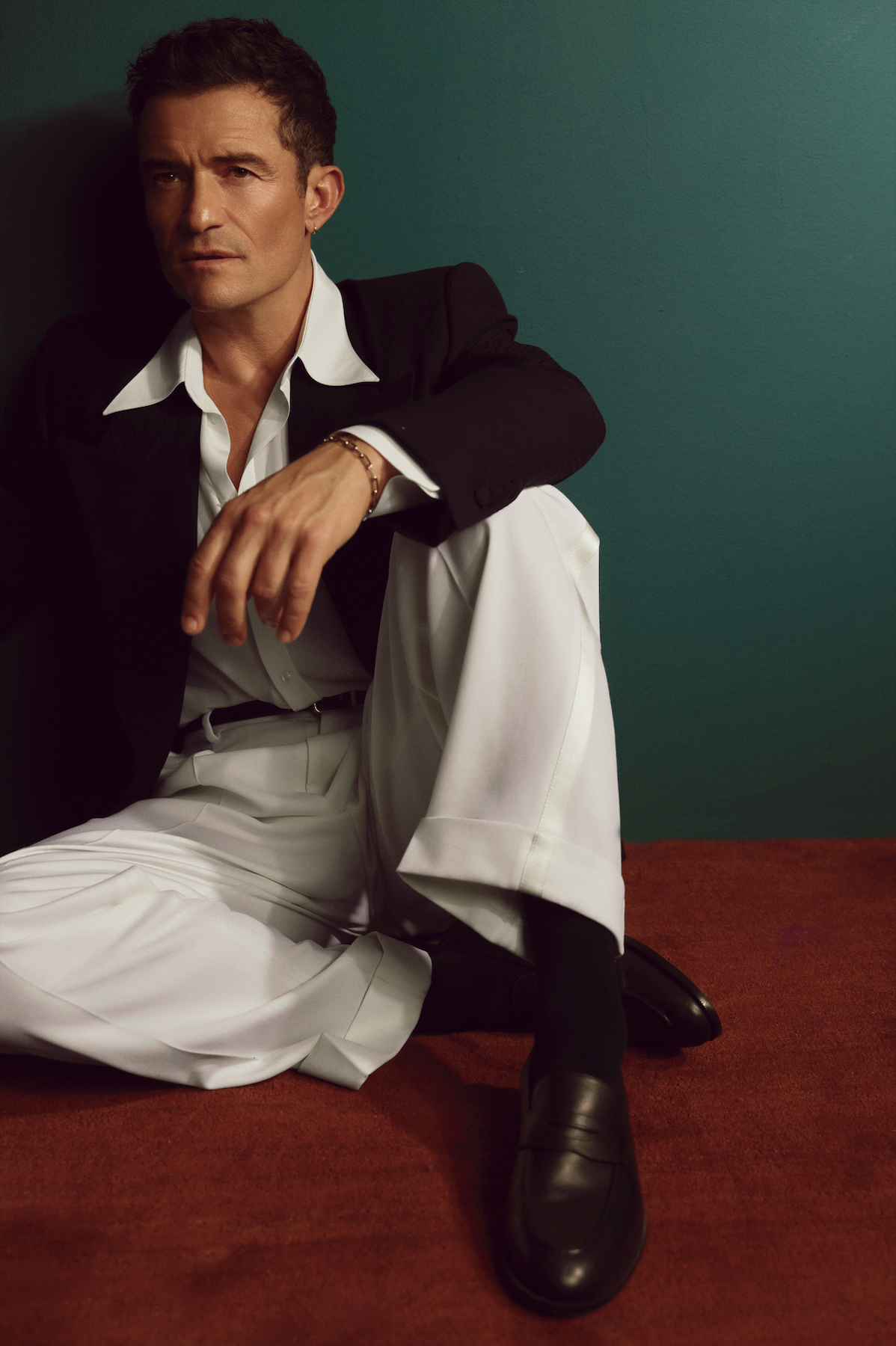
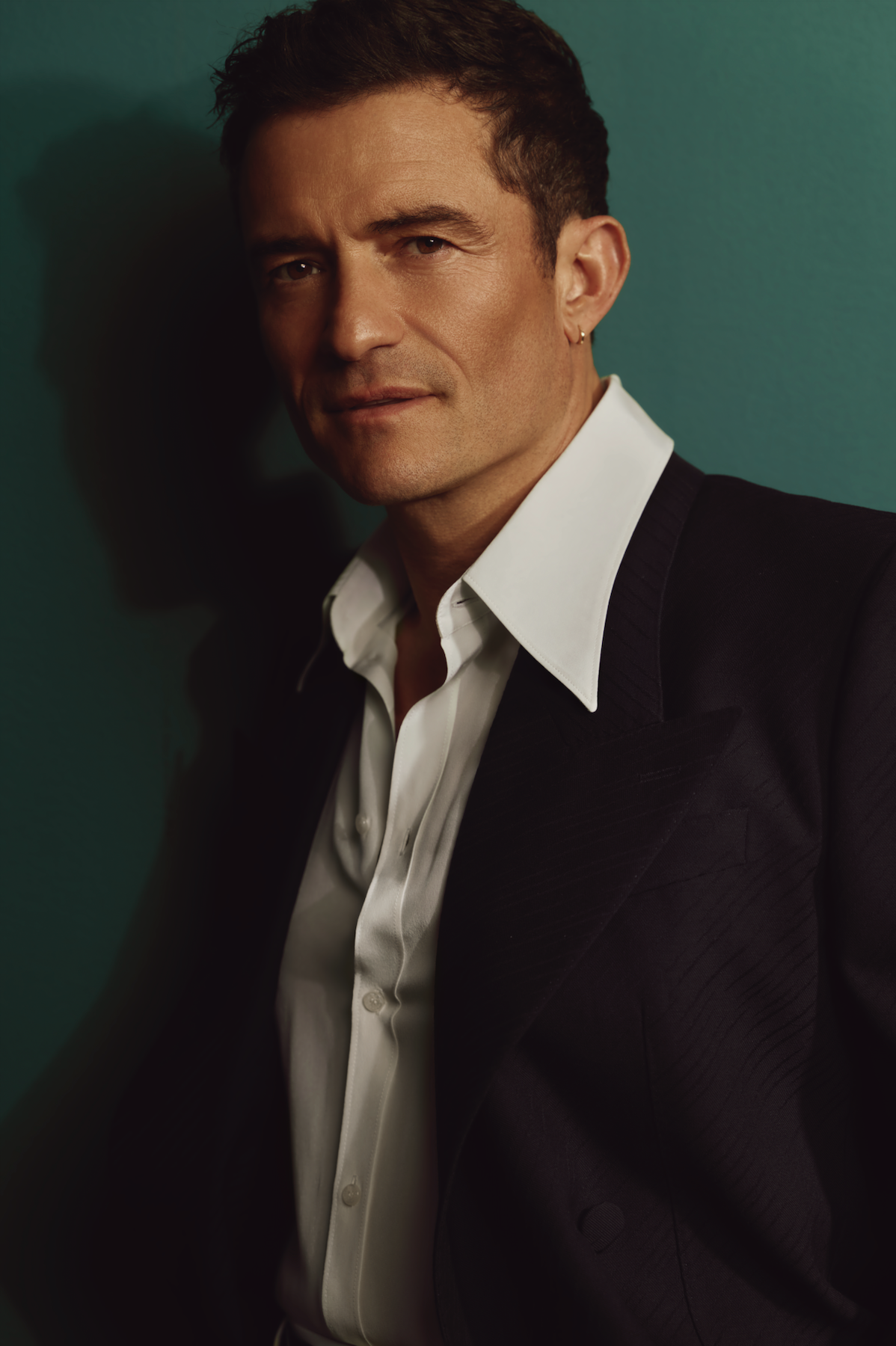
shirt, pants, blazer and belt DOLCE & GABBANA
loafers LORO PIANA
bracelet CARTIER
You’ll next be seen in Werner Herzog’s BUCKING FASTARD. What is it like stepping into Herzog’s singular creative world, and what can you tease about this film?
I’ve long been a huge admirer of Werner Herzog. When I was invited to join a project with Kate and Rooney Mara, I jumped at the opportunity. The film has a very poetic quality to it. Werner approaches filmmaking with the sensibility of both a storyteller and a documentarian.We filmed in Dublin, and even the scenes I was involved in felt like small pieces of a larger poem.Working with Werner, and with actors as talented as Kate and Rooney, was a wonderful experience.
You’re also an ambassador for PORSCHE. What draws you to brands that emphasize performance, craftsmanship, and innovation?
It’s honestly a bit of a dream.My first car in my late twenties was a 1973 Porsche 911S, which I still own today. Growing up in Canterbury I always admired classic Porsches and dreamed one day owning one. A few years ago, I had the opportunity to go to Stuttgart and customize a 911 GT3 Touring with the design team. We worked together on the colors and interior details, which was such a unique creative process. That collaboration eventually evolved into a partnership with Porsche Design. I’ve worked on everything from eyewear inspired by the Targa silhouette to watches, luggage, and even a capsule leather jacket.It’s been a wonderful way to express creativity through design.
There’s a new LORD OF THE RINGS film coming. Do you feel any pull to go back, or does it feel like a chapter you’ve already closed?
Honestly, PETER, FRAN, PHILIPPA, and the whole New Zealand team are incredible. Returning for THE HOBBIT was unique. If PETER said jump, I’d say “how high?” In many ways I feel I owe him and Fran my career. ANDY SERKIS is an unbelievable artist and director, and I’m excited to see what he creates. I watched the Amazon version and enjoyed seeing Tolkien’s world brought to life. At my age, it’s hard to imagine returning, but I’m excited to be an audience member and watch the magic unfold.
At this stage of your career, how do you define success differently than you did in your 20s?
Peace of mind, really. In my twenties, everything moved incredibly quickly. I went from one massive production to another, and while it was exciting, it was also about simply surviving that level of exposure.
Now I find myself much more interested in the process itself — collaborating with talented people, exploring new ideas, continuing to learn. Filmmaking is such a collaborative art form. When everyone involved is bringing their best to the table, it becomes something quite magical. For me now, success is really about continuing to surprise myself and staying curious.
As the theme of our issue is LOVE, what role does love have in your life?
Love, to me, is a sense of peace.It’s contentment, safety, mutual respect, and appreciation for life itself. Love can exist in something as simple as watching a sunset, walking in nature, or showing kindness in a small moment. Self-love is also incredibly important. When you find peace within yourself, it allows you to give more freely to others. Ultimately, love is a universal language. And when we’re able to live from that place, life tends to find its balance.
TEAM CREDITS:
talent ORLANDO BLOOM
photography AUSTIN HARGRAVE
creative direction RYAN LUCCA
styling MONTY JACKSON
hair and makeup LORI GUIDRO
photography assistance SAMAN ASSEFI
styling assistance MARISA ESPINOZA, CASSIE JOHNSON and MAX GOLDMAN
editor TIMOTEJ LETONJA
interview SAMO ŠAJN and JANA LETONJA
cover design ARTHUR ROELOFFZEN
