
IN CONVERSATION WITH PAULINA PORIZKOVA
interview by JANA LETONJA
Paulina Porizkova is a true cultural icon—an internationally renowned model, actress, and bestselling author whose remarkable life has been shaped by resilience, reinvention, and defiance of expectations. Discovered at 15, Paulina became the first woman from Central Europe to appear on the cover of the Sports Illustrated Swimsuit Issue at just 18, followed by a historic multimillion-dollar Estée Lauder contract that cemented her status as a supermodel of the era. Her creative journey expanded into film, television, and writing, including her acclaimed memoir ‘No Filter’, which confronts aging, beauty standards, grief, and identity with rare candor. In 2025, she rejoined Estée Lauder as a Global Ambassador, this time with a powerful mission: championing age inclusivity and reframing what beauty means for women at every stage of life.
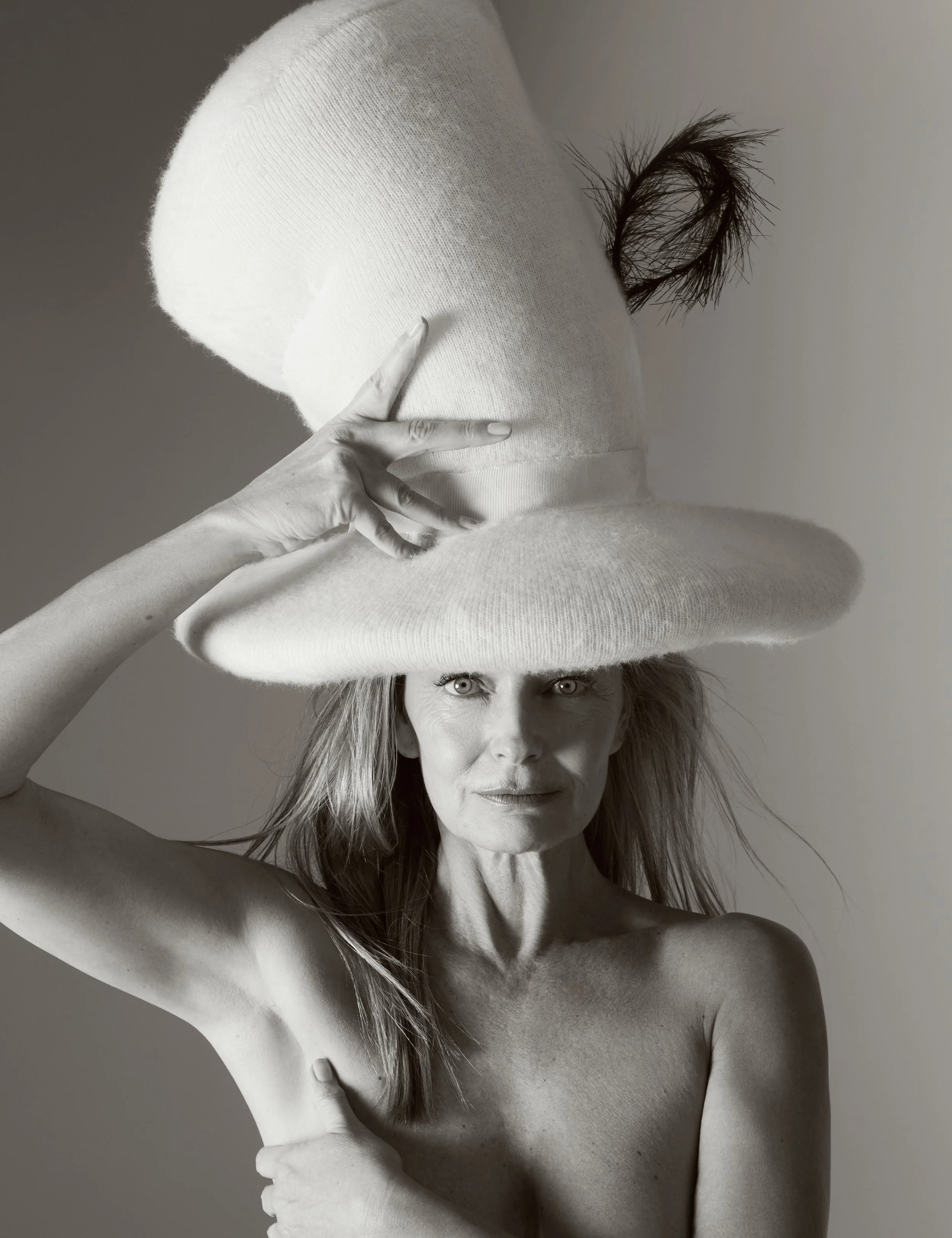
hat PIPENCO LORENA
You’ve returned to Estée Lauder as a Global Ambassador, decades after your groundbreaking first contract. What does this new chapter mean to you now?
This is a whole different world. First of all, modeling was very different forty year ago. Models were either just coat hangers, nameless thin girls who all fit the required sample size 2, or a very select few who became famous. Only the famous ones had a voice and a name. Now, through social media, everyone does.
In 1988, I was at an interesting intersection. Estée Lauder had hired me as their sole Spokeswoman for all products, but this was based on my image alone. My personality at the time was not perfectly aligned with theirs. They wanted me to be and behave as the elegant young woman I looked like on photos, accentuated with classic clothing and jewelry, dreamily lounging in modern mansions, while the actual me was a little punk who dressed exclusively in Trash And Vaudeville and preferred to smoke and discus Kafka in cheap bars.
Today, our partnership is one that is aligned. I have been doing my share of Instagram, fighting the invisibility that all middle-aged women in America seem doomed to unless they take drastic steps to look younger, and my association with Estée Lauder promised I would be able to amplify the message. In fact, the action alone of a legacy cosmetic brand signing a sixty-year-old woman, who looks it, and not just shoving her into the background as a token “older” woman, is a big deal. There is no better way to show the world that we, older women, are far from dead.
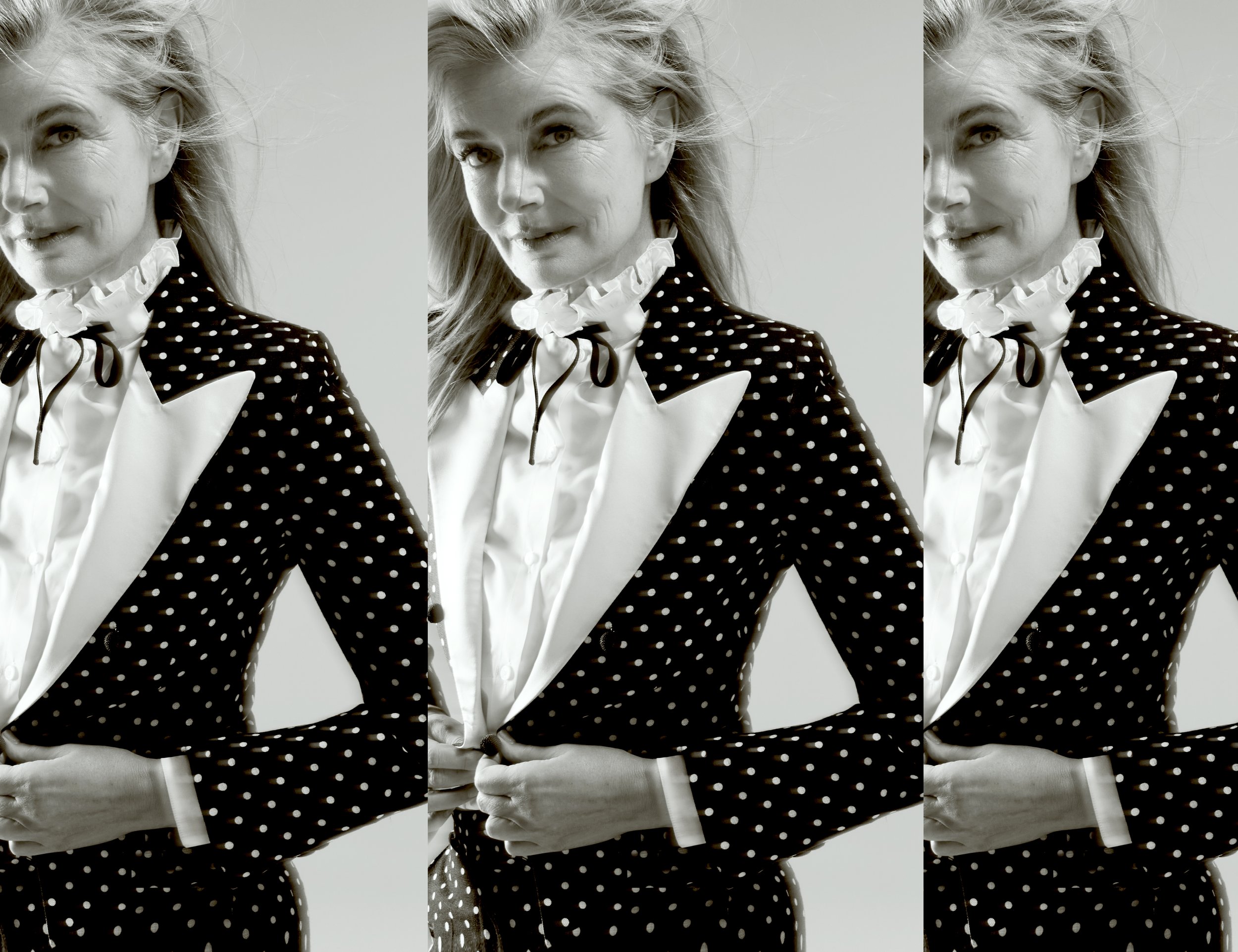
full look VALENTINO
How has your relationship with beauty evolved from your teen modeling years to this stage of your life?
Well, of course, the most obvious one is that I went from a girl to a woman. Which inherently means that I went from catastrophically insecure to, mostly, confident. At a time when I was judged by the world to be at my most beautiful, I was at my most insecure. What truly translates as beauty is confidence. Far more so than being pretty. And this is something one can acquire with wisdom that comes from age.
You’ve become a leading voice in conversations around aging. What sparked your decision to speak so openly, and so publicly, about it?
I think it was exactly because I was celebrated only for my looks my entire career. And just when I finally started growing up and into myself, I was told I no longer mattered. My mission, as it appears is every woman’s mission, is to catch a mate with your looks, breed children who will either get good looks (female) or a facility to acquire power (male) and then be retired. It is literally like cows shoved off to a nearby pasture where we are left, providing nurture for younger generations until we die. This is of course not true for men. And the double standard was making me furious. I grew up in a very gender equal country, Sweden in the 70s, so the misogyny seemed obvious and unfair. Someone had to shed a light on it.
Of course, it didn’t help that I dated a few men who made me feel like they were doing me a favor, dating such an old woman when they could easily go for women who could be their daughters. I had no such choices. And again, the unfairness of that double standard rankled.
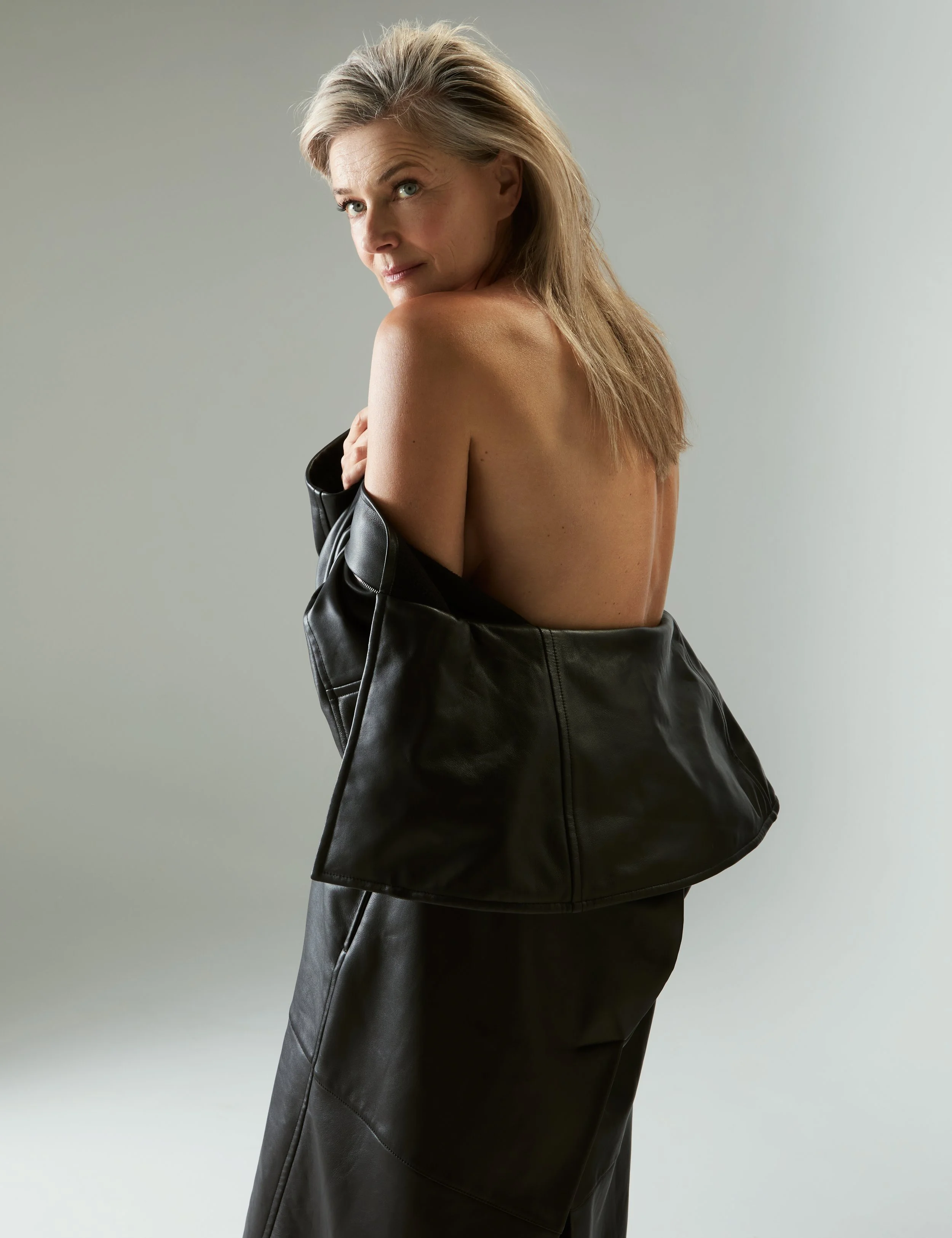
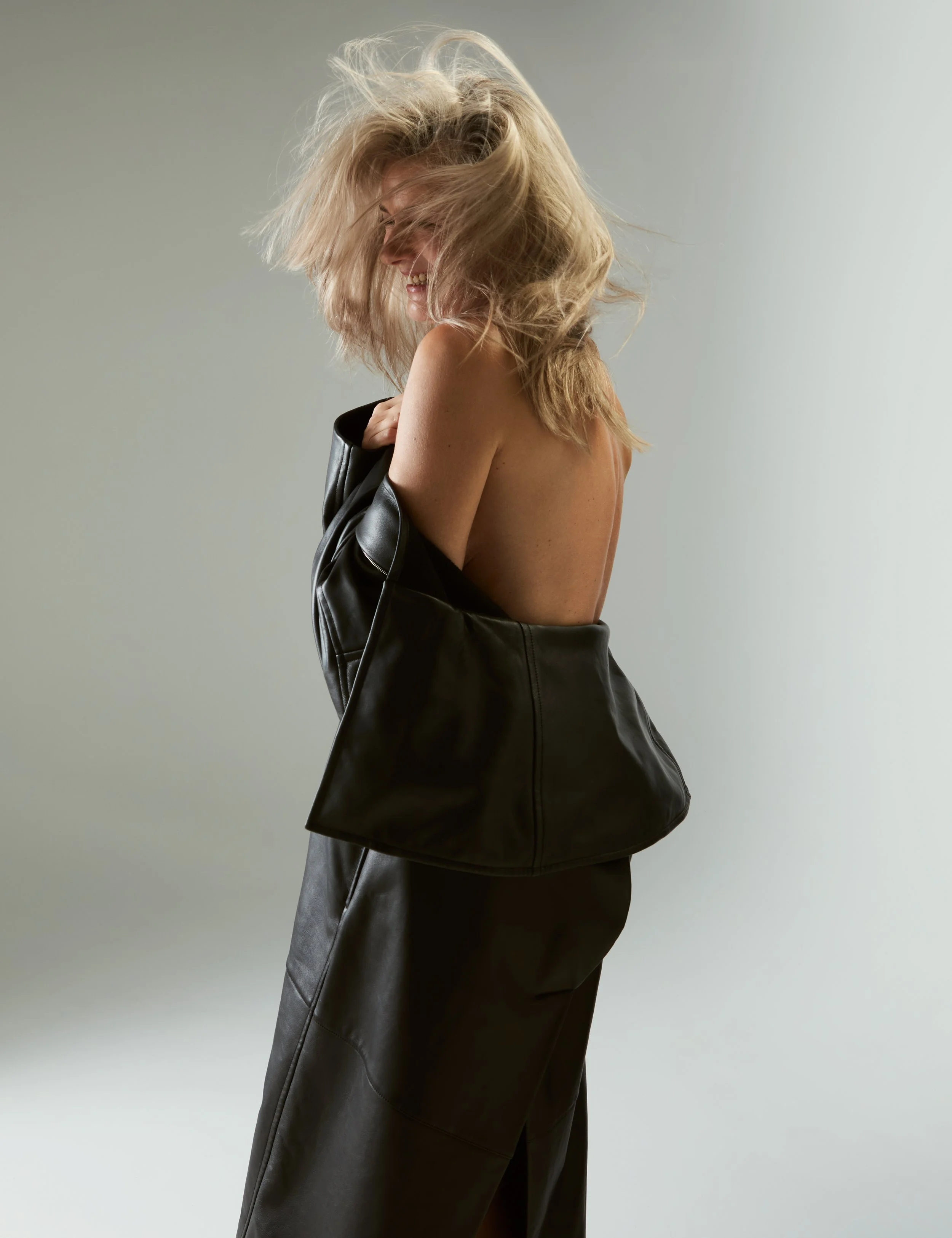
full look SPORTMAX
You entered the fashion world at 15 and were on the Sports Illustrated cover at 18. When you look back at that young woman, what do you see now?
Pretty much what I’ve already said, a very insecure young girl. As a girl, she is her most winsome self outwardly, never saying no, which of course places her in a very dangerous world. I am so lucky I escaped mostly unharmed.
You were part of the true “supermodel era,” working with legends like Avedon and Penn. What did that time teach you about the industry, and about yourself?
It taught me my value was only in my looks. That value went up if I could also pretend that I was never tired or hungry or had any feelings but pretty ones. It taught me a hyperawareness of physicality, my features and body in the space and light I occupy and how to judge others by looks. I understand that the question was hoping to elicit and answer of what it was like to work with the greats, and yes, it was amazing. Every time one gets the opportunity to work with someone who’s a master of their field, it’s a lesson. But here, the lesson is one that doesn’t contribute to who you are as a human being, except for noting that working with someone who’s really good at their job saves a lot of time.
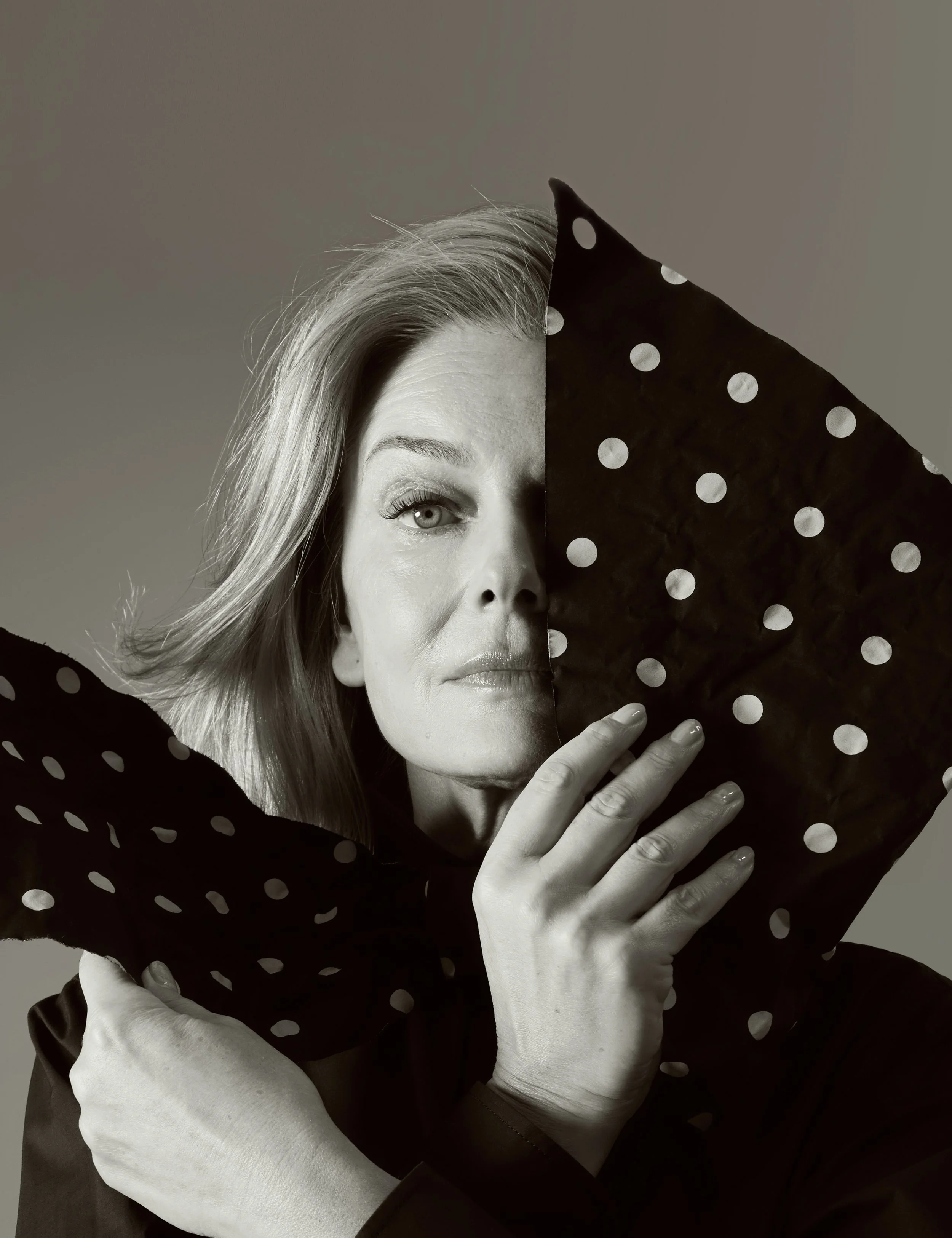
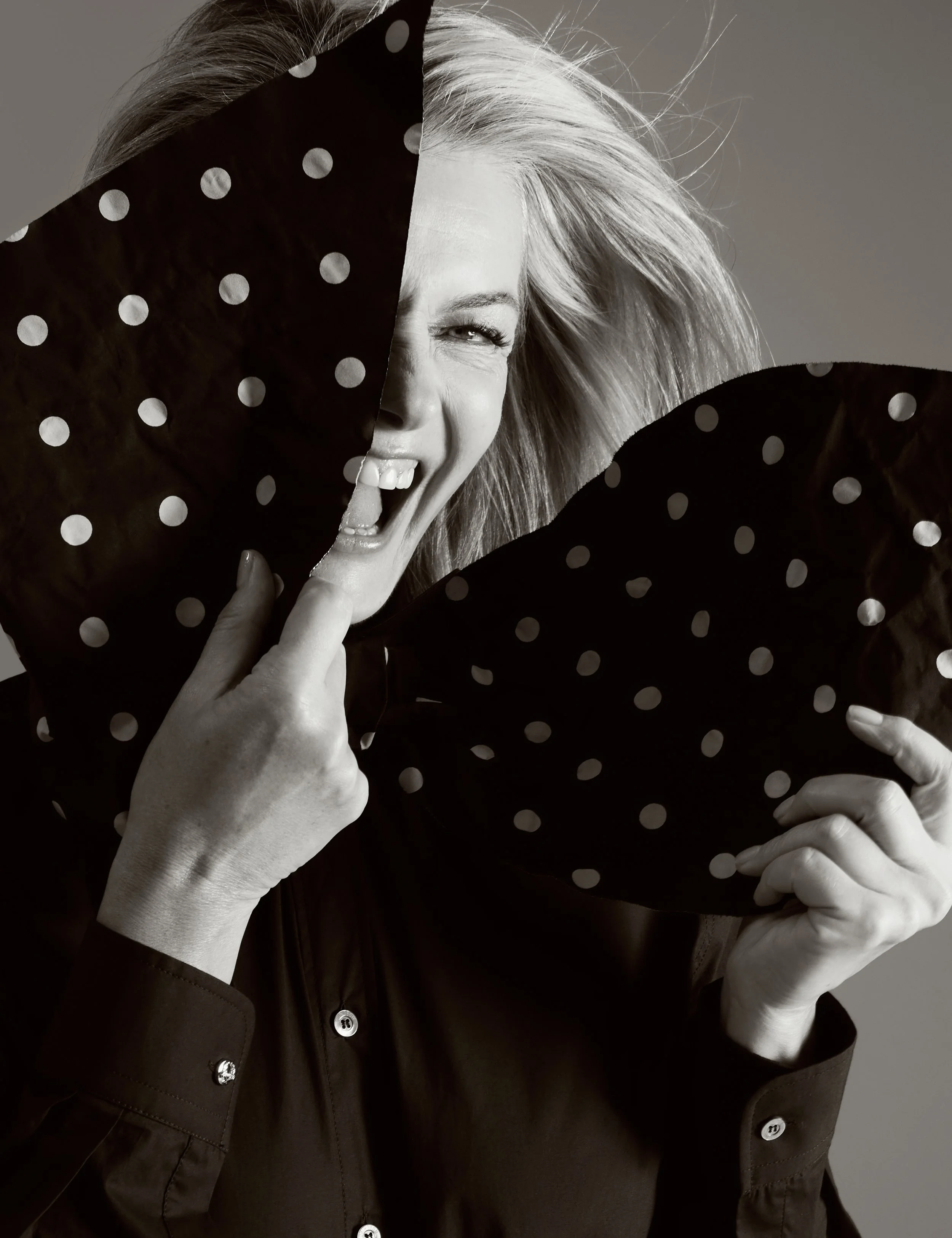
full look MOSCHINO
What misconception about the modeling world do you wish more people understood?
That the glamorous part they glimpse on the outside has not much to do with the daily grind of the modeling world. Modeling is a physical job. You will be in pain, you will be cold or hot and still have to look like you’re having the time of your life.
Physical awareness is great, but not crucial. You may become a better model if you study yourself with minute attention to detail, so you know how to position your body in space and in light, but this will only work for you if you also have the right looks at the right time. If you have the right look at the right time, you can be as stiff as a plank, preferably with the same emotional and physical requirements, and still become a super model. Especially today with the help of AI and all the retouching possibilities.
You’ve acted, written novels, published essays, and modeled. What does each medium allow you to express that the others don’t?
Modeling allowed me to make a great deal of money. It also made me famous for how I looked. Acting allowed me to have a voice and a personality. But it is ultimately in writing where I feel like I can truly stretch my voice and do what I have been longing to do my whole life, connect with others.
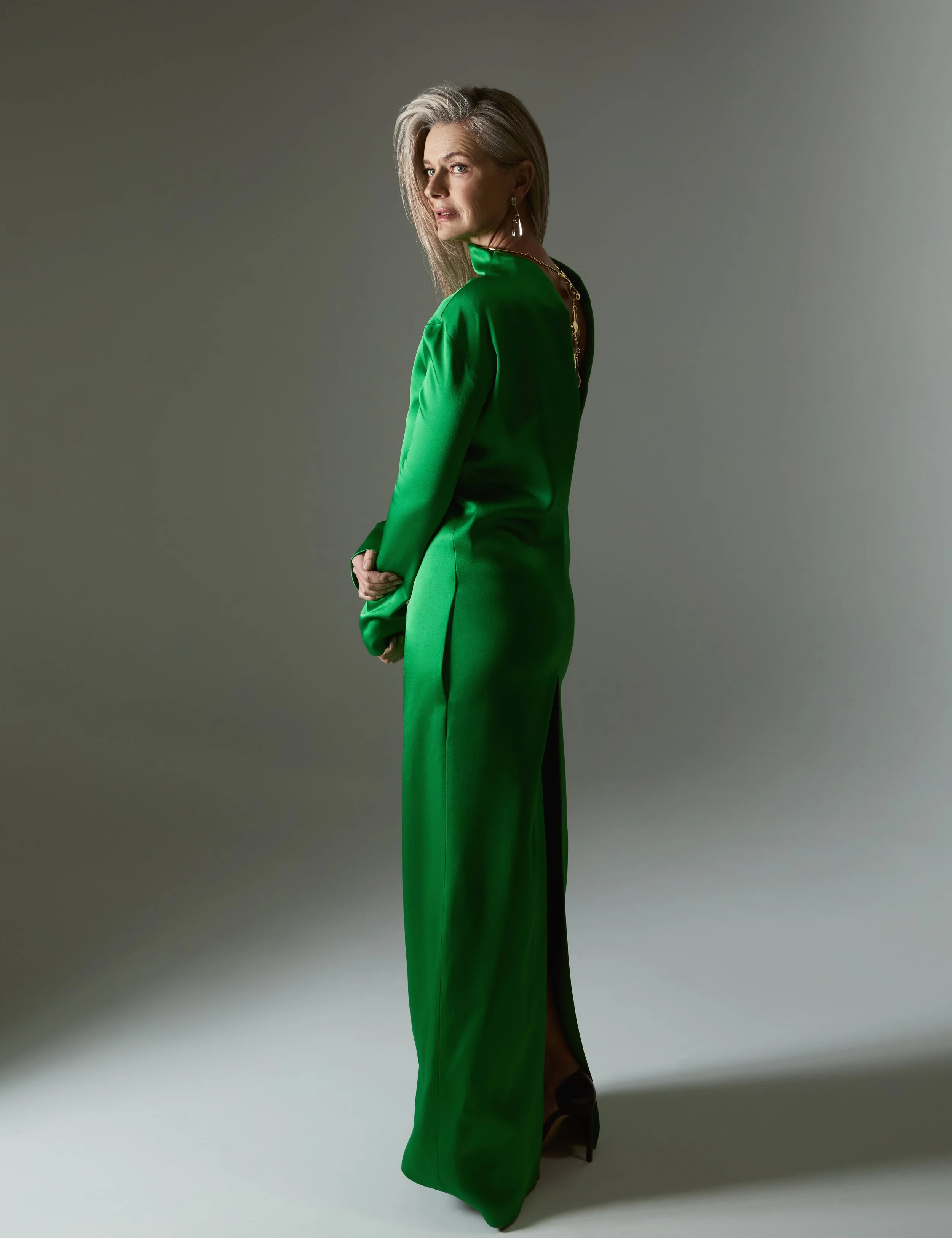
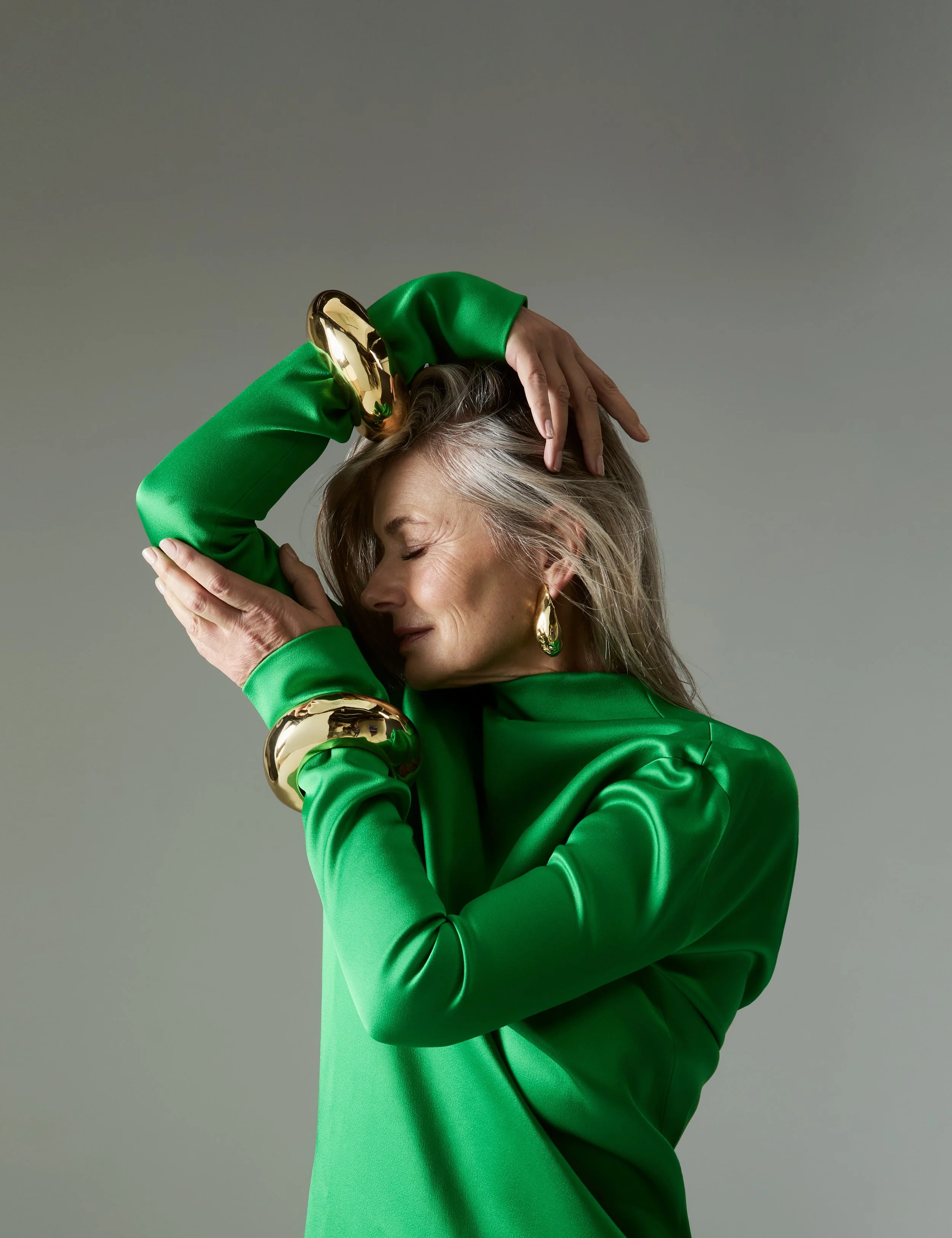
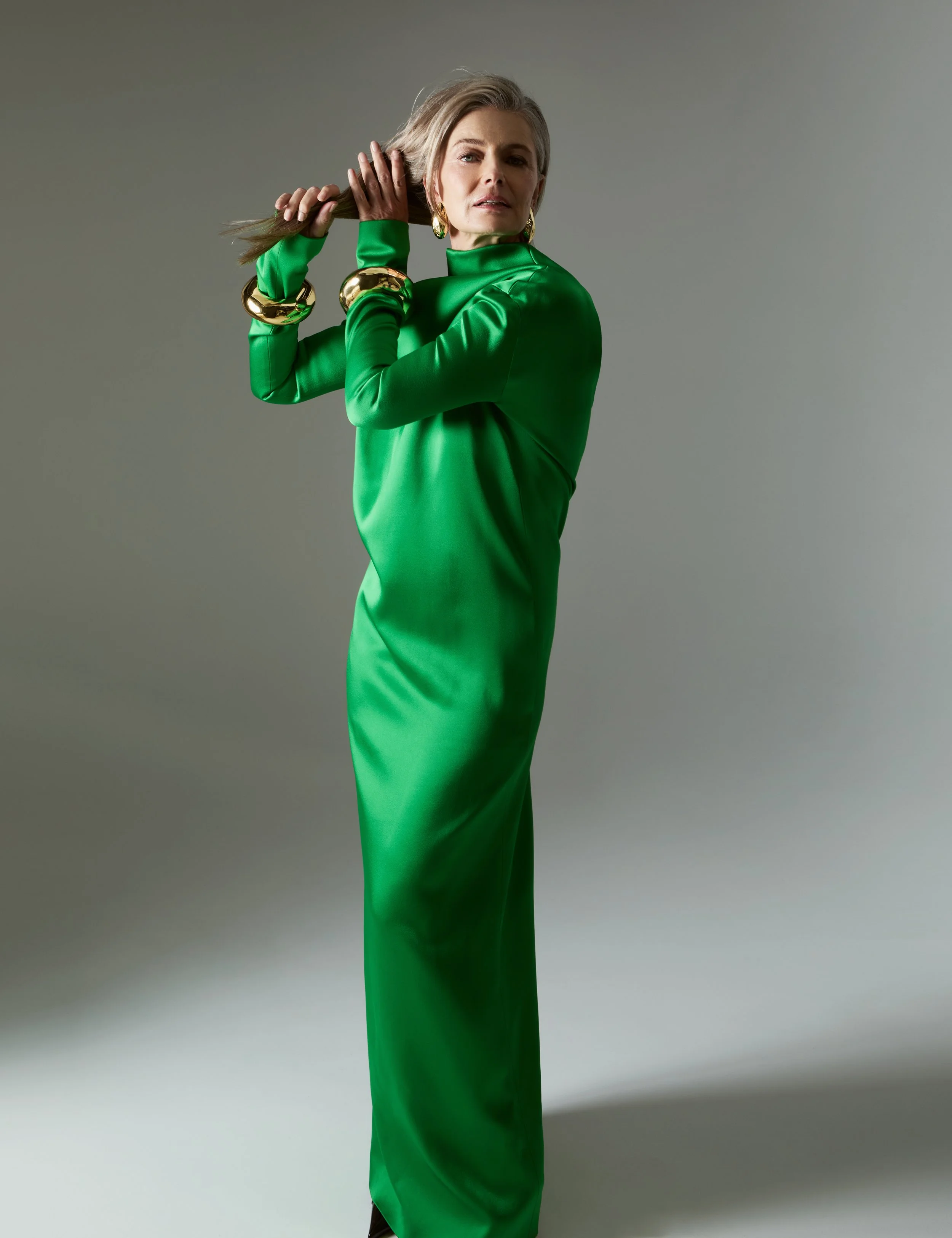
dress TOM FORD
jewellery ALEXIS BITTAR
Your memoir ‘No Filter’ struck a powerful chord with readers. What was the hardest part of writing it, and the most healing?
The hardest part was that I had to write a whole book in three months. When it was put to me, I thought it impossible. But with the help of a great editor, I managed, after writing literally 8 hours a day every single day. It was a marathon. The most healing part? That was getting to share my story. Getting to let you know who I was and how I got to be me. It wasn’t the act of writing itself that was healing. All of the things I wrote about and the pain I was in at the time was all I could think about anyway. But getting to share it was healing.
You’ve said that women over 50 often feel invisible in culture. What do you think needs to change in the beauty and fashion industries?
One of the things I thought truly needed to change was the inclusivity of color and race and size. And that has indeed changed for the better since the 1980s. Possibly not enough yet, but so much better. What still needs a lot of help is the inclusivity of age. Looking at fashion, one still gets the idea that only young slim women get to dress well.
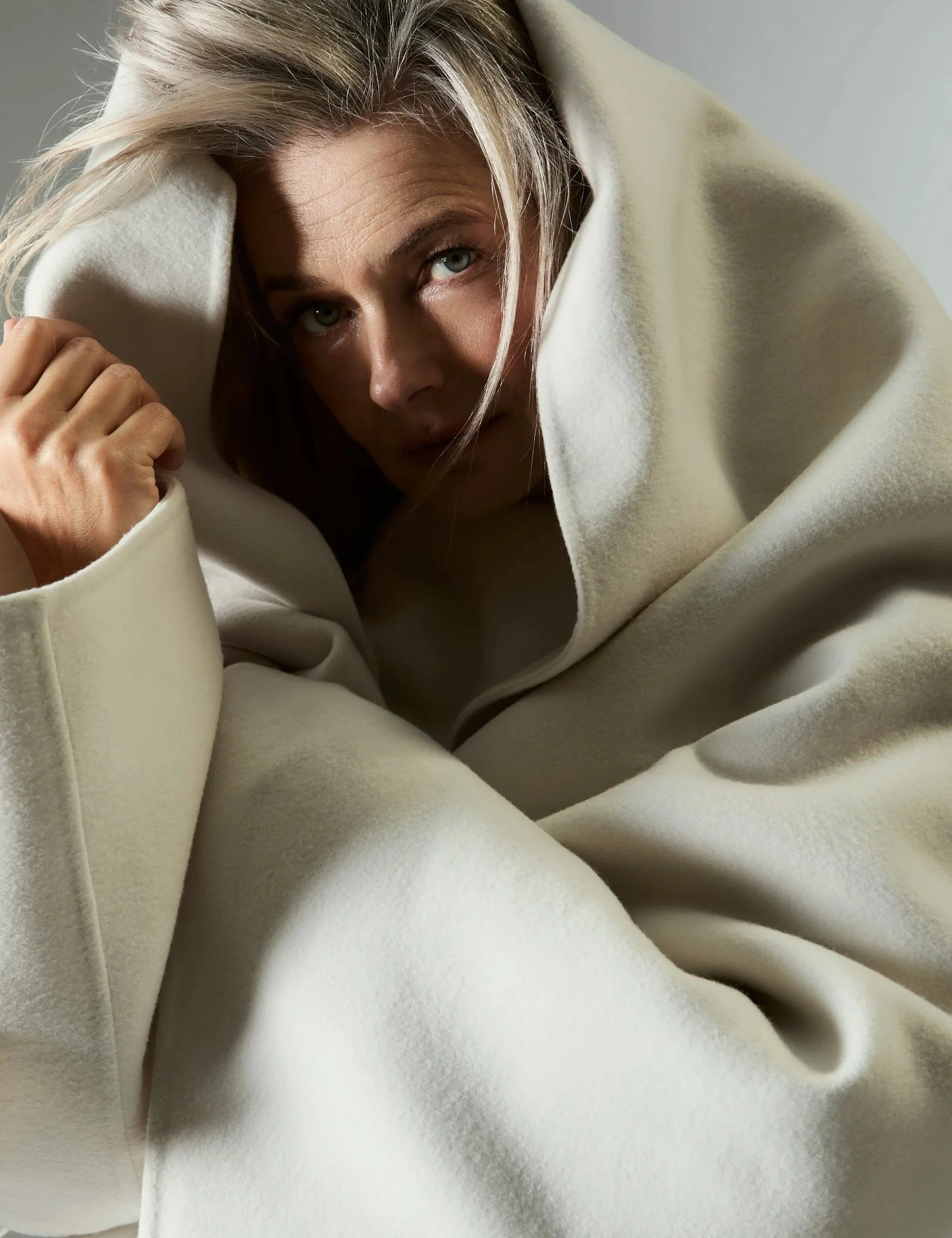
full look CALVIN KLEIN COLLECTION
What practices or philosophies help you stay grounded during periods of reinvention?
I’m a reader. I’ll read anything I can reach. I will read for information, for inspiration and for relaxation. This is what has helped me “reinvent” in the past. Information, inspiration and relaxation I’ve found in books. And learning that nothing lasts. Not the bad, nor the good. This is now something I live by. Seizing everyday of joy and beauty, and waiting the bad ones out.
What excites you most about this new phase of your career and life?
Everything. I’m excited about life in a way I haven’t ever known in my whole life. Being 60, healthy, having found the love of my life, being relatively financially secure and being done with child raising and taking care of others, it’s finally my turn. I feel enormously privileged, and old and wise enough to be grateful for every minute.
And to top it off, I no longer care all that much about what people whom I don’t know say about me. That is, after a lifetime of being judged, like learning to fly.
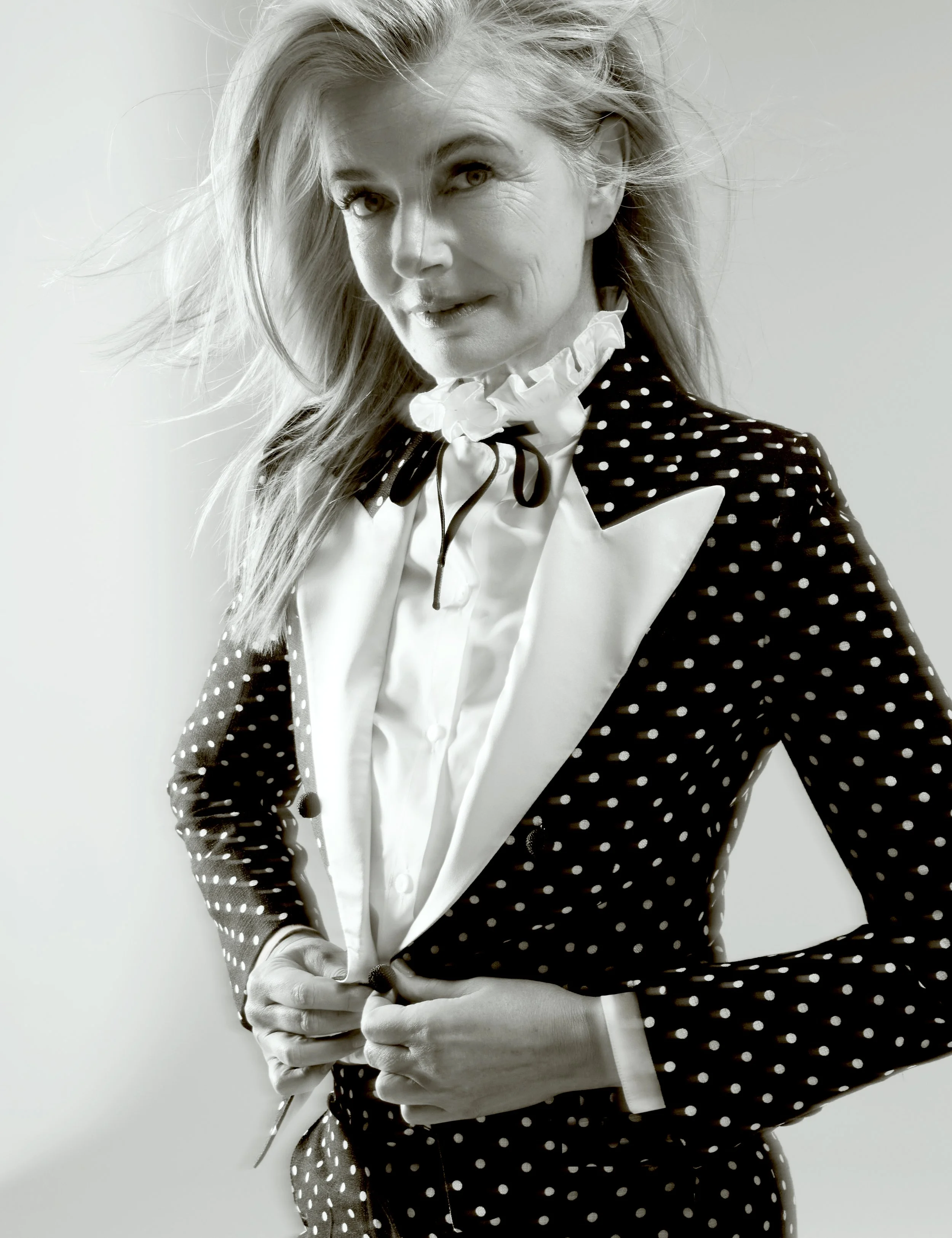
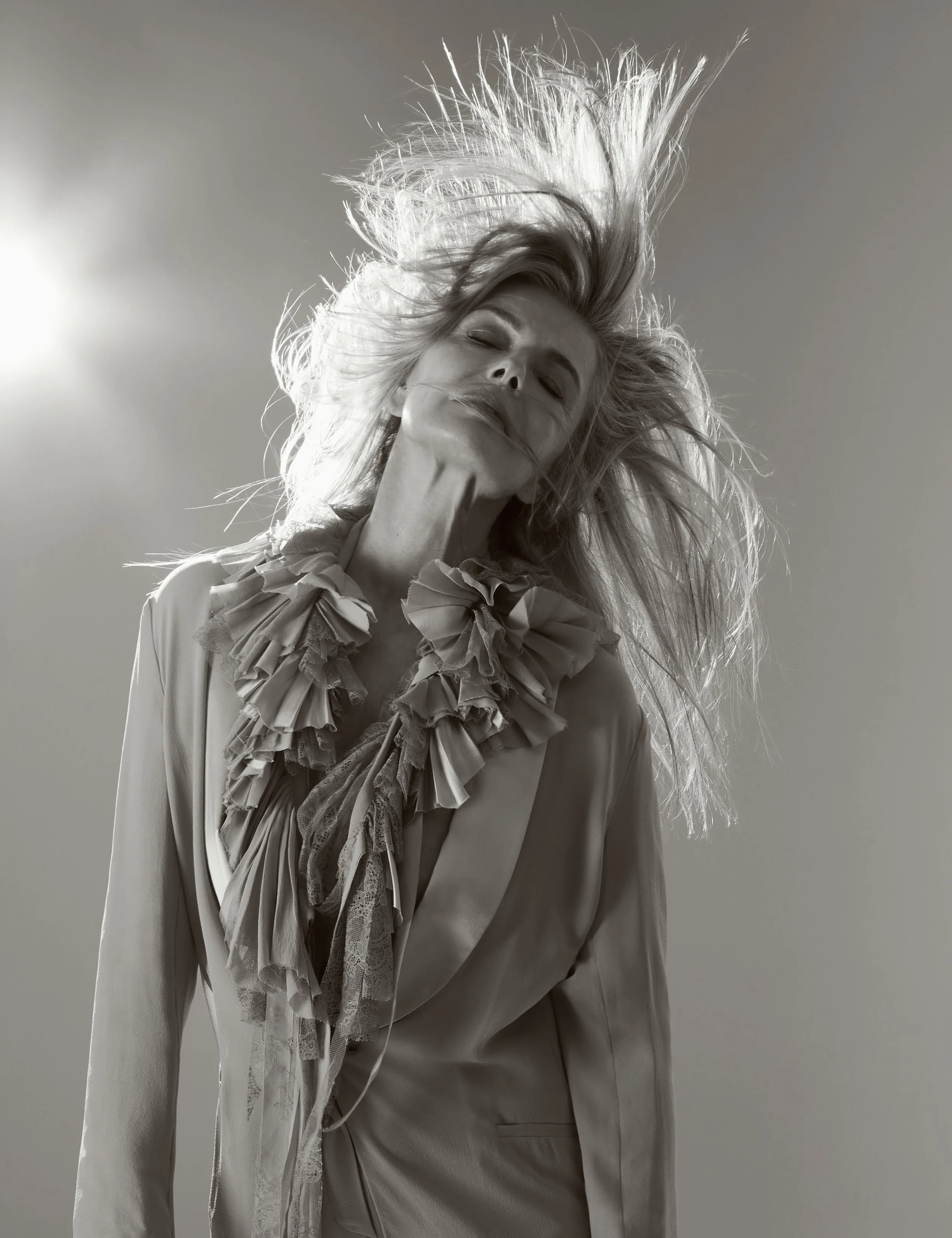
left:
full look VALENTINO
right:
full look ALBERTA FERRETTI
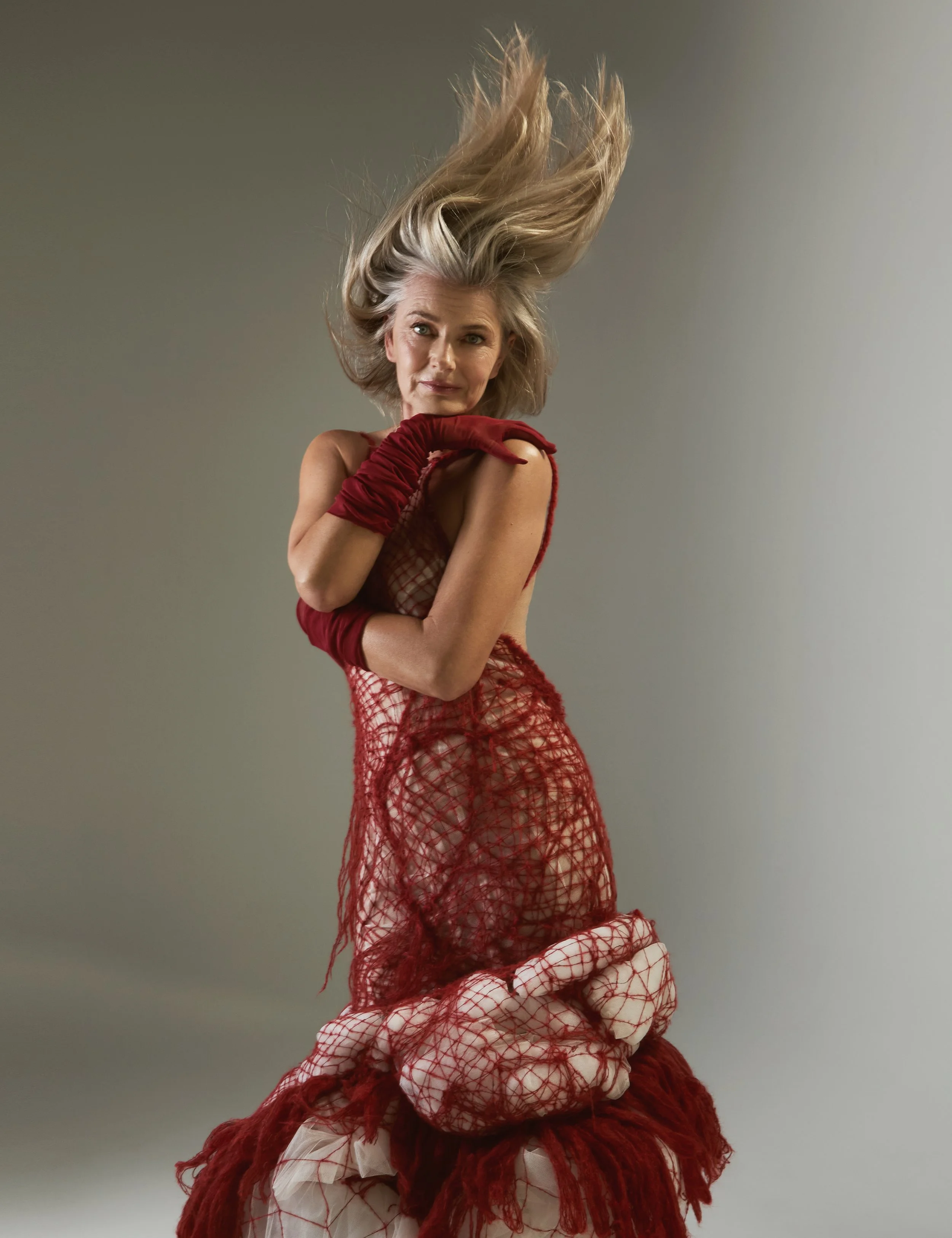
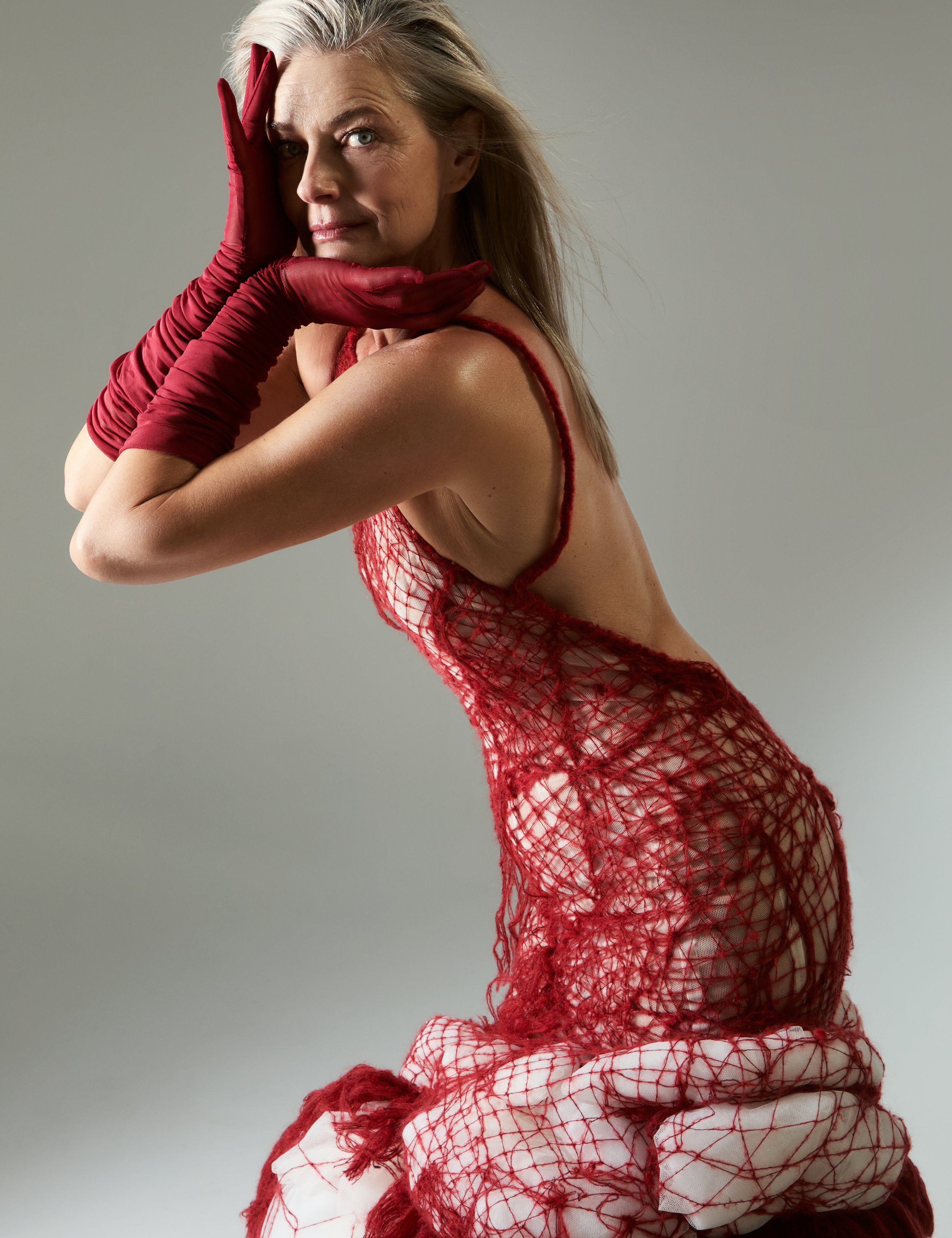
dress PIPENCO LORENA
boots CASADEI
gloves STYLIST’S OWN

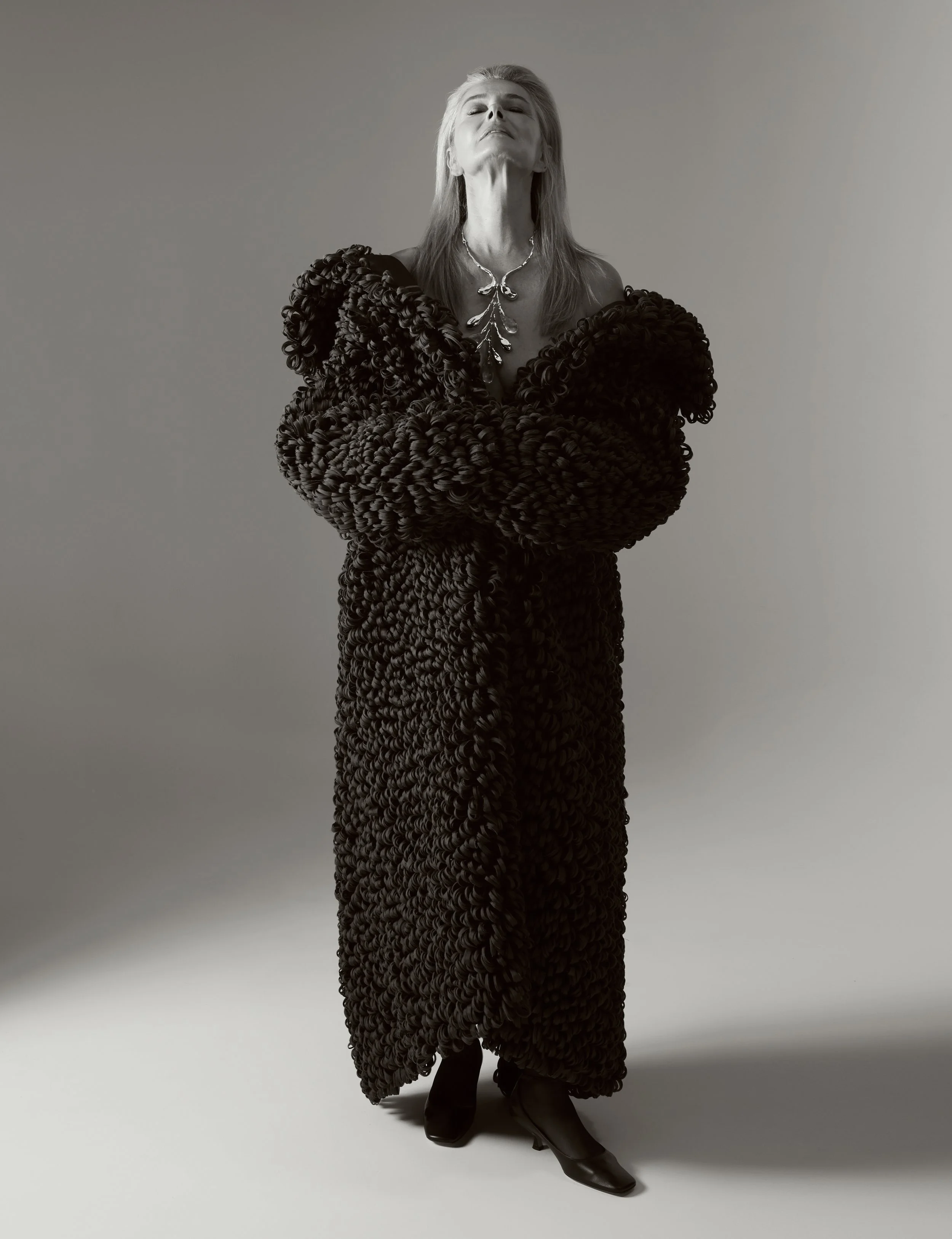
left:
dress PIPENCO LORENA
bangles ALEXIS BITTAR
right:
coat and shoes CALVIN KLEIN COLLECTION
necklace ALEXIS BITTAR
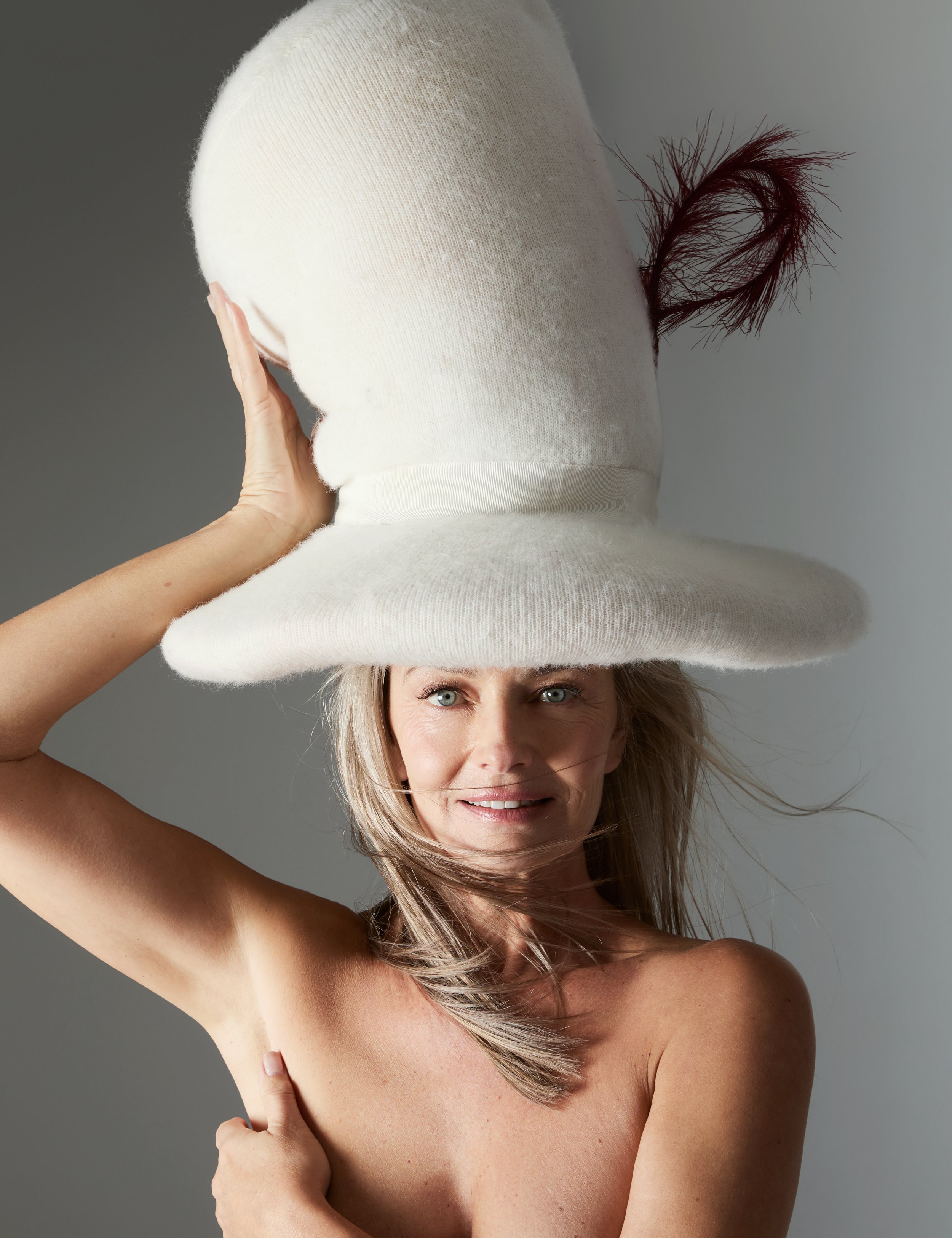
hat PIPENCO LORENA
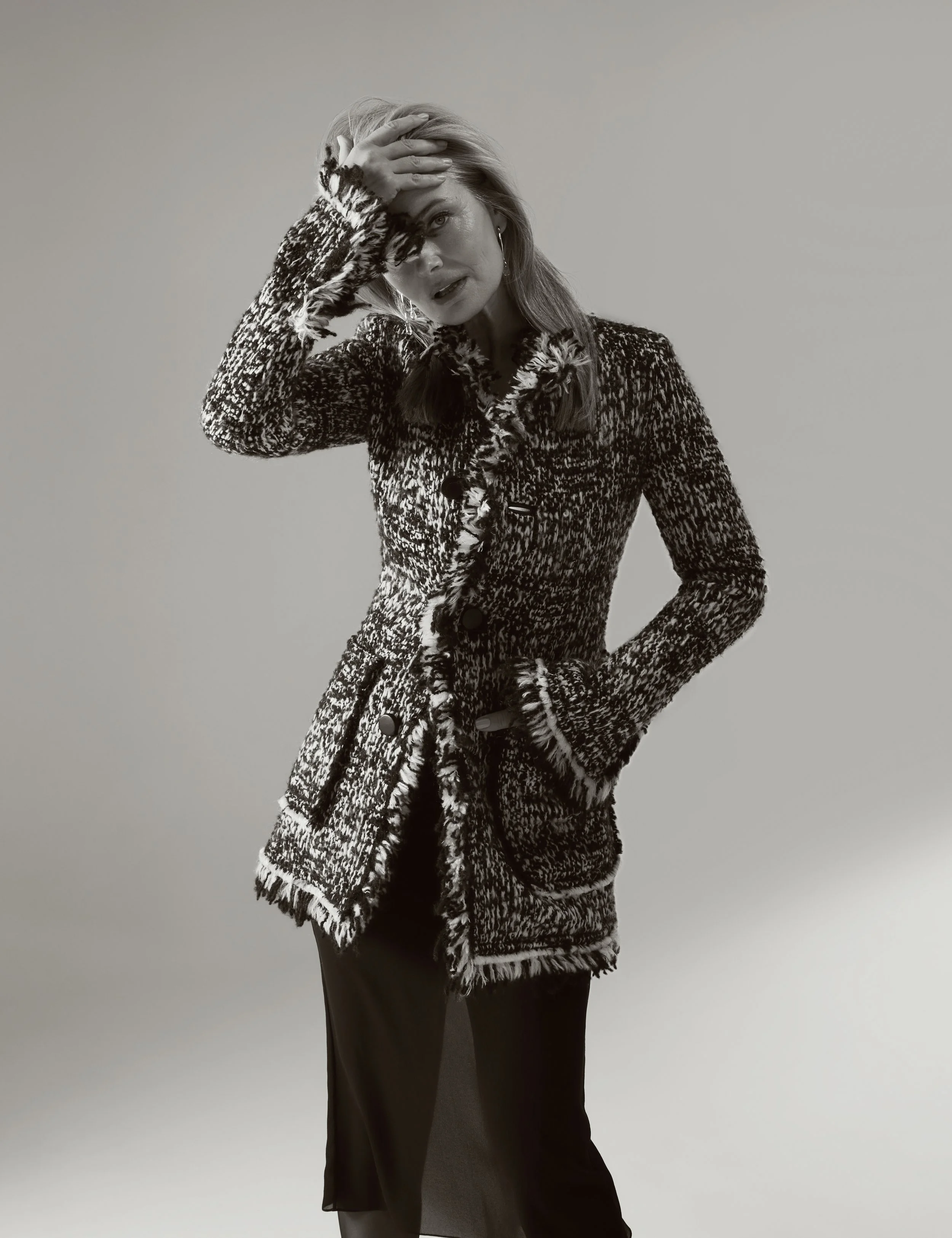
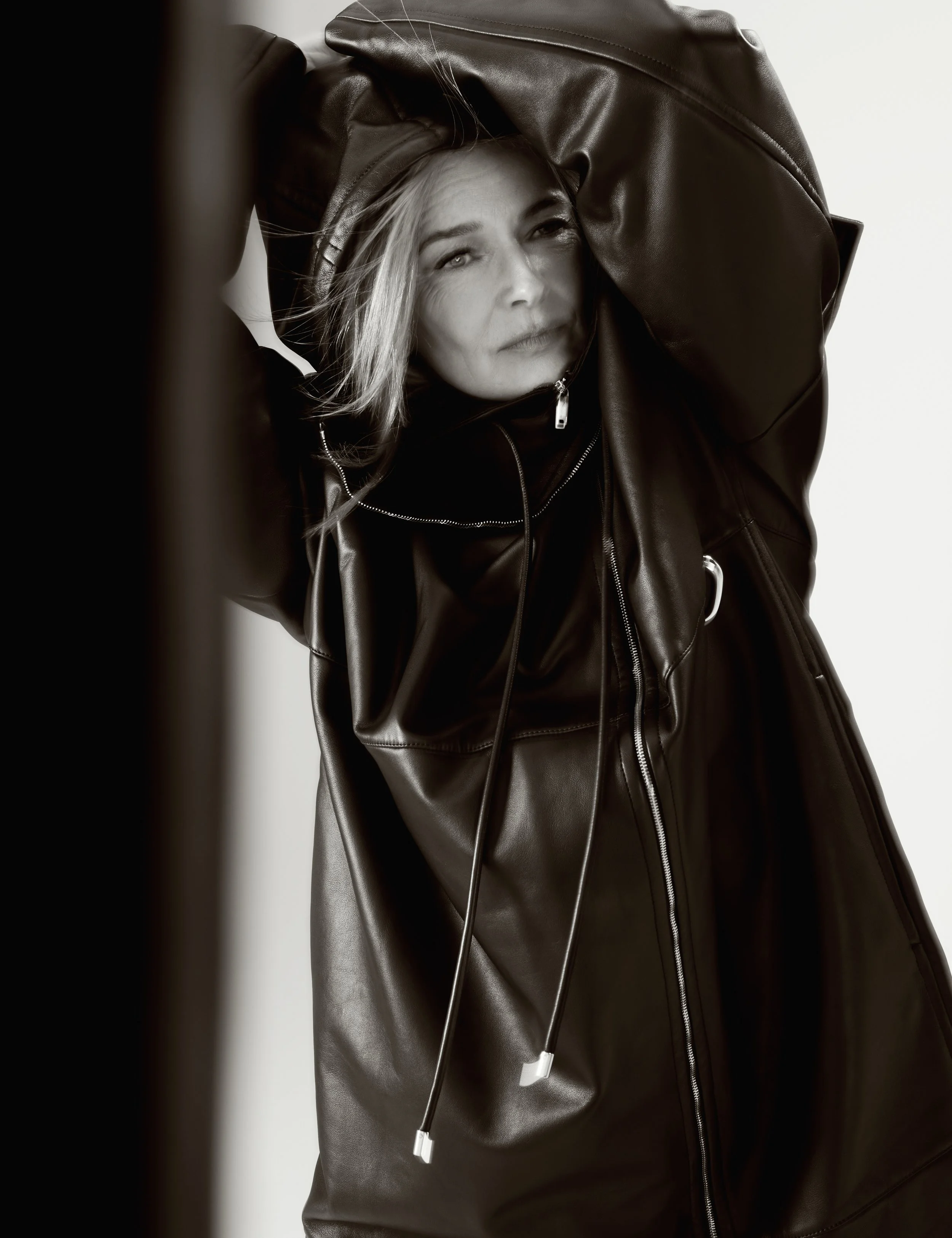
left:
skirt and blazer TOD’S
earrings ALEXIS BITTAR
right:
full look SPORTMAX
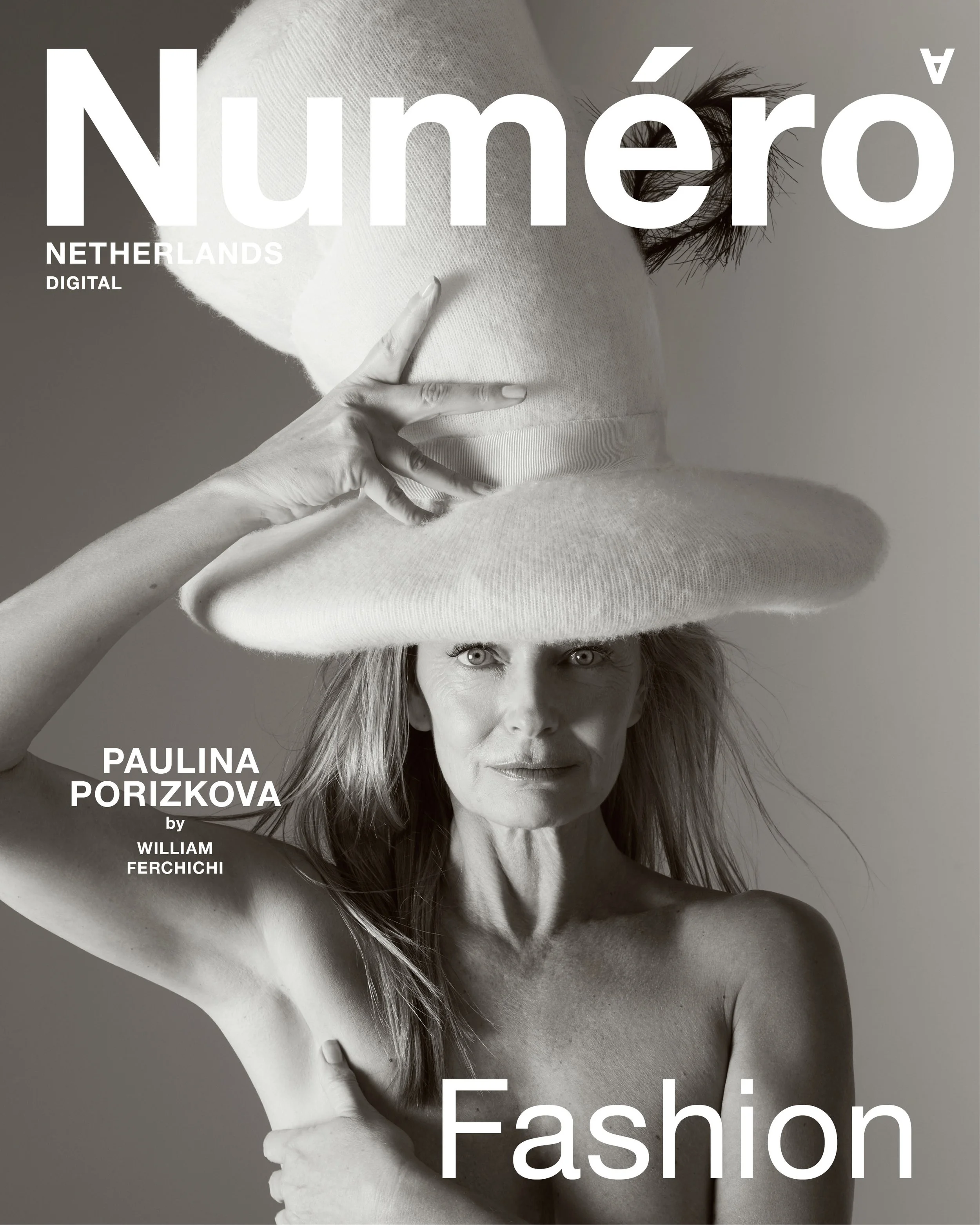
TEAM CREDITS:
talent PAULINA PORIZKOVA at Models1
photography WILLIAM FERCHICHI at Imaj Artists
styling GIANLUCA COCOCCIA
makeup Matin at TRACEY MATTINGLY using Retrouve Skin and Lashify
hair BRENTON DIALLO at The Wall Group using Matrix
photography assistant ZANDER WHALEN
styling assistant MARY BACE
editor TIMOTEJ LETONJA
interview JANA LETONJA
cover design ARTHUR ROELOFFZEN
