
IN CONVERSATION WITH TAYLOR POLIDORE WILLIAMS
interview by JANA LETONJA
Taylor Polidore Williams is entering one of the most exciting chapters of her career. After Beauty in Black became one of Netflix’s biggest breakout hits, she’s returning for its highly anticipated third season, already followed by the surprise announcement of a fourth. At the same time, she’s joining the cast of Reasonable Doubt season four, cementing her place as one of television’s most compelling rising stars. But Taylor’s ambitions extend far beyond the screen. Through her short film Her Pretty Vagina, she’s helping spark conversations around Black women’s healthcare, while her work as a court-appointed Foster Youth Advocate and founder of The Shelter Rock Foundation reflects a deep commitment to creating lasting change. Whether she’s portraying complex women on screen or advocating for underserved communities, Taylor is building a career rooted in purpose as much as performance.
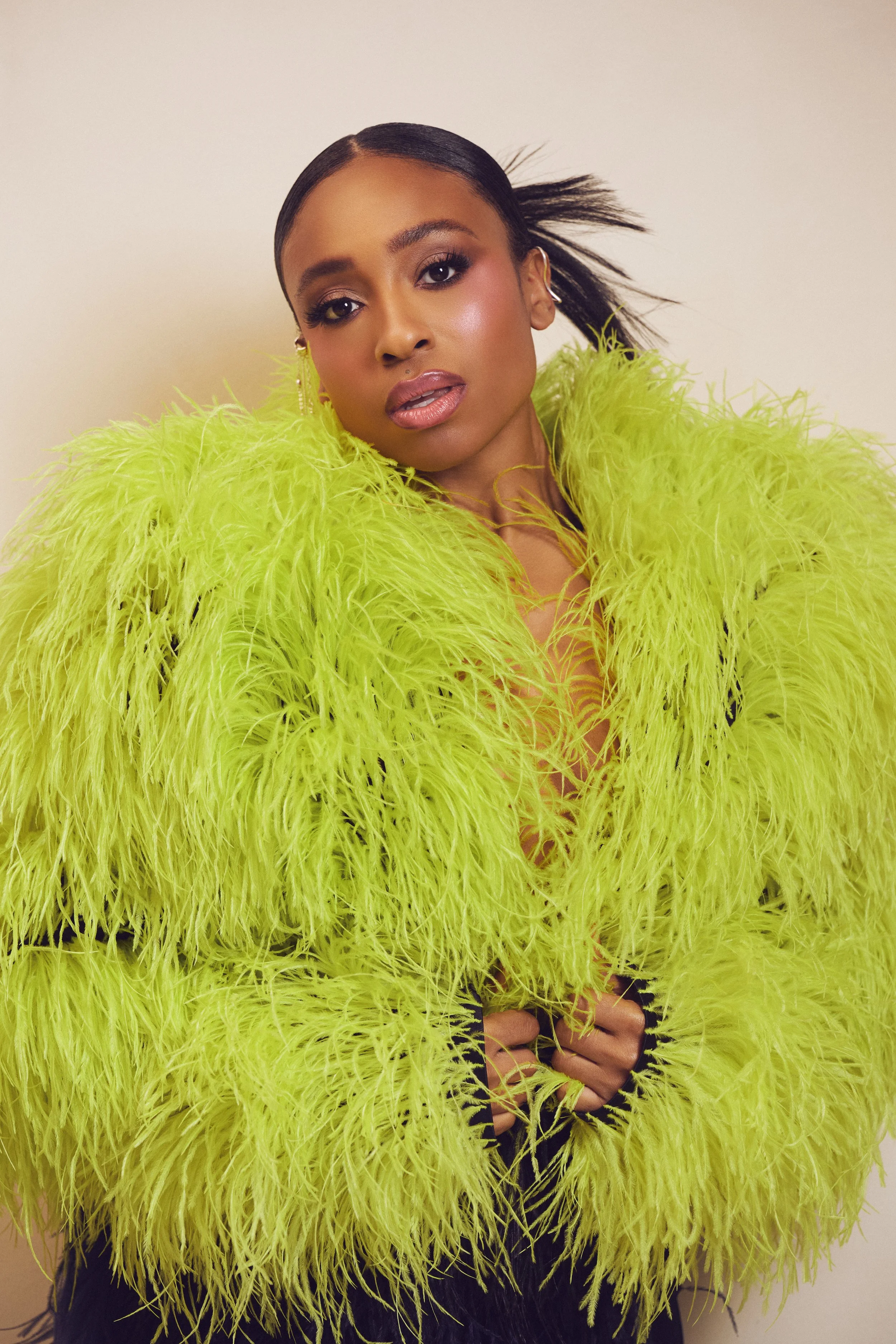
all photography by ALEX D. ROGERS
Beauty in Black quickly became a global streaming phenomenon. Looking back, what do you think connected so deeply with audiences?
At its core, Beauty in Black is a story about what happens when a woman the world has underestimated decides she will no longer be powerless. That desire to claim your power and your future is universal. The circumstances may be heightened, but the emotional journey is deeply human. Coupled with killer one-liners and billionaire family drama that leaves you on the edge of your seat, it’s an engaging and entertaining watch that transcends color, age, and countries.
Fans expected season three to be the final chapter, but Netflix surprised everyone with a fourth season. What was your reaction when you got that news?
I was genuinely stunned. I couldn’t believe it. I had just never heard of Netflix announcing a cancellation and then taking it back, but overall I was incredibly grateful. I believe there is a lot more to the story and I’m so excited that we get to continue. I feel like we’re going to step into an epic new era.
How has your relationship with your character evolved over the course of the series?
In the beginning, I felt extremely protective of Kimmie. I wanted to make sure that her trauma never eclipsed her humanity. As she has evolved, my relationship with her has become less protective and more open and curious. I want to know who she is in deeper ways and the type of decisions she makes when she’s in the driver’s seat of her own life.
Tyler Perry is known for creating complex, emotionally layered characters. What has working with him taught you as an actress?
Mr Perry has taught me to trust my preparation and then release it. His process requires you to arrive with the character fully living inside of you. That has made me more instinctive, more courageous and much more willing to follow an emotional impulse. Personally, the only way I can feel confident to work that way is to be as prepared as possible, which are honestly the basics, knowing my lines and understanding the story and my perspective.
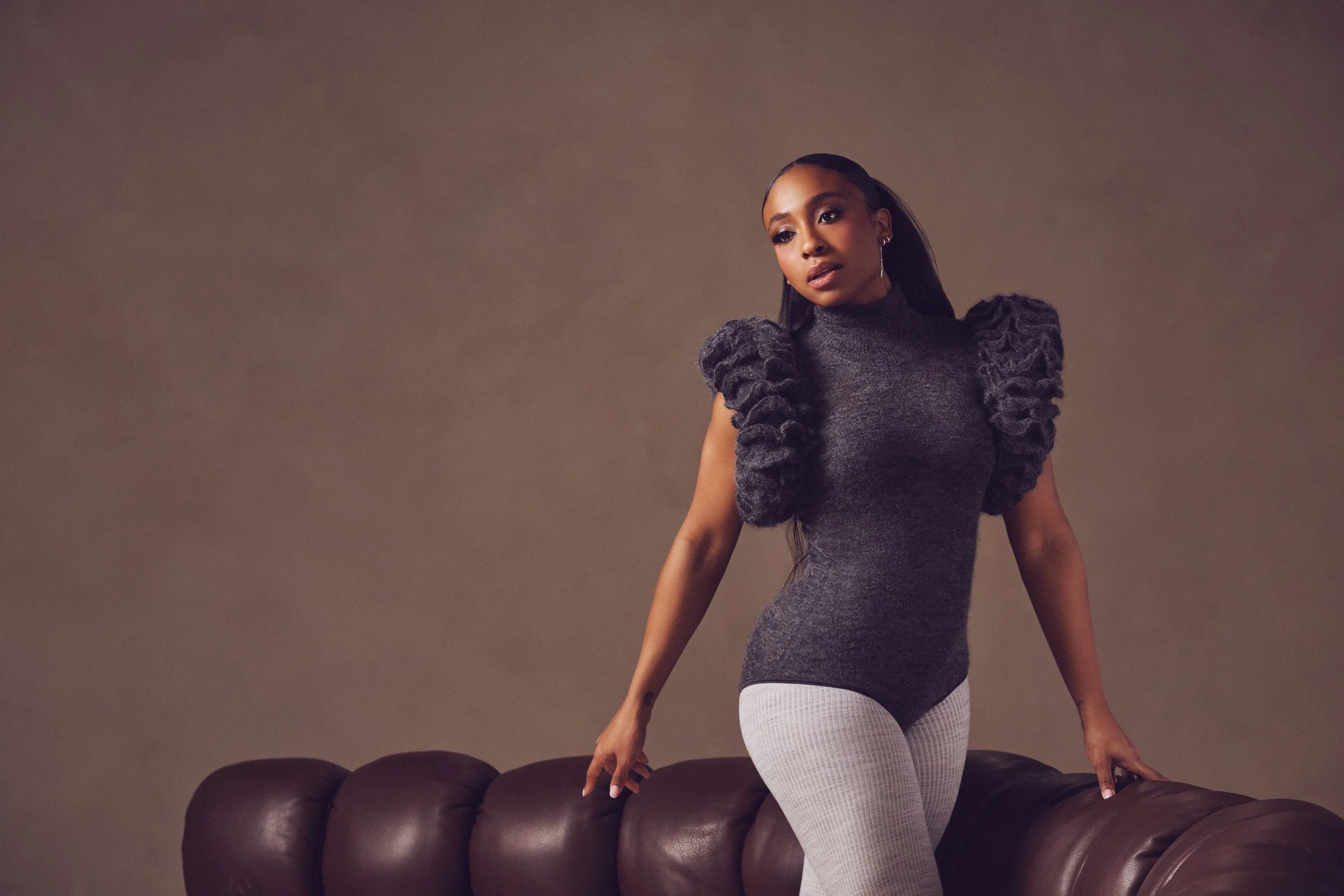
You’re also joining Reasonable Doubt this season. What excited you most about stepping into that world?
I’m most excited to enter a world where Black women are allowed to be brilliant, complicated, ambitious and deeply imperfect. Reasonable Doubt has such a specific tone. It’s sophisticated and entertaining, but there is always something emotionally dangerous underneath the surface. The creator, Raamla Mohammed Hunter, is such a force and a brilliant writer. She’s a Scandal alum, which was one of my all time favorite television shows, so getting my hands on that type of material, the monologues, the drama, I loved it. Kerry Washington is one of the executive producers and one of my biggest inspirations, so I was so honored to enter the Simpson Street family. I also am playing a deeply layered and complicated character. Brooke is a catalyst of the season.
You’ve spoken about wanting every project to have meaning. What kinds of stories are you most drawn to today?
I am drawn to stories that feel cinematic and larger than life, yet somehow are still deeply human. I love expansive worlds, high emotional stakes, and characters whose choices fundamentally transform them. I am especially interested in portraying women who are not reduced to their strength, their suffering or their relationship to someone else. I’m drawn to complicated women who have lessons to learn in a world that is specific and also universal. I want to be in projects that leave the audience feeling that they have truly gone on a journey.
Beyond acting, you produced and starred in Her Pretty Vagina, tackling issues like endometriosis, HPV and healthcare disparities affecting Black women. Why was telling that story so important to you?
Women, especially Black women, are too often expected to tolerate pain, advocate tirelessly for ourselves, and prove that our experiences are credible before receiving adequate care. A woman’s pain should not have to become catastrophic before it becomes believable. It was important to tell a story that could begin a real conversation about things we absolutely should be talking about. The reactions that so many women have had after watching the film and feeling seen is what it is all about. This film is for women and people who love women.
Did producing your own project change the way you think about storytelling and the kinds of roles you want to pursue?
Absolutely. Acting asks me to think deeply about one person’s emotional journey. Producing asks me to think about the entire ecosystem surrounding that journey. Whose perspective is centered, who is hired, how the camera sees the character, and what the project ultimately contributes to the culture. Now I am much more curious about what a project is contributing to the world and not only if I like the role. Producing established that I want to help create the kinds of opportunities I have spent my career hoping to receive. I want to tell as many beautifully written, culturally specific, and universally resonant stories that reflect the diverse world I live in as possible.
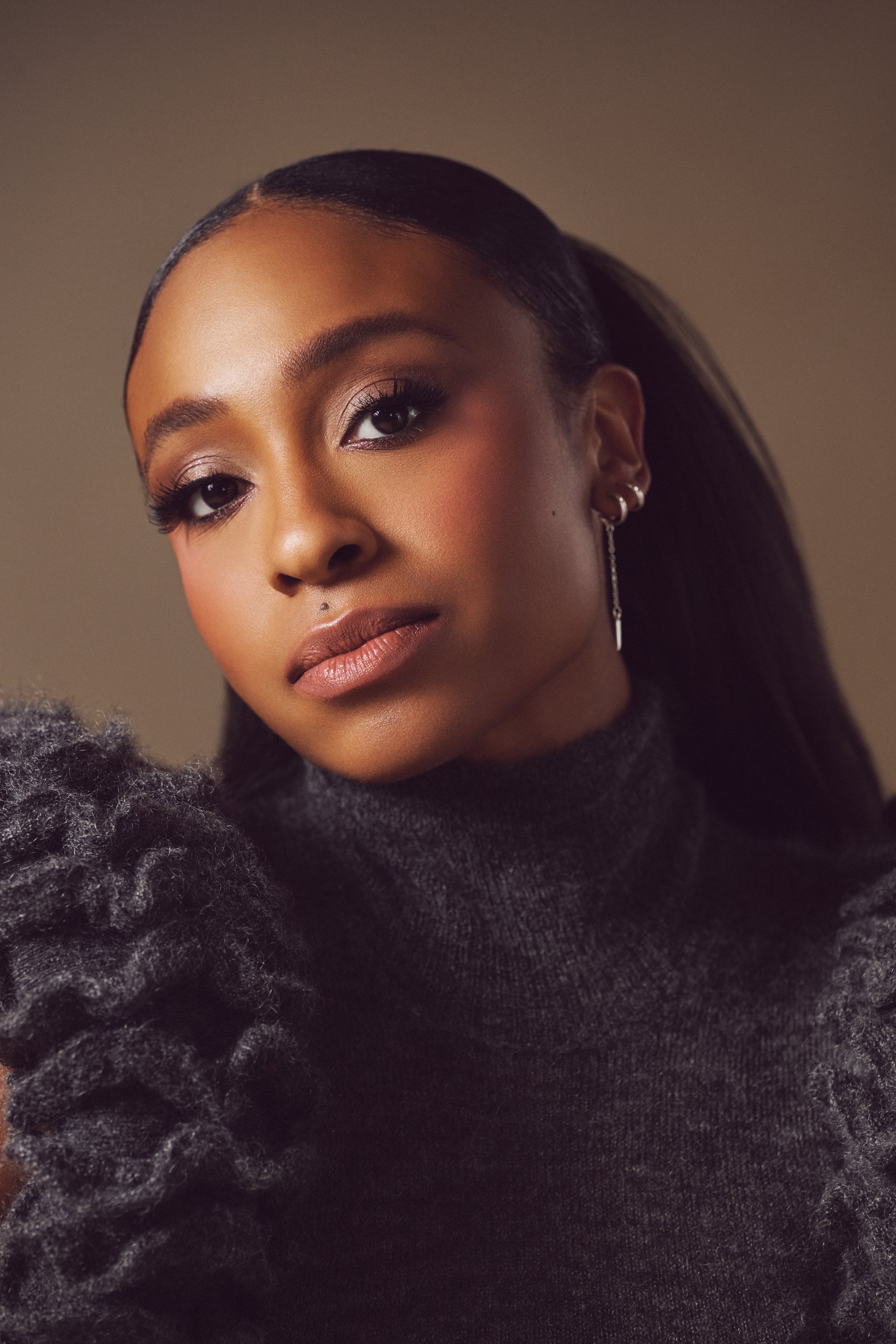
You’re a court-appointed Foster Youth Advocate and founder of The Shelter Rock Foundation. What first inspired your commitment to supporting foster youth?
My grandmother was a foster parent when I was a child, so I’ve always been adjacent to the child welfare system and felt very strongly about advocating for young people. I was a court-appointed advocate for young people in foster care for years, and that experience was one of the most fulfilling experiences of my life. It allowed me to witness not only the challenges within the system, but also the immense resilience and enormous potential of the young people navigating it.
As my career became more demanding, I realized I could no longer serve in the same hands-on way, but I still needed a way to serve. I never wanted to create a vanity foundation. I wanted real work to still happen. The Shelter Rock Foundation was born from the desire to expand that commitment and create consistent support, educational opportunities, and meaningful relationships for young people, specifically those in foster care and transitioning into adulthood.
How do you balance the demands of a growing acting career with such hands-on advocacy work?
My work and my values coincide. Advocacy is my work too. I think helping people is part of our civic duty on Earth. However, I am building an incredible team, strong systems, and becoming more selective about where my presence is most valuable. The foundation is not something I do when acting slows down. It is part of the life and legacy I am building alongside my career.
Social media gives audiences access to so much of your life. How do you decide what parts of yourself to share publicly and what to keep private?
I decided a while ago that I don’t mind being in the public eye. I believe that I can be visible without being completely available. I want people who support me to experience my work, my taste, my interests, my values and the joy I have in the process of doing this. But there are parts of me, typically the things that mean the most to me, such as my personal life, my marriage, moments with my family, or my deep beliefs or rituals, that are sacred to me. I protect those fiercely because I don’t wish to have opinions about that. Whatever I share with the world, I give it freely and happily for anyone to perceive however they’d like and I have peace with that. Protecting certain parts of me allows me to remain rooted.
As your platform continues to grow, what responsibility do you feel comes with that visibility?
I feel a deep responsibility to be intentional about what I normalize and what I amplify. I understand people are watching, so my aim is to have a platform that is worthwhile and can put some goodness back into the world. I don’t feel responsible for perfection, but definitely authenticity. If someone sees the layers of me and that there is no contradiction between all of the worlds that I belong to and is empowered to embrace all the parts of themselves too, then I’ve done a good thing.
Finally, when audiences watch your work or learn about your advocacy, what’s the one thing you hope they take away about who Taylor Polidore Williams is?
I want to create work that is truthful, expansive, unifying people of different backgrounds and walks of life, and very entertaining. I’m a deeply intentional person and I love what I do, and I hope that joy is apparent when people interact with me. Overall, I hope people understand that I am deeply committed to being of service to making a positive impact on the world in everything that I do.