
IN CONVERSATION WITH TERRENCE SULLIVAN
interview by JANA LETONJA
With the release of his debut novel, Alice of Oz, author and multidisciplinary artist Terence Sullivan is inviting readers into an ambitious new universe where some of literature’s most familiar fantasy worlds collide. The first instalment in the Oz Multiverse series, the adult gothic portal fantasy reimagines Alice Liddell as an 18-year-old in 1913 London whose supposed delusions of Wonderland turn out to be prophecy, and whose search for the missing Wendolyn Darling leads her through a mirror and into Oz. Born from a viral TikTok storytelling series that garnered more than six million views, Alice of Oz draws on Terence’s wide-ranging background in theatre, film, commercial production and fine art to ask what might happen if Wonderland, Neverland and Oz were never separate worlds at all.
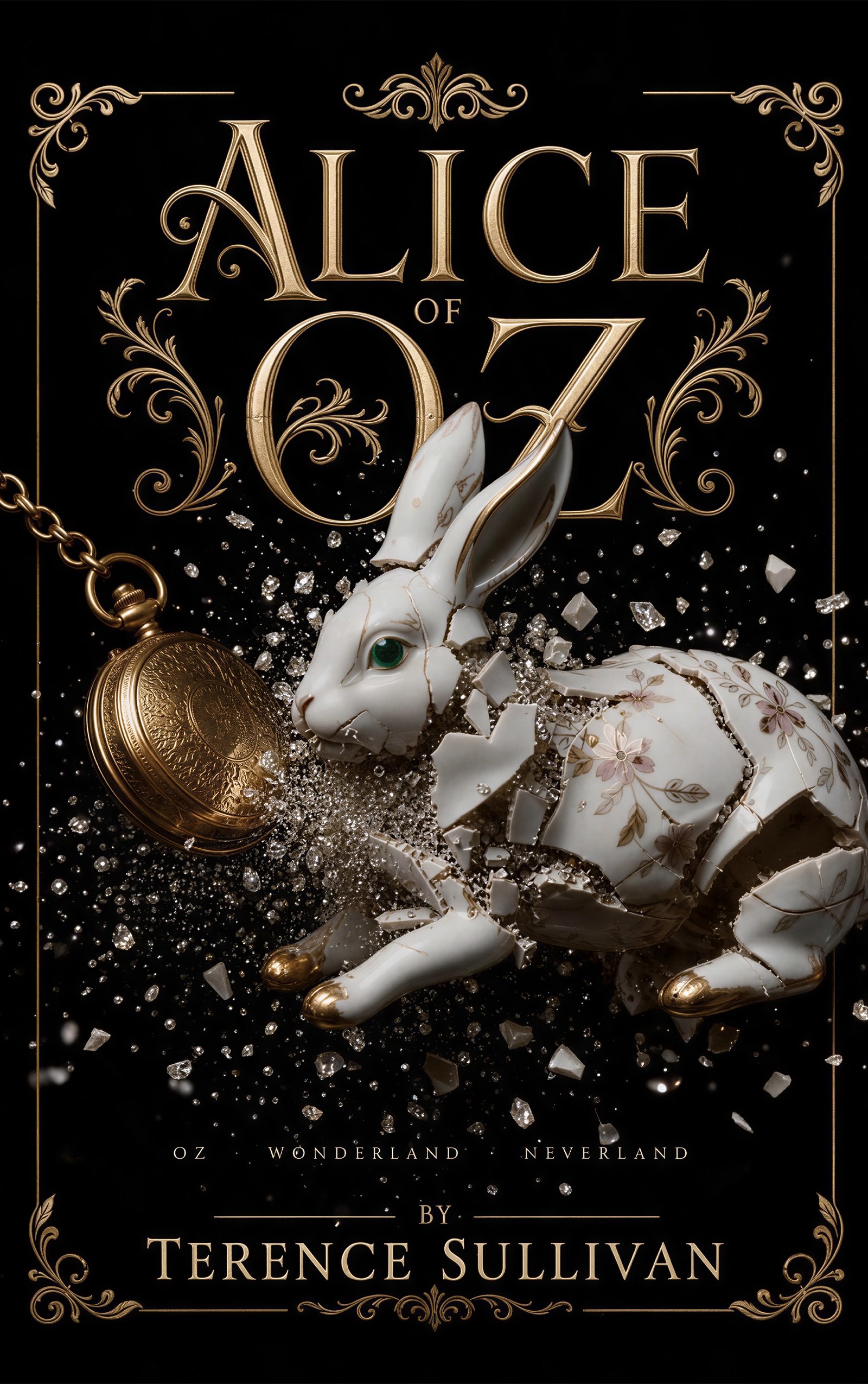
Alice of Oz brings together three worlds that are deeply embedded in our cultural imagination: Oz, Wonderland and Neverland. What was the first connection between them that made you think, “There’s a story here”?
It goes back to when I was a kid. My mother was obsessed with movies. She worked at a video store and was always bringing tapes home, and one night she brought home Return to Oz. If you’ve seen it, you know it is truly dark and a little bizarre. Well, it was more than a little. I loved it. I think it shaped my very being.
What stuck with me was Ozma. In that film she’s seen through mirrors and glass, and my kid brain made a very simple leap: if you can reach Oz through a mirror, then Alice can get there too. This seemed obvious because I was at an age where magic and fantasy were very real and very possible then.
That idea never left me. Flash forward to me in my thirties, with an extremely overactive imagination and I started building what became the Oz Multiverse. The response to the very first video was so big, and so many people were asking for a book that I thought, “Okay. This is a thing.”
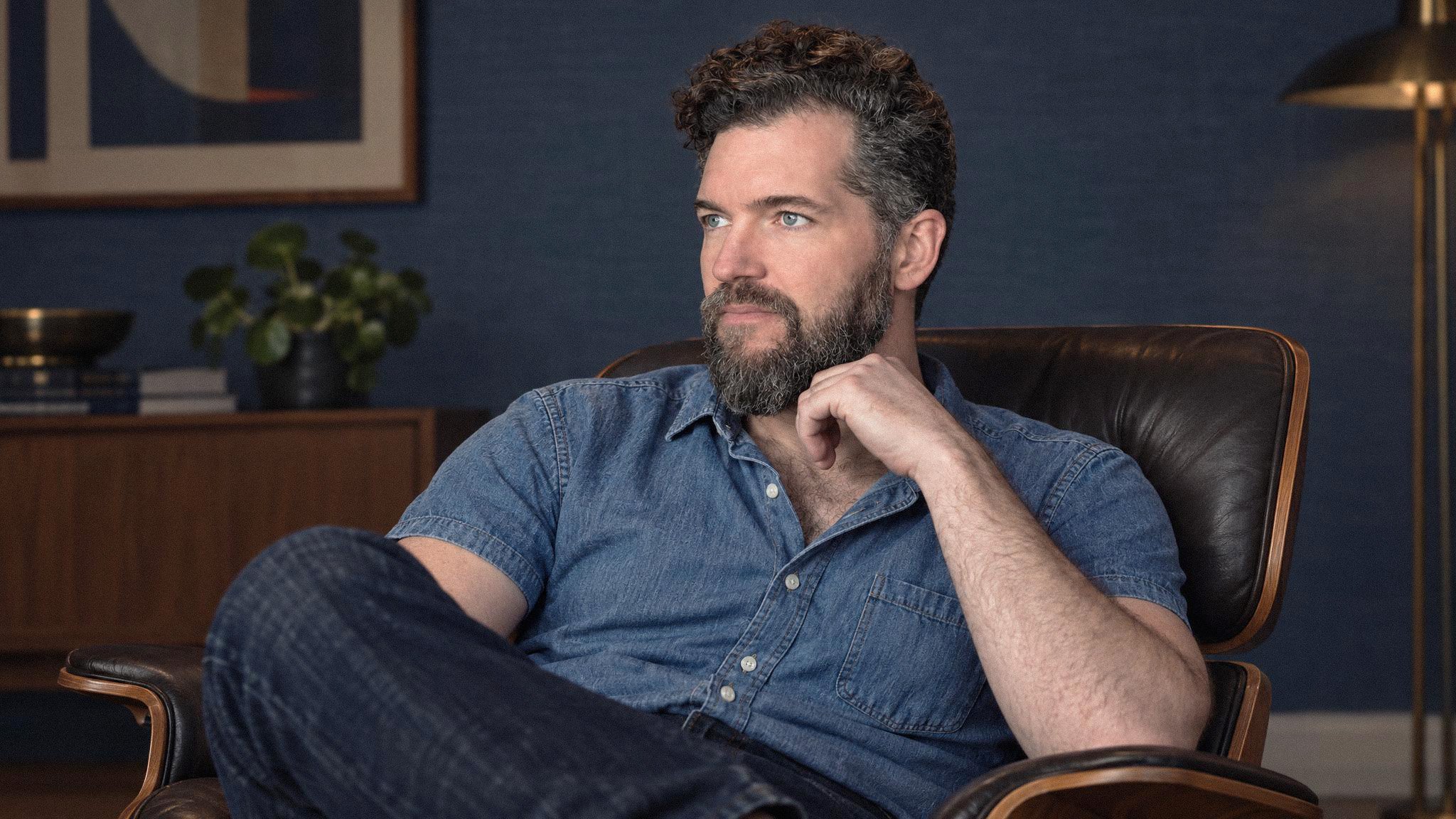
Before there was a novel, there was a TikTok series that reached more than six million views. What do you remember about posting that first piece of the story, and when did you realize people genuinely wanted more
I’d had content go viral before. My first big one was about a million views, so I knew what that felt like. This was different. The first multiverse video moved so fast. There were so many comments and so many people stitching it, and over and over I saw the same lines, “I would read this book. I want this book. Give me the full timeline.”
So I kept going, and the series became a kind of testing ground. I’d lay out a connection between Oz, Wonderland and Neverland and wait to see if people believed it and they did. At least the connection was believable. People would go back to the original books and come back saying it totally checks out. It’s almost comical, because on paper it sounds far-fetched, but it really does hold together. That’s when I knew people genuinely wanted more. Also, my brain had started to the weaving process and once that starts for me the only way out is through.
How different is Alice of Oz today from the story you originally began telling online?
There are definitely differences. There are many more characters now and a lot more nuance. But the beginning and the end held. The arc I built online is very close to the arc of the book. The way Alice travels and discovers things has shifted a little, but the role she plays and who she becomes are true to the story I first started telling.
Some things changed for practical reasons. Not everything connected to these worlds is in the public domain, so there were pieces I couldn’t use. That turned out to be a gift. Every time I had to let something go, a new rosebud bloomed on the vine.
You’ve chosen Alice Liddell as your protagonist, but we meet her at 18 rather than as the little girl readers might expect. What interested you about finding Alice on the threshold of adulthood?
We know her so well as a little girl. I’ve seen so many adaptations and reinventions of that Alice, and I didn’t want to make her someone else.
I love historical fiction, and I have a deep interest in mental health and psychology. So I kept asking myself what this woman would become, growing up at a time in our world where people hurled words like “mad”, “wayward”, and “witch” at women who saw things differently. How would the girl from those beloved books evolve? What insecurities would she carry? What kind of defiance?
At eighteen she’s becoming a woman in a period that did not allow for much exploration or understanding of self. That tension made her a rich, unique person to write.
The novel begins with Alice being told that her visions are delusions, only for her to discover that they may actually be prophecy. What interested you about that tension between being dismissed as “mad” and learning to trust your own perception?
That’s such a beautiful question. When I started researching the book, most of that research was about dreams. Dream analysis, and how different cultures have understood dreams over time. The first draft had close to a hundred pages, before where the novel now begins, of Alice in sessions with a doctor and a psychoanalyst, working through the competing schools of thought of the era. Most of that didn’t survive the edit, but it sits underneath everything.
The idea that stayed with me came out of that research. In so many cultures, dreams and stories are believed to be given to you, by a god or by your ancestors. The story doesn’t belong to the storyteller. The storyteller is the vessel.
That’s the heart of Alice’s struggle. The people with power over her call it madness, and she has to learn to trust what she sees before anyone else will.
I’ll admit, maybe it’s a little method acting, but I started to feel that way about the book itself. These three stories came together as if they already existed and I was finding them. Part of that is how my brain works. I’m wired for pattern recognition, so I’m always making connections. But a lot of the time it felt like I was uncovering something that was already there.
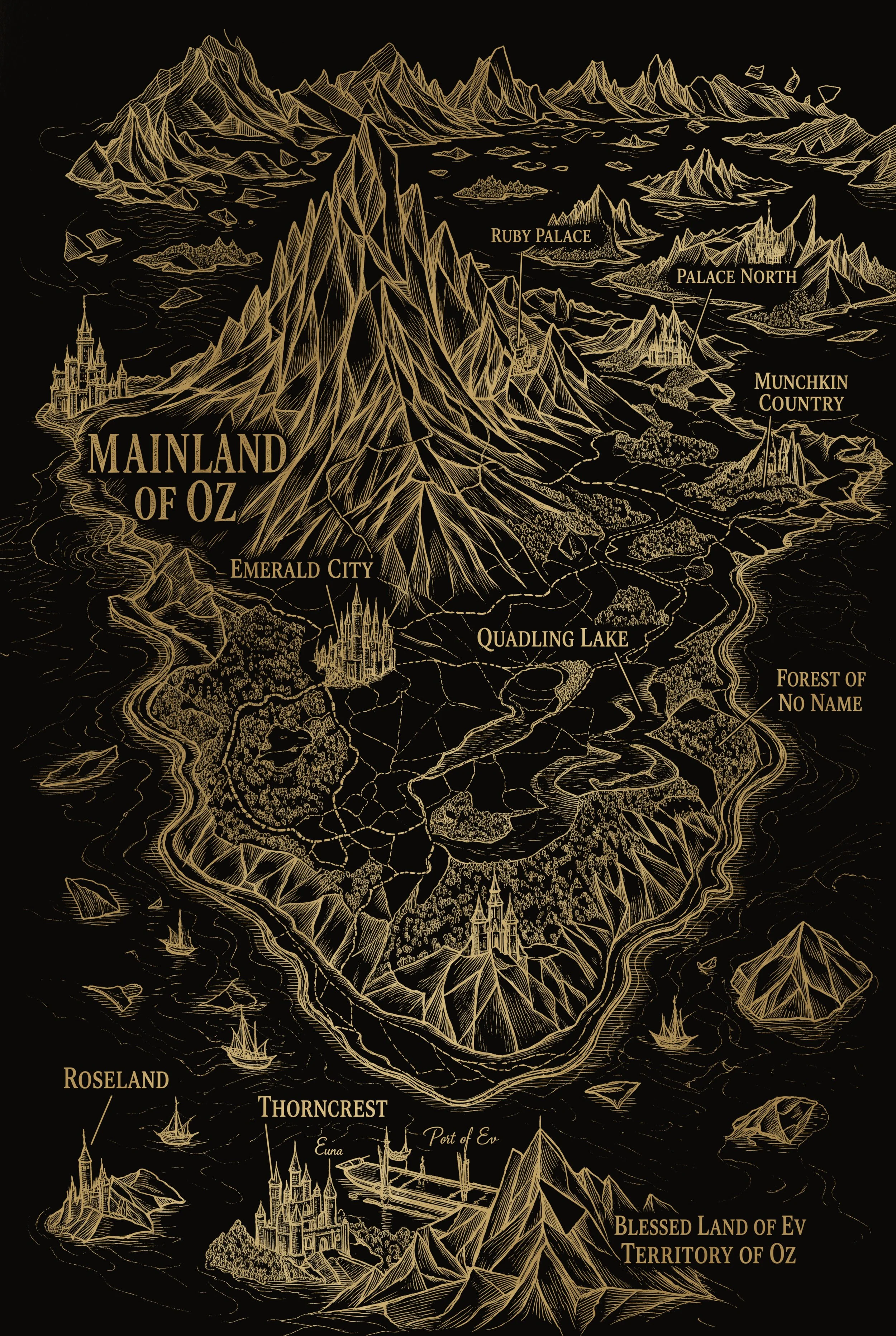
Setting the story in London in 1913 puts Alice on the brink of enormous historical change. Why was that particular moment the right backdrop for this version of her story?
Without giving away too much of the timeline, the book also spends a little time in the 1860s, when Alice’s Adventures in Wonderland was first published. I wanted the story to live close to the moments these books actually came into the world. And in 1913, all three worlds were alive in print at once. Barrie had published Peter and Wendy two years earlier, and Baum was still writing Oz books. The Patchwork Girl of Oz came out that year or close to it.
It was also a moment when something enormous was about to happen, and people could feel it. It’s a year before the First World War. Women were fighting for the vote. Spiritualism and skepticism were pulling against each other, with séances on one side and the new psychology on the other. People were looking for answers because the ground was moving under them in a way. Putting a young woman who is told her visions aren’t real into that world felt right. It also gave me the room I needed to grow some of the villains I wanted to expand on.
Oz is at a turning point too. When Alice arrives, it’s before the Emerald City readers know. Both worlds are on the edge of becoming something new.
Readers come to Alice, Oz and Neverland with incredibly strong memories and expectations. How did you decide which elements of those original worlds were sacred and which ones you were willing to completely reinvent?
What mattered most was that the most beloved parts of these worlds, and Alice above all, were preserved. And not only preserved, but expanded on and elevated. I truly believe this is how Alice would behave, and how she’d see the world, if the girl we know grew up and at eighteen had her world fall apart again.
I wanted to be very true to a woman of that era. The tension of expectations, the way people spoke to each other and behaved in terms of the class that Alice and Wendy belonged. I’m lucky that my editor, Ellen Baker, is a historical fiction writer, so we held the book to that standard right down to the costumes and exactly when a piece of technology would have existed.
What I was willing to reinvent was around the edges and the connective tissue that linked the worlds. A number of minor characters became very large characters. Princess Languidere comes from Baum’s Ozma of Oz, and she has been greatly expanded, but her core is the same. In Baum she can remove her head, and she keeps a collection of them. To me, that was the making of a villain.
I stayed true to character names and places, with a few adjustments. My rule was that a reader should never stop and think, wait, that doesn’t feel right. Going from Baum’s books to this dark, gothic version should feel like a natural evolution.
Your Alice enters Oz through a mirror rather than arriving via a tornado. What does the mirror symbolize for you in this story?
What you’ll discover is that there are many ways into Oz, most notably Kensington Garden’s. There are portals, and you can travel by mirror, by water, even through the air. There’s a mechanism behind all of it, which I’ll leave for readers to find.
But the mirror had to be Alice’s door. By the time we meet her, she’s stopped wanting to look into mirrors at all. They’ve come to stand for something truly traumatic for her. So when she goes through one, it’s an intentional confrontation of her fears. Technically, she’s chased through it, but in her heart she’s always known there is a world on the other side.
For me, the mirror is a reflection of our many selves. The book is Alice trying to uncover who she is versus who she’s been told she is.

Alice eventually finds herself part of an unlikely fellowship. What draws you to stories about people who might never have chosen one another but ultimately have to depend on each other?
I think that’s the magic of life. I feel it so strongly in my own life. People come into your life when they’re supposed to, even the ones you never would have picked.
I don’t think you truly know yourself until it’s reflected back to you, until you’re with people who challenge who you think you are. That makes for the richest experiences in life, and in stories. Alice’s fellowship is a shape-shifting prince, an inventor and his mechanical soldier, a spunky Munchkin girl and a dragon she names after her cat, Dinah. None of them would have chosen each other. They need each other anyway, and I love watching what that does to all of them.
Your creative background spans fine art, theater, film and commercial production. How did those disciplines influence the way you visually imagined and constructed the Oz Multiverse on the page?
I’m extremely painterly and vignette-driven. I trained as a fine artist at MICA long before I wrote fiction, so you’ll see a lot of my art history background in the book, and the influence of specific works I love. I think everything I make ends up being the culmination of what I’ve consumed and loved.
Film is a big part of that. This began in my head as a cinematic universe, because I grew up on the, in my opinion, golden era of fantasy movies, and it became the multiverse as I went back to the original books. You can’t divorce yourself from either one. You hold both.
I also come from theater, so the book is character driven with a lot of “choreography” for lack of a better word. Movement is really important to me. I built many of the scenes from specific camera angles in my head, so even without being told the point of view, you’ll know where you’re standing in the room and who is moving through it. Years in commercial production taught me the same thing from another direction, always know where the eye goes first. I think readers will feel how cinematic it is.
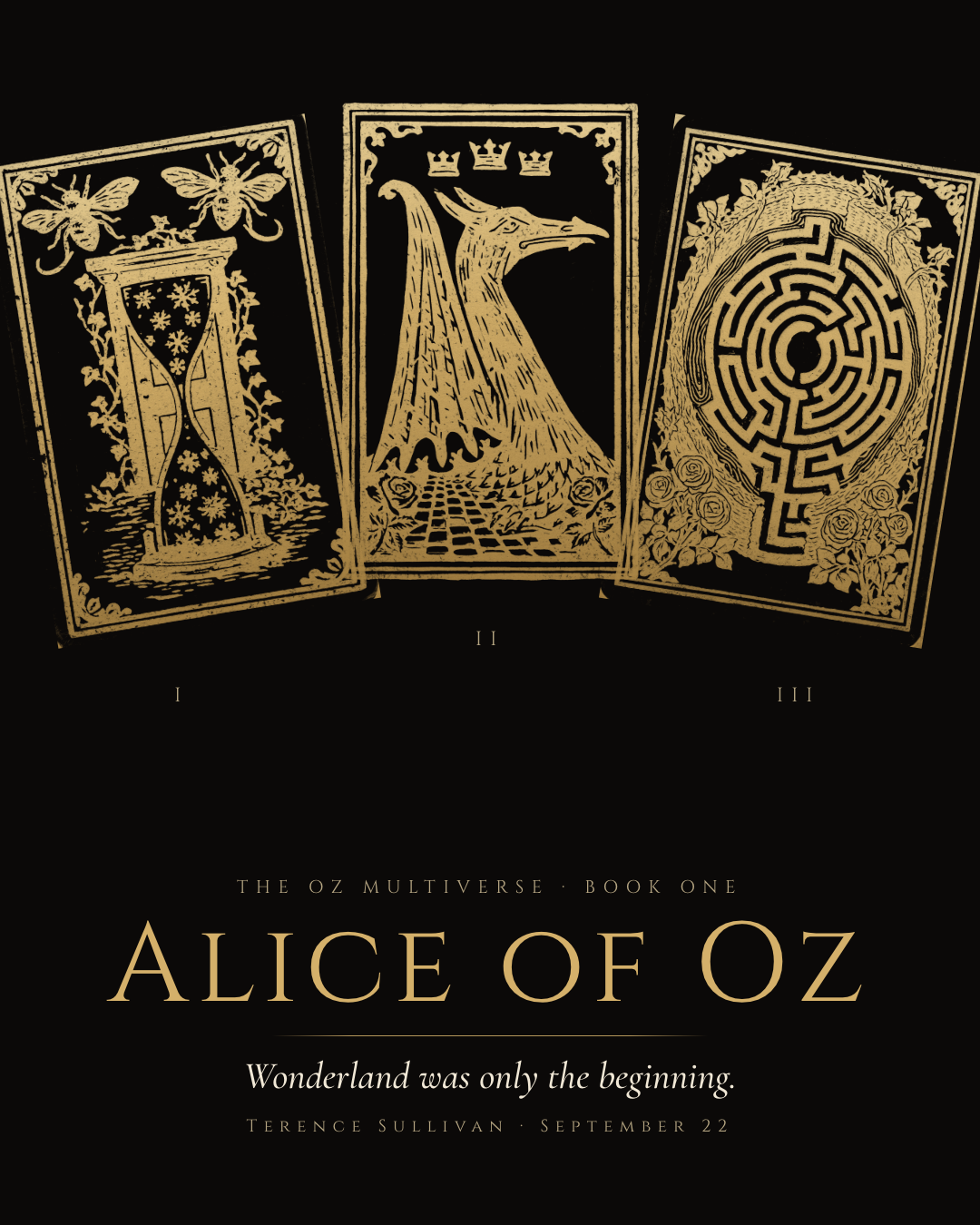
You went from telling this story in the fast, immediate format of TikTok to writing an entire novel. What did that transition teach you about storytelling, and about your own creative process?
It was unbelievable. I honestly had no idea what I was doing, and I was smart enough to bring in someone far more skilled in the craft of writing than I was. It took years, because I wanted to do it right, and I was starting from net-zero. Coming from a painting background, it was like getting my master’s in writing.
It taught me that I’m fast, sloppy, and prolific, maybe relentless, but that I’m not precious. I take feedback and constructive criticism quickly, and I know it always makes the work better. As an artist, online or in live theater, you’re constantly exposing yourself to feedback, and you learn that everyone wants the story to succeed. They want you to succeed, at least that’s the best mindset to be in. Working from that place is important.
What I learned about my own process is that I will rebuild and rebuild. I’ll carve and resculpt until the true story finally comes through.
Ellen Baker called you “a brilliant storyteller” and described the book as “an incredibly fresh and imaginative page-turner.” As a debut novelist, what is it like hearing that response to something you’ve spent so much time building privately?
In the lead-up to launch, you can’t stop your brain from running through every fear about how the book will be received. So to hear that from someone I trust and value so much is humbling. Honestly, it makes me super emotional.
It gives me the confidence that I can do this. I’m working every day to believe in myself that way, but sometimes it just takes one other person believing in you.
Alice of Oz is Book One of the Oz Multiverse. How much of the larger mythology did you need to understand before writing this first installment, and how far ahead have you already imagined the story?
The story is completely plotted through Book Three.
Before writing this one, I went back and reread all of Baum’s Oz books, and I spent a lot more time with Alice’s Adventures in Wonderland and Through the Looking-Glass than I expected to. Without giving too much away, Alice’s Wonderland is her dreams, and those dreams are portents of what she’ll go through in Oz. So I had to know the original texts and characters deeply, and then reinvent them for the real world of this story, so to speak.
It was also about respect. If you’re going to do something like this, you have to know the texts forward and backward. People love these characters so you better know what you are messing with.
