
HOW WIMBLEDON'S 'ALL WHITE' RULE HAS BEEN TRANSLATED BOTH ON AND OFF COURT
words by BEX WHITLEY
Wimbledon may be over, but people are still talking about who wore what. This year marked the 139th Championship, yet many aren’t aware quite how far back the club's dress code runs. Shaped by Victorian etiquette and a symbol of status, it remains the strictest sartorial law in professional sport.
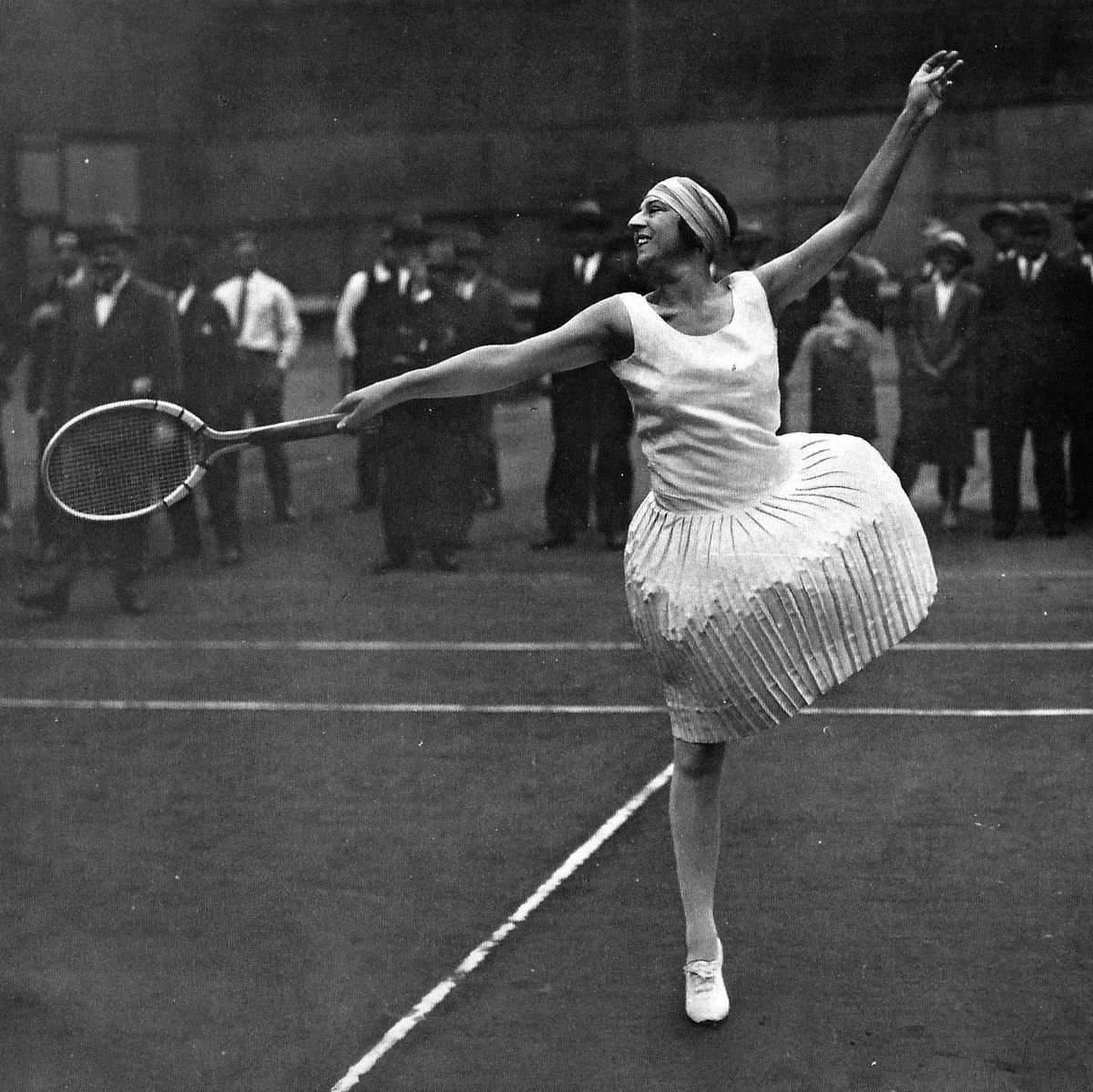
image via PINTEREST
Historically, to play in white was to advertise a lifestyle removed from the labour-intensive work of the working class. A distinction that took hold from 1890, though the rule wasn't formally written into Wimbledon's regulations until 1963. “Predominantly white" became "almost entirely in white" in 1995, and by 2014 Wimbledon had introduced its now-infamous 10-millimetre rule, capping any colour to a single narrow trim. The only transgression from this arrived a mere few years ago, following the "Address the Dress Code" campaign, which drew attention to the anxiety felt by female players wearing white while menstruating. Women could now wear solid, mid-to-dark undershorts beneath their whites, so long as nothing showed past the hem.
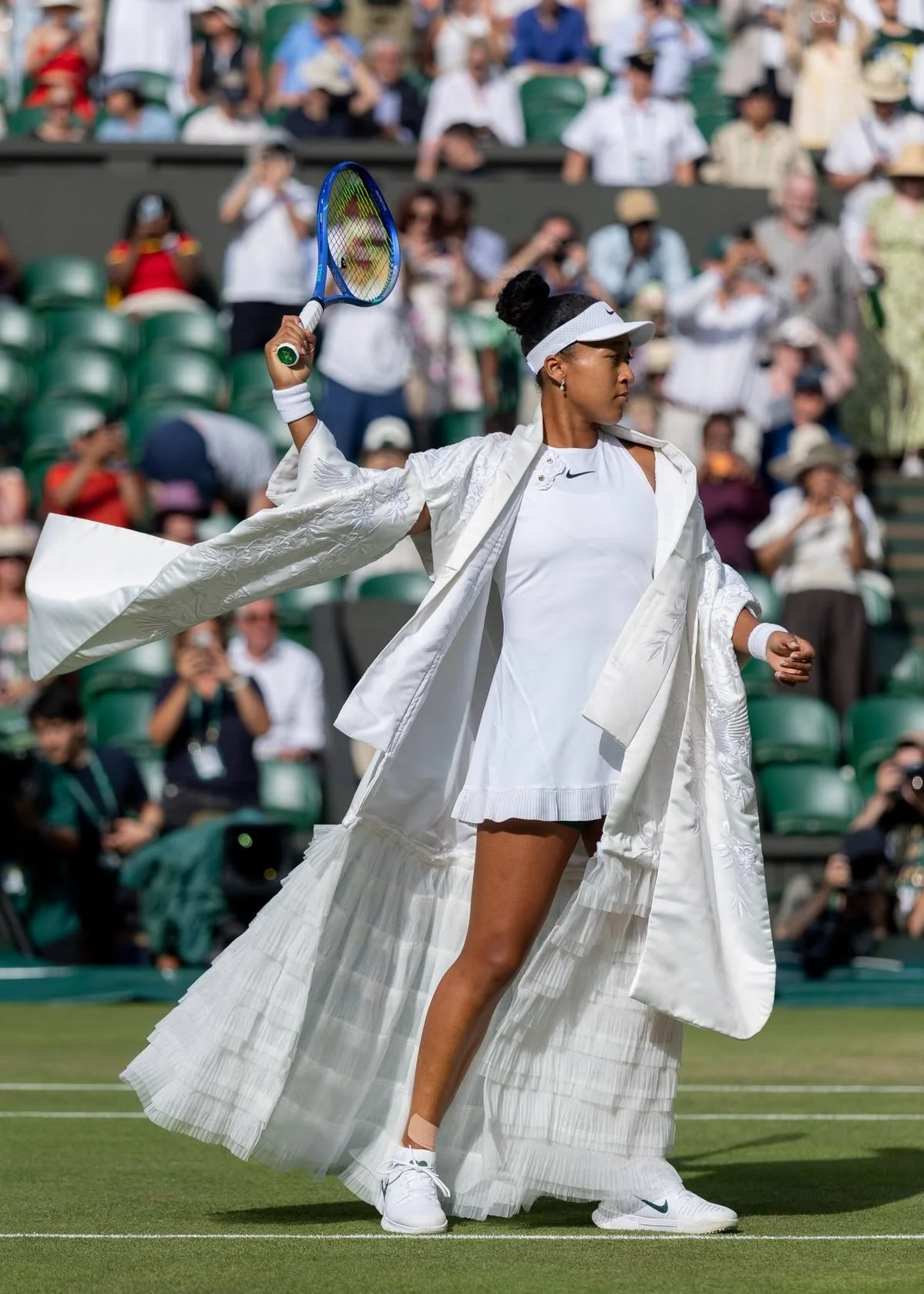
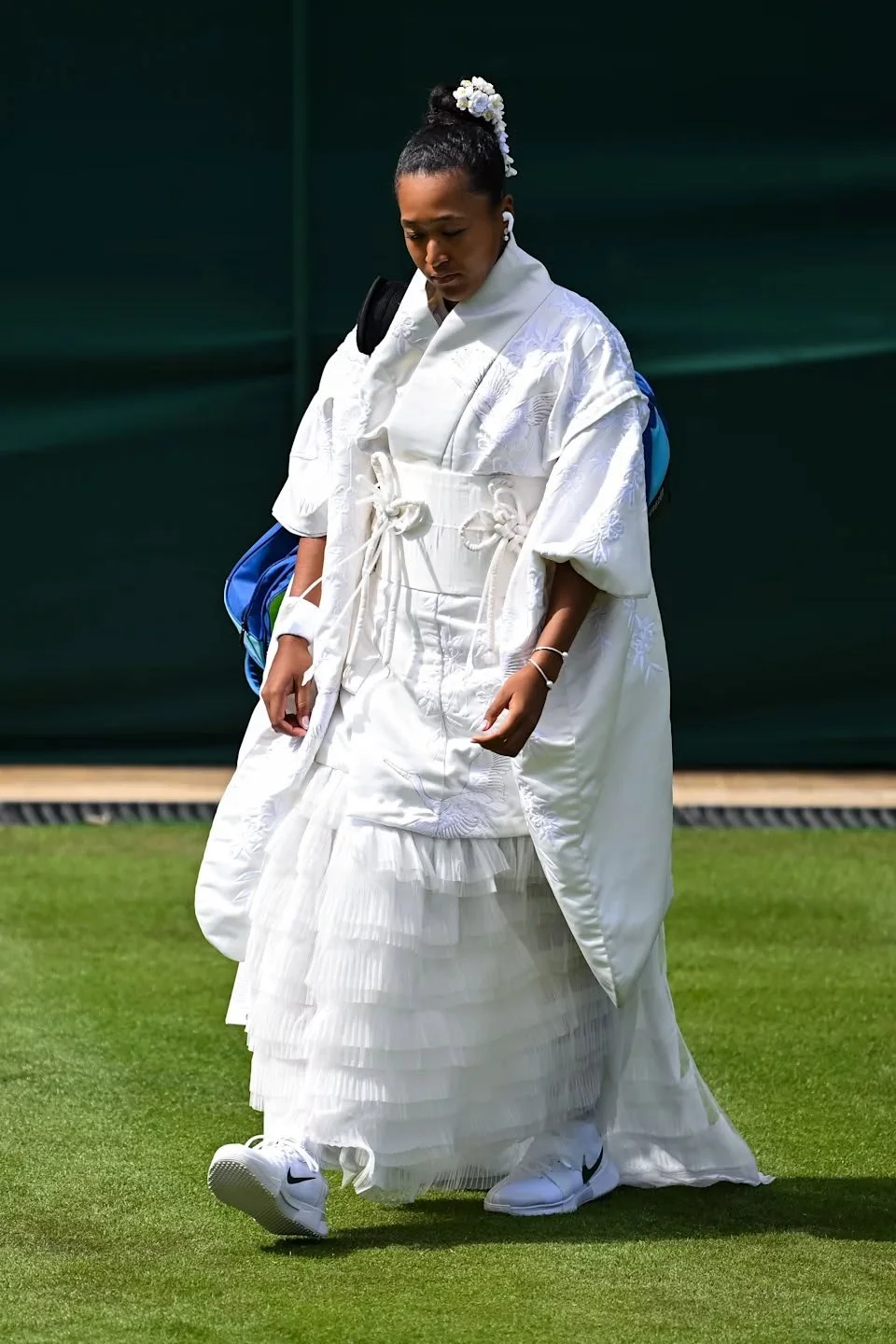
While the rules remain, the room for interpretation has become a moment that defines the players with the most creativity. For Naomi Osaka, her finding of loopholes has allowed her to express her identity. Her viral walk-on gown made headlines worldwide, featuring a floor-length, kimono-inspired piece by Tokyo designer Hana Yagi, cut from vintage bridal kimono fabric, embroidered with cranes and cherry blossom and finished with a kanzashi hair ornament. Osaka has described the piece as a tribute rather than a provocation, a nod to her Japanese and Haitian heritage, rather than any challenge to Wimbledon's own traditions.
images via PINTEREST
“Wimbledon’s all-white rule did not limit creativity. Rather, it created an opportunity to express Japanese tradition and Naomi’s story.” - Hana Yagi, designer of Naomi Osaka’s Kimono-inspired Outfit named Evolving Ceremony
Alexandra Eala also expressed a desire to respect the rules whilst also reminding the world where she came from, embroidering her Nike visor with a Filipino phrase, "Every dream begins as a seed. Once it grows, it cannot be stopped”, carrying her heritage onto Centre Court alongside Wimbledon's.
Taylor Fritz wore a bespoke all-white Hugo Boss suit for his walk-on, deliberately echoing Roger Federer's own 2007 Wimbledon suit. Coco Gauff’s New Balance x Miu Miu collaboration paired a picot-trimmed tank dress with 530 SL sneakers finished in nude, rather than white, gum soles. Marta Kostyuk found a similar opening in lace: a two-piece kit co-designed with Wilson, its bodice and tiered skirt built from floral lace over a four-way stretch base, romantic in silhouette but entirely within the rule. The effect reads closer to the front row than the baseline and signals a move towards treating rules as a design brief rather than a restriction.
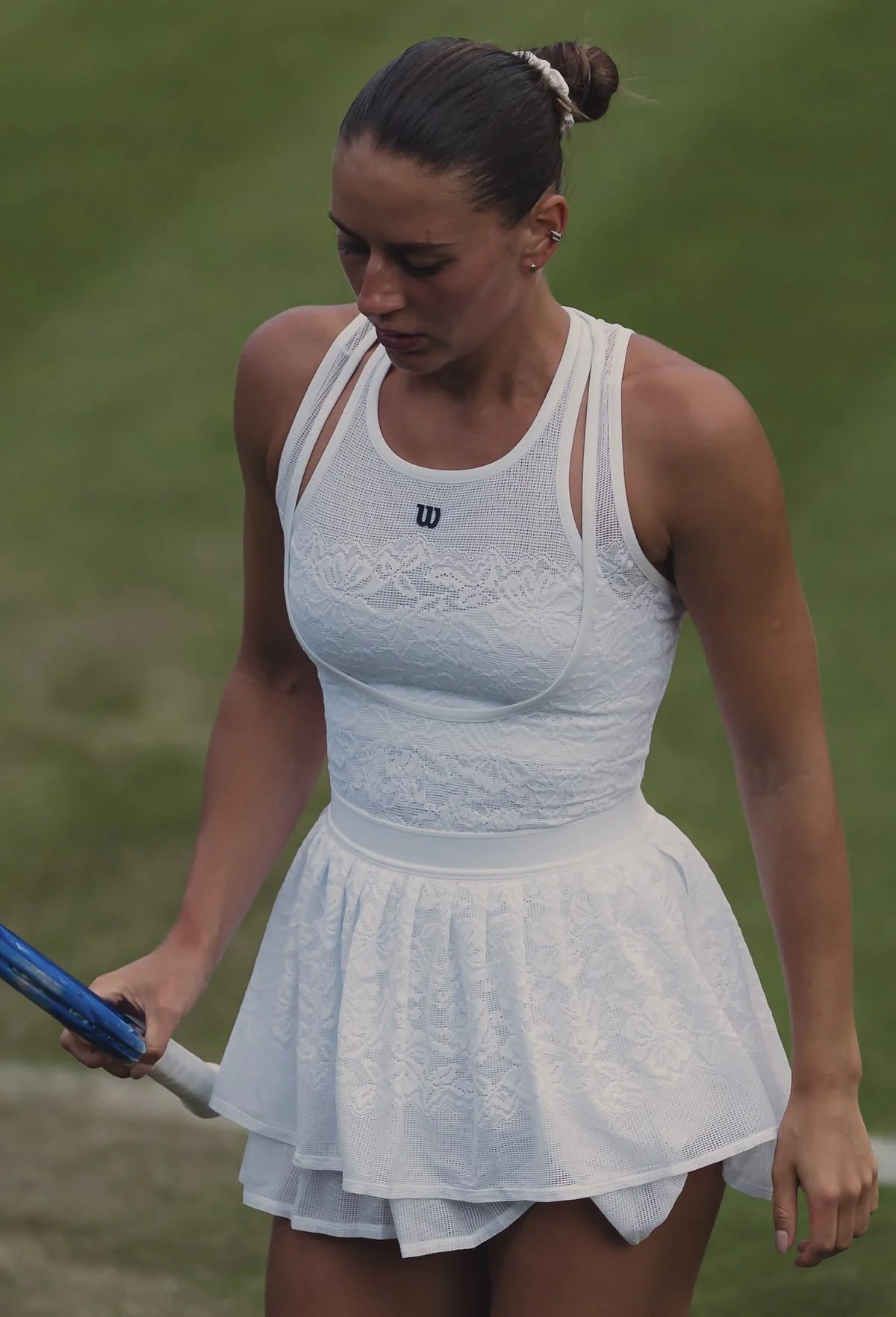
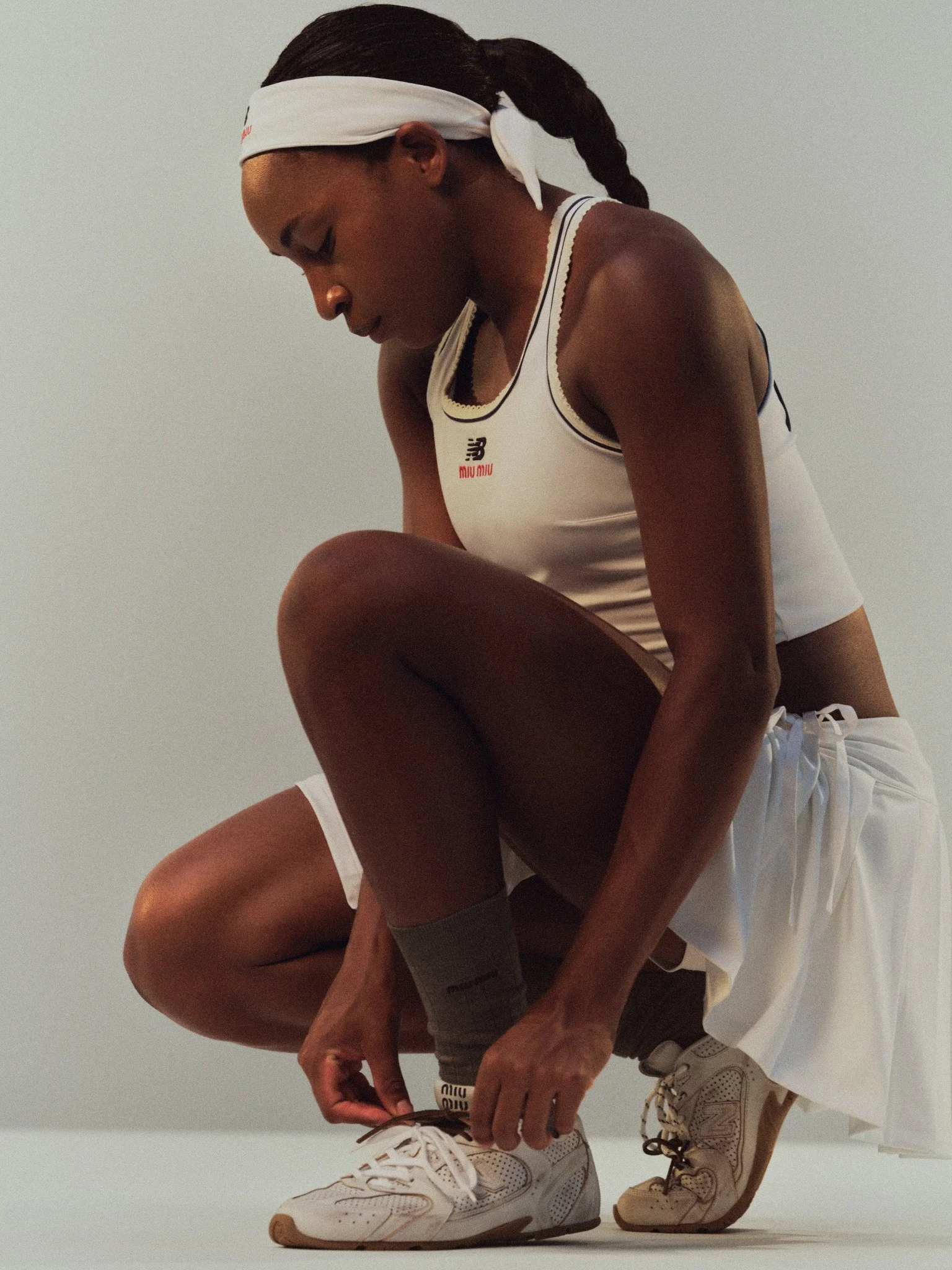
image via PINTEREST, image courtesy of SAMBA ESTUDIO
The rulebook, notably, is silent on nails and jewellery. Serena Williams, returning to the All England Club after a four-year hiatus, sported a diamond-crusted manicure inspired by her engagement ring. Frances Tiafoe's "BIG FOE" necklace, which features his nickname as a large silver charm, has become a style choice as recognisable as his forehand.
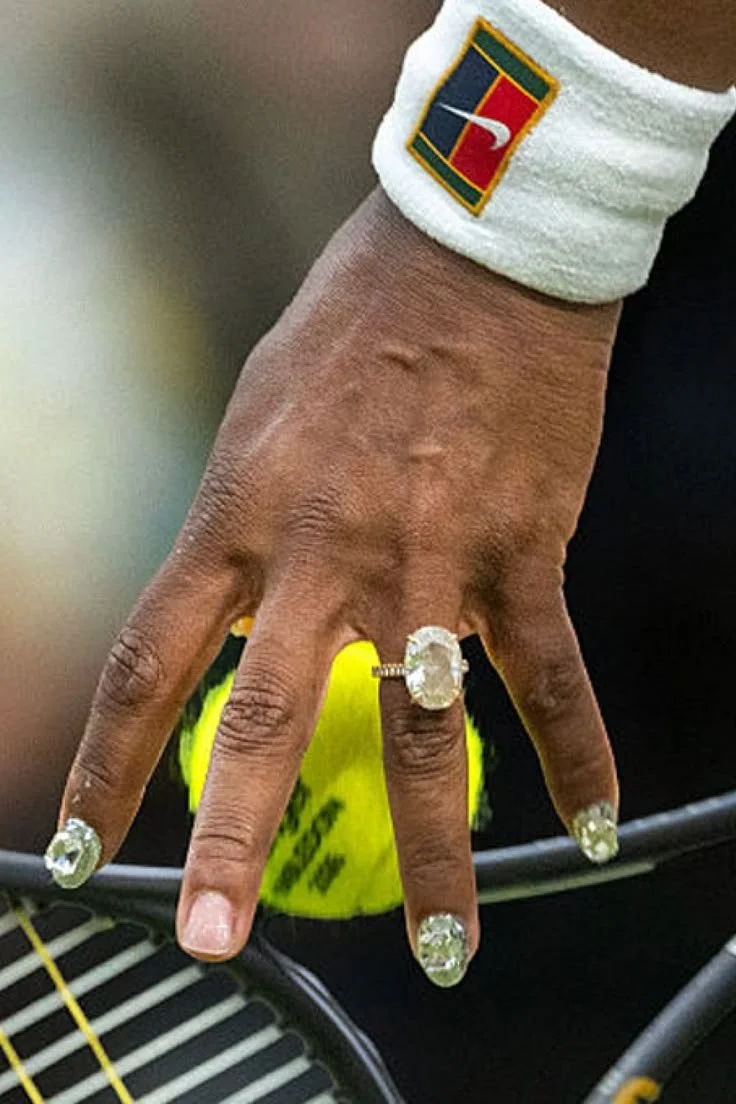
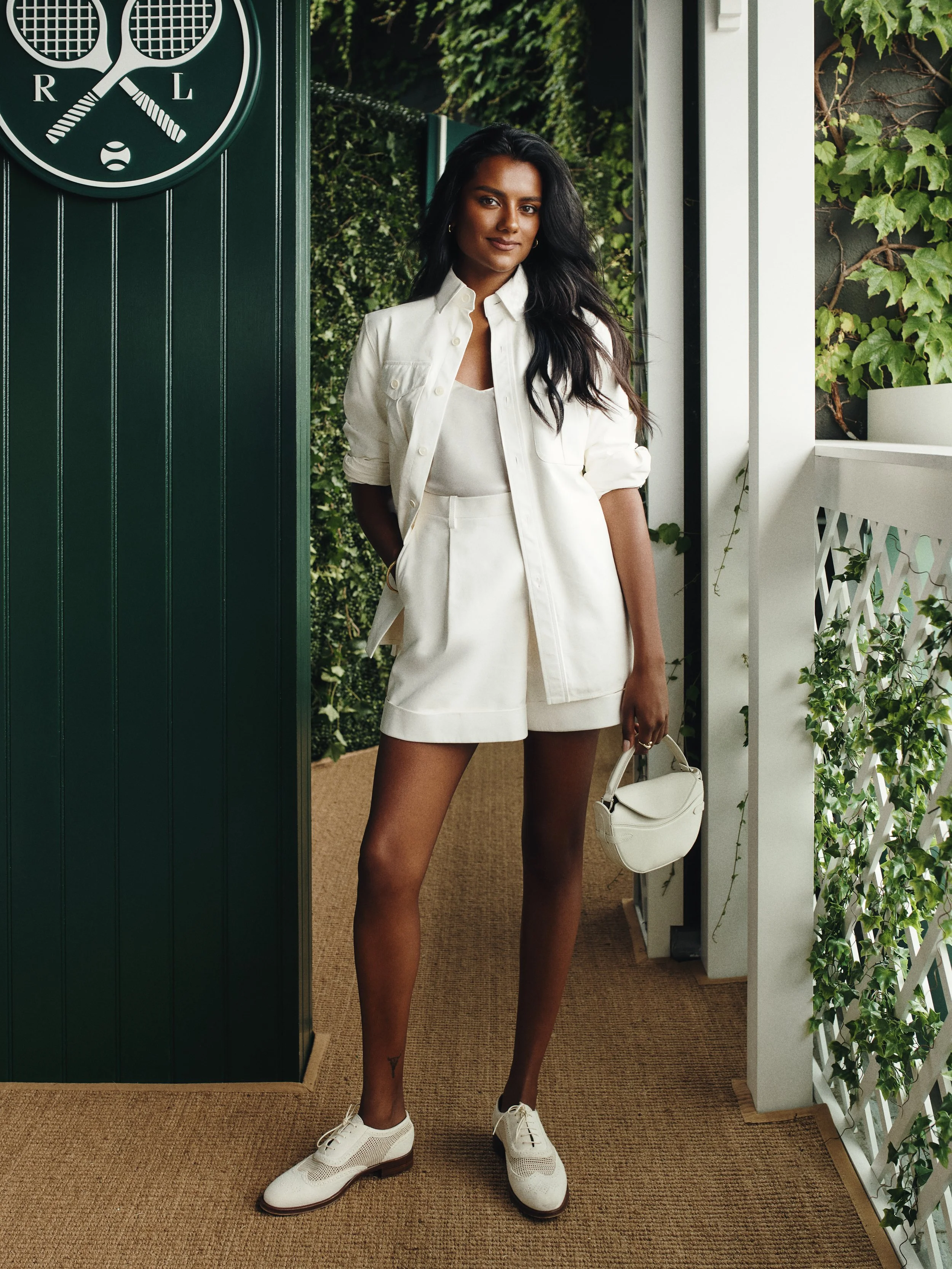
image via PINTEREST, image courtesy of RALPH LAUREN
Although guests off-court are under no obligation to wear white, tradition still shapes what's worn at the Championships. This year saw Isla Fisher and Simone Ashley, in white ME+EM and Ralph Lauren respectively, nod to the long-held tradition. Michaela Coel’s maximalist approach in a Loewe x Paula's Ibiza camisole and skirt trimmed with vibrant pom-poms proves that the all-white rule can still be playful and personal.
The question remains as to whether the traditions upheld by Wimbledon and The All England Tennis Club are vital in maintaining the allure. While some have even opposed the new fashion-forward approach, many see the inspired and innovative approach as a sign of the progression within the sport itself. In an environment once reserved for a limited number of individuals, this creativity nods to the newfound inclusivity and progress both off and on court.
